Faded Flowers on Portulaca: Causes, Checks & Fixes
Quick answer
Faded flowers on Portulaca are usually normal-each bloom opens one day in direct sun, then closes and drops. Closed or dull petals on cloudy afternoons are photonastic, not failure. First step: confirm timing (sunny afternoon vs all-day shade), then move the pot to full sun if blooms never open bright.
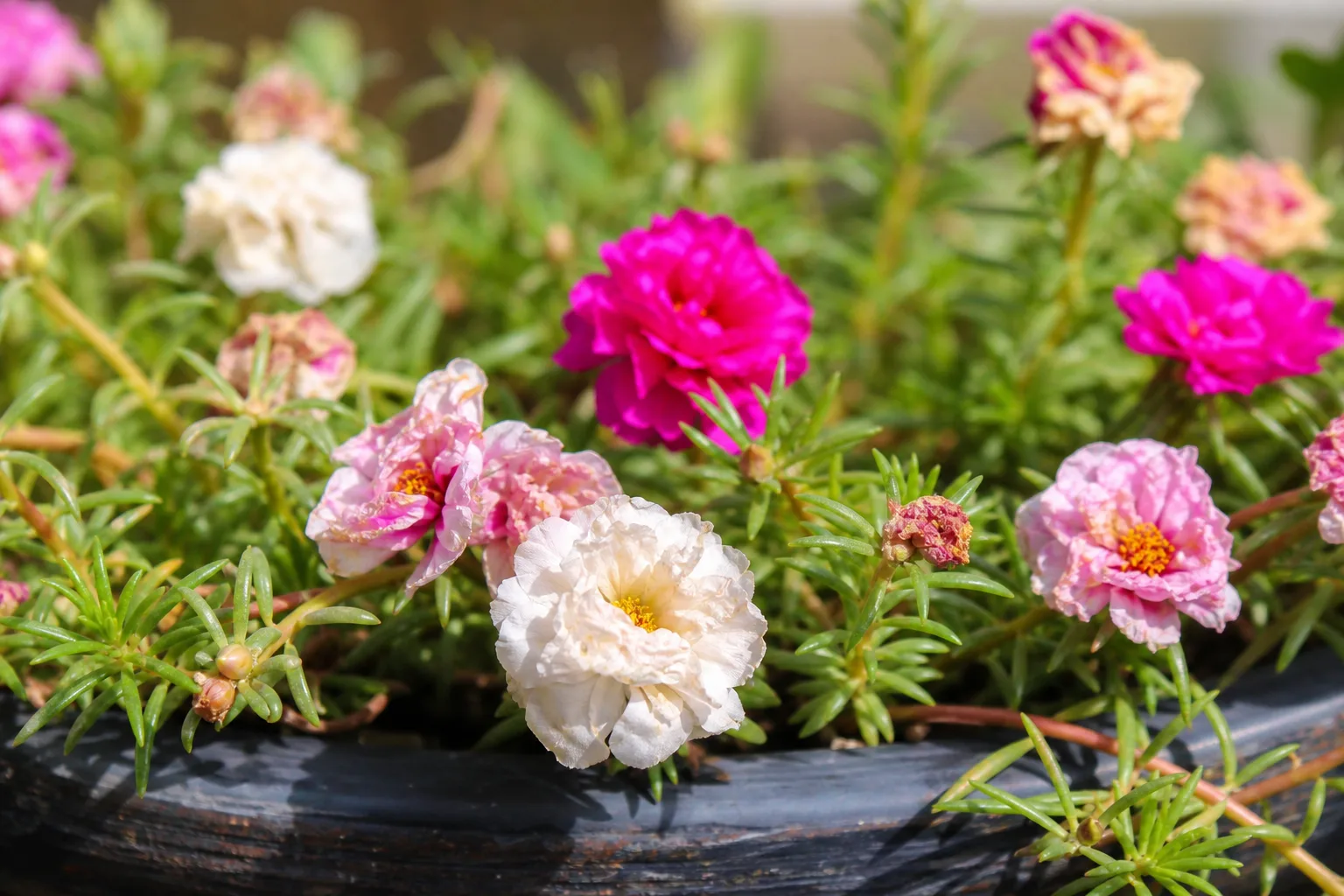
Faded Flowers on Portulaca: Causes, Checks & Fixes
This guide covers faded flowers on Portulaca. See also the general Faded Flowers guide, watering, and light pages for this plant.
Faded Flowers on Portulaca: Causes, Checks & Fixes
Quick answer
Faded flowers on Portulaca (Portulaca grandiflora, Moss Rose) split into two very different stories. Most of the time, fading is normal biology-each saucer-shaped bloom opens in direct morning sun, holds peak color for hours, then closes and drops within a single day. Closed or dull-looking petals on cloudy afternoons and at night are also normal-Moss Rose is photonastic and only fully displays color in bright sunlight.
First step: confirm whether flowers ever open bright on a clear sunny afternoon. If they do, then close by evening or on overcast days, you are seeing expected Moss Rose behavior-not a care failure. If blooms stay shut or washed-out all day in Portulaca light guide, the problem is usually insufficient direct light, root stress from wet soil, or cultivar choice-not simple petal aging.
Once you rule out normal cycling, move the pot to the sunniest spot available and let soil dry completely before the next drink. Portulaca produces its most vivid flowers only when roots are healthy and the plant receives uninterrupted full sun.
What faded flowers look like on Portulaca
Moss Rose fading is about timing and light, not always tissue damage.
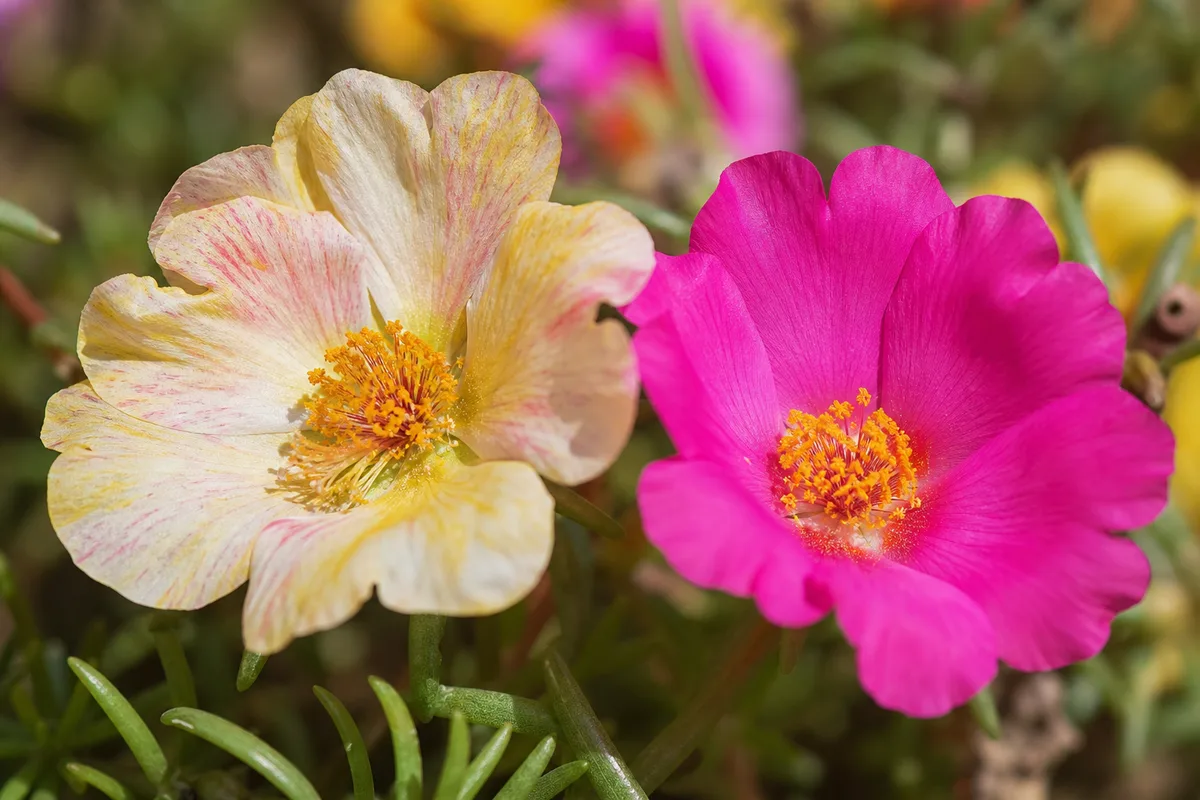
Faded Flowers symptoms on Portulaca - compare with healthy tissue on the same plant.
Normal fade and closure (most common):
- Morning-open, evening-closed - petals unfurl in mid-morning sun, curl inward by late afternoon, and the spent head drops within one day
- Cloudy-day closure - tight buds or half-closed flowers on overcast monsoon mornings that reopen when direct sun returns
- Night closure - flowers shut from sundown to sunup regardless of plant health
- Self-cleaning drop - faded blooms fall without deadheading; fresh buds keep forming at stem tips
- Stems still firm and trailing growth continues while individual heads cycle
Stress-related dulling (needs a fix):
- All-day closure on clear sunny afternoons - buds never fully open despite bright weather
- Washed-out, pale petals on new blooms in partial shade or bright indoor light
- Premature wilt of open flowers when soil stays soggy or roots are rotting
- Sudden closure after transplant, repot, or a move - stress signal beyond ordinary nightly shut-down
- Reduced bud count alongside faded heads through peak summer heat
What is not faded flowers:
- Bud drop on Portulaca - unopened buds detach cleanly before petals ever show; see bud-drop guidance if green buds lie on the soil
- No flowers at all - total shade or heavy nitrogen; buds never form rather than fading after opening
Double-flowered and older species-type cultivars close more aggressively on cloudy days than Sundial or Sundance hybrids bred to stay open longer.
Why Portulaca flowers fade
Moss Rose evolved for hot, lean, sunny ground in South America. Its flowers are built for a one-day display cycle tied to light intensity-not long-lasting cut-flower performance.
Single-day bloom senescence. Each flower opens once, attracts pollinators, completes its cycle, and makes way for the next bud. That rapid turnover is how Portulaca keeps color across a terrace bed from late spring through frost. Spent petals do not reopen; new buds carry the show forward.
Photonastic light response. Moss Rose flowers open in bright sunlight and close at night and on cloudy or rainy days. Species-type plants are only open in bright sunlight, while newer hybrids such as Sundance and Sundial remain open most of the day or in cooler, cloudier weather. What looks like “fading” on a grey afternoon is often the plant waiting for sun.
Insufficient direct sun. Portulaca needs at least six hours of full sun daily for best flowering. In partial shade, blooms open smaller, paler, or not at all-and may close early even on mild afternoons. Mississippi State Extension observes that flowers also close when the plant is under stress; chronic shade mimics that signal every day.
overwatering on Portulaca and root stress. Soggy soil suffocates shallow roots. Stressed roots deliver less water and oxygen; open blooms wilt and close prematurely while stems may still look plump. Poor drainage can lead to crown rot, weakening the whole flowering system.
Drought during peak heat. Moss Rose tolerates extreme drought, but letting soil stay bone-dry through a heat wave can wilt open flowers before their normal afternoon closure. Boom-bust watering produces uneven color across the same trailing stem.
Cultivar genetics. Standard Moss Rose closes on cloudy days. Sundial series hybrids open in cooler and cloudier weather; Sundance semi-doubles stay open most of the day. Afternoon Delight and Yubi Summer Joy cultivars hold blooms open later into the afternoon. Buying species-type plants and expecting all-day color on monsoon terraces sets up a false “fading” alarm.
Heat and end-of-day physiology. Even healthy Moss Rose petals naturally curl as the day’s photosynthetic window closes. Late-afternoon dulling on a sunny day is senescence, not emergency stress.
Aphids on tender tips. Soft shoot tips and developing buds attract aphids that drain sap. Heavy feeding can make open blooms look shriveled or dull without obvious wilting if soil moisture looks fine.
How to confirm the cause
Work through these checks in order-the answer usually appears before you need fertilizer or sprays:
- Sunny-afternoon test - On a clear day, do any blooms open fully by mid-afternoon? All-day closure in bright sun confirms placement or root stress-not normal cycling.
- Cloudy-day vs sunny-day pattern - Closure only on overcast days fits photonasty. Closure every day fits shade or stress.
- Direct sun hours on the pot - Track unobstructed sun from mid-morning through afternoon. Less than six hours strongly implicates placement.
- Bloom age on one stem - Are oldest heads faded while newer buds on the same stem still open bright? That confirms normal one-day turnover.
- Soil moisture at stem base - Wet and heavy for several days with limp stems suggests overwatering. Dry with afternoon wilt points to drought shortening bloom display.
- Cultivar label - Sundial, Sundance, Afternoon Delight, and Yubi Summer Joy stay open longer; species-type Moss Rose closes aggressively on cloudy days.
- Recent move or repot timeline - Sudden dulling within 48 hours of transplant, with firm stems and moist soil, fits shock. Gradual wash-out after weeks in the same dim corner fits chronic shade.
- Bud and tip inspection - Look at stem tips with a hand lens. Soft aphid clusters, sticky residue, or honeydew confirm insect pressure. Brown spotted petals with stem lesions point to disease rather than simple fade.
If flowers open vivid in morning sun and close by evening on the same clear day, culture is working-no rescue treatment is needed.
First fix for Portulaca
Confirm normal cycling, then move to full direct sun only if blooms never open bright on clear afternoons.
On a sunny day, watch the pot from mid-morning onward. If flowers open fully and fade naturally by late afternoon, do nothing beyond optional light grooming-Moss Rose self-cleans spent blooms and does not require deadheading for continued flowering.
If blooms stay shut or washed-out through a clear sunny afternoon:
Relocate to the sunniest terrace rail, roof edge, or open bed where Moss Rose receives six or more hours of direct sunlight. Do not judge the move on the first cloudy day-wait for a clear afternoon to assess opening.
For wet soil: skip all watering until the mix is bone-dry at 3 cm depth. Confirm drainage holes flow freely. Empty saucers. Do not fertilize a stressed root system.
For dry soil after a wilt spell: water deeply at soil level in early morning until moisture exits drainage holes-then return to dry-down rhythm. Do not mist flowers or foliage.
Do not apply nitrogen fertilizer as a first response. Dull blooms from shade or root stress are not fixed by feeding; excess nitrogen can reduce flowering further.
Step-by-step recovery
Once you know whether fading is normal or stress-linked, follow this sequence:
- Classify the pattern - Normal one-day cycle and cloudy-day closure need no intervention. All-day dulling in sun needs placement and moisture fixes.
- Move to full sun if the sunny-afternoon test failed-hold the pot in place for at least one week before rejudging.
- Maintain dry-down watering for two weeks - Water only when soil is completely dry at depth. In full summer sun, that may mean every four to five days; in cool weather, once a week or less.
- Remove only diseased or rotting flower tissue - Pinch brown spotted heads if disease is confirmed. Leave healthy closed buds in place on cloudy days.
- Rinse aphids from shoot tips with a strong water stream if insects are confirmed-only after moisture is stable.
- Light mid-season shear on leggy plants only after new buds appear-shearing in midseason can promote fuller growth and greater flowering on sparse mid-season Moss Rose, but do not strip budded tips during active stress.
- Plan cultivar upgrades for next season if monsoon cloud cover makes species-type closure frustrating-Sundial and Sundance hybrids stay open longer in cooler, cloudier weather.
Recovery timeline
On healthy Moss Rose in full sun, new vivid blooms open every morning through the warm season. Individual heads still fade the same day-that timeline does not change. What improves after fixing shade or root stress is brighter peak color, fuller opening, and steadier bud production within one to two weeks.
Monsoon cloud cover may temporarily reduce open flowers even on recovered plants-that is environmental, not ongoing failure. Expect fewer visible blooms on grey weeks regardless of cultivar.
Lookalike symptoms
Bud drop means unopened buds detach before petals show-different from opened blooms fading after their daily cycle.
Not enough light shows closed flowers every sunny day plus leggy stems-buds may never reach full color because they never fully open.
Overwatering pairs dull blooms with soft yellow stems, sour soil smell, and wilting on wet mix.
No flowers means buds never form-often total shade or heavy nitrogen. Faded flowers means blooms opened, then completed their cycle or closed on schedule.
Leggy growth stretches stems toward light; flowers may be sparse and pale, but the primary issue is placement, not petal senescence.
Mistakes to avoid
Do not deadhead every closed flower on cloudy monsoon mornings-buds are waiting for sun, not dying.
Do not keep Moss Rose in bright indirect indoor light expecting all-day open blooms-it needs outdoor full sun for peak color.
Do not confuse nightly closure with plant failure and apply unnecessary fertilizer or fungicides.
Do not alternate flood and drought during heat waves-uneven moisture shortens the visible bloom window.
Do not buy species-type Moss Rose for shaded balconies and interpret normal cloudy-day closure as fading disease.
Portulaca care cross-check
Faded flowers on Moss Rose tie full sun, one-day bloom biology, and cultivar choice together. Best flowering occurs with about six hours of full sun and consistently moist-but not waterlogged-root zones in well-drained mix. Shade plus wet soil produces the dullest, shortest-lived displays.
Closed flowers on cloudy days and spent heads dropping by evening are normal. All-day washed-out blooms on sunny afternoons are not.
When to worry
Act quickly when every bloom stays closed through multiple clear sunny afternoons alongside soft stems on wet soil-unpot and inspect roots for mush. Aphid-coated bud tips with sticky residue need rinsing before populations spread.
Low urgency when flowers open bright in morning sun and close on schedule-even if the pot looks less colorful by dinner. That is Moss Rose working as designed.
Conclusion
Portulaca faded flowers usually mean confirm normal one-day cycling and photonastic closure first, then fix sun and moisture only when blooms never open vivid on clear afternoons. Move to full direct light, dry soggy roots, and choose longer-opening cultivars if monsoon cloud cover frustrates you. Expect fresh morning color on healthy trailing stems throughout the warm season-individual blooms will still fade the same day, and that is not a problem to solve.
When to use this page vs other Portulaca guides
- Portulaca watering guide - Use for routine moisture checks before assuming faded flowers is the main issue.
- Portulaca problems hub - Browse all 50 common issues on this species.