Leaf Miners on Portulaca: Causes, Checks & Fixes
Quick answer
Leaf miners on Portulaca leave winding pale trails inside fleshy Moss Rose leaves-the portulaca leaf-mining weevil is the species-specific pest. First step: Pinch off and bag mined leaves before larvae exit to pupate; contact sprays rarely reach grubs protected inside succulent tissue.
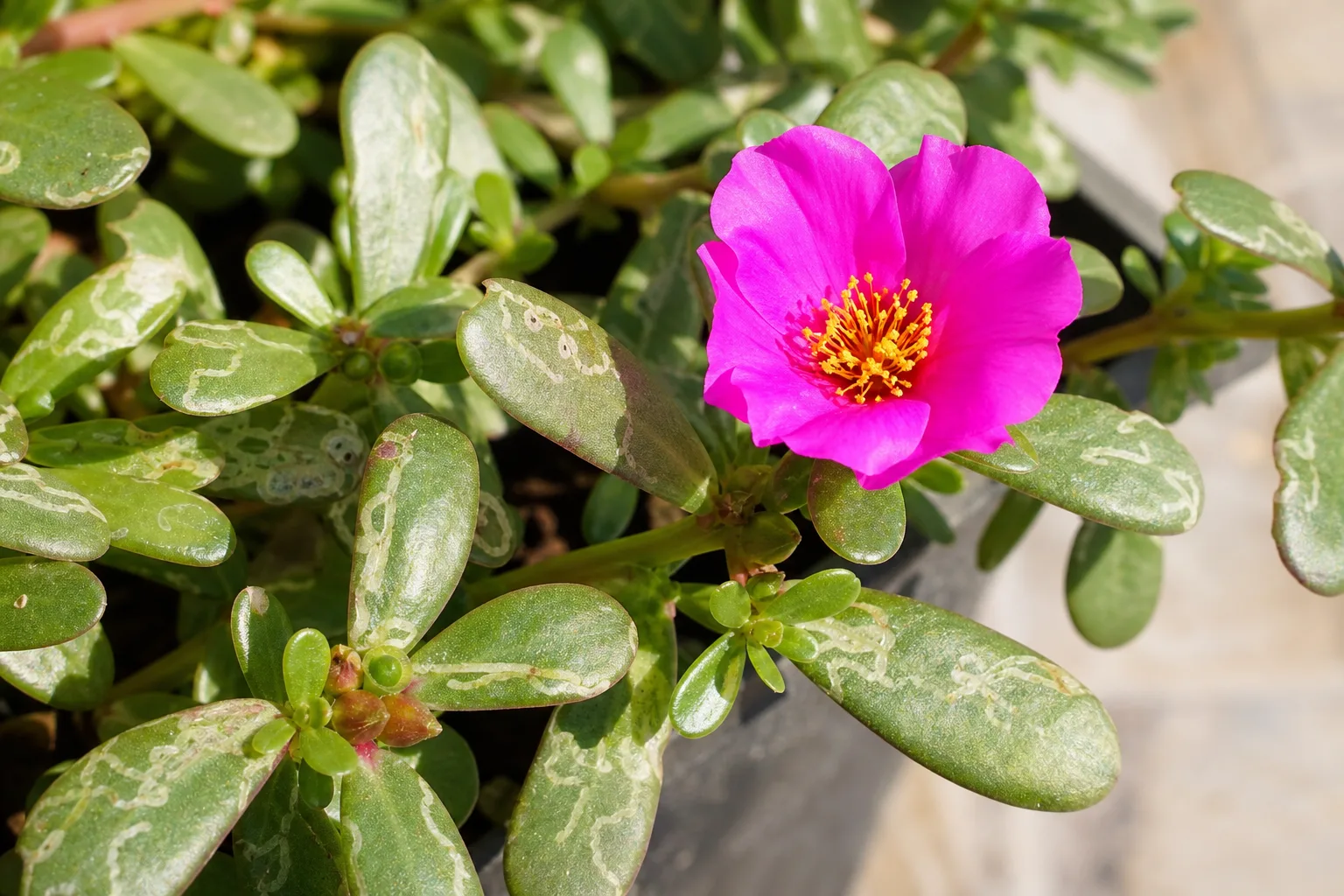
Leaf Miners on Portulaca: Causes, Checks & Fixes
This guide covers leaf miners on Portulaca. See also the general Leaf Miners guide, watering, and light pages for this plant.
Leaf Miners on Portulaca: Causes, Checks & Fixes
Quick answer
Leaf miners on Portulaca (Portulaca grandiflora, Moss Rose) are insect larvae feeding between the upper and lower surfaces of fleshy cylindrical leaves, leaving winding pale tunnels visible when you hold a leaf to light. On mature summer bloom baskets the damage is usually cosmetic-flowers keep opening in Portulaca light guide even when a few leaves show internal trails. On young seedlings, heavy mining can slow growth before the first flush of blooms.
First step: pinch off mined leaves and bag them before larvae mature and drop to pupate. Contact sprays and soaps rarely reach grubs protected inside succulent leaf tissue, so sanitation beats spraying on home Moss Rose.
What leaf miners look like on Portulaca
The clearest sign is a serpentine mine-a twisting white or pale trail inside the fleshy needle-like leaf, often with a dark line of larval waste (frass) running through it. The mine widens as the larva grows. Unlike caterpillar chew holes or slug ragged edges, the leaf surface stays intact except for a tiny exit hole when the larva leaves to pupate.
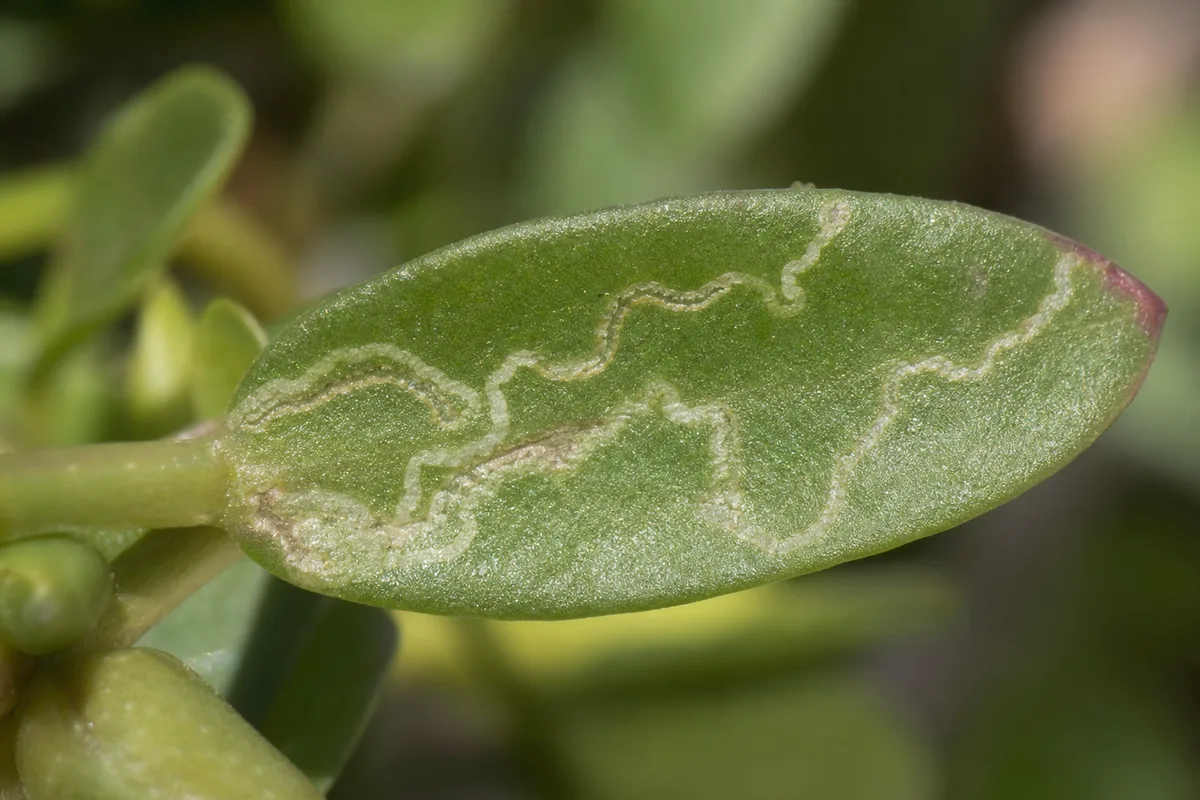
Leaf Miners symptoms on Portulaca - compare with healthy tissue on the same plant.
On Moss Rose specifically:
- White winding lines on cylindrical succulent leaves-the signature damage of the portulaca leaf-mining weevil (Hypurus bertrandi), a purslane-family specialist also found on related Portulaca species.
- Mines on middle and lower leaves of trailing stems, where dense mats of foliage stay accessible to egg-laying adults.
- A small legless grub visible inside an active mine if you gently tear the leaf at the widest part of the tunnel-unlike fly maggots on petunias, weevil larvae are pale and grub-like.
- Brown pupae near a mine exit or on soil beneath hanging baskets after larvae drop out to complete development.
Moss Rose leaves are thick and succulent-mines show up clearly against the green blade when backlit. Flower petals are rarely mined; most home damage stays on foliage.
Why Portulaca gets leaf miners
Two pest groups can produce leaf mines on Moss Rose and its purslane relatives:
Portulaca leaf-mining weevil (Hypurus bertrandi). Wisconsin Extension notes that this leafminer weevil damages or kills purslane in parts of the country where it has spread from its native range. Adults lay eggs inside leaves; legless larvae tunnel through fleshy tissue, leaving white lines on the exterior. After feeding, larvae exit foliage and transition to adult weevils-one female can lay dozens of eggs, and unchecked families can weaken a small Moss Rose flat within weeks.
Vegetable serpentine leafminers (Liriomyza species). UC IPM lists leafminers attacking many flower hosts including marigold and verbena-ornamentals in mixed summer baskets near Moss Rose can carry fly larvae that mine between leaf surfaces. Adult females puncture leaves to feed and lay eggs; larvae mine for one to two weeks before exiting. Warm weather can shorten the life cycle to about two weeks, allowing multiple generations through a single Moss Rose season.
Portulaca invites leaf miners for practical reasons:
- Constant soft new growth during hot summer flush gives females fresh succulent leaves to colonize.
- Ground-hugging trailing habit keeps inner leaves dense and accessible-Moss Rose forms a low mat 8 inches tall spreading 1 foot wide.
- Nearby purslane weeds in terrace cracks or vegetable beds can harbor Hypurus bertrandi that moves onto ornamental Moss Rose.
- Broad-spectrum insecticide use on aphids or other pests can kill parasitic wasps that normally control fly leafminers-secondary outbreaks after blanket sprays are common in gardens.
Leaf miners rarely kill established Moss Rose. Unusually heavy mining can slow growth or cause infested leaves to drop, but mature bloom plants usually outgrow cosmetic damage if mines are removed early.
How to confirm the cause
Work through these checks before treating:
- Hold the leaf to light. A bordered internal tunnel confirms leaf miner-not surface sun scorch or drought stippling alone.
- Check whether the mine is expanding. A lengthening trail means an active larva; an old brown mine may be empty.
- Look for frass. A dark line inside the pale tunnel distinguishes miners from thrips scars or spider mite stippling.
- Rule out chewers. Slugs and caterpillars remove tissue outright on Moss Rose, leaving ragged holes-not enclosed trails. NC State lists slugs as an occasional Portulaca problem, not internal miners.
- Inspect nearby purslane. Weedy purslane in pot cracks or paving joints can explain sudden mines on otherwise healthy Moss Rose.
- Note recent sprays. A flare of mines two to three weeks after broad-spectrum insecticide fits loss of natural enemies more than random bad luck.
If you see only fine yellow dots without bordered trails, suspect spider mites in hot dry baskets. Silvery scarring points to thrips. White powder on the leaf surface is mildew, not mining.
First fix for Portulaca
Remove mined leaves and discard them in the trash-not the compost pile.
Pinch or cut affected leaves, including a short section of clean stem below the mine when possible. Bag removed foliage so larvae cannot pupate in your bin. Wear gloves when handling heavily mined Moss Rose-Portulaca is toxic to cats and dogs and sap contact can irritate skin. Check the same plant again in three to five days and remove any new mines before they widen.
Do not reach for insecticidal soap or neem as a first response on mature bloom Moss Rose. Larvae inside leaves are shielded from contact products-insecticides are not very effective for leafminer control-and unnecessary sprays can knock out parasitic wasps already working in your garden.
Step-by-step recovery
Once mined leaves are removed, work in this order:
- Scout weekly through peak summer-trailing Moss Rose hides mines on inner stems. Rotate hanging baskets to inspect all sides.
- Keep plants vigorous with dry-down watering. Moss Rose needs full sun and well-drained sandy soil-drought stress does not resist miners, but steady care supports replacement foliage after you prune mines.
- Improve airflow by trimming overcrowded inner stems on dense mats-only enough to open the canopy, not so hard that you remove bloom wood.
- Hold off on high-nitrogen feeds while mines are active. Soft, nitrogen-rich new growth is easier for weevils and flies to colonize. Moss Rose thrives in lean soil; resume minimal feeding once new mines stop appearing for two weeks.
- Pull nearby purslane weeds from terrace cracks and basket edges to reduce Hypurus bertrandi hosts.
- Escalate only if needed. If mines cover most leaves on young plants or keep spreading despite weekly removal, a spinosad product labeled for leaf miners on ornamentals may help when applied as new leaves expand-still secondary to sanitation on home Moss Rose.
Recovery timeline
Cosmetic mines on a few leaves of a mature terrace basket: visible improvement within days once you remove affected foliage; new clean leaves appear within one to two weeks if adults are not laying heavily.
Moderate infestation across a window box: two to three weeks of weekly leaf removal before mine counts drop, assuming you are not applying broad-spectrum sprays that suppress natural enemies.
Seedlings with mines on more than half of leaves: may not recover full vigor in time for peak summer bloom-replacing affected flats is often faster than waiting.
Mined tissue never turns green again. Judge success by absence of new expanding mines, not by old trails fading.
Lookalike symptoms
| What you see | Likely cause | How to tell apart |
|---|---|---|
| Winding pale tunnel inside leaf | Leaf miner | Bordered trail with frass line; leaf surface intact |
| Fine yellow dots, possible webbing | Spider mites | No enclosed tunnel; stippling across fleshy leaves in hot dry baskets |
| Ragged holes through leaf | Slugs, caterpillars | Tissue removed; slime trails or frass pellets outside |
| Brown mushy stems | overwatering on Portulaca / crown rot | Stem collapse, not internal leaf trails |
| White powder on leaf surface | Powdery mildew | Fungal coating rubs off; not internal |
Mistakes to avoid
- Spraying soap or oil first on mature Moss Rose with a few cosmetic mines-wastes effort and rarely reaches larvae inside tissue.
- Composting mined leaves-larvae may survive and pupate in the pile.
- Using broad-spectrum insecticides for aphids, then wondering why leaf miners exploded two weeks later.
- Confusing drought stippling with mines-extreme drought can pale Moss Rose leaves, but without bordered internal tunnels.
- Replacing the entire basket for three mined leaves on an otherwise healthy Moss Rose-sanitation is usually enough.
Portulaca care cross-check
Leaf miners are a pest issue, not a Portulaca watering guide problem-but weak Moss Rose recovers slower after you remove foliage.
- Light: Full sun-six or more hours of direct sunlight-keeps Moss Rose pushing clean replacement leaves and opening flowers.
- Water: Water only when soil is completely dry; avoid overhead sprays that keep dense trailing foliage wet for hours in humid monsoon weather.
- Soil: Sandy, well-drained, low-fertility mix; soggy roots do not cause mines but stress slows regrowth after pruning.
- Season: Moss Rose is a seasonal annual-heavy late-season mining on declining plants may not warrant escalation; focus removal on actively growing stems.
How to prevent it next time
- Quarantine new seedlings two weeks before adding them to mixed terrace baskets or hanging combos.
- Inspect leaves at purchase-reject packs with visible serpentine mines or heavy stippling on lower leaves.
- Remove mines weekly during warm months when generations turn over quickly.
- Preserve natural enemies by using targeted controls for aphids-water knockdown and spot treatments before blanket sprays.
- Control purslane weeds near pots and paving; they host the portulaca leaf-mining weevil that can move onto Moss Rose.
When to worry
Escalate beyond leaf removal when:
- Most leaves on young seedlings show active expanding mines-growth may stall before first bloom.
- New mines appear every week on the same mature plant despite consistent removal for three weeks or more.
- Leaf drop is heavy and the mat looks thin after mining, not after drought.
- A small flat is collapsing from weevil damage faster than you can remove mines-replacement may be more practical than rescue.
For a mature bloom basket with scattered cosmetic mines, worry less about plant death and more about appearance-trim mined leaves and let natural enemies handle fly leafminers where possible.
Conclusion
Leaf miners on Portulaca look alarming on succulent leaves but rarely threaten a full summer terrace display. The larvae live inside tissue where sprays barely reach, so your best tool is early removal of mined foliage plus the lean, sunny care Moss Rose already prefers. Save chemical escalation for seedling losses or persistent outbreaks-and avoid broad-spectrum sprays that trigger the very flare you are trying to prevent.
When to use this page vs other Portulaca guides
- Portulaca watering guide - Use for routine moisture checks before assuming leaf miners is the main issue.
- Portulaca problems hub - Browse all 50 common issues on this species.