Rust Disease on Portulaca: Causes, Checks & Fixes
Quick answer
Rust on Portulaca usually means white rust-raised chalky-white pustules on pale, wilting Moss Rose leaves in cool wet weather-not orange powder. First step: isolate the pot and remove infected leaves before pustules rupture and splash spores to neighbors.
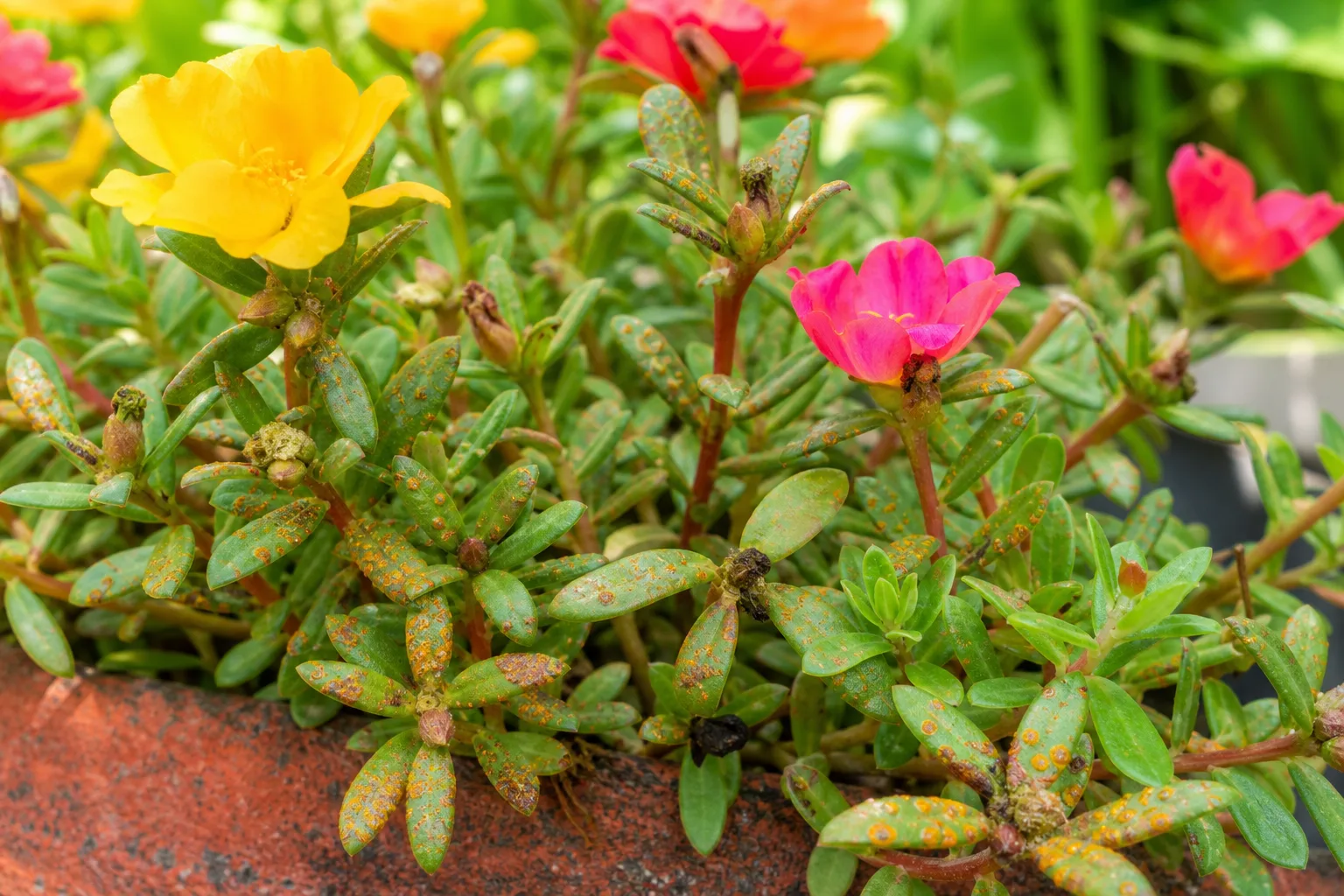
Rust Disease on Portulaca: Causes, Checks & Fixes
This guide covers rust disease on Portulaca. See also the general Rust Disease guide, watering, and light pages for this plant.
Rust Disease on Portulaca: Causes, Checks & Fixes
Quick answer
Rust disease on Portulaca (Portulaca grandiflora, Moss Rose) usually means white rust-raised chalky-white pustules on pale, wilting leaves in cool wet weather-not the orange powder typical of true rust fungi. First step: isolate the pot and remove infected leaves before pustules rupture and splash spores to neighbors.
Pale wilting without pustules may be thirst, shade stress, or soggy roots instead-start on the wilting guide or faded leaves guide before treating as infectious rust.
Moss Rose is built for hot, dry, full-sun culture. Rust problems appear when that pattern breaks: prolonged leaf wetness, crowded humid baskets, or cool overcast weeks that keep succulent foliage damp overnight. Full culture baseline lives on the portulaca overview.
Reviewed by LeafyPixels Review Board · Author: sai-ananth
When to use this page vs. sibling guides
| Symptom pattern | Best guide | Why |
|---|---|---|
| Chalky-white or orange pustules on leaves, powder on tissue rub | This page | Infectious rust specialty |
| Pale wilting without blisters, firm stems on dry soil | Wilting | Thirst or heat stress triage |
| Bleached, dull leaves without raised pustules | Faded leaves | Light or nitrogen stress |
| Mushy stems at base on sour wet mix | Overwatering | Root-zone failure, not foliar rust |
| Full sun and dry-down watering baseline | Light · Watering | Culture fixes that prevent rust |
What rust disease looks like on Portulaca
On Moss Rose, the disease gardeners call “rust” is most often white rust caused by the oomycete Wilsoniana portulacae (formerly Albugo portulacae). Affected plants thin out, wilt, and develop light-colored leaves with raised white or chalky blisters on upper or lower surfaces. Those blisters are pustules beneath the epidermis; when they rupture, they expose powdery white sporangia that splash to nearby plants.
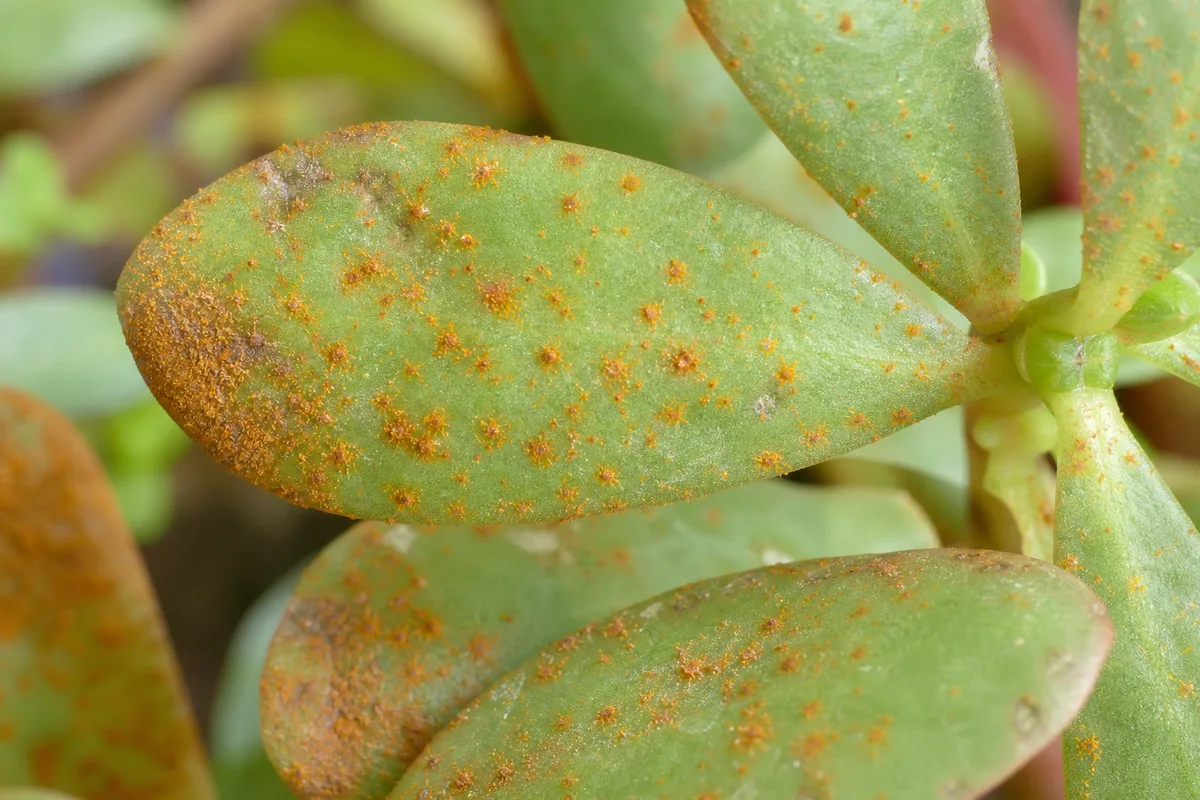
Rust Disease symptoms on Portulaca - compare with healthy tissue on the same plant.
True orange, yellow, or brown rust-powdery pustules typical of fungal rust in the Uredinales order-is less commonly reported on Moss Rose but follows the same general pattern: colored powder on leaf undersides, often with matching spots above, and spread when foliage stays wet.
In hanging baskets or dense terrace rows, white rust may hit half the plants in one container before the whole basket looks sparse. Flowers stop opening on heavily infected shoots because stressed tissue cannot support bloom-a useful clue that separates infectious decline from normal species-type closure on cloudy afternoons covered in the light guide.
White rust vs. edema vs. true rust vs. powdery mildew
| Sign | White rust (Wilsoniana) | Edema | True orange rust | Powdery mildew |
|---|---|---|---|---|
| Pustule color | Chalky white | Corky, same green as leaf | Orange, yellow, brown | White surface coating |
| Location | Blister under skin | Raised bump on surface | Often underside powder | Fuzzy white film on surface |
| Tissue rub test | White powder streak | No powder | Colored streak | Smears white growth |
| Spread to neighbor pots | Yes in wet trays | Usually no | Yes when leaves stay wet | Yes in stagnant humidity |
| Weather trigger | Cool, humid, wet nights | Overcast + wet soil | Leaf wetness | Crowded shade, poor airflow |
Why Portulaca gets rust disease
White rust is an oomycete, related to downy mildews and Pythium-not a true rust fungus. It thrives in cooler, wet conditions: overcast monsoon stretches, greenhouse benches with overhead mist, crowded baskets, and evenings when Moss Rose foliage dries too slowly.
Portulaca’s shallow roots and drought-tolerant stems normally limit disease, but wet leaves overnight override that advantage. Overhead watering, late-day spraying, and saucers that splash mix upward all keep the succulent leaf surface wet long enough for infection-see the watering guide for soil-level technique. Spores move by water splash and contact between trailing stems in tight plantings.
Hanging baskets outbreak faster than ground pots on terrace rails because trailing stems overlap, runoff drips from upper baskets onto lower leaves, and plastic saucers hold splash that rewets foliage even when the surface mix looks dry. During monsoon weeks, a single rupturing pustule on the lowest tier can seed every Moss Rose in the row within days.
True rust fungi also need a film of water on foliage to germinate and infect. Warm summer sun usually dries Moss Rose quickly on open terraces; rust pressure rises when humidity stays high and airflow is blocked by walls, other pots, or dense trailing growth.
Stress from brief shade or soggy mix does not cause rust by itself, but weakened leaves in stagnant air are easier targets once spores arrive on tools, splashed soil, or infected Portulaca weeds nearby.
How to confirm the cause
Work through these checks before spraying or repotting:
- Pustule color and texture - Chalky-white raised blisters that rupture to white powder point to white rust. Orange-yellow-brown powder on undersides suggests true rust.
- Tissue rub test - Gently rub a white tissue on pustules. Rust spores leave a colored powder streak; edema blisters do not.
- Leaf wetness history - Recent cool humid nights, greenhouse mist, or daily overhead watering strongly support rust over drought.
- Spread pattern - New spots on neighboring Moss Rose in the same wet basket confirm infectious disease, not isolated edema on one leaf.
- Wilting on moist soil - Pale wilting while mix is damp fits foliar infection; firm stems on dry soil suggest thirst-compare with wilting before assuming rust.
- Edema lookalike - Corky raised bumps from high internal water pressure during wet, humid, overcast weather can mimic white rust early; rupture with white spore release separates them.
If pustules are actively rupturing, treat as confirmed rust and isolate immediately.
First fix for Portulaca
Isolate the affected pot away from other Moss Rose, shared saucers, and runoff paths. Then remove every leaf showing active white or orange pustules with clean, alcohol-wiped shears. Bag clippings and discard in trash-not home compost on a terrace.
This single action comes before fungicide, repotting, or fertilizer. White rust spreads fast once sporangia release; stopping splash between pots matters more than any spray on day one.
Move surviving plants to the sunniest, airiest spot you have and switch to soil-level watering only until new growth stays clean for two weeks-details in the watering guide.
Step-by-step recovery
- Quarantine - Separate suspect baskets at least several feet from healthy stock.
- Prune infected foliage - Cut below spotted tissue; sterilize shears between pots.
- Dry the culture - Full direct sun per the light guide, wider spacing, and no evening wetting of leaves.
- Empty saucers - Prevent splash-back onto lower leaves after watering.
- Monitor neighbors - Inspect adjacent Moss Rose daily for pale leaves and new blisters.
- Discard if needed - When more than half the basket is thinned or pustules keep appearing on new tips, replace the planting rather than prolonging spread.
- Hold fertilizer - Do not feed until firm new growth returns without fresh pustules.
Recovery timeline
Early white rust on an isolated plant may stabilize in one to two weeks if rupturing stops and foliage dries each day in full sun. Spotted leaves do not heal-they are removed or die off. Expect two to four weeks before you can judge whether new trailing tips stay clean.
Heavy basket-wide infection rarely returns to full bloom the same season. Treat recovery as stopped spread plus clean new tips, not restoration of every old leaf.
True orange rust on individual leaves may halt after removal and dry culture within a similar window if humidity drops.
Lookalike symptoms
Edema produces raised corky bumps without powdery spores-common on Moss Rose during humid overcast weeks when roots take up water faster than leaves transpire. Powdery mildew coats leaves with white surface growth rather than blistered pustules beneath the skin. Botrytis gray mold favors cool wet flowers and soft brown tissue, not chalky white pustules. Overwatering rot shows soft dark stems at the base on sour wet mix-different from foliar rust spots; see overwatering when the crown is involved.
What not to do
Do not overhead-water to “wash rust off”-that splashes spores and keeps leaves wet longer. Do not mist diseased Moss Rose; humidity helps oomycete spread. Do not compost infected clippings near terrace pots. Do not apply heavy nitrogen fertilizer on stressed plants. Do not assume orange-rust fungicides alone fix white rust without drying foliage and removing infected tissue first-the pathogens are unrelated.
Wear gloves when handling diseased plants-Portulaca is toxic to cats and dogs because of soluble calcium oxalates. If a pet chews trimmings, call ASPCA Animal Poison Control at (888) 426-4435 or your veterinarian. Fuller toxicity detail lives on the portulaca overview.
When cultural control is not enough
If you have isolated, pruned, and dried foliage for two full weeks yet new pustules still appear on clean tips, escalation may help-but expectations stay modest.
The e-gro white-rust bulletin notes that no fungicides are labeled specifically for white rust (Wilsoniana, Albugo, Pustula) on ornamental crops. Because white rust is an oomycete related to downy mildews, products labeled for downy mildew may slow spread in greenhouse settings after sanitation-not as a substitute for removing infected leaves. Orange-rust fungicides target true fungi and should not be your first or only chemical choice.
On home terraces, repeated cultural failure usually means replace the basket and change placement rather than stacking sprays on a trailing annual. If you do spray, follow the label exactly, treat only after pruning, and keep pets away until foliage is dry.
How to prevent rust disease on Portulaca
Water at the soil line when mix is completely dry-rust fungi need moisture on leaf surfaces to start infection. Space terrace pots for airflow. Grow Moss Rose in full sun and sandy, fast-draining mix so leaves dry within hours of watering. Avoid evening overhead sprays during monsoon. Quarantine new baskets before mixing with older stock.
Weed purslane (Portulaca oleracea) in splash zones: Wilsoniana portulacae infects Portulaca species, and volunteer purslane near wet saucers can harbor spores that splash onto ornamental Moss Rose. Pull weeds from shared trays; do not rely on purslane as a harmless neighbor in humid monsoon rows.
Sanitize pruners between containers.
Practical checks
Urgency check
Urgent when white pustules are rupturing in crowded baskets or rust appears on multiple terrace pots after shared watering.
Best inspection order
Pustule color, tissue rub test, recent weather and watering method, spread to neighbors, stem firmness, then soil moisture.
Portulaca care cross-check
Rust on Moss Rose in open full sun with dry soil and soil-level watering is uncommon-recheck for edema after a cool wet spell or pest damage before treating as infectious rust.
When to worry - discard vs. retry
| Situation | Action |
|---|---|
| Under one-third of basket spotted; firm stems; no new pustules after 10–14 days dry culture | Retry - keep isolated, prune any fresh blisters, monitor neighbors |
| Half or more of basket thinned; pustules on new tips despite dry culture | Discard - replace planting; change saucer placement and watering path |
| Rust returns on replacement stock in the same wet corner | Change system - move pots, fix splash geometry, clear purslane; do not only swap stems |
| Only orange powder on a few lower leaves in dry open sun | Retry - prune affected leaves; true rust often halts when humidity drops |
Worry when more than half a basket thins within a week, new tips keep developing pustules despite dry culture, or rust returns on replacement plants in the same wet corner. At that point, change placement and watering technique-not just swap individual stems.
Related Portulaca guides
- Portulaca overview - full Moss Rose culture baseline
- Watering - soil-level dry-down rhythm
- Light - full sun requirements and closed-flower triage
- Wilting - pale wilt without pustules
- Faded leaves - bleached tissue without blisters
- Overwatering - mushy crown on wet mix