Plant Leaning on Portulaca: Causes, Checks & Fixes
Quick answer
Portulaca leans when trailing stems reach toward uneven light, when wet rot softens the base, or when a shallow basket lists under summer trailers. First step: pinch the stem at soil level-if firm, rotate to full sun; if soft on wet mix, stop watering and dry-repot.
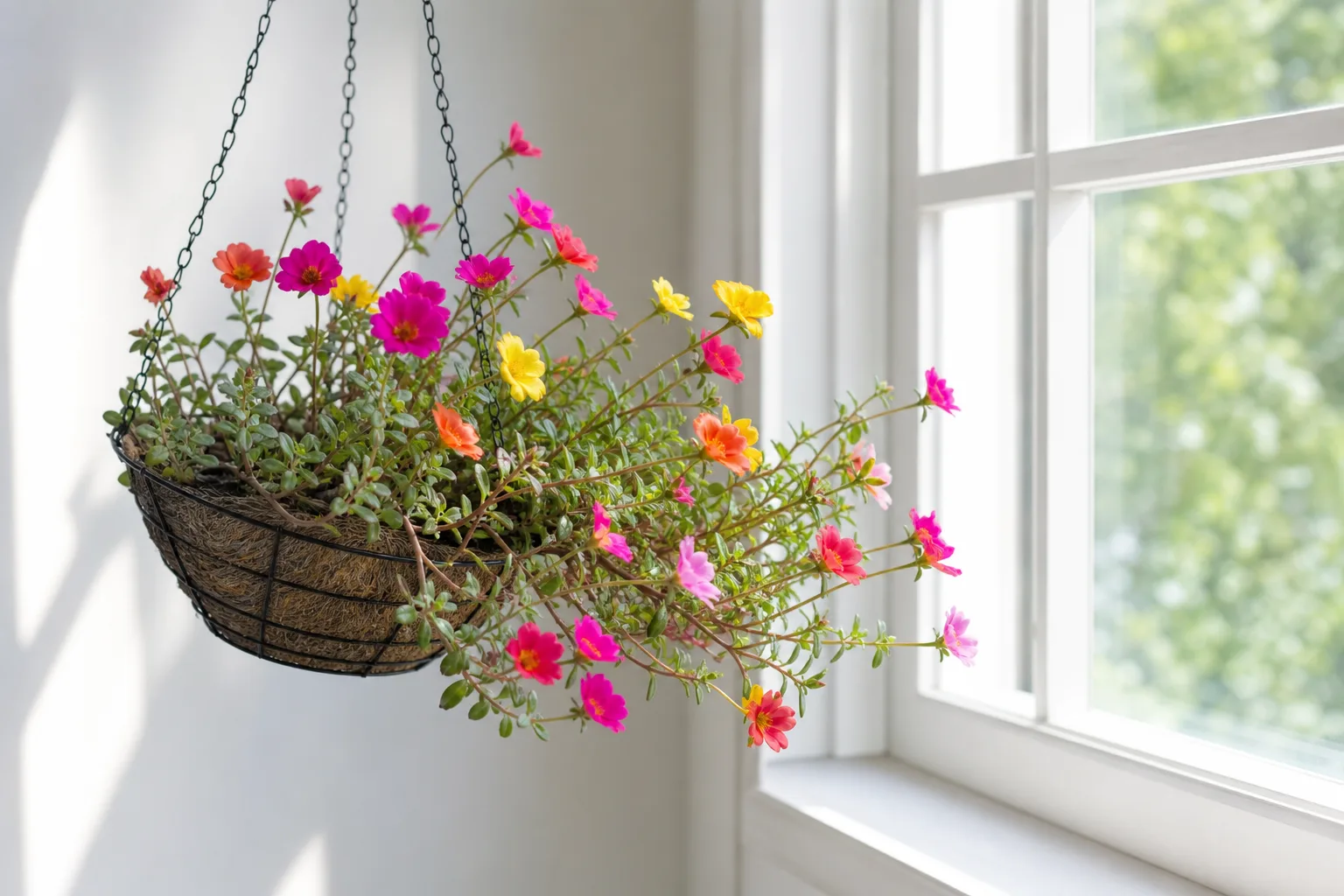
Plant Leaning on Portulaca: Causes, Checks & Fixes
This guide covers plant leaning on Portulaca. See also the general Plant Leaning guide, watering, and light pages for this plant.
Plant Leaning on Portulaca: Causes, Checks & Fixes
Quick answer
Your Moss Rose hanging basket tipped toward the afternoon sun side, or the whole mound collapsed after a rainy week in shade-the fix path splits on stem firmness at the soil line, not on how dramatic the tilt looks. Portulaca (Portulaca grandiflora) is a prostrate spreading succulent annual built for open ground; in pots and hanging baskets one-sided sun pulls the mat toward the brightest edge while shallow liners list when summer trailers outweigh the hook.
First step: pinch the stem at soil level. Firm and plump → rotate to full sun and stabilize the basket. Soft on wet mix → stop watering and follow the dry-repot sequence below. Closed flowers on cloudy days are normal-not a lean symptom.
Scope on this site: This page owns pot tilt, whole-mound direction, and basket tip on Portulaca. For long internode stretch without dramatic pot rock, see leggy growth. For wet-soil weakness before collapse, see overwatering and root rot.
Firm base vs. soft base - the Moss Rose lean decision fork
Most terrace calls resolve here before you repot, prune, or stake:
| Base stem at soil line | Soil / pot feel | Lean pattern | Most likely cause | First move |
|---|---|---|---|---|
| Firm, dry-succulent | Light when dry; no sour smell | Whole mound or basket tilts toward brightest edge | Phototropism ± trailing weight | Rotate weekly; stabilize hanger |
| Firm, dry-succulent | Normal moisture; basket rocks on hook | Pot tips as trailers lengthen; stems still green | Top-heavy basket leverage | Redistribute vines; wider hook or stake |
| Soft, mushy | Wet heavy pot; sour smell possible | Sudden flop; yellow translucent stems | Crown or root rot | Stop water; dry-repot → root rot |
| Firm but limp midday | Bone-dry mix | Temporary lean; recovers by evening | Heat limpness / drought | See drooping leaves - not structural lean |
Do not stake a soft rotting base-fix roots first when the bottom row matches.
Lean vs. leggy vs. rot flop on Portulaca
All three can share insufficient sun, but search intent differs:
| Your main worry | Start here | Also check |
|---|---|---|
| Basket or pot tips; mound leans toward one sun edge | This page - tilt and phototropism | Light guide for placement |
| Long gaps between leaf clusters; sparse runners | Leggy growth - internode morphology | This page if the pot also lists |
| Soft base, wet mix, sour smell, sudden collapse | Root rot - crown rescue | Overwatering for early wet habit |
| Limp stems all around, not directional reach | Drooping leaves - turgor loss | Drought vs rot fork |
| Flowers closed on sunny afternoon only | Not enough light - marginal sun | Flower test below |
Improving full sun (6+ hours of direct light) and rotation fixes most firm-base lean cases. Prune long trailers after light is corrected, not before.
What plant leaning looks like on Portulaca
Gradual tilt of the whole mound or basket toward a window, railing, or sunniest terrace edge. Trailing runners may all point one direction while the base stays firm-classic phototropism on a low mat-forming succulent.
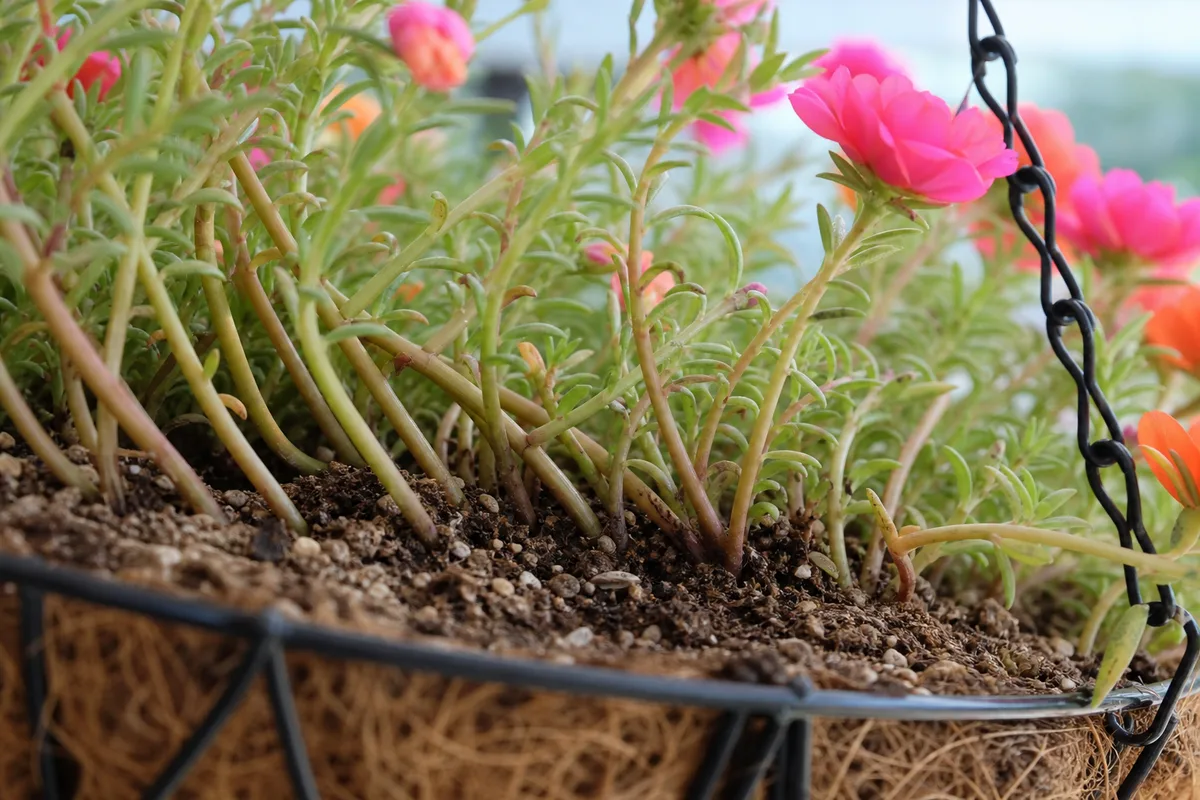
Plant Leaning symptoms on Portulaca - compare with healthy tissue on the same plant.
Basket tip when long cascades outweigh a small plastic hanger is common in summer even when stems are healthy. Shallow basket depth fails faster than ground-planted Moss Rose that self-spreads without listing-the center of gravity sits above a narrow soil column.
Sudden flop with yellow soft stems and wet mix means structural failure from rot in poorly drained soil, not light alone.
Wind push on exposed rails can angle trailers temporarily. Firm bases recover after repositioning; soft bases do not.
Closed flowers on cloudy days are normal. Flowers open in bright sunlight and close at night or in shade-the midday flower test on a clear day separates marginal sun (buds stay shut at noon) from normal cloudy-day closure.
Why Portulaca leans
Uneven light and phototropism
Uneven light is the most common cause on containers. Moss Rose needs unobstructed full sun at the pot surface, not only on shoot tips peeking over a railing. Stems and flower heads orient toward the brightest source-especially visible on balconies where only one side gets afternoon sun. Too little light produces weak stretch that worsens directional lean over time.
Trailing weight in hanging baskets
As stems lengthen, trailer mass shifts the center of gravity. Lightweight coco liners, narrow S-hooks, and 20 cm plastic bowls that looked fine in May often list by July when runners cascade 30 cm on one side. Healthy tissue can still tip the display-this is mechanical balance, not disease.
Root rot from overwatering in shade
Moss Rose is built for hot, dry, sunny conditions, not soggy mix in dim corners. Overwatering in shade softens the crown; damaged roots cannot anchor fleshy stems and the plant falls toward the heavy side or collapses outright. See overwatering on Portulaca when wet habit precedes tilt.
Wind on exposed rails
Brief gusts push trailing stems to one side. Re-center firm plants after storms; do not confuse temporary angle with rot.
How to confirm the cause (5-clue checklist)
- Base firmness - Pinch the stem at soil level. Hard and plump suggests light or weight; mushy suggests rot.
- Lean direction - Toward the brightest exposure points to phototropism.
- Soil moisture - Wet heavy pot plus soft stem confirms rot over simple lean.
- Basket balance - Does the hanger tilt as trailers lengthen on one rim?
- Flower test - On a clear day, do blooms open at midday in current light? Persistent closure in bright weather may mean marginal sun driving stretch-cross-check not enough light.
Phototropism vs. basket weight vs. rot collapse
| Pattern | Stem feel | Soil / pot | Flower at noon (clear sky) | Urgency | First move |
|---|---|---|---|---|---|
| Phototropic lean | Firm; tips track one edge | Normal; pot may be level | May be closed if sun marginal | Routine | Rotate toward full sun |
| Basket weight tip | Firm; pot rocks on hook | Normal; shallow liner | Often open if sun OK | Soon - before fall | Redistribute trailers; upgrade hook |
| Rot flop | Soft at base; limp collapse | Wet, heavy; sour possible | Closed even in sun | Same day | Stop water; dry-repot |
First fix for Portulaca
Firm base: Move the pot to the sunniest spot available, rotate weekly for even exposure, and trim or pinch the longest trailers if a basket lists. Loop a short bamboo stake loosely through the crown-never tight enough to bruise fleshy succulent tissue-until new growth fills in. Upgrade to a wider hook or slightly deeper pot if the liner chronically tips.
Soft base on wet soil: Stop watering immediately. Do not stake, fertilize, or heavily prune on day one. Follow the numbered recovery below.
Make one correction first-do not repot, prune hard, and fertilize the same day.
Step-by-step recovery for soft-base lean (rot rescue)
When the firm-vs-soft fork points to rot, work through this sequence-expanded from the root rot guide for lean-specific collapse:
- Stop all watering - Lift the pot out of any saucer holding runoff.
- Unpot gently - Moss Rose does not transplant well; shake off wet soil without yanking fleshy stems.
- Inspect roots - Pale firm roots are healthy; brown mushy roots confirm rot. Trim mushy tissue with clean scissors.
- Air-dry trimmed roots - 2–4 hours in shade before repotting.
- Repot into dry gritty mix - Sandy, fast-draining blend per the soil guide; crown at the same depth as before.
- Place in full sun with open drainage - Excellent drainage and full sun dry the zone faster than shade.
- Wait for dry-down - Do not water again until mix is fully dry throughout (often 5–7 days in strong sun).
- Wear gloves when trimming - Portulaca is toxic to cats and dogs; keep mushy trimmings away from pets.
If more than half the root mass was mushy or the crown continues to soften after dry repot, treat the plant as a seasonal loss and start fresh stock next warm season-see the portulaca overview for replacement timing.
Recovery timeline
Phototropic lean improves as new tips grow toward even light over one to two weeks after rotation. Old angled stems keep their direction until pinched back per the pruning guide.
Rot-related collapse may take two to three weeks to show new firm growth if enough roots remain. Severe crown rot often means replacing the annual rather than expecting the mound to stand upright again.
Case snapshot (terrace basket, June): A 30 cm hanging basket on a west rail listed toward the afternoon gap; base stems stayed firm, mix was dry, and midday blooms opened after rotation. Weekly quarter-turns plus pinching two longest trailers rebalanced the hook within 10 days-new tips grew evenly rather than old curved runners straightening.
Lookalike symptoms to rule out
Leggy stretch produces long sparse stems but the base may still be firm-fix with more sun and pinching on the leggy growth page, not rot rescue alone.
Normal trailing cascade over a basket rim is decorative draping, not instability, unless the whole pot tips.
Midday heat limpness on very dry pots can look like lean but stems firm up after watering in sun-see drooping leaves and the watering guide.
Shaded wet mix chronic lean often combines rot plus insufficient light-address drainage, sun, and moisture together, not rotation alone.
What not to do
Do not water a leaning plant when soil is already wet-that deepens rot. Do not assume Moss Rose tolerates shade; marginal light produces weak stretch and worsens lean. Do not tie stems so tightly that fleshy tissue cuts or bruises in heat. Do not stack fertilizer on a stressed leaning plant before you identify cause. Do not repot into standard garden soil or block drainage holes expecting stability.
How to prevent plant leaning on Portulaca
Site Moss Rose where full sun is realistic all day at the pot, not under eaves that shade the soil while tips catch late rays. Rotate containers weekly. Use stable baskets with drainage and proportionate depth for trailing spread-match hook rating to wet soil weight. Water only when completely dry per the watering guide. Pinch tips after transplanting to keep cascades compact before they overbalance small liners.
For chronic basket tip on firm plants, upgrade hanger width, shift to a heavier terracotta liner, or repot into a slightly deeper container before stake-only stabilization stops working.
When to worry
Cosmetic gradual lean toward light on firm Moss Rose stems is a placement issue first. Escalate when:
- Lean accelerates on wet soil with mushy base tissue within 48 hours of stopping water
- Sour smell rises when you lift the pot
- The basket falls from the hook-stabilize before injury to the plant or railing
- No improvement in balance after two weeks of full sun, rotation, and dry-down on a firm-base case-reinspect roots
- Collapse spreads from the base while mix stays heavy-pivot to root rot rescue
Contact your local cooperative extension office if lean persists after corrected sun, drainage, and watering on an otherwise firm plant-unusual crown diseases are rare on Moss Rose but worth ruling out on valuable mixed baskets.
When to use this page vs other Portulaca guides
- Portulaca watering guide - Use for routine moisture checks before assuming plant leaning is the main issue.
- Portulaca problems hub - Browse all 50 common issues on this species.