Poor Root Growth on Portulaca: Causes, Checks & Fixes
Quick answer
Poor root growth on Portulaca usually means a sparse shallow root mat in soil that stays wet or cool too long. First step: Move to full direct sun, stop watering until the mix is bone-dry, then unpot and repot into fresh sandy gritty mix sized to the root mass.
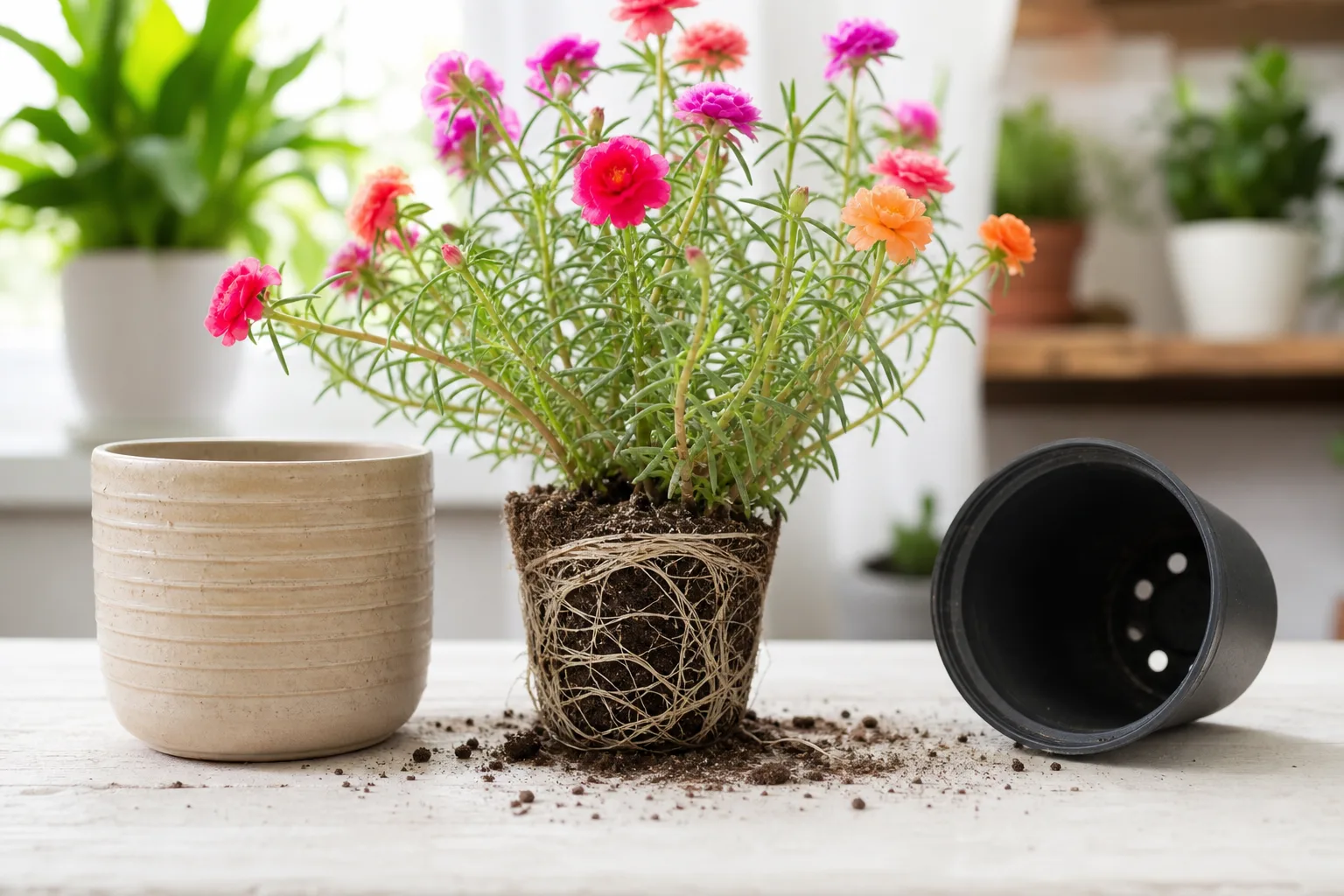
Poor Root Growth on Portulaca: Causes, Checks & Fixes
This guide covers poor root growth on Portulaca. See also the general Poor Root Growth guide, watering, and light pages for this plant.
Poor Root Growth on Portulaca: Causes, Checks & Fixes
Quick answer
Poor root growth on Portulaca (Portulaca grandiflora, Moss Rose) usually means a sparse shallow root mat in soil that stays wet or cool too long. First step: move to full direct sun, stop watering until the mix is bone-dry, then unpot and repot into fresh sandy gritty mix sized to the root mass.
Scope of this page: Use this guide for root underdevelopment and slow horizontal spread-thin pale mats, nursery plug circling, and pots that feel light for their size despite warm weather. If roots are mostly mushy with sour smell and no handling event, start on the dedicated root rot guide instead. For early wet-soil triage before you unpot, see overwatering. For miniature top growth with healthy roots when inspected, see stunted growth. For repot trauma or broken roots after transplant, see damaged roots.
Moss Rose forms a shallow fibrous root system from a low central crown. Roots spread horizontally rather than deep, so they depend on oxygen between drinks and warm soil to push new white tips. When mix stays damp in shade or dense peat, fine roots stall or die back before the plant can spread.
Reviewed by LeafyPixels Review Board · Author: sai-ananth
When to use this page vs. sibling guides
| Symptom pattern | Best guide | Why |
|---|---|---|
| Thin pale mat, slow spread, plug still circling, pot light for size | This page | Root underdevelopment specialty |
| Mushy roots, sour smell, wet-soil wilt with no recent repot | Root rot | Confirmed decay rescue |
| Chronic heavy wet pot, early moisture habit | Overwatering | Watering rhythm before roots fail |
| Small top size but firm roots when unpotting | Stunted growth | Top-size failure, not root mat stall |
| Wilt or stall within days of repotting | Damaged roots | Mechanical / repot-trauma specialty |
| Oversized tub holding wet soil around tiny root ball | Pot too large | Container sizing stall |
| Full gentle-repot protocol and timing | Repotting guide | Step-by-step transplant care |
If unsure, unpot first: firm sparse pale roots with slow spread point here; black mushy tissue across most of the mat points to root rot.
What poor root growth looks like on Portulaca
Above soil, the plant spreads slowly or stalls for weeks despite warm weather. New shoots stay short, flowers open late or not at all on sunny days, and trailing stems may look thin rather than forming a dense mat. The pot can feel oddly light for its size when roots never filled the volume-a hallmark of shallow horizontal roots that never colonized the container.
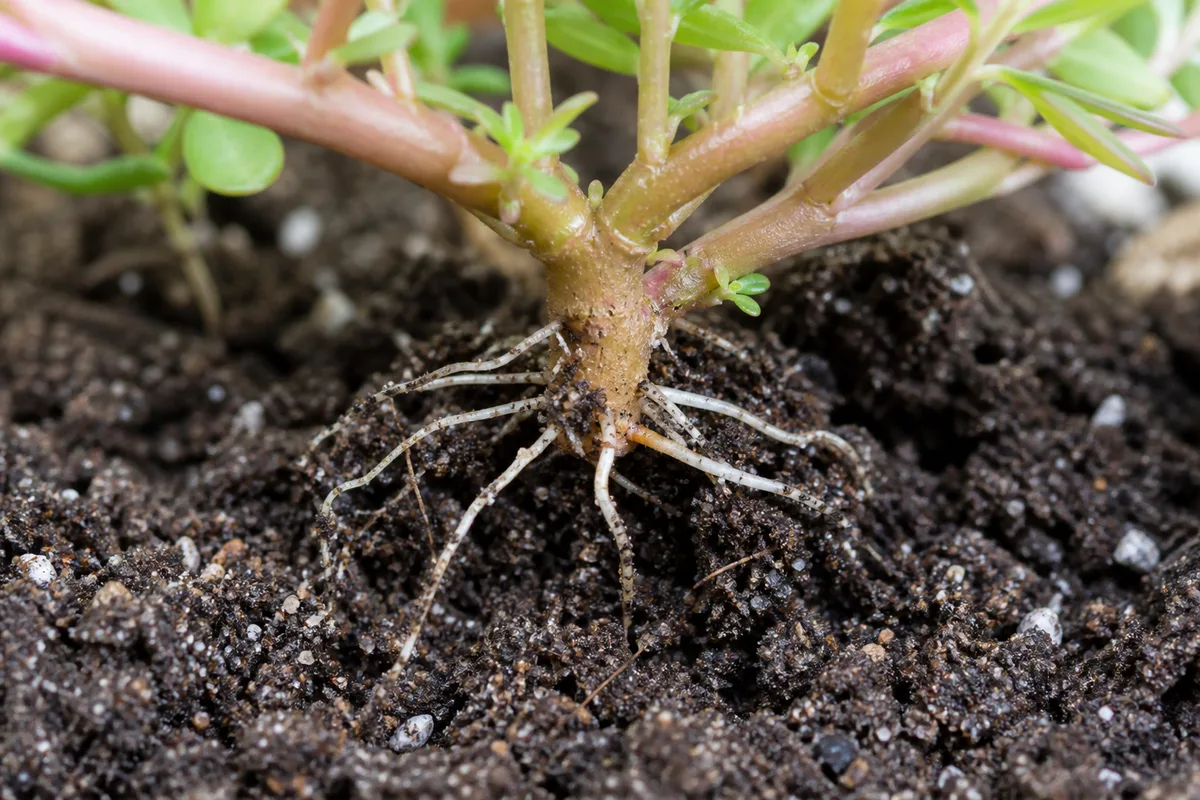
Poor Root Growth symptoms on Portulaca - compare with healthy tissue on the same plant.
Unpotting tells the story: instead of a web of firm pale roots, you see a thin mat with few active tips, sometimes still circling a small plug from nursery sowing. Roots may be brown at the edges but still firm-not the black mush of active rot. In heavy clay or collapsed peat, the root zone smells flat or sour even before full rot sets in.
Severity ladder
| Severity | Root picture | Stem base | Realistic outcome |
|---|---|---|---|
| Mild underdevelopment | Sparse but firm pale mat; a few white tips | Firm reddish stems | New spread in 1–2 weeks after gritty repot and full sun |
| Moderate plug stall | Thin circling mat on original plug; mix wet at bottom | Firm; flowers closed on sunny afternoons | 2–4 weeks to reliable flowering after right-sized gritty repot |
| Severe sparse mat | Almost no white tips; less than one-third healthy tissue | Still firm but no new runners | Replace from seed or stem cuttings same day |
| Rot overlap | Mix of firm pale and black mush | Softening at soil line | Escalate to root rot rescue-do not treat as simple stall |
Judge success by new white root tips and firm spreading stems, not by old yellow lower leaves-they rarely revert to perfect color.
Why Portulaca gets poor root growth
Moss Rose evolved for lean, sandy, gravelly ground in full sun. Hard clay or dense peat-heavy potting mix physically limits how far shallow roots can expand and how fast water drains. Poorly drained soils may lead to crown rot when fine roots suffocate before they spread.
Oversized containers hold a large wet soil mass around a small root ball-see pot too large when the tub dwarfs the root mass. Portulaca tolerates drought better than chronic wetness; roots need air at the root zone between waterings per the watering guide. Cool spring planting before soil warms also stalls root activity; Moss Rose is frost tender and waits for heat before spreading aggressively.
Insufficient direct sun slows the whole system. In dim balconies, pots dry slowly, metabolism stays low, and roots produce few new tips even if you water sparingly. Moss Rose needs full sun (6 or more hours of direct sunlight daily)-compare light placement on the light guide before blaming roots alone.
Proven Winners notes portulaca is shallow rooted, making plants prone to rot if overwatered and prone to development stall when mix stays damp in shade. Portulaca is not a heavy feeder-extremely depleted mix is less common than drainage and light failures, but chronic starvation in pure sand without any organic matter can leave plants pale and root-poor.
Seedlings started indoors in peat plugs sometimes never outgrow a tiny root ball after transplant if handled roughly or moved to wet rich mix. Moss Rose does not take well to transplanting; care should be given when handling seedlings per the repotting guide.
Hanging baskets vs. terrace pots
In hanging baskets, shallow roots dry faster on all sides but saucers and overhead watering during monsoon can keep the core wet while the rim looks dry-roots stall in the damp center. On terrace pots, plastic tubs hold moisture longer than terracotta; a light-feeling large pot with sparse roots often means the plant never colonized the wet lower half. Both setups need sandy fast-draining mix and full sun so the entire root zone dries predictably between drinks.
How to confirm the cause
Work through these checks before stacking repot, fertilizer, and pruning on the same day:
- Root mass - Unpot gently; count white firm tips vs. a sparse circling mat still on the original plug.
- Soil texture - Sandy grit vs. sticky clay or waterlogged peat at the bottom per the soil guide.
- Pot weight - Heavy and wet many days after one drink points to mix failure or oversized pot, not drought.
- Sun and temperature - Less than six hours of direct sun or cool nights below roughly 15°C (60°F) limit root expansion.
- Smell and color - Sour odor and black mush mean rot overlap-route to root rot; firm tan roots with slow spread mean underdevelopment.
- Season timing - Recently transplanted Moss Rose often pauses briefly-allow one warm week in full sun before deciding roots failed.
Compare poor root growth with lookalikes
| Signal | Poor root growth | Root rot | Stunted growth | Damaged roots | Underwatering |
|---|---|---|---|---|---|
| Root texture | Firm but sparse; few white tips | Brown, mushy, slippery | Firm when checked | Broken or bruised after handling | Firm; mix bone dry throughout |
| Soil smell | Flat or musty | Sour or swampy | Neutral | Sour if wet overlap | Dusty dry |
| Pot weight | Light for pot size; or heavy with damp unused mix | Heavy days after watering | Moderate | Variable after repot | Very light |
| Flowers | Closed on sunny afternoons | Closed; stems soft | Small but may open in sun | Closed after recent repot | Midday wilt that resolves after one drink |
| First move | Gritty repot sized to roots; full sun | Stop water; trim mush | Upgrade light; check feeding | Gentle repot; keep soil on roots | One thorough soak |
First fix for Portulaca
Move the pot to full direct sun and stop watering until the mix is completely dry at depth. Moss Rose stores water in fleshy stems, so top growth can look alive while roots stay stagnant in wet substrate.
Once dry, gently unpot and inspect. If roots are sparse but firm and pale, repot into fresh dry gritty mix per the soil guide-roughly 40% potting mix, 40% coarse sand or perlite, and 20% fine gravel-in a pot sized to the root mass, not the desired mature spread. Set the crown just above the mix line. Wait several days before the first light drink unless full sun bakes the surface dry sooner.
Make this one change first. Do not fertilize, pinch heavily, or repot again within the same month unless rot forces it.
Step-by-step recovery
- Relocate to the sunniest warm spot available-six or more hours of direct sunlight daily.
- Let soil dry fully; lift the pot to confirm weight loss before any repot work.
- Unpot with soil clinging to shallow roots; avoid bare-rooting unless inspecting rot.
- Trim only black mushy tissue; leave firm pale roots intact.
- Repot into open sandy mix at the same depth; ensure drainage holes flow freely.
- Hold fertilizer until new firm tips and buds appear.
- If the main plant stays stunted but stems are firm, take 5–8 cm stem cuttings and press into dry sandy mix-broken pieces will root if the soil is moist enough after the initial dry period. Iowa State Extension lists moss rose among annuals propagated from stem cuttings-full protocol on the propagation guide.
Recovery timeline
Seedlings with almost no root mass may never catch up in one season-replacing from seed in warm weather is often faster. Established plants with some healthy roots typically show new spread within one to two weeks after repotting into grit and full sun. Flower opening may take two to four weeks if growth was stalled for a month in wet shade.
Judge recovery by new white root tips and firm spreading stems, not by old yellow lower leaves-they rarely revert to perfect color.
Mistakes to avoid
Do not keep watering lightly on a schedule when soil stays damp-roots need dry cycles to breathe and grow. Do not upsize to a large decorative pot hoping the plant will “grow into it”; excess wet soil stalls shallow roots-see pot too large. Do not use rich compost or garden clay in containers. Do not fertilize heavily to force roots that are suffocating in anaerobic mix.
Wear gloves when handling-Portulaca is toxic to cats and dogs because of soluble calcium oxalates. If a pet chews trimmings or soil, call ASPCA Animal Poison Control at (888) 426-4435 or your veterinarian. See the portulaca overview for fuller toxicity detail.
How to prevent poor root growth on Portulaca
Sow or transplant after frost when soil is warmed; thin seedlings so each has space for horizontal spread. Use sandy fast-draining mix, right-sized pots, and full sun so the root zone dries predictably. Refresh substrate each season rather than reusing collapsed peat. Water only when soil is completely dry per the watering guide. For terrace pots, lean gritty mix beats rich moisture-retentive blends every time.
Practical checks
Urgency check
Act promptly if stems soften at the base, roots turn mushy, or wilting persists on wet soil-that is rot escalation on the root rot guide, not slow development alone.
Best inspection order
Sun hours and temperature, pot weight, soil dryness at depth, smell at drainage holes, then gentle unpot for root tip color and density.
Portulaca care cross-check
Moss Rose wants full sun and well-drained sandy or rocky soil. If roots stay sparse after fixing mix and light, confirm you are not planting in cool weather, keeping saucers full of standing water, or using an oversized pot. Cross-check light, watering, and repotting guides before re-searching.
Related Portulaca problems
- Portulaca overview - species context, purslane confusion, and seasonal planting
- Root rot - mushy decay rescue when wet soil has already turned roots slippery
- Overwatering - moisture habit triage before roots fail
- Stunted growth - top-size failure when roots look healthy on inspection
- Damaged roots - repot trauma and broken shallow roots
- Pot too large - oversized wet-soil stall around a small root ball
- Propagation - stem-cutting backup when the parent root mass is too sparse