Low Humidity on Portulaca: Causes, Checks & Fixes
Quick answer
Low humidity rarely hurts Portulaca-it prefers dry air and heat. If leaves look stressed in dry weather, check underwatering, salt burn, or mites before raising humidity.
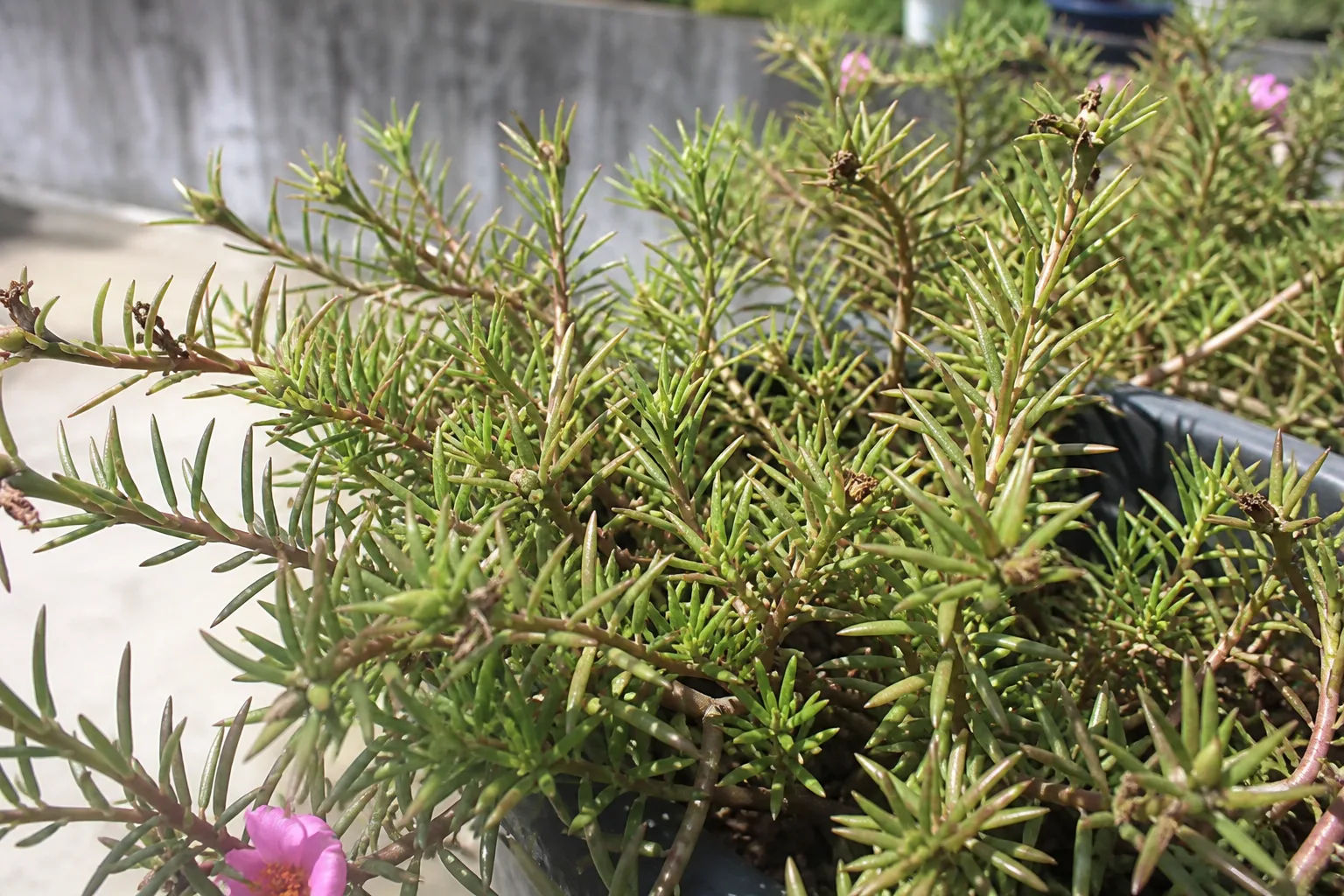
Low Humidity on Portulaca: Causes, Checks & Fixes
This guide covers low humidity on Portulaca. See also the general Low Humidity guide, watering, and light pages for this plant.
Low Humidity on Portulaca: Causes, Checks & Fixes
Quick answer
Moss Rose is built for dry heat-do not mist or humidify. Low humidity rarely hurts Portulaca (Portulaca grandiflora, Moss Rose). This hot, dry weather annual has high drought and heat tolerance and fleshy, succulent leaves and stems that store water through scorching terrace summers. Treating it like a humidity-loving fern leads to overwatering-not healthier leaves.
If Moss Rose looks stressed in dry weather, the failure mode is almost never atmospheric humidity below 40%. Check underwatering in small pots, salt buildup, spider mites in hot dust, or rot from compensatory overwatering before buying a humidifier.
First step: Lift the pot and probe soil at 2–3 cm depth. If the mix is bone-dry and the pot feels light, water deeply until runoff drains-then wait for full dry-down before the next soak per the portulaca watering guide. Do not mist, add pebble trays, or group Moss Rose with ferns in shaded wet corners.
Scope of this page: Dry-air reframing-ambient low humidity is usually fine; drought, salts, or mites are not. For the opposite problem (humid air plus slow-drying soil), open high humidity on Portulaca. For calendar overwatering after misting, see overwatering. For mushy stems on wet mix, use root rot.
Why “low humidity” gets blamed on Portulaca - and when dry air is actually fine
Indoor-plant advice often assumes every houseplant needs misting and 50–60% room humidity. Moss Rose is an outdoor drought tolerant annual native to hot, dry regions of South America. NC State lists drought and heat among its resistance challenges-not low humidity.
When dry air is genuinely fine: Moss Rose in full sun (six or more hours of direct light) on an open balcony, rock wall, or in-ground bed thrives through heat waves with hygrometers reading 25–35%. A 15 cm hanging basket on a south-facing rail in July is doing what this plant evolved for-not gasping for a humidifier.
When “dry air” complaints appear: Crispy tips, midday limpness, or dull leaves on a dry terrace usually trace to underwatering in shallow containers, salt crust on pot rims, or spider mites in dusty heat-not the air moisture reading. Indoor windowsill Moss Rose in a heated dry room can look limp for the same drought reasons; raising room humidity still will not replace a deep soak when soil is bone-dry.
Houseplant culture trap: A grower sees brown tips on trailing Moss Rose, searches “low humidity,” and starts misting daily. Wet foliage plus already-damp mix invites crown rot in poorly drained conditions-the opposite of the fix. Compare the brown tips guide when tips burn from multiple causes, not humidity alone.
What symptoms people confuse with low humidity
Low-humidity misdiagnosis on Moss Rose shows up as drought or pest patterns on dry soil-not the moisture-trapping damage covered in the high humidity guide.
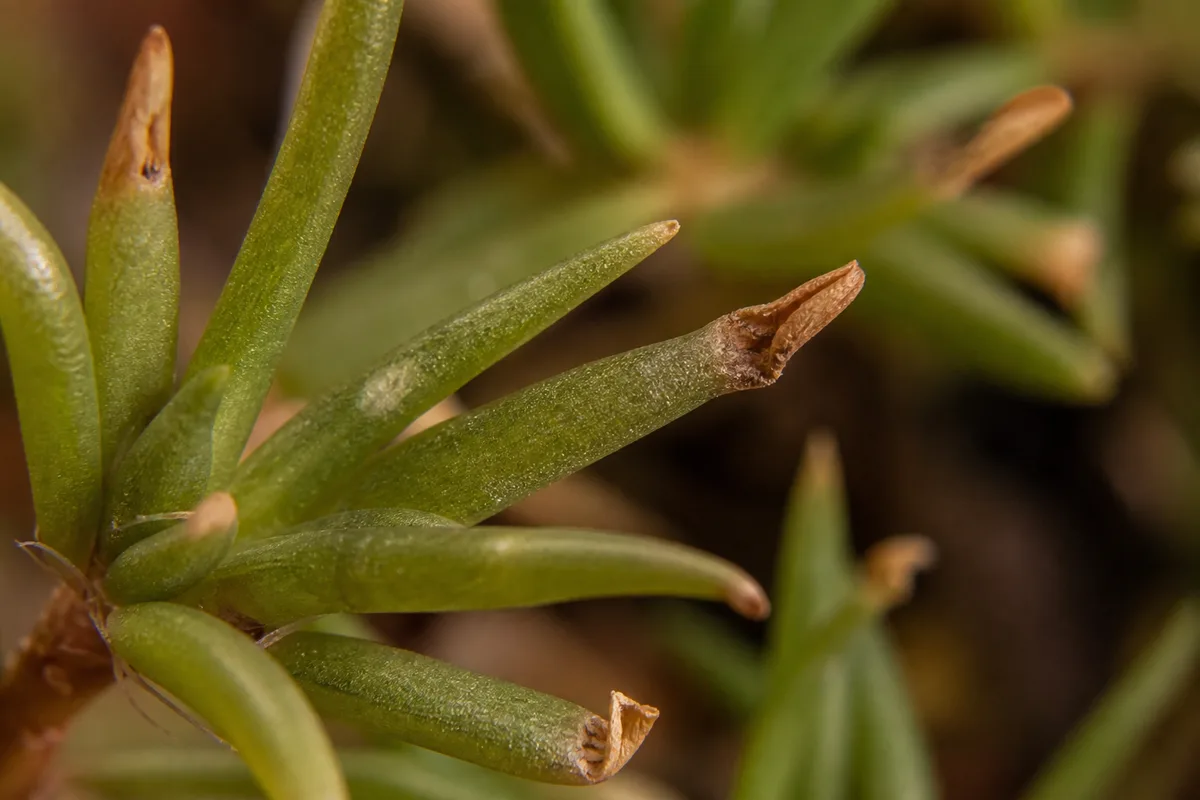
Low Humidity symptoms on Portulaca - compare with healthy tissue on the same plant.
Outer trailer limpness at midday:
- Outer stems droop while the crown still looks firm-classic underwatering in a light, dry hanging basket
- Recovers within hours after a deep soak if stems were firm before watering
- Not fixed by misting-only by restoring the dry-down watering rhythm
Brown tips on older outer leaves:
- Crispy margins on sun-exposed trailers during heat waves-often drought or fertilizer salt buildup, not dry air
- White crust on pot rims points to salts; flush or repot into gritty mix from the soil guide
Dull, stippled foliage in hot dust:
- Fine pale dots and webbing on dusty terrace Moss Rose-spider mites thrive in hot, dry, dusty conditions
- Water-stressed plants are more susceptible-drought and mites overlap, but a humidifier does not rinse dust or dislodge mites
Soft stems on wet soil after “fixing” dry air:
- Overwatering to compensate for dry air causes mushy bases-escalate to root rot, not higher humidity
How to confirm the real cause (numbered inspection workflow)
Run these checks in order before raising humidity:
- Pot weight and soil at depth - Lift the pot. Light weight plus dry mix at 2–3 cm depth means drought, not humidity stress. Heavy wet mix after misting points to overwatering compensation-see overwatering.
- Stem firmness - Push foliage aside at the soil line. Firm stems on dry mix confirm underwatering; soft spongy tissue on wet mix confirms rot risk-not low humidity.
- Tip pattern and salt crust - Brown only on oldest outer tips with white rim crust suggests salts-open fertilizer burn or flush protocol below. Even tip burn across new growth needs a different branch.
- Mite signs in dust - Hold a leaf over white paper and tap; stippling, moving specks, or fine webbing on undersides in hot dusty corners confirms spider mites-not atmospheric humidity.
- Sun and container context - Small hanging baskets dry in hours on full-sun rails; large bowls in partial shade hold moisture longer. Moss Rose needs well-drained sandy or rocky soils in full sun-shade plus drought looks like “dry air stress” but is really light plus underwatering.
- Hygrometer reading (last) - Room humidity below 40% on a sunny open terrace is normal for Moss Rose. A hygrometer alone cannot diagnose a stressed pot-soil dryness and stem firmness come first.
Symptom lookalike comparison
| What you see | Soil | Stems | More likely cause |
|---|---|---|---|
| Midday limp outer trailers | Bone-dry | Firm | Underwatering-not low humidity |
| Brown tips on oldest leaves | Dry; white rim crust | Firm | Fertilizer burn / salt flush needed |
| Fine stippling, webbing in hot dust | Dry | Firm | Spider mites |
| Yellow soft bases, sour smell | Wet days | Mushy | Root rot after misting or overwatering |
| Closed flowers on overcast day | Any | Firm | Normal-blooms reopen in sun |
Not low-humidity stress = bone-dry soil + firm stems in full sun on an open terrace → Moss Rose is fine; no humidifier needed.
The first fix for Portulaca
Do not add humidity trays, pebble dishes, or daily misting. Wet foliage overnight on a succulent annual invites rot when mix stays damp. Portulaca prefers dry to moderately moist, well-drained soils-in a terrace pot, that means full dry-down cycles, not constant dampness from mist.
If soil is bone-dry and stems are firm: Water deeply until runoff drains, empty the saucer, and wait until the mix is dry at 2–3 cm depth before the next drink-use the watering guide finger test, not a hygrometer.
If white salt crust is present: Pause fertilizer, scrape crust from the rim, and run two slow flushes with plain water until runoff runs clear-then resume dry-down watering only.
If stippling and webbing confirm mites: Rinse undersides with a firm water stream in early morning; repeat every two to three days while hot and dusty-full protocol in spider mites on Portulaca.
If stems are soft on wet soil after misting: Stop all water, move to full sun with airflow, and open root rot rescue if softness spreads.
Step-by-step recovery by cause
Once you have stopped misting and identified the branch:
- Drought limpness - Deep soak until runoff; empty saucer; check recovery within 4–8 hours on firm stems. Small baskets may need daily dry-down checks in heat waves.
- Salt tip burn - Flush twice with plain water; hold fertilizer four weeks; trim fully dead tips only-old burn does not re-green.
- Spider mites - Isolate if possible; rinse undersides every two to three mornings; treat with insecticidal soap only if rinsing fails after one week-see spider mites guide.
- Rot from overwatering compensation - Withhold water; improve sun and airflow; unpot only if stems stay soft after five dry days-root rot steps apply.
Grower observation: A 15 cm Moss Rose hanging basket on a hot dry terrace read 28% humidity at midday-outer trailers limp, pot weight feather-light, soil dry at 3 cm. Deep evening soak, saucer emptied. Trailers perked within five hours; no humidifier used. A second basket on the same rail received daily misting for “dry air”-soil stayed damp, stem bases softened by day six. Humidity did not save the stressed plant; dry-down watering did.
Damaged leaf tips do not re-green. Judge recovery by firm stems, new flower buds opening on sunny days, and no spreading stippling.
Recovery timeline
Drought limpness (firm stems, dry soil): Visible perk within hours after a deep soak; full turgidity often returns the same evening in heat.
Salt tip burn: Flush effects show on new growth within one to two weeks; old crispy tips remain until trimmed or replaced by growth.
Spider mites: Rinsing reduces active mites within days; full clearance often takes two weeks of repeated washes in hot weather-see spider mites for escalation.
Rot from misting/overwatering: Firmness may return after one dry week if crowns are intact; spongy collapse can advance within days-do not wait on a humidifier.
Signs of improvement: Heavier pot after watering then predictable light weight before the next soak; firm stem bases; flowers opening on sunny afternoons; no new stippling after rinses.
Signs of worsening: Limpness on wet soil; spreading softness; stippling climbing to new growth despite rinsing-escalate to root rot or mite treatment, not higher humidity.
What not to do
Do not mist Moss Rose daily for humidity. Do not buy a humidifier as the first response for outdoor terrace Moss Rose in a heat wave. Do not group it with humidity-loving plants in shaded, wet corners. Do not overwater to compensate for dry air-that causes root rot in saturated mix. Do not repot, fertilize, and spray on the same day-one primary fix at a time.
How to prevent problems in dry climates
Embrace dry air-it suits Moss Rose. Use fast-draining mix per the soil guide, full sun placement, and dry-down watering from the watering guide. Monitor small containers daily in heat. Accept that Moss Rose on an open sunny terrace does not need supplemental humidity-see the portulaca overview for container vs. in-ground culture.
Wear gloves when handling-Portulaca is toxic to pets. Keep trimmed debris off patios where pets graze.
Low humidity vs. high humidity on Moss Rose
These paired guides cover opposite misdiagnoses:
| Your question | Start here |
|---|---|
| ”Should I mist or humidify dry terrace Moss Rose?” | This page - usually no |
| ”My Moss Rose is moldy / soft on wet soil in humid summer” | High humidity |
| ”Brown tips from drought, salts, or sun” | Brown tips |
| ”Bone-dry soil limpness” | Underwatering |
Ambient humidity rarely drives Moss Rose health-soil moisture rhythm and full sun do.
When to worry
Low humidity alone: not urgent. Urgent: a feather-light hanging basket with crisp wilt at noon in full sun-water now. Urgent: stippling spreading fast in dusty heat-open spider mites. Urgent: soft stems on wet soil after misting-dry the root zone and check root rot before collapse spreads.
Related Portulaca guides
| If your situation is… | Start here |
|---|---|
| Dry-down rhythm and heat-wave checks | Portulaca watering |
| Bone-dry soil limpness | Underwatering |
| Stippling and webbing in hot dust | Spider mites |
| Brown tips from multiple causes | Brown tips |
| Humid air plus slow-drying soil | High humidity |
| Salt crust and tip burn | Fertilizer burn |
| Mushy stems after overwatering | Root rot |
| Gritty mix and drainage | Portulaca soil |
| General culture | Portulaca overview |