Holes in Leaves on Maranta Leuconeura: Causes, Checks &
Quick answer
Holes in Maranta Leuconeura leaves usually mean something is chewing-caterpillars, slugs, leaf miners, or pet nibbles-not a watering mistake. First step: inspect leaf undersides and the pot rim at night with a flashlight and manually remove any chewer or frass you find before applying spray.
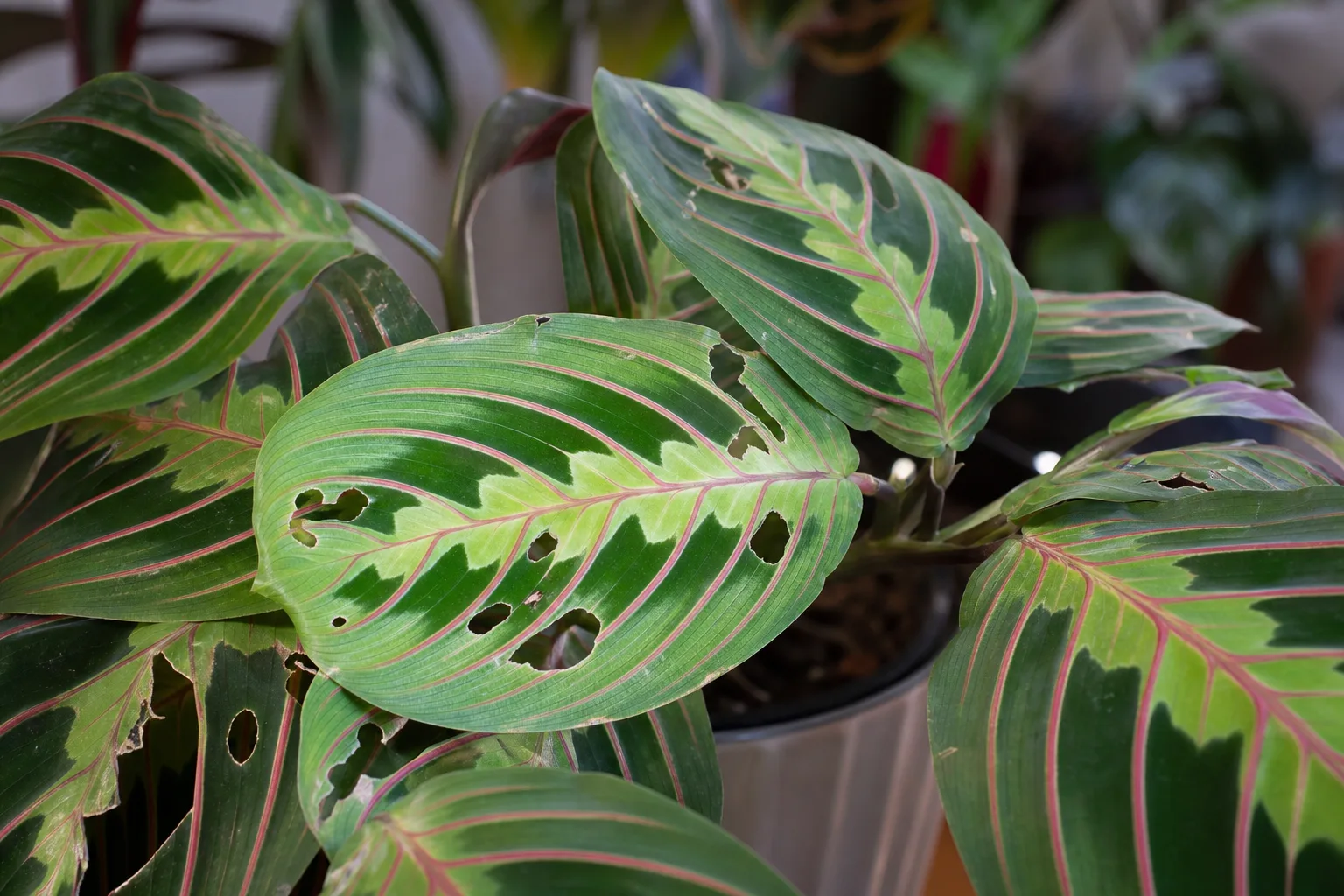
Holes in Leaves on Maranta Leuconeura: Causes, Checks & Fixes
This guide covers holes in leaves on Maranta Leuconeura. See also the general Holes in Leaves guide, watering, and light pages for this plant.
Holes in Leaves on Maranta Leuconeura: Causes, Checks & Fixes
Quick answer
Holes in Maranta leuconeura-the prayer plant-almost always mean something chewed or scraped the leaf, not that you watered wrong. Thin, patterned foliage is easy for caterpillars, slugs, occasional beetles, and leaf-miner larvae to damage. On indoor marantas, pet nibbles and mechanical tears during unfurling are also common because the plant is non-toxic to cats and dogs.
First step: inspect affected leaves and the pot rim at night with a flashlight, then manually remove any caterpillar, slug, or beetle you find. Pick off chewers by hand or scrape them into soapy water. Only after you confirm an active pest-or rule out chewing entirely-should you reach for insecticidal soap or other sprays.
What holes in leaves look like on Maranta Leuconeura
Prayer plants produce new leaves from short rhizomes near the soil. Those unfolding leaves are thinner and softer than mature foliage, which makes them prime targets for chewing pests.
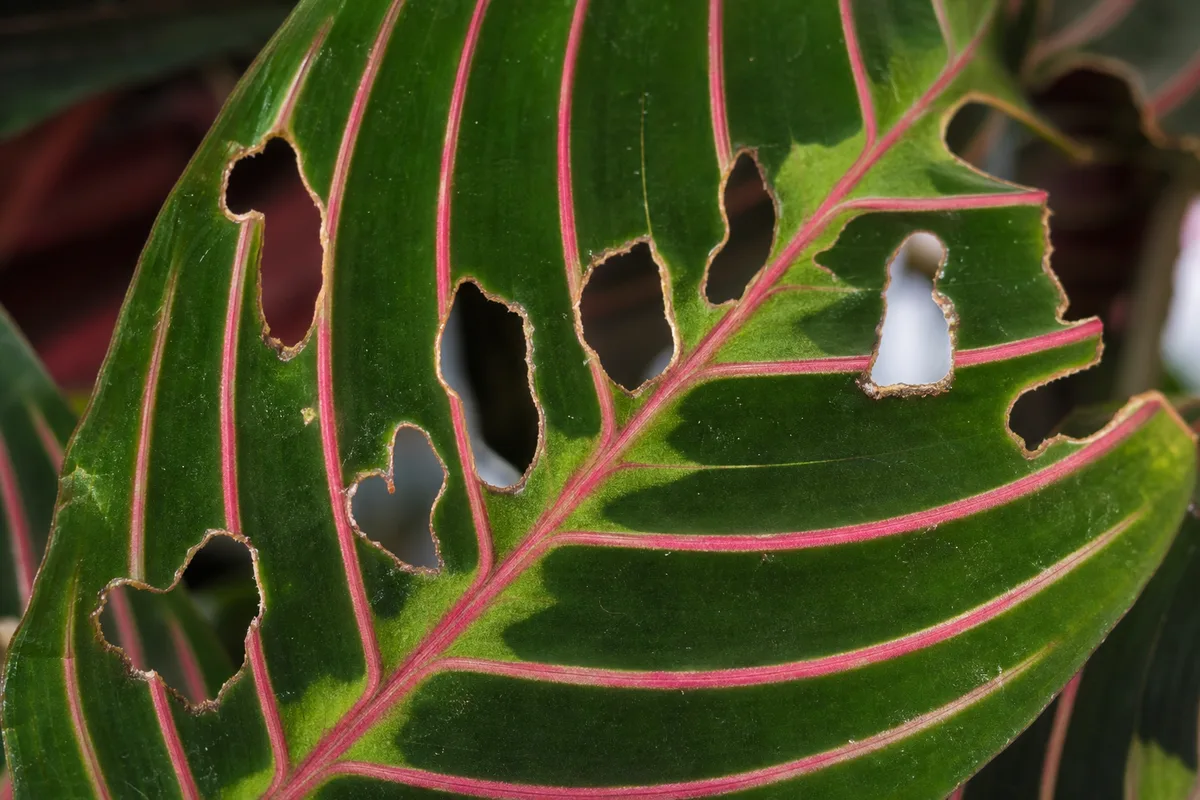
Holes in Leaves symptoms on Maranta Leuconeura - compare with healthy tissue on the same plant.
On marantas, hole damage usually shows up as:
- Irregular holes with rough, torn edges in the leaf center or along margins
- Rows of small pinholes in a line across a leaf-often a sign a caterpillar fed while the leaf was still rolled, then the holes spread apart as the blade unfurls
- Dark frass pellets (insect droppings) on upper leaf surfaces or the pot saucer beneath chewed areas
- Slime trails on pots, shelves, or leaf undersides when slugs or snails are involved
- Winding, pale tunnels inside the leaf blade that may break open into blotchy holes when leaf-miner larvae finish feeding
- Clean, crescent-shaped tears on accessible leaf edges when a pet chewed the plant
Healthy prayer plant leaves fold upward at night and lie flat by day. Holes from pests look different from normal movement: damaged tissue stays torn during the day, may yellow around the edge, and often appears on several leaves at once rather than on one old lower leaf only.
Holes are not the usual signature of spider mites (fine stippling and webbing), aphids (curl and sticky honeydew), or Helminthosporium leaf spot on Maranta (tan spots with yellow halos-not punched-out tissue).
Why Maranta Leuconeura gets holes in leaves
Chewing damage on prayer plants ties to how the plant grows and where it lives in your home.
Soft, regularly replaced foliage. Happy marantas in Maranta Leuconeura light guide with evenly moist soil push new leaves often. Chewing insects target that tender tissue. UC IPM notes that caterpillars range from tiny to several inches long and feed on leaves with chewing mouthparts-exactly the damage pattern prayer plant owners describe as “something ate my leaf.”
Low, humid placement. Maranta leuconeura stays low to the pot and prefers high humidity and consistently moist soil. Slugs and snails thrive in damp, sheltered spots on floors, in saucers, or on pebble trays-right where prayer plant leaves arch near the surface.
Outdoor summer exposure. Plants that spend warm months on a patio often return with hitchhikers. UC IPM warns that houseplants outside, especially on the ground, may carry pests in through drainage holes. Caterpillars and beetles commonly enter that way.
Open windows at night. Adult moths can fly in and lay eggs on indoor foliage. Caterpillar damage may appear days later on the newest maranta leaves before you notice the insect itself.
Pet access. Because prayer plants are listed as non-toxic, cats and dogs sometimes sample them. Chewing leaves irregular edge tears without frass or slime.
Leaf miners. Several fly, moth, and beetle larvae mine between leaf surfaces. University of Maryland Extension describes random curving tunnels or blotches inside leaves. On houseplants, UC IPM notes leafminer damage as winding discolored trails-cosmetic at first, but heavy mining can weaken thin prayer plant blades.
Unfurling accidents. New maranta leaves emerge rolled. Rough handling, a snagged neighbor leaf, or a dry tip tearing as it opens can mimic pest holes. These show clean mechanical edges and do not spread to other leaves.
How to confirm the cause
Work through these checks before you spray:
- Timing - Inspect at night or early morning when caterpillars and slugs feed. Daytime checks miss pests hiding in soil or under pots.
- Frass vs. slime - Dark pellet droppings point to caterpillars or beetles. Shiny slime trails point to slugs or snails.
- Inside the leaf - Hold damaged leaves to light. Serpentine pale tunnels confirm leaf miners; open holes with no tunnel suggest external chewers.
- Pinhole rows - Evenly spaced holes across a leaf strongly suggest caterpillar feeding on a previously rolled leaf.
- Pot and saucer check - Lift the pot and look under the rim, in drainage holes, and on damp saucers. Slugs hide in those spaces on humid maranta setups.
- Pet and placement review - Could a cat or dog reach this shelf? Are teeth marks on the same side as the pot edge?
- Neighbor plants - Chewing pests move to other soft tropicals. Inspect calathea and stromanthe on the same shelf.
- Age of damage - Old holes with brown calloused edges and no new chewing mean the pest may already be gone; focus on prevention rather than repeated spraying.
If you find no live insects, slime, frass, or internal mines-and only one calloused hole on an old leaf-mechanical damage or past pet chewing is more likely than an active infestation.
First fix for Maranta Leuconeura
Inspect at night with a flashlight and manually remove any chewer, slug, or heavily mined leaf you find.
Move the maranta to a clear workspace. Check leaf undersides, stem joints, the soil surface, and beneath the pot. Pick caterpillars or beetles off by hand and drop them into soapy water. Drown slugs in the same way or use a damp paper towel to collect them. For leaf miners confined to one or two leaves, pinch squish the tunnel or cut off the affected blade at the base.
Do not spray insecticide on day one if a single caterpillar was the culprit and you removed it. Do not drench the crown when rinsing debris-Illinois Extension warns that water standing on prayer plant crowns can rot stems. Do not fertilize a chewed plant hoping to replace lost leaves; new soft growth invites more feeding.
Step-by-step recovery
After manual removal:
- Isolate the plant if chewing is active and neighbors share a shelf. UC IPM recommends keeping infested houseplants separate until pests are fully controlled-a process that may take several weeks.
- Repeat nightly inspections for seven to ten days. Caterpillars you miss can grow quickly on tender new maranta shoots.
- Apply insecticidal soap if chewing continues after hand removal. Coat tops and undersides; repeat weekly because contact sprays must hit the insect directly. University of Minnesota Extension lists insecticidal soap as an option for indoor plant pests-test one leaf first on thin prayer plant foliage.
- Use Bacillus thuringiensis (Bt) for caterpillars if labeled for your setting and you confirm larvae are the pest. UC IPM lists Bacillus thuringiensis among less toxic sprays for caterpillars and other small pests on ornamental plants. It does not control slugs or leaf miners.
- Remove mined or shredded leaves once larvae inside are crushed or removed. Discard them in sealed bags-not the compost pile indoors.
- Rinse outdoor-return plants before reuniting them with your collection. Examine soil and drainage holes when a maranta comes back from patio season.
- Adjust pet access if chewing edges look like animal damage. Elevate the pot or gate the room without punishing the plant with poor light.
Because maranta leuconeura is non-toxic to cats and dogs, rinsing and labeled soap treatments are practical in pet homes-still keep pets away until sprays dry.
Recovery timeline
A single caterpillar removed by hand often stops new holes within days. Slug problems clear in one to two weeks once hiding spots under saucers are cleaned and nightly checks continue. Leaf-miner damage stops when affected leaves are removed or squished; expect two to three weeks before you trust that no new mines appear on fresh growth.
Judge success by clean new leaves unfurling without tears, normal nightly folding on undamaged foliage, and no new frass, slime, or mines on two weekly inspections. Old holed leaves stay holed-they will not regenerate tissue.
Worsening signs: multiple new leaves chewed each week despite removal, mines spreading through most of the plant, crown damage at soil level, or stunted new growth with persistent frass on every shoot.
Lookalike symptoms to rule out
Thrips rasp leaf surfaces, causing silver scarring and distortion-not typically large punched-out holes. University of Maryland Extension describes thrips feeding with rasping mouthparts that punctures cells and drains contents.
Spider mites cause stippling and webbing in dry winter air, not irregular chewed holes with frass.
Leaf spot disease on maranta shows small water-soaked spots that turn tan with yellow halos per Penn State Extension-not missing leaf tissue.
Brown crispy edges from low humidity or fluoride in tap water do not come with frass or internal mines.
Normal senescence - One old lower leaf with a small tear and brown edge, while all new growth stays clean, is often past mechanical damage-not an active pest crisis.
Mistakes to avoid
Do not spray broad insecticides before identifying the chewer-you may burn delicate prayer plant leaves without fixing slug versus caterpillar versus miner problems.
Do not overhead soak the crown when rinsing frass off leaves. Stem rot develops quickly when water pools in the center.
Do not ignore slugs because you keep the plant indoors. Damp saucers and floor placement are enough for them to reach maranta leaves.
Do not compost mined leaves indoors; larvae can continue developing.
Do not assume holes mean fungus and apply fungicide. Penn State links Maranta leaf spot to overhead watering and fungal pathogens-not chewing insects, which need different management.
Do not return an isolated plant after one clean day. Hold it two weeks with weekly checks for new holes or mines.
Maranta Leuconeura care cross-check
While solving chewing damage, keep baseline care steady-swinging watering or light mid-infestation adds stress that slows recovery.
- Light: Bright indirect light per Missouri Botanical Garden; weak light slows replacement of damaged leaves.
- Water: Keep mix evenly moist at about 2 cm depth; allow slight drying in winter but avoid bone-dry spells that crisp unfurling tips.
- Humidity: Target 60% or higher-good for marantas, but also keep saucers and pebble trays clean so slugs cannot hide beneath them.
- Temperature: Above 60°F; cold stress weakens new growth without causing true chewed holes.
- Crowns: When rinsing debris, tip the pot so water runs away from the rhizome base.
Fix the chewer first; raising humidity alone will not remove a caterpillar on tonight’s new leaf.
How to prevent holes next time
Scout leaf undersides and new shoots weekly, especially after spring growth begins and when plants return from outdoors. UC IPM emphasizes checking plants before bringing them indoors and examining soil when pots sat on the ground.
Quarantine new marantas and cuttings two weeks before placing them near other tropicals.
After summer outdoors, rinse foliage, inspect drainage holes, and consider replacing the top layer of soil if slugs or beetles were present.
Keep pots elevated on stands if slugs have been a problem on damp floors or pebble trays.
Use screens or closed windows at night when moths are active if your maranta sits near an open window.
Place pet-safe plants out of reach if your cat or dog chewed before-non-toxic does not mean they will stop sampling soft leaves.
Remove fallen leaf debris from saucers promptly. Decaying tissue attracts pests to the humid microclimate marantas prefer.
When to worry
Escalate when new holes appear on every unfurling leaf despite a week of nightly removal, when leaf-miner trails cover most of the plant, or when crown tissue at the rhizome looks chewed or mushy. A prayer plant can recover from scattered hole damage if the rhizome stays firm and new leaves arrive clean-but heavy, repeated defoliation on a shared shelf may warrant discarding one heavily infested pot to protect the rest of your collection.
One or two holed leaves with a caterpillar removed and no new damage for ten days is manageable. An spreading mine pattern or nightly frass on every new shoot needs persistent treatment and isolation.
Conclusion
Holes in Maranta leuconeura leaves point to chewing-caterpillars, slugs, leaf miners, beetles, pets, or mechanical tears-not the same problems that yellow or crisp prayer plant foliage. Confirm the pattern at night, remove what you find by hand before you spray, and judge recovery by clean new growth rather than old torn blades. Steady care, quarantine after outdoor time, and weekly undersides checks keep small chewers from shredding the patterned leaves you grow Maranta Leuconeura overview for.
When to use this page vs other Maranta Leuconeura guides
- Maranta Leuconeura watering guide - Use for routine moisture checks before assuming holes in leaves is the main issue.
- Maranta Leuconeura problems hub - Browse all 40 common issues on this species.