Brown Tips on Maranta Leuconeura: Causes, Checks & Fixes
Quick answer
Brown tips on prayer plant leaves usually mean low humidity, fluoride in tap water, or salt buildup-not thirst. First step: switch to filtered or overnight tap water and raise humidity above 55%.
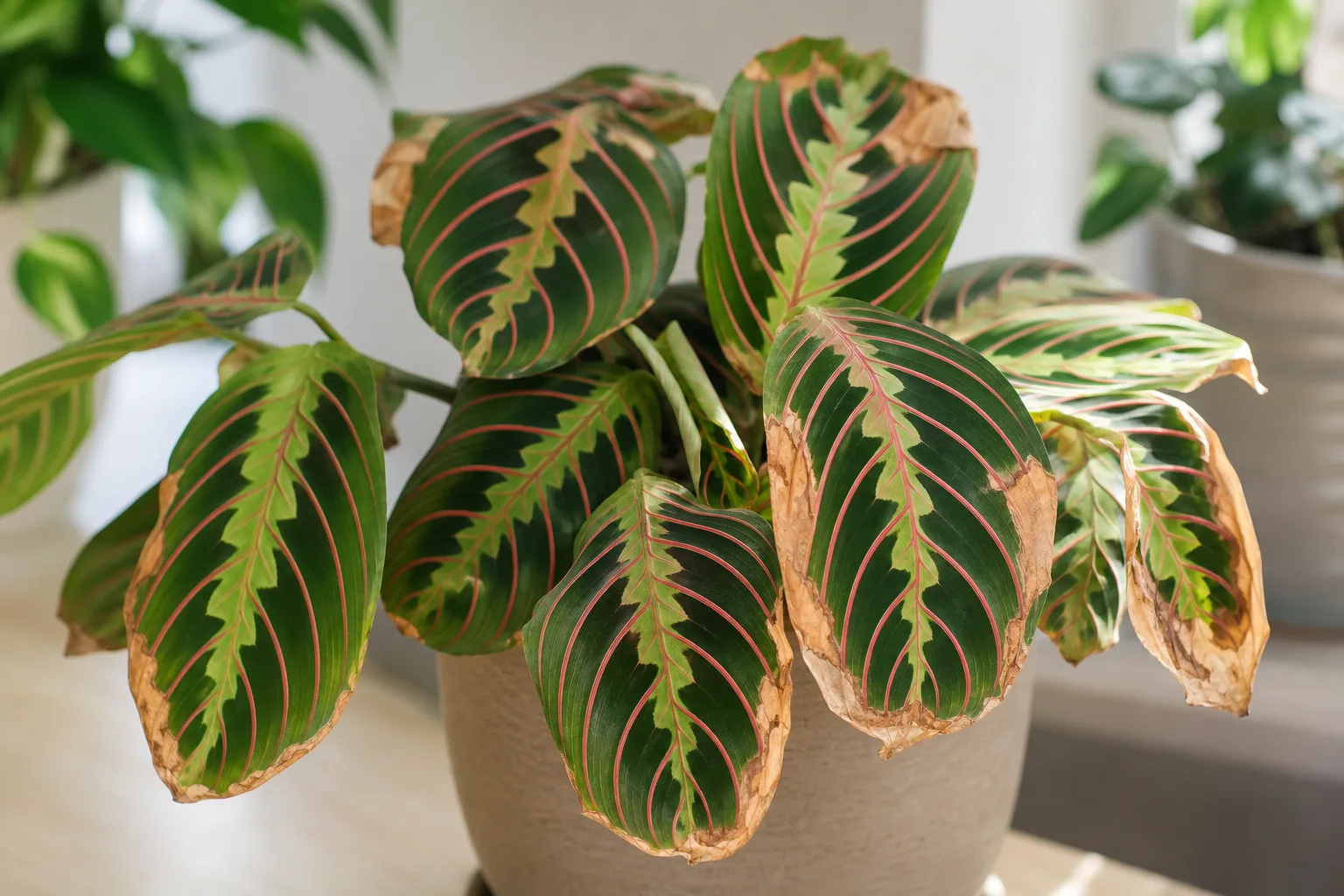
Brown Tips on Maranta Leuconeura: Causes, Checks & Fixes
This guide covers brown tips on Maranta Leuconeura. See also the general Brown Tips guide, watering, and light pages for this plant.
Brown Tips on Maranta Leuconeura: Causes, Checks & Fixes
Quick answer
Brown tips on Maranta leuconeura (prayer plant) usually trace to dry indoor air, fluoride or chlorine in tap water, or salt buildup-not a simple need for more water. The Marantaceae family shows edge damage fast because thin leaf margins desiccate before the rhizome signals drought. First step: switch to filtered or rested tap water and raise humidity toward 55–60% while keeping soil evenly moist, not soggy.
What brown tips look like on Maranta Leuconeura
Damage starts at leaf tips and may creep along margins on the herringbone-patterned foliage. Tips turn tan-to-brown and crispy while mid-leaf color stays vivid. New leaves may emerge with minor edge browning when water quality or humidity is off. White crust on the pot rim points to fertilizer salts. This differs from sun scorch, which bleaches or washes out attractive leaf colors in too much direct sun.
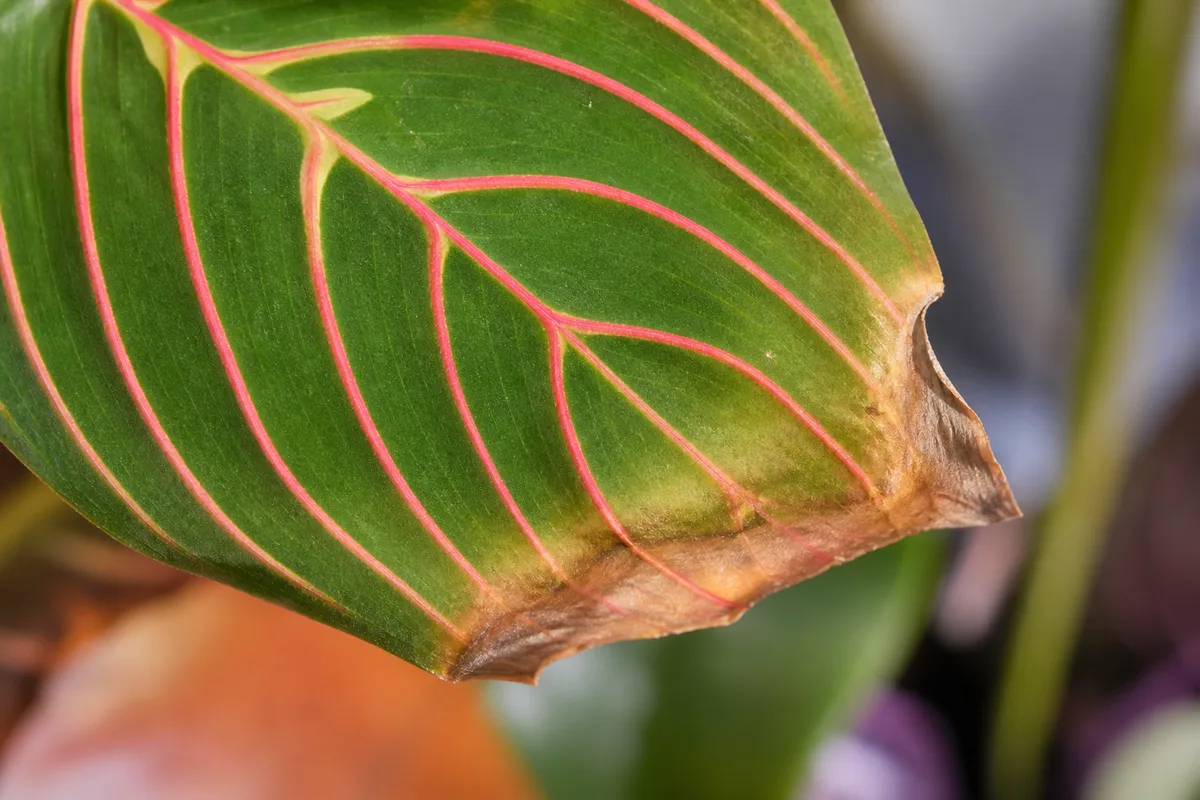
Brown Tips symptoms on Maranta Leuconeura - compare with healthy tissue on the same plant.
Cold drafts near windows can mimic humidity damage-pair brown tips with placement checks.
Why prayer plant gets brown tips
Maranta leuconeura prefers high humidity and warm temperatures. Winter heating drops ambient moisture below what tropical foliage expects. Tap water fluoride sensitivity is a known prayer-plant issue-LeafyPixels and Illinois Extension both recommend avoiding water that stands on crowns; edge burn often appears before crown rot.
Over-fertilizing or letting salts accumulate in peat-rich mix burns tips from the root zone upward. Underwatering can crisp edges too, but the pot will feel light and mix dusty dry-not heavy and wet.
How to confirm the cause
- Water source - Did you recently switch to hard tap water or skip filtering?
- Humidity - Is the plant near a heat vent or dry AC stream? High humidity supports clean margins.
- Pot weight - Heavy wet soil with brown tips suggests salts or rot stress, not drought.
- Light - Direct sun bleaches patterns; humidity fixes will not help scorched tissue.
- New growth - If only oldest leaves brown, aging may be normal; spreading tip burn on new leaves confirms an active stressor.
First fix for Maranta Leuconeura
Switch to filtered, rainwater, or overnight tap water and raise humidity with a humidifier or pebble tray-not misting alone. Keep soil moist but allow partial dry-down in winter. Flush the pot with plain water monthly during active growth to leach salts. Trim fully brown tips with clean scissors for appearance only; tissue will not re-green.
Step-by-step recovery
- Move the plant away from heating vents and cold window glass.
- Run a humidifier or group with other tropicals to hold 55–60% RH.
- Water with low-fluoride water until a little drains; empty saucers.
- Hold fertilizer for three weeks while edges stabilize.
- Judge success by clean new leaves that still fold upward at night.
Causes to rule out
- Underwatering - Light pot, limp stems, dry mix throughout.
- root rot on Maranta Leuconeura - Sour smell, yellow leaves, mushy roots despite brown tips.
- Spider mites - Stippling and webbing on undersides, not uniform tip crispness.
- Low light - Pale patterns and weak new growth without crisp margins.
What not to do
Do not increase watering because tips look dry-wet soil plus low humidity worsens rot risk. Do not allow water to stand on crowns; stems rot easily. Avoid heavy fertilizer while tips are actively browning.
How to prevent brown tips next time
Use filtered water as default. Keep evenly moist during growth; allow soil to dry between waterings in winter. Maintain humidity in dry seasons. Feed monthly at half strength only during active growth, not in autumn dormancy.
Conclusion
Prayer plant brown tips are an environment-and-water-quality signal. Confirm dry air or tap water, fix humidity and filtering first, and judge recovery on new patterned leaves-not old crispy margins.
When to use this page vs other Maranta Leuconeura guides
- Maranta Leuconeura watering guide - Use for routine moisture checks before assuming brown tips is the main issue.
- Maranta Leuconeura problems hub - Browse all 40 common issues on this species.
- Low Humidity on Maranta Leuconeura - Different entry point when symptoms overlap with brown tips.
- Overwatering on Maranta Leuconeura - Different entry point when symptoms overlap with brown tips.
- Yellow Leaves on Maranta Leuconeura - Different entry point when symptoms overlap with brown tips.