Watering Maranta leuconeura (Prayer Plant): Schedule, Soil
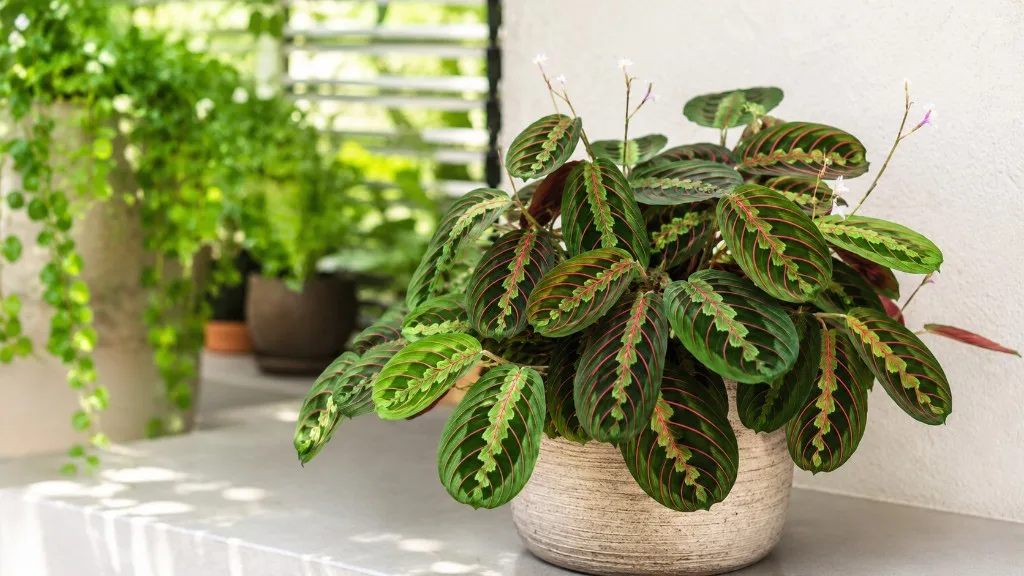
Watering Maranta leuconeura (Prayer Plant): Schedule, Soil Checks & Mistakes
Watering Maranta leuconeura (Prayer Plant): Schedule, Soil Checks & Mistakes
Maranta leuconeura - the classic prayer plant - is not a plant you water on autopilot. It evolved on the humid forest floor of Brazil as a low, rhizome-spreading perennial that expects light, even moisture at shallow roots - never bone-dry potting mix for weeks, and never a soggy root zone that cannot breathe. The main indoor failure mode is swinging between those extremes: drought that curls leaves and stalls nightly folding, then panic-soaking that keeps crowns wet and invites rot. A reliable Maranta leuconeura watering routine connects pot weight, soil texture, light level, and season instead of treating every Tuesday the same.
University of Illinois Extension advises keeping prayer plant soil moist in regular potting mix while growing in diffused bright light, warm temperatures, and high humidity - and adds a critical warning: do not allow water to stand on the crowns, because stems rot easily when water pools where leaves meet the rhizome. That single sentence separates prayer plant watering from generic “water when dry” houseplant advice. This guide covers moisture checks, seasonal adjustment, water quality for fluoride-sensitive leaves, drought recovery, and when to escalate to root rot or brown tips troubleshooting on the Maranta Leuconeura overview.
Why Prayer Plants Need Check-the-Pot Watering, Not a Calendar
There is no honest universal answer to how often to water a prayer plant. A rigid “every five days” schedule fails because the same M. leuconeura in a 6-inch terracotta pot under a grow light may need water twice as often as an identical plant in a glazed cachepot on a north shelf. NC State Extension instructs growers to keep potting soil evenly moist throughout the growing season but to hold back on watering to allow the soil to dry out in the winter months - two different rhythms in one species. Your job is to check the root zone, not obey a reminder app.
The working principle for active growth: water when the top inch (roughly 2 cm) of mix begins to feel dry, then soak until a little excess drains, and empty standing water within thirty minutes. In winter, let the surface go dry a bit further between drinks while still avoiding a brick-hard root ball. Light drives the interval - see the Maranta light guide - because a bright plant transpires faster and a dim plant sits wet longer in the same moisture-retentive mix.
Shallow Rhizomes and Even Moisture - Not Swampy Soil
Prayer plants spread by rhizomes just below the soil surface. NC State Extension describes a horizontally spreading habit with leaves held parallel to the ground by day. Fine roots occupy the upper root zone; they need consistent access to moisture during growth but suffocate when the entire pot stays saturated for days - especially in cool, low-light rooms where the plant cannot use what you supplied.
RHS lists moist but well-drained as the target moisture regime under glass - not waterlogged, not desert. Pair that with a pot that has drainage holes and a mix that holds light moisture without compacting. If overwatering on Maranta Leuconeura signs appear, fix soil and drainage before increasing water frequency.
Nyctinasty as a Hydration and Rhythm Signal
Healthy M. leuconeura folds leaves upward at night through nyctinasty - reversible turgor changes in the pulvinus at each leaf base. NC State Extension notes leaves move from parallel to the soil by day to a perpendicular “prayer” posture after dark. Weak or absent folding often precedes obvious wilt: chronic underwatering, cold below about 60°F (15°C) per Missouri Botanical Garden, root stress, or grow lights left on around the clock all dampen movement before edges crisp.
Use nyctinasty as a secondary hydration check. If folding stopped but the top inch of mix is appropriately moist and nights are genuinely dark for eight hours, inspect roots and temperature before adding water. If folding stopped and the pot is light with dry mix, underwatering is the more likely throttle.
The Best Moisture Check: Finger, Skewer, and Pot Weight
Surface color lies. Peat-heavy mixes can look pale on top while staying damp near rhizomes - or feel cool at depth when the crown zone is already too dry. Use at least one check every time:
Finger or knuckle test: Push into the mix to one inch (2 cm) depth. If it feels cool and clings, wait. If it is dry and crumbly at that depth during active growth, water. In winter, you may accept slightly deeper dryness before soaking.
Skewer or chopstick test: Insert a dry wooden skewer toward the pot center. Darkening or soil sticking means moisture remains. Clean, dry wood means the upper root zone has dried enough for the next drink in summer; in winter, confirm the mid-root zone is not dust before soaking.
Pot weight test: Lift the container after a fresh watering and again daily until it feels noticeably lighter. Weight reflects moisture through the whole column better than touch alone - especially in plastic or glazed pots where walls hide dry-down speed.
Track two full dry-down cycles after purchase. Note days-to-lightness against your window and season. Within a month you will know your home’s rhythm better than any generic blog schedule.
The Top Inch / 2 cm Rule in Practice
The top inch dry heuristic aligns with extension guidance for Marantaceae: moist through the root zone during growth, but not watered again until the surface layer loses obvious wetness. For shallow pots and rhizome-heavy plants, the upper inch is where evaporation and root uptake meet first - the zone that best predicts whether the next soak helps or harms.
Do not interpret “keep moist” as “never let any layer dry.” Illinois Extension’s winter note to allow soil to dry between waterings means a longer dry-down at the surface, not drought to wilting point. Full drought damages fine roots and makes the plant react badly when water finally returns - curled leaves, stalled new growth, and underwatering symptoms that mimic low humidity.
Worked Example: Same Plant, Two Light Levels
Imagine one M. leuconeura ‘Erythroneura’ in a 6-inch nursery pot inside a draining cachepot, in the same room:
| Condition | Typical dry-down | What to watch |
|---|---|---|
| Bright indirect light (east window, summer) | Top inch dry in 4–6 days | Pot lightens quickly; do not wait for leaf curl |
| Low indirect light (interior shelf, winter) | Top inch dry in 9–14 days | Mix stays cool longer; reduce soak volume if growth paused |
| Recently repotted into larger pot | Slower until roots fill space | Weight stays high; resist calendar watering |
| Decorative outer pot holding runoff | Unpredictably slow at bottom | Hidden saucer saturation - empty after every drink |
These ranges are starting observations, not guarantees. Your mix, humidity, and pot material shift the numbers. The constant is: check, then water - never the reverse.
How Often in Practice: Light, Pot Size, and Season
During active warm growth, many indoor prayer plants in bright filtered light need a thorough watering roughly every 5–7 days - but only when dryness checks pass. Missouri Botanical Garden lists medium moisture needs with preference for consistently moist soils without waterlogging. In cooler, darker months, the same plant may need water every 10–14 days or longer, because transpiration drops even though the pot looks unchanged.
Pot size changes the schedule immediately. A recent repot into a container one size larger holds wet mix around roots that have not colonized the new volume - classic overwatering setup. A rootbound plant in small terracotta may need water more often in summer because roots fill the volume and clay pulls moisture from walls. Match frequency to this container in this light, not to a label on a different plant in a different room.
Humidity affects edge health more than root-zone timing, but extremely dry air increases transpiration and can shorten dry-down in bright spots. If low humidity is the issue, fix humidity separately - do not compensate by keeping soil permanently soggy.
Summer vs. Winter Watering Targets
Reconcile summer moisture with winter dry-down explicitly - this is where many prayer plant guides contradict themselves:
| Season | Surface target | Pot weight | Frequency mindset |
|---|---|---|---|
| Spring–summer (active growth) | Top 1 inch (2 cm) begins to dry | Pot feels moderately light vs. soaked | Soak when check passes; often ~5–7 days in bright homes |
| Fall–winter (slow growth) | Top 1–2 inches may dry further | Pot stays light longer; growth minimal | Illinois Extension: allow dry between waterings - longer interval, smaller soak if mix stays cool |
| Either season | Never bone-hard entire root ball | Never heavy and cold weeks after watering | Empty saucers; no standing water on crowns |
Winter overwatering in a cool room is more common than winter drought: the plant uses little water while mix stays wet, roots lose oxygen, and yellow leaves appear on wet soil. When in doubt in January, wait one extra day and re-check weight before soaking.
Signs You Are Watering Too Much
Prayer plant overwatering shows in layers. Catch early signals before crowns collapse.
Watch for yellowing leaves beyond normal old-leaf drop, especially on multiple leaves at once. University of Illinois Extension troubleshooting guidance lists yellowing among common houseplant stress signals tied to water and environment. Soft stems, sour or stagnant smell from the mix, and fungus gnats hovering over perpetually damp surface peat point to a root zone that never dries adequately.
Wilting despite wet soil is the trap: roots cannot absorb water because they are damaged or oxygen-starved - adding more water accelerates decline. If several signs appear together, pause watering, inspect the root zone, and read the root rot guide before feeding or repotting on impulse.
Overwatering is more likely when moisture-retentive mix is paired with low light, no drainage hole, or a decorative cachepot that hides pooled runoff. Fix the container environment first; calendar changes alone will not help.
When Moist Soil Means Pause - Not More Water
Brown or crisp leaf tips with moist soil usually mean water quality or humidity, not drought. NC State Extension flags fluoride sensitivity - margins burn when salts accumulate even though you watered “correctly” by volume. Route to filtered water and flushing before increasing frequency. Adding water to already-wet mix is how healthy rhizomes turn mushy in cool rooms.
Signs You Waited Too Long - and How to Recover
Underwatering shows as daytime leaf curl, limp blades, dry compacted mix, and pot weight very light. A single dry episode is often recoverable; repeated drought damages fine roots and makes the plant overreact when water returns - sudden soak after chronic dryness can shock stressed tissue.
Drought recovery protocol:
- Confirm mix is dry throughout, not just surface - if hydrophobic and repelling water, see dry hydrophobic soil.
- Water slowly and evenly until a little drains; do not flood repeatedly in one hour.
- Empty saucer and cachepot completely.
- Place in stable bright indirect light and 60%+ humidity if possible.
- Wait 24–48 hours before judging - leaves should uncurl partially if roots are intact.
- Resume check-the-pot rhythm; do not switch to daily sips.
If leaves stay curled with wet soil after recovery soak, roots may be compromised - inspect before the next drink.
Water Quality: Tap, Fluoride, Filtered Water, and Flushing
Prayer plants are more sensitive to municipal water chemistry than many common houseplants. Fluoride, chlorine, and dissolved salts build up in the mix and burn thin leaf margins - red-veined cultivars like ‘Erythroneura’ show damage earliest.
Fixes in order of reliability:
- Use filtered, distilled, or rainwater for routine watering.
- Overnight tap water in an open container off-gases some chlorine; it helps chlorine more than fluoride.
- Flush monthly: water heavily with plain water until runoff runs clear, discarding all drainage - reduces salt crust without repotting.
- Repot into fresh mix if white mineral rings line the pot and tips persist after a water change.
If new leaves emerge clean after switching water while old tips stay brown, you found the culprit. Trim dead tips with sterile scissors for appearance; new growth is the scoreboard. Full detail lives on the brown tips problem page.
How to Water Cleanly: Drainage, Crowns, and Cachepots
Top-water the soil surface directly - not overhead onto crowns - especially on cold mornings. University of Illinois Extension warns that water standing on crowns rots stems where leaves meet the rhizome.
Standard sequence:
- Check dryness at top inch / pot weight.
- Apply room-temperature water evenly across the surface until a little exits drainage holes.
- Let pot drain 15–30 minutes.
- Empty saucer and outer cachepot - never let the plant sit in returned runoff.
- Log days until the pot lightens again.
Cachepot trap: Outer decorative pots hide saucer saturation. Water in the sink, drain fully, then replace - or lift the inner nursery pot every time. Wicking from pooled bottom water keeps the lower root zone anaerobic even when the top inch feels perfect.
Bottom watering can work for shallow rhizomes if you lift the pot out after 15–30 minutes of uptake and still top-water occasionally to flush salts. Do not leave pots sitting in reservoirs indefinitely - Marantaceae roots need oxygen between drinks.
Common Watering Mistakes on Prayer Plants
Watering on a fixed calendar regardless of soil moisture - fix by replacing “water Tuesday” with “check Tuesday.”
Increasing water when tips brown while soil is moist - fix water quality and humidity, not volume.
Misting instead of checking roots - misting does not hydrate rhizomes and can spread fungal spotting; it does not replace soak-and-drain cycles.
Leaving plants in pots without drainage because the decorative container is pretty - fix with nursery pot inside or drill holes.
Using cold tap water on warm roots - room-temperature water reduces shock; dryness timing matters more, but icy water stresses fine roots.
Continuing summer frequency through winter in cool, dim rooms - cut intervals sharply; prioritize Illinois Extension’s winter dry-down guidance.
Compensating for underwatering with daily small cups - fix with one full soak, then appropriate dry-down; dribble watering swings between drought and surface wetness without reaching deep roots.
Watering After Repotting or Moving Homes
After repotting into fresh, moist mix, skip the next scheduled soak until the new volume begins to dry at the top inch - roots in unused wet space slow dry-down unpredictably. See the repotting guide for timing; do not stack repot, fertilizer, and placement changes the same week.
First month at home: Do not repot on day one unless mix is failing or pests are obvious. Quarantine, learn how fast this pot dries in your light, and keep care boring while the plant adjusts. Watch for yellow leaves, brown tips, and root rot - correct one variable at a time.
When moving from a bright greenhouse to a dim apartment, reduce water immediately even if the calendar says otherwise - lower light means slower uptake. When moving closer to a window, expect shorter dry-down and check more often in summer.
Practical Checks: Buying, First Month, and Fast Decisions
Before you buy: Choose plants with firm new growth, clean leaf undersides, and mix that does not smell sour or feel compacted. Be cautious if you see collapsed crowns, sticky residue, or wet soil in poor light - cosmetic old edge damage is less worrying than weak roots.
Fast decision check: If the plant looks tired, assess pot weight, top-inch moisture, and light level before watering. Limp leaves with wet soil mean pause and inspect roots. Limp leaves with a light, dry pot mean soak and drain. Crisp tips with moist soil mean water quality or humidity - not more water.
Wilt + Wet Soil vs. Wilt + Dry Pot
| What you see | Soil / pot | Likely cause | First action |
|---|---|---|---|
| Limp, curled leaves | Wet, heavy, cool | Overwatering / root stress | Stop watering; inspect roots |
| Limp, curled leaves | Dry, light | Underwatering | Soak once; drain; raise humidity |
| Crisp brown tips | Moist | Fluoride / salts / low humidity | Switch water; flush; humidify |
| Weak night folding | Moist, adequate light | Cold, light rhythm, or root issue | Check temp, dark period, roots |
| Yellow lower leaves | Wet, slow growth | Chronic overwatering | Dry-down; repot if sour |
Escalate to problem pages when the same symptom repeats after you corrected the matching row.
Conclusion
Maranta leuconeura watering succeeds when you treat moisture as a check-the-pot discipline, not a calendar habit. Keep soil evenly moist during active growth by watering when the top inch (2 cm) begins to dry, soak until a little drains, and empty every saucer and cachepot. In winter, allow longer dry-down between drinks while avoiding a brick-hard root ball - matching University of Illinois Extension and NC State seasonal guidance.
Use pot weight, nyctinasty, and new leaf quality as secondary signals. Switch to filtered or rainwater when tips brown on moist soil. Never pool water on crowns. If wilt pairs with wet mix, pause - if wilt pairs with dry mix, soak. Link watering to light and soil on the same plant, and escalate to root rot or brown tips guides when symptoms persist. Get the rhythm right and M. leuconeura becomes a responsive foliage plant whose nightly fold tells you the environment still works - not a mystery that punishes every missed Tuesday.
When to use this page vs other Maranta Leuconeura guides
- Maranta Leuconeura overview - Start here for whole-plant context before deep-diving this topic.
- Maranta Leuconeura problems hub - Jump to symptom-specific fix guides when this care topic does not resolve the issue.
- Overwatering on Maranta Leuconeura - Escalate here when watering adjustments are not enough.
- Root Rot on Maranta Leuconeura - Escalate here when watering adjustments are not enough.
- Wilting on Maranta Leuconeura - Escalate here when watering adjustments are not enough.