Root Rot on Maranta Leuconeura: Causes, Checks & Fixes
Quick answer
Root rot on Maranta leuconeura (prayer plant) starts when shallow rhizomatous roots sit in soggy, oxygen-starved mix - often after crown flooding or winter overwatering in dim rooms. Stop watering immediately, unpot to inspect roots, trim every mushy strand, then repot into fresh airy mix sized to the root mass.
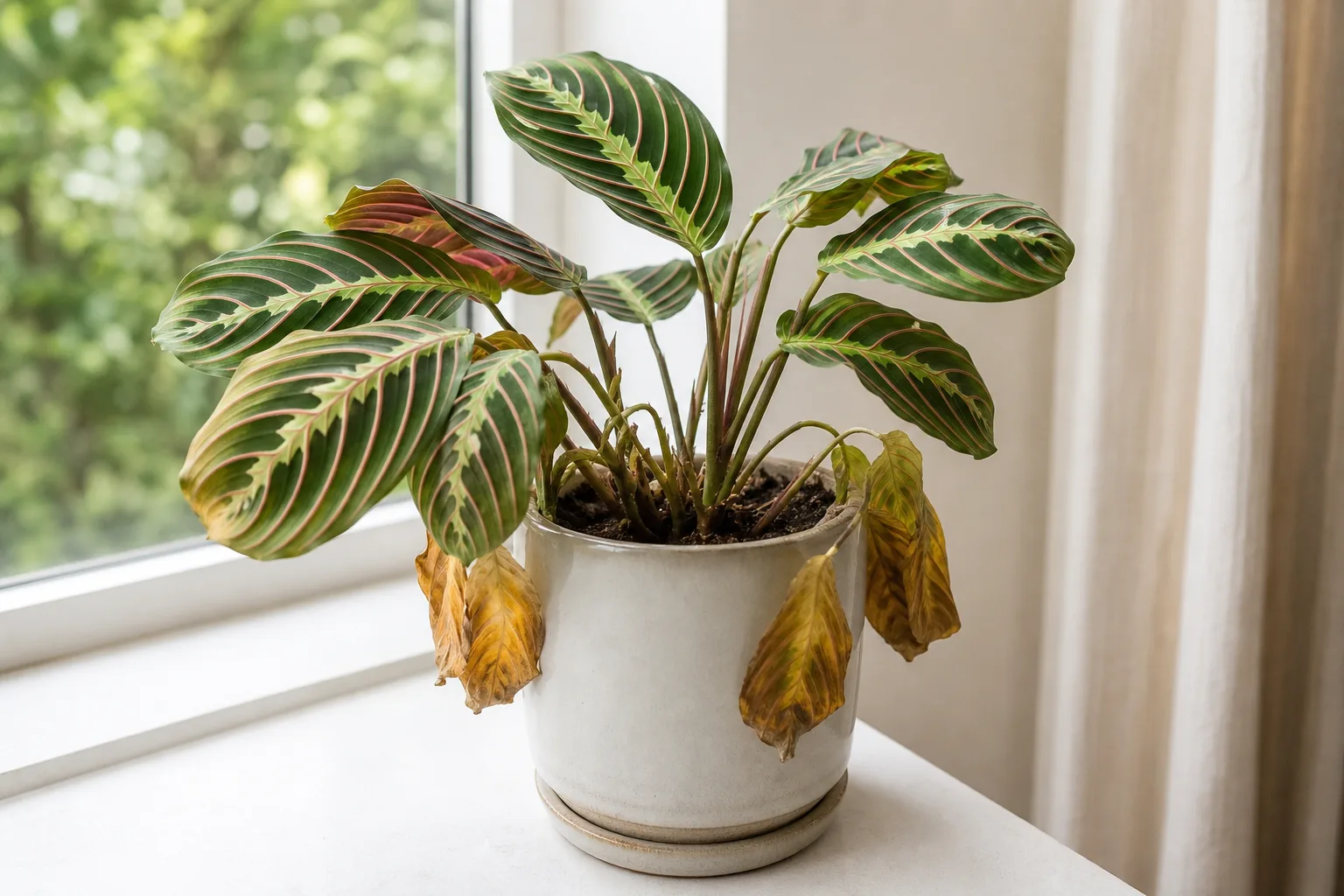
Root Rot on Maranta Leuconeura: Causes, Checks & Fixes
This guide covers root rot on Maranta Leuconeura. See also the general Root Rot guide, watering, and light pages for this plant.
Root Rot on Maranta Leuconeura: Causes, Checks & Fixes
Quick answer
Root rot on Maranta leuconeura - the classic prayer plant - is what happens when shallow rhizomatous roots sit in [waterlogged, oxygen-starved mix](https://www.missouribotanicalgarden.org/gardens-gardening/your-garden/help-for-the-home-gardener/advice-tips-resources/insects-pests-and-problems/environmental/[overwatering on Maranta Leuconeura](/plants/maranta-leuconeura/overwatering/)) long enough to decay. Unlike upright cane plants, M. leuconeura spreads horizontally from a low rhizome; when roots fail underground, patterned leaves stop folding cleanly at night and lower foliage yellows while the pot still feels heavy.
First step: stop all watering and inspect the root zone today. Do not add fertilizer, mist heavily, or repot blindly into a bigger container. The dangerous pattern is limp, patterned leaves while the mix stays cool and damp - the plant looks thirsty, but rotting roots cannot take up water even when soil is wet.
If you have been watering on a calendar instead of checking soil, compare your routine to the top-inch dry rule in our Maranta watering guide. Chronic overwatering is the usual runway into rot; this page covers what to do once roots are actually decaying.
Root rot vs. overwatering: Overwatering means the mix stays wet too long but roots are still firm when you check. Root rot means mushy roots, sour-smelling mix, or soft tissue at the crown where stems meet the rhizome - you need trim-and-repot surgery, not just a dry-down pause. Start on the overwatering page if roots are still pale and resilient; stay here when they are not.
Prayer plant is non-toxic to cats and dogs - safe to handle during repotting, though pets may get mild stomach upset if they chew many leaves.
This guide covers rhizome-specific rot signals, crown-wetness traps, and numbered recovery for growers who search by scientific name. The same species also appears under the common-name slug prayer-plant on LeafyPixels; for everyday troubleshooting by common name, see root rot on prayer plant. This page sits in the Maranta Leuconeura overview.
What root rot looks on Maranta leuconeura
Early rot hides behind Maranta’s dramatic leaf movements. Watch for this progression:
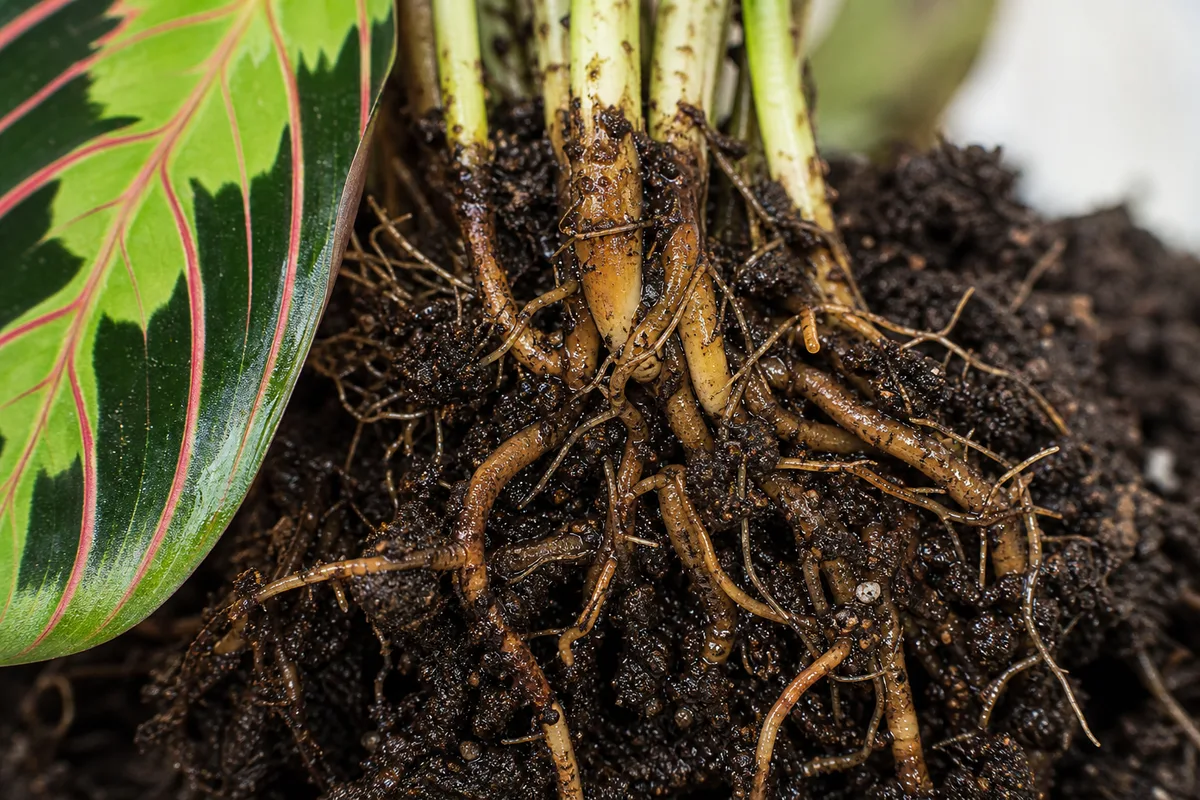
Root Rot symptoms on Maranta Leuconeura - compare with healthy tissue on the same plant.
- Nyctinastic folding slows or stops - healthy prayer plant leaves fold upward at night; stressed plants may hold leaves flat or droop through the evening before obvious yellowing appears.
- Lower patterned leaves yellow or brown while newer rolled leaves at the center still look acceptable for a while.
- Leaves stay limp or wilt even though the pot feels heavy and the surface mix is cool and dark several days after the last drink.
- The mix smells sour or swampy when you lift the pot or sniff near the drainage hole.
- Stem bases at the soil line turn soft where water pooled on crowns after top-watering.
- Fungus gnats hover around constantly damp soil - a warning that the rhizome zone rarely dries between waterings.
- Advanced cases show multiple stems collapsing at once, blackened tissue at the rhizome, and a plant that wilts despite wet soil.
Prayer plant wilts with wet soil because rotting roots lose the ability to absorb water. Gardeners often first notice root rot when a plant is wilted although soil is wet - that paradox is one of the strongest clues that you are dealing with root failure, not underwatering.
Root rot vs. overwatering on Maranta
Both problems start with too much water, but the fix differs:
| Situation | What you see | Roots on inspection | First action |
|---|---|---|---|
| Overwatering stress | Heavy wet pot, limp leaves, maybe edema or gnats | Firm, pale, resilient | Pause water until top inch dries; improve light |
| Early root rot | Same wet-wilt pattern plus sour smell or stalled night folding | Some mushy strands; rhizome still firm | Stop water; trim decay; repot same day |
| Advanced root rot | Crown softness, wave of yellow leaves, collapse on wet mix | Majority mushy; rhizome spongy | Aggressive trim; division or cuttings salvage |
If roots are still firm after you unpot, you likely do not need surgery yet - work through the overwatering guide first. Return here when texture, smell, or crown firmness confirms decay.
Why prayer plant gets root rot
The moisture paradox
Maranta wants consistently moist soil in bright diffused light - not saturation. Growers afraid of crisp leaf tips often pour water when the surface still feels damp, especially in dim bathrooms where evaporation is slow. Moist means evenly damp through the root ball after a full drink; it does not mean the crown and rhizome sit in standing water.
Crown flooding and shallow rhizomes
Prayer plant grows low and spreading from a rhizome just below the soil surface. Do not allow water to stand on crowns - pooled water after top-watering rots stems where they meet the rhizome faster than roots deeper in the pot. This is a Marantaceae-specific failure mode that generic houseplant rot advice often misses.
Peat-heavy mix, oversized pots, and cachepots
Nursery prayer plants often arrive in dense peat that holds water for days. Repotting into an oversized decorative pot - or dropping a drained nursery pot into a cachepot that traps runoff - leaves a wide ring of permanently wet mix around shallow roots. Rot frequently starts in that outer zone before leaves show stress.
Cool rooms and winter slow-down
Cool winter rooms slow transpiration while owners keep summer watering schedules. Allow soil to dry more between waterings during winter - the same plant that needed water every five to seven days in a bright summer window may sit ten to fourteen days between drinks in a cool back bedroom. Wet soil plus cool roots is a common rot trigger. This means a longer dry-down at the surface, not drought to wilting point - see our watering guide for the winter nuance.
Blocked drainage
Standing water in saucers after bottom-watering keeps bottom roots submerged. Pots without open drainage holes or clogged holes mimic chronic overwatering even when you think you are watering lightly.
Lookalike symptoms to rule out
Not every limp or yellow leaf means rot. Sort these patterns before you unpot:
| Pattern | What you see | Root check needed? |
|---|---|---|
| Underwatering | Very light pot, dry mix throughout, dramatic leaf curl - not limp tissue on wet soil | No |
| Overwatering without rot | Wet heavy pot, limp leaves, firm roots when spot-checked | Pause water; unpot only if decline continues |
| Cold draft damage | Yellowing on one side near a window; roots firm; mix not chronically sour | No |
| Transplant shock | Temporary wilt days after repotting; roots intact; no sour smell | No |
| Low light alone | Pale stretchy growth without mushy crown or swampy odor | No |
If the pot stays heavy for a week after watering, night folding weakens, and lower leaves keep yellowing, root inspection is warranted regardless of how green the center still looks.
How to confirm the cause
Work through this inspection in order:
- Lift the pot. A heavy, waterlogged feel days after the last drink suggests saturation, not drought.
- Check night movement. Reduced upward folding on otherwise patterned leaves is an early Maranta stress signal worth pairing with soil checks.
- Smell the drainage hole. A sour or rotten odor means anaerobic conditions in the rhizome zone.
- Press crown tissue. Stems at the soil line should feel solid. Spongy tissue on wet mix is urgent.
- Test the top inch. Prayer plant should be watered when this layer dries per our watering guide - constant surface dampness confirms overwatering.
- Gently slide the plant out. Squeeze a flexible nursery pot or tip a rigid pot - avoid yanking patterned leaves.
- Rinse away old mix under lukewarm running water so you can see root color and rhizome texture clearly.
- Press roots gently. Healthy prayer plant roots are firm, pale, and resilient. Rotten roots are brown and soft, translucent, or slimy and may fall apart between your fingers.
Confirmed rot means mushy roots, sour-smelling mix, or soft tissue at the crown - not just one yellow leaf on an otherwise stable clump.
First fix for Maranta leuconeura
Stop all watering immediately. This single action prevents further oxygen loss while you prepare for root surgery. Move the plant to Maranta Leuconeura light guide - not harsh sun, but enough brightness that mix will dry predictably after recovery.
Do not fertilize, mist heavily, or repot into an even larger container. Your next step after the pause is unpotting and trimming decay - but letting a chronically wet root ball air on a paper towel for an hour before inspection often makes mushy tissue easier to identify.
Step-by-step recovery
Once you confirm rot, work through these steps in order:
Trim decayed roots and soft crown tissue
Use clean, sharp scissors sterilized with rubbing alcohol. Cut away every brown, soft, or hollow root back to firm tissue. If crown tissue is mushy, trim until you reach solid stem - each cut should expose firm, pale tissue, not watery brown.
It is normal to remove a significant portion of roots on a badly overwatered prayer plant. Dispose of trimmed material in a closed bag, not the compost bin. Sterilize tools between cuts when rot is advanced.
Let cut surfaces dry briefly
After trimming, let the root ball and any trimmed rhizome air for one to two hours on a paper towel. This reduces reinfection risk when you repot into fresh mix.
Repot into fresh, airy mix
Choose a clean pot with drainage holes sized to the trimmed root mass - not dramatically larger. Use a moist but well-drained houseplant blend:
- 60% peat-based indoor potting mix
- 20% perlite
- 20% coco coir or fine orchid bark
Set the plant at the same depth it grew before. Do not bury the rhizome deeper to prop up a wobbly clump - buried crown tissue in wet mix invites a second rot cycle. See our repotting guide for pot depth and cachepot rules.
Water once, then wait
Water lightly to settle the new mix, then do not water again until the top inch is dry - often seven to ten days on a freshly repotted, root-reduced plant. Hold all fertilizer for at least three to four weeks until you see stable new rolled leaves.
Improve light and humidity
Place the recovering plant in bright indoor light without strong direct sun while roots regrow. Steady humidity around fifty to seventy percent supports Maranta recovery without foliar disease from heavy misting on stressed leaves.
Division or stem-cuttings backup if the crown fails
If the rhizome is partially firm but several stems have soft bases, divide the healthy section from decayed tissue. If crown tissue is gone but firm stem tips remain, root stem cuttings per our propagation guide. This is salvage when rot has consumed the center, not a substitute for fixing drainage on a saveable clump.
Recovery timeline
Mild cases with mostly firm roots may stabilize within one to two weeks after you correct watering and improve drainage. Moderate cases needing root pruning typically show the first firm new rolled leaf in fourteen to twenty-one days at warm temperatures above 18 °C (65 °F) during spring or summer growth.
A realistic example: a Maranta leuconeura ‘Erythroneura’ in a dim bathroom was watered on a fixed weekly schedule while the top inch never dried. After trimming roughly forty percent of mushy roots, repotting into a 60/20/20 airy mix, and moving to brighter indirect light at about 21 °C and sixty percent humidity, the first clean rolled leaf with restored night folding appeared in sixteen days - old yellow leaves never re-greened, but the rhizome stayed firm and the pot lightened between drinks.
Judge success by new rolled leaves, restored night folding, and root firmness - not by old yellow foliage turning green. Severe crown rot where the rhizome is black and mushy with no firm stems is often fatal; stem-tip propagation may be the only save.
Signs the plant is improving: the pot lightens between waterings on a normal schedule, new leaves emerge with crisp patterns and fold at night, and roots visible through drainage holes look pale and solid.
Signs it is worsening: crown softening spreads, leaves collapse in waves despite corrected watering, or the mix smells sour again within days of repotting.
What not to do
Do not keep watering because leaves look wilted when soil is already wet - that accelerates rot.
Do not apply fungicide to the soil without removing mushy roots and fixing drainage. Wisconsin Extension does not recommend fungicides for houseplant root rot because home products are limited and cannot restore oxygen to waterlogged mix.
Do not repot into garden soil, a pot without holes, or a much bigger decorative cachepot that holds standing water.
Do not fertilize a root-damaged plant hoping to “boost” recovery. Salt stress hits weakened rhizomes hardest.
Do not mist heavily during recovery - wet foliage on stressed Maranta invites foliar issues while roots are still rebuilding.
Do not reuse contaminated mix or pots without scrubbing - fungal spores persist in old wet soil.
How to prevent root rot on Maranta leuconeura
Prevention comes down to matching water to how fast your pot actually dries in your room:
- Water when the top inch dries, not on a fixed calendar. In winter, that often means longer gaps between drinks.
- Use perlite-amended mix and a pot with open drainage. Empty saucers within thirty minutes of watering.
- Right-size the container to the root ball per our repotting guide - not preemptively into oversized decorative pots.
- Top-water without flooding the crown - direct water to the soil surface, not the stem cluster.
- Adjust for light. A prayer plant in a dim corner needs less water than the same cultivar in a bright east window.
- Watch for fungus gnats - chronic damp mix often precedes rot; see our fungus gnats guide if adults hover after every watering.
When to worry
Treat root rot as urgent when the crown feels soft, more than a third of roots are mushy on inspection, or multiple patterned leaves collapse within a few days despite moist soil. At that stage, trim aggressively, repot the same day, and start stem-tip cuttings from any firm shoots as backup.
If only one bottom leaf yellows slowly over months, roots are firm when you check, and the crown is solid, you likely have normal aging or mild overwatering - not an emergency repot. Read the overwatering guide before surgery.
Practical checks
Urgency check
Soft crown on wet soil, sour smell from the drainage hole, or wilt on a heavy pot for three or more days after the last drink needs same-day root inspection.
Best inspection order
Pot weight → soil smell → night folding → crown firmness → root texture after gentle unpotting.
Conclusion
Root rot on Maranta leuconeura is a drainage and watering failure written on a spreading rhizome - night folding falters, the pot stays heavy, and the crown tells the truth when you press it. Stop water, unpot, trim to firm tissue, repot into airy mix, and judge recovery by new rolled leaves and restored evening movement. When the center is gone but firm stem tips remain, propagation is your backup. Align daily care with the top-inch dry rule and your prayer plant rarely ends up here again.
Related Maranta leuconeura guides:
- Watering - top-inch dry rhythm and winter adjustment
- Overwatering - wet-soil stress before roots decay
- Repotting - post-surgery pot and mix choices
- Propagation - division and stem-tip salvage
- Fungus gnats - chronic wet-soil warning sign
- Root rot on prayer plant - common-name parallel guide
- Overview - species context and hub links
When to use this page vs other Maranta Leuconeura guides
- Maranta Leuconeura watering guide - Use for routine moisture checks before assuming root rot is the main issue.
- Maranta Leuconeura problems hub - Browse all 40 common issues on this species.
- Overwatering on Maranta Leuconeura - Different entry point when symptoms overlap with root rot.
- Yellow Leaves on Maranta Leuconeura - Different entry point when symptoms overlap with root rot.
- Wilting on Maranta Leuconeura - Different entry point when symptoms overlap with root rot.