Overwatering on Maranta Leuconeura: Causes, Checks & Fixes
Quick answer
First fix: stop watering until the top 2 cm of mix dries, empty any saucer water, and check whether roots are still firm. On Maranta leuconeura, wet soil plus wilting often means oxygen-starved roots, not thirst-and weakened night folding is an early clue.
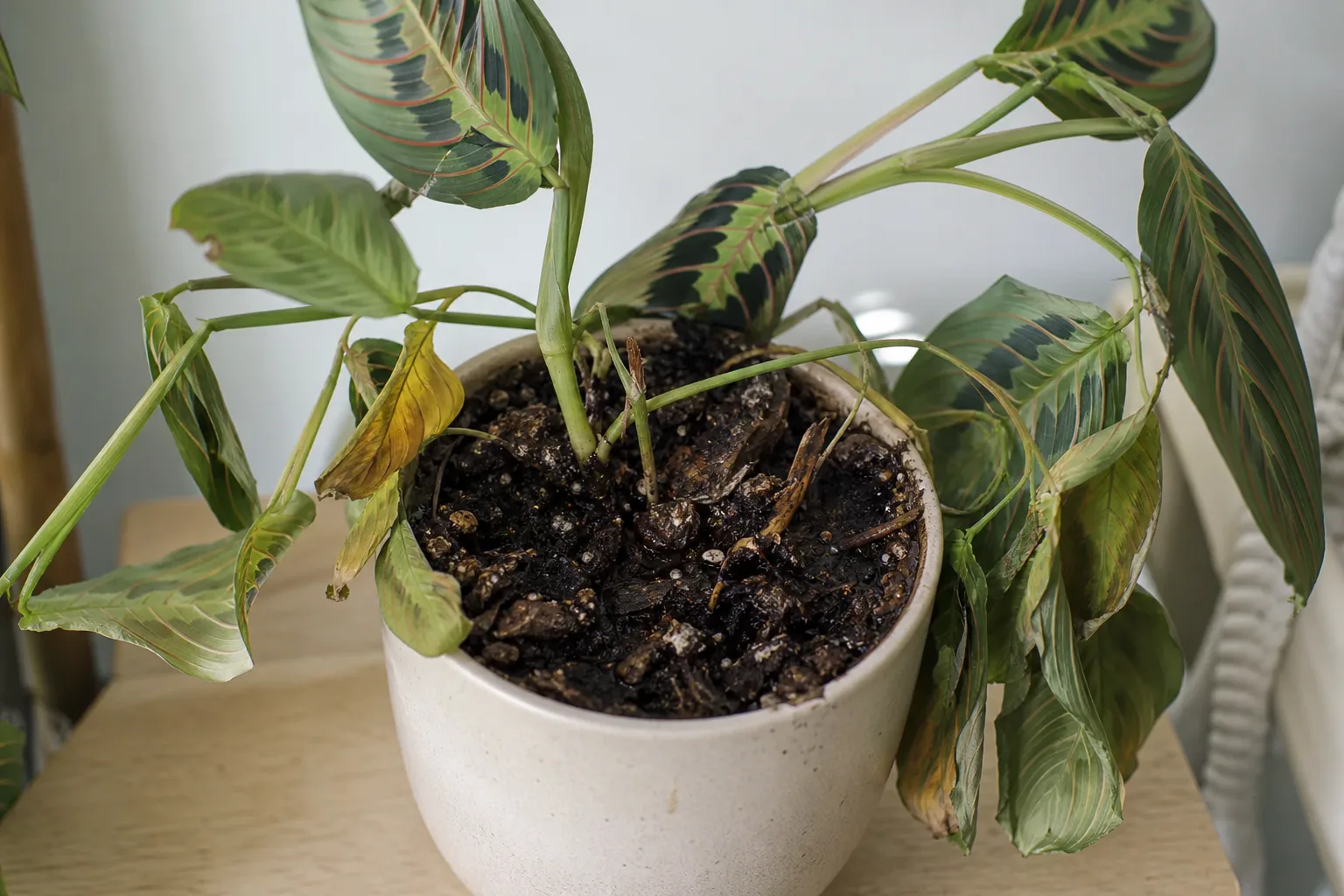
Overwatering on Maranta Leuconeura: Causes, Checks & Fixes
This guide covers overwatering on Maranta Leuconeura. See also the general Overwatering guide, watering, and light pages for this plant.
Overwatering on Maranta Leuconeura: Causes, Checks & Fixes
Quick answer
Overwatering on Maranta leuconeura is usually a duration problem, not a one-time splash. Prayer plant roots want moisture and oxygen at the same time, so constantly wet media can stress roots even when the top looks fine. Missouri Botanical Garden notes Maranta Leuconeura overview should be kept consistently moist in well-drained media and that root rot may occur in poorly drained conditions.
First fix: pause watering until the top 2 cm dries, empty standing water, and reassess root firmness before doing anything else. On Maranta, wet soil plus wilting and weakened nightly leaf folding often means oxygen-starved roots-not thirst.
What overwatering looks like on prayer plant
On Maranta, early overwatering often shows up as:
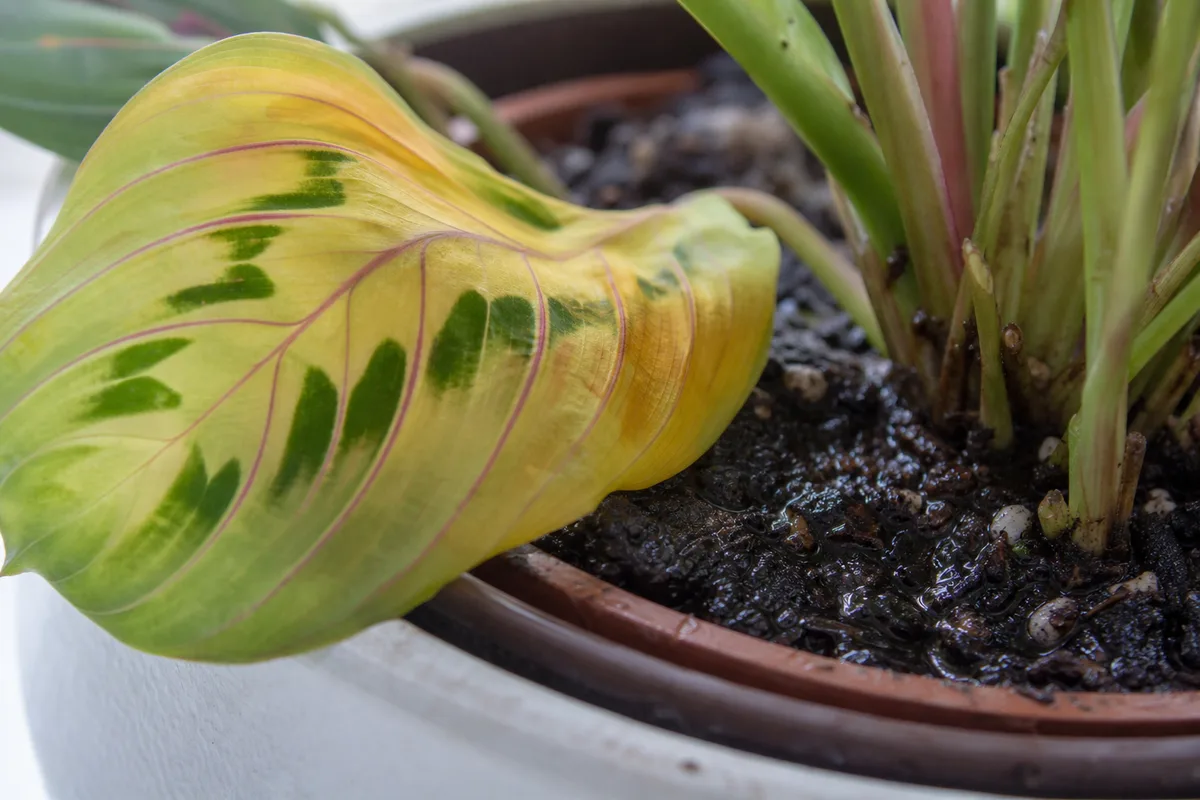
Overwatering symptoms on Maranta Leuconeura - compare with healthy tissue on the same plant.
- Yellowing lower leaves while the pot stays heavy for days
- Limp foliage and slower or weaker night folding-leaves may stay partially flat at dusk when roots cannot move water efficiently
- Wet-soil wilt-the plant looks thirsty despite damp mix at 2 cm depth
- Slower new growth with smaller rolled leaves at the center
University of Maryland Extension explains that excess moisture can cause wilting or yellowing lower and inner leaves, which is why “wet soil + wilt” is a red flag for oxygen-starved roots on thin-leaved tropicals. If the pot smells sour or stems soften near the crown, the issue may be progressing beyond mild overwatering toward active root rot.
Overwatering vs. underwatering vs. root rot on Maranta
Use this table when symptoms overlap:
| Symptom pattern | Most likely cause | Pot / soil cue | Night folding | Read next |
|---|---|---|---|---|
| Heavy pot, top 2 cm wet for days, lower yellow leaves, wilt despite damp mix | Overwatering (this page) | Soggy but not yet sour; roots still firm when checked | Weak or delayed fold at dusk | Stay here |
| Light pot, soil pulls from edge, perk-up after deep water | Underwatering | Dry at 2 cm; fast recovery after watering | May fold normally once hydrated | Underwatering guide |
| Sour smell, dark mushy roots, soft crown, stem collapse | Root rot | Wet, anaerobic mix; roots soft and brown to black | Often lost entirely on collapsing stems | Root rot guide |
| Small flies on soil surface, moist mix | Fungus gnats | Overly wet organic media | Variable | Fungus gnats guide |
If you are unsure between mild overwatering and active rot, unpot gently. Maryland Extension notes healthy roots are firm, while rot-affected roots become soft, brown to black, and mushy.
Why this plant gets overwatered easily
Prayer plant care advice often says to keep the mix evenly moist, but growers can over-correct and water too often. Illinois Extension advises to keep evenly moist but allow soil to dry between waterings during winter, so frequency should drop when growth slows. The same source warns to avoid water standing on crowns because stems rot easily.
Maranta’s shallow rhizomes sit near the soil surface where oxygen runs out first in saturated mix. Cachepots, blocked drainage holes, and dense old media all increase wet-time around those roots. A prayer plant in low winter light uses less water but still looks limp when overwatered-easy to misread as thirst and water again.
How to confirm the cause at home
- Check top 2 cm - still wet several days after your last drink means hold water.
- Lift the pot - Maryland Extension recommends using weight change as a watering cue because drying media becomes lighter; pot weight is a practical moisture check.
- Watch night folding - weakened or absent prayer movement at dusk with a heavy pot favors root-zone oxygen stress over underwatering.
- Inspect drainage - ensure holes are open and no water is trapped in saucers or outer pots.
- Smell and unpot if needed - sour odor or persistent decline means inspect roots now.
- Scout pests - fungus gnats breed in moist organic potting soil; UMN notes overwatering and poor drainage encourage fungus gnats.
First fix to try
Stop watering until the top layer dries and remove all standing water immediately. This single step restores oxygen to the root zone before you add new interventions. Keep light bright and indirect, and avoid fertilizing during stress.
If symptoms are mild, roots feel firm, and there is no sour odor, dry-down alone may be enough. If symptoms continue with wet media, move to recovery paths below.
Step-by-step recovery
Path A: mild overwatering, roots still firm
- Pause watering until the top 2 cm dries.
- Improve airflow and light (bright indirect).
- Resume watering only when moisture checks and pot weight indicate need.
- After each watering, let excess water drain and discard it-UMN recommends avoiding plants standing in water.
Path B: sour mix or root damage suspected
- Unpot gently and remove loose, saturated mix.
- Trim only mushy, dark roots; keep firm roots.
- Repot into fresh, airy mix in a container with drainage.
- Water once to settle, then wait for partial dry-down before the next watering.
For severe decline-soft crown, mostly mushy roots, widespread collapse-use the full protocol at root rot on Maranta rather than repeating dry-down alone.
Recovery timeline and what improvement looks like
- 3–7 days - yellowing may slow; plant may still look tired; pot weight drops as mix dries.
- 1–3 weeks - fewer new problem leaves; stems feel firmer; night folding begins to return.
- 2–6 weeks - healthy new growth and normal nightly prayer movement on actively growing plants.
Damaged tissue usually stays damaged. Judge recovery by new growth quality, stopped symptom spread, and root firmness-not by old leaf color reversal.
What not to do
- Do not keep watering on a fixed calendar-use soil depth and pot weight per our watering guide.
- Do not leave pots standing in saucer water.
- Do not fertilize while roots are stressed.
- Do not jump to a much larger pot, which can keep media wet too long.
- Do not rely on misting to fix root-zone waterlogging.
- Do not confuse wet-soil wilt with thirst and soak again-that deepens oxygen starvation.
When to escalate
| Situation | Action |
|---|---|
| Top 2 cm dries, roots firm, yellowing slows | Continue Path A; resume careful watering |
| Sour smell, some mushy roots, stems still firm | Path B repot with trim; monitor weekly |
| Soft crown, multiple stem collapse, mostly mushy roots | Full root rot triage now |
| Fungus gnats during wet recovery | Address media moisture and follow fungus gnats protocol |
Escalate quickly if decline continues after a full dry-down cycle with firm roots ruled out-waiting on a rotting crown wastes salvage time on prayer plants.
How to prevent overwatering next time
Use a repeatable rhythm: check moisture depth, lift pot, water thoroughly, then drain fully. UMD recommends watering when needed and pouring off collected saucer water because constant excess moisture contributes to fungus gnat and root issues. Keep this species in bright, indirect light and adjust frequency seasonally.
- Winter - allow more dry-down between drinks when growth slows (Illinois Extension winter guidance).
- Cachepots - lift inner pots to drain; never let outer shells hold standing water.
- Mix - use airy, well-draining media; dense old mix holds water longer around shallow rhizomes.
For baseline care rhythm, see Maranta watering. If the mix dries too fast instead of staying wet, compare with underwatering.
Related problems on Maranta leuconeura
- Mushy roots, sour smell, crown collapse → Root rot
- Light pot, dry soil, fast perk-up after water → Underwatering
- Small flies on wet soil surface → Fungus gnats
- Curl after AC or window chill, one-sided damage → Draft stress
About this guide
This guide was written by sai-ananth and reviewed by the LeafyPixels Review Board against botanical references including the Missouri Botanical Garden PlantFinder entry for M. leuconeura, University of Maryland Extension overwatered indoor plants and root rots guidance, Illinois Extension prayer plant page, University of Minnesota Extension indoor plant pests, and LeafyPixels watering, root rot, underwatering, fungus gnats, and draft stress guides. Last reviewed 2026-06-17.
When to use this page vs other Maranta Leuconeura guides
- Maranta Leuconeura watering guide - Use for routine moisture checks before assuming overwatering is the main issue.
- Maranta Leuconeura problems hub - Browse all 40 common issues on this species.
- Root Rot on Maranta Leuconeura - Different entry point when symptoms overlap with overwatering.
- Yellow Leaves on Maranta Leuconeura - Different entry point when symptoms overlap with overwatering.
- Wilting on Maranta Leuconeura - Different entry point when symptoms overlap with overwatering.