Draft Stress on Maranta Leuconeura: Causes, Checks & Fixes
Quick answer
When Maranta leuconeura stops folding its leaves at night after a vent blast or cold window, draft stress is the first suspect-not bad watering. Move the pot to a stable spot away from AC, heat vents, and cold glass before you change soil or feed.
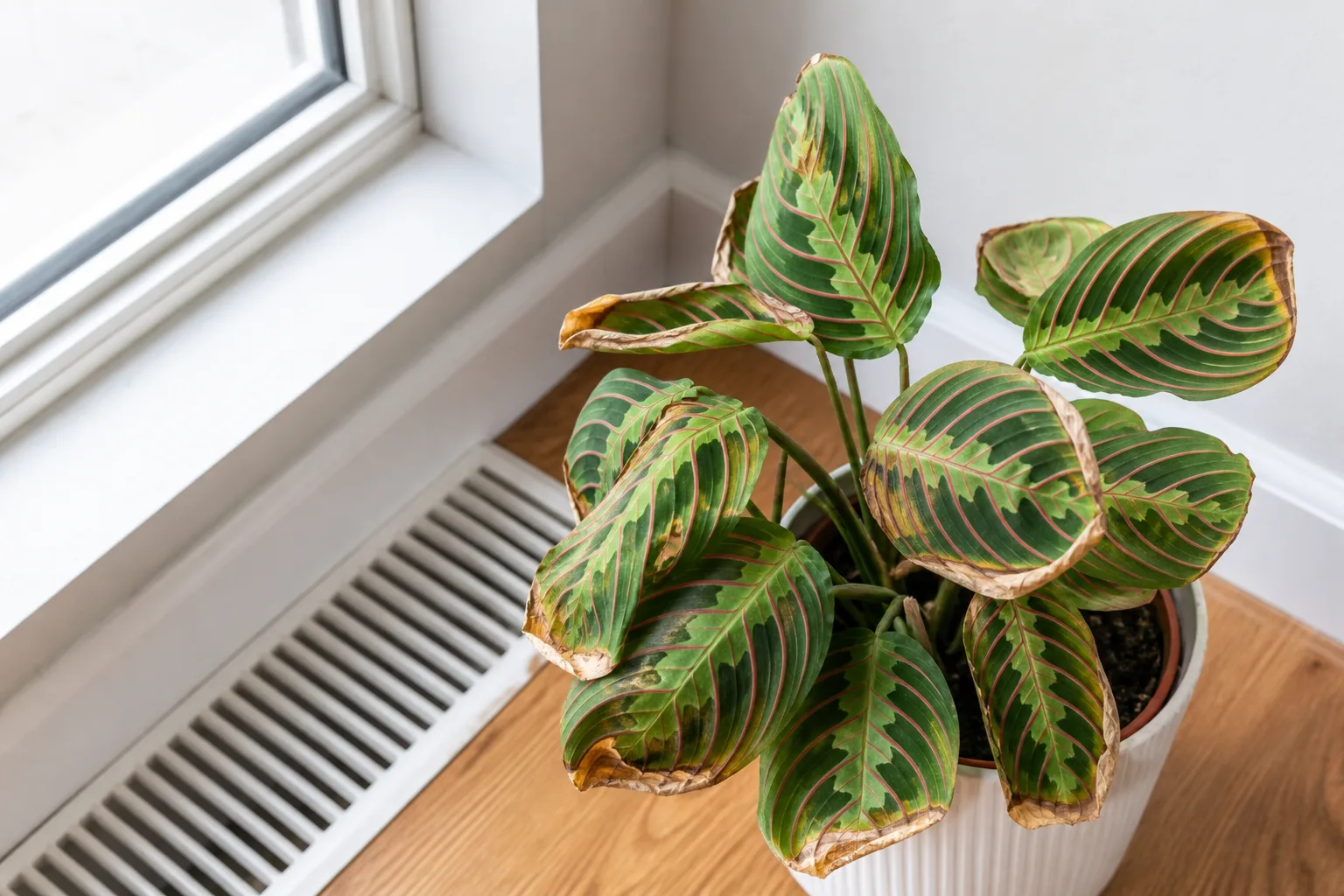
Draft Stress on Maranta Leuconeura: Causes, Checks & Fixes
This guide covers draft stress on Maranta Leuconeura. See also the general Draft Stress guide, watering, and light pages for this plant.
Draft Stress on Maranta Leuconeura: Causes, Checks & Fixes
Quick answer
If your prayer plant stopped folding its leaves at night after an AC blast, winter window chill, or heater draft, suspect draft stress before you reach for the watering can. Maranta leuconeura evolved on the humid forest floor of Brazil, where air stays warm and still-not in the path of heating ducts or cold glass. The species is intolerant of low temperatures and cold drafts, and thin leaves lose turgor fast when localized air swings hot or cold.
First step: move the pot to a stable location away from vents, exterior doors, and cold window glass-then leave it there for at least a week. Do not repot, fertilize, or soak the soil until air around the plant holds steady between 18–27°C (65–80°F).
Draft stress vs. wind damage vs. curling on Maranta
Prayer plant symptoms overlap across several Maranta problem pages. Use this table to route yourself before changing care:
| What you notice | Most likely cause | Key differentiator | Read next |
|---|---|---|---|
| Lost or weak night folding after vent or window exposure; one-sided curl or limpness; no torn edges | Draft stress (this page) | Timing matches AC, heat, or cold glass; damage faces the air source; soil evenly moist | Stay here |
| Torn or ragged leaf margins, crispy one-sided burn after fan, transport, or HVAC blast | Wind damage | Physical tears or shredded edges; often follows moving air plus dry air | Wind damage guide |
| Inward curl on multiple leaves, dry pot weight, soil pulling from edges | Underwatering or curling leaves | Light pot; perks up after thorough watering | Curling or underwatering guide |
| Crispy tips and margins in dry heated rooms, moist soil | Low humidity | Broad margin burn in winter; hygrometer below 45% RH | Low humidity guide |
| Yellow lower leaves, heavy wet pot, sour smell | Overwatering | Mushy roots; wilt despite wet mix-often worsened when cold roots cannot absorb water | Overwatering guide |
Draft stress and wind damage share HVAC triggers but differ in whether temperature shock or physical airflow desiccation dominates. Curling from dry soil develops over days without a sudden air event.
What draft stress looks like on Maranta leuconeura
Draft injury on prayer plants usually appears suddenly and often on one side of the plant first:
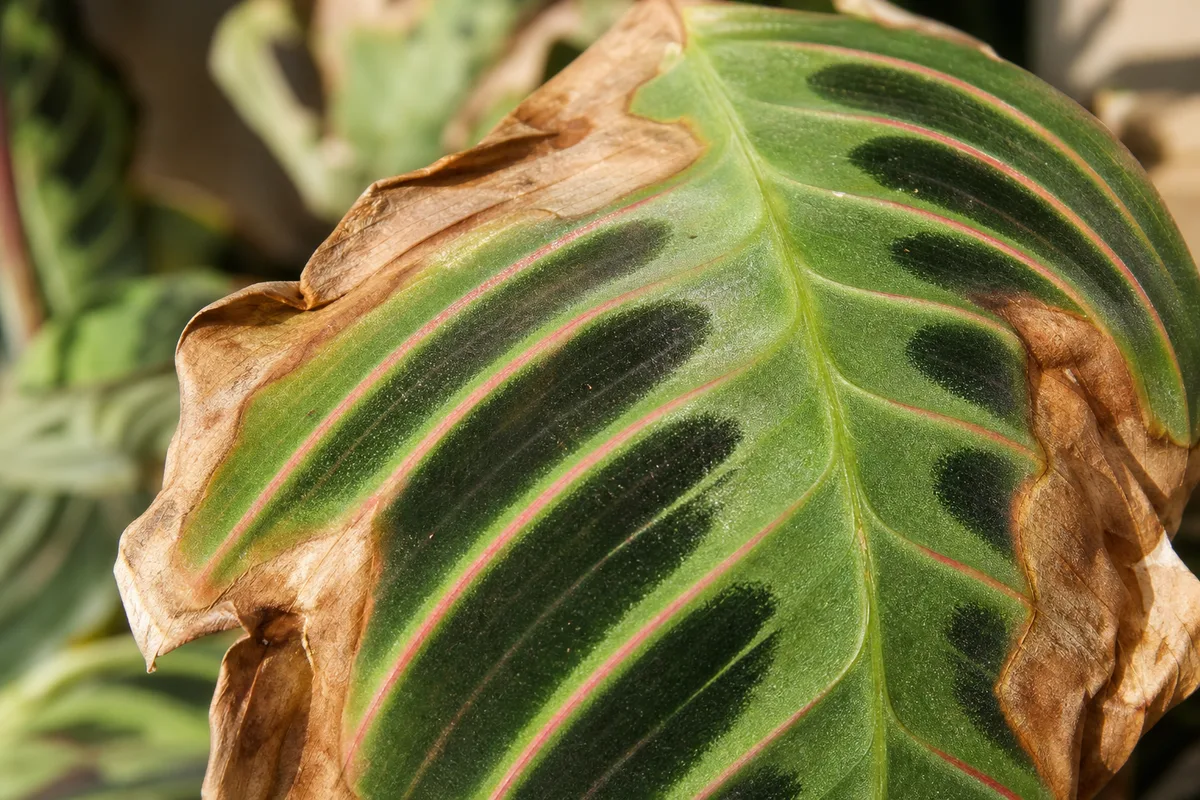
Draft Stress symptoms on Maranta Leuconeura - compare with healthy tissue on the same plant.
Early signs:
- Leaves curling inward or failing to rise fully into the nightly “prayer” position
- Outer trailing leaves drooping while inner growth still looks upright
- Faded or washed-out variegation on the side nearest a vent or window
- Slight limpness despite soil that feels evenly moist at 2 cm depth
- New leaves opening smaller or already curled at the edges
Progressed stress:
- Yellowing leaves, sometimes several at once, on the draft-exposed side
- Brown or tan patches where cold glass or hot dry air contacts foliage directly
- Leaves staying flat day and night-the nyctinastic folding response weakens when turgor drops
- Slowed new growth during an otherwise warm growing season
- Leaf drop within days of a room change, Maranta Leuconeura repotting guide near a vent, or first winter heating cycle
Because Maranta spreads horizontally from short rhizomes, the longest stems hanging over a basket rim often touch the coldest air layer first. A plant beside a frequently opened door may look fine on the interior side while outer leaves wilt-a strong clue that moving air, not root failure, triggered the slump.
Why prayer plant reacts badly to drafts
Maranta leuconeura is a low-growing tropical perennial with broad, thin leaves and shallow rhizomes. It prefers temperatures that do not dip below 60°F (15°C) and has no tolerance for frost. Indoor plants are sensitive to drafts or heat from registers, and Maranta’s large leaf surface loses heat and moisture quickly when cold or dry air streams across it-even if a room-center thermometer reads 21°C (70°F).
Several traits explain why drafts hit Maranta Leuconeura overview harder than pothos or ZZ plant:
- Shallow rhizomes - Roots sit near the soil surface and cannot compensate when chilled air slows water uptake at the crown.
- Nyctinastic movement - Healthy prayer plants fold leaves upward at night; draft stress disrupts turgor before obvious yellowing appears.
- Indoor microclimates - Leaf tissue touching winter glass can experience far colder conditions than the room average suggests.
Common draft sources include central AC floor vents, heat pumps blowing across a shelf, radiators cycling overnight, poorly sealed windows, and the air rush when exterior doors open repeatedly. Summer AC and winter heating both qualify-draft stress is about sudden localized air movement and temperature change, not only cold.
How to confirm draft stress is the cause
Lead with placement and the night-fold check before you repot, fertilize, or drastically change water:
- Location audit - Stand at the pot and feel air at leaf height. Cold seepage from glass, a warm blast from a floor vent, or a direct AC stream confirms environmental stress.
- Night folding at dusk - Partial folding with daytime curl suggests early draft stress; completely flat leaves day and night may mean deeper water or root problems. This is the fastest Maranta-specific triage step.
- Timing - Did symptoms start after turning on heat, opening windows, moving the plant, or placing it in a new room? Same-day or next-day onset favors drafts over slow root rot.
- Pattern - One-sided damage (leaves facing the vent or window only) strongly supports draft stress. Uniform yellowing from the soil line up suggests overwatering.
- Soil moisture at 2 cm - Evenly moist soil plus limp leaves on one side points to air stress. Bone-dry soil means underwatering. Wet, heavy soil with sour smell means overwatering-often compounded when cold roots cannot absorb water efficiently.
- Pot weight and roots - Lift the pot. Moderate weight with firm, pale roots rules out advanced rot. Mushy roots need a different fix.
If the plant sits in stable 18–27°C (65–80°F) air with no vent blast and symptoms persist, look next at low humidity, fluoride tip burn, or spider mites-especially in dry heated rooms.
First fix for Maranta leuconeura
Relocate the pot to a draft-free spot with Maranta Leuconeura light guide and stable room temperature, then do not move it again for at least seven days.
Choose a place at least 30 cm (12 in.) from window glass in winter, out of the direct path of AC and heat vents, and away from doors that open often. Illinois Extension notes prayer plants need warm temperatures and high humidity-relocation addresses the temperature half of that equation immediately. For baseline light and moisture rhythm, cross-check our Maranta watering guide.
While the plant acclimates:
- Keep your normal moist-but-not-soggy watering rhythm; do not pour extra water to “comfort” a chilled plant.
- Hold fertilizer completely until new growth looks stable for two to three weeks.
- Avoid pruning heavily on day one-remove only leaves that are fully black or mushy.
After 48 hours in the new spot, check whether outer leaves feel less limp and whether the nightly fold is returning. Stable air is the signal to proceed; if collapse spreads despite a calm location, inspect roots and pests before trying secondary fixes.
Step-by-step recovery
Once the plant sits in stable air, support recovery in this order:
- Maintain humidity - Drafts often pair with dry heated air. Run a humidifier or use a pebble tray so RH near the plant stays around 55–60% while temperatures stabilize. See low humidity if margins crisp broadly in winter.
- Adjust watering slightly if soil stayed wet - Cold-stressed roots absorb less water. If the pot felt heavy and cool after exposure, let the top 2 cm dry slightly before the next drink rather than keeping saturated mix.
- Trim only dead tissue - Snip fully brown, black, or yellow leaves at the base with clean scissors. Leave partially green leaves-they still photosynthesize.
- Scout for spider mites - Stressed prayer plants attract pests. Inspect undersides weekly while the plant recovers.
- Seasonal placement - In winter, pull the pot inward from the windowsill; in summer, redirect AC so it does not blow across foliage.
Avoid repotting during active draft recovery unless roots are clearly failing. Prayer plants already under environmental stress tolerate root disturbance poorly.
Recovery timeline and what improvement looks like
Draft fixes work quickly when stems and roots remain firm:
- 24–72 hours - Active curling may ease; leaves feel less papery on the protected side.
- 1–2 weeks - Yellowing stops spreading; existing leaves hold their color.
- 2–4 weeks - New leaves emerge flatter, with stronger variegation; nightly folding strengthens.
- 1–2 months - Fresh foliage replaces the worst damaged outer leaves on actively growing plants.
Brown or blackened tissue will not revert to green-judge success by new growth and restored leaf movement, not repaired edges.
Signs the problem is worsening:
- Crown or stem bases softening while soil stays wet
- Widespread yellowing from multiple stems after relocation
- Blackened leaf tissue spreading despite stable air
- No new growth after four weeks in a calm 18–27°C (65–80°F) spot with correct watering
Those patterns mean escalate beyond placement-check for root rot, prolonged cold injury, or pest load.
Lookalike symptoms to rule out
| What you see | More likely cause | Quick differentiator |
|---|---|---|
| One-sided curl or droop after vent exposure | Draft stress | Damage faces vent, window, or door; timing matches environmental change |
| Crispy tips, dry room, moist soil | Low humidity | Affects margins broadly in winter; hygrometer below 45% |
| Yellow leaves, soggy soil, sour smell | Overwatering / root rot | Mushy roots; limp plant despite wet mix |
| Light pot, dry soil, wilt before curl | Underwatering | Soil pulls from pot sides; recovers after thorough watering |
| Silver stippling, fine webbing | Spider mites | Pests on undersides; often follows dry or stressed conditions |
| Bleached patches on upper leaves | Direct sun scorch | Damage on sun-facing side, not vent side |
Draft stress and underwatering both cause curl-confirm air stability and soil moisture together before picking a fix.
Mistakes to avoid
- Overwatering a chilled plant - Cold roots in saturated mix rot quickly; stems rot easily when water stands on crowns.
- Fertilizing immediately - Nutrients on stressed foliage add burn risk; wait until new leaves open cleanly.
- Repotting on day one - Root disturbance stacks on environmental shock.
- Moving the pot daily - Bouncing between rooms prevents acclimation; pick one stable spot.
- Sitting on a winter windowsill - Glass-adjacent leaves experience colder air than the room thermometer shows.
- Ignoring paired dry air - A heating vent delivers both hot dry blast and temperature swing; fix placement and humidity together.
- Mistaking draft for wind damage - Torn edges and ragged margins point to wind damage, not temperature shock alone.
Maranta care cross-check
Draft stress rarely exists in isolation. Confirm these basics stay steady while the plant recovers:
- Light - Bright indirect light; no direct sun that heats leaves unevenly.
- Temperature - 18–27°C (65–80°F); avoid sustained exposure below 15°C (59°F).
- Water - Keep top 2 cm evenly moist during growth per our watering guide; use filtered or settled water to avoid stacked tip stress.
- Humidity - Target 55–60% RH or higher near the pot.
- Airflow - Gentle room circulation is fine; avoid constant hot or cold blasts.
Maranta leuconeura is more draft-sensitive than pothos or ZZ plant but generally more forgiving than Calathea-still firmly in the tropical foliage group.
How to prevent draft stress next time
- Map vents before placing the pot - Know where heat, AC, and return air actually blow at shelf height.
- Winter window buffer - Move plants inward or use insulated curtains before the first hard cold snap.
- Stable “home base” - Avoid relocating the prayer plant when seasons change; adjust distance from glass instead.
- Door-adjacent caution - Keep trailing baskets away from entries that open frequently.
- Thermometer at plant level - Room average temperature can mask a cold microclimate at leaf height.
- Acclimate new purchases - Hold new plants in one stable room for two weeks before moving them near windows or vents.
Related problems on Maranta leuconeura
If symptoms do not match draft stress after relocation:
- Torn or shredded leaf edges → Wind damage
- Inward curl with dry, light pot → Curling leaves or underwatering
- Crispy winter margins, moist soil → Low humidity
- Yellow leaves, heavy wet pot → Overwatering
About this guide
This guide was written by sai-ananth and reviewed by the LeafyPixels Review Board against botanical references including the Missouri Botanical Garden PlantFinder entry for M. leuconeura, NC State Extension prayer plant profile, Illinois Extension prayer plant page, University of Maryland Extension temperature and humidity guidance, and LeafyPixels watering, wind damage, curling leaves, low humidity, and overwatering guides. Last reviewed 2026-06-17.
When to use this page vs other Maranta Leuconeura guides
- Maranta Leuconeura watering guide - Use for routine moisture checks before assuming draft stress is the main issue.
- Maranta Leuconeura problems hub - Browse all 40 common issues on this species.