Wind Damage on Maranta Leuconeura: Causes, Checks & Fixes
Quick answer
Wind damage on Maranta Leuconeura shows as torn or curled patterned leaves, crispy margins, and drooping thin stems after HVAC blasts, open windows, or rough transport-not usually a watering disease. First step: move the pot away from the draft or forced-air source into a stable, humid spot before you prune or repot.
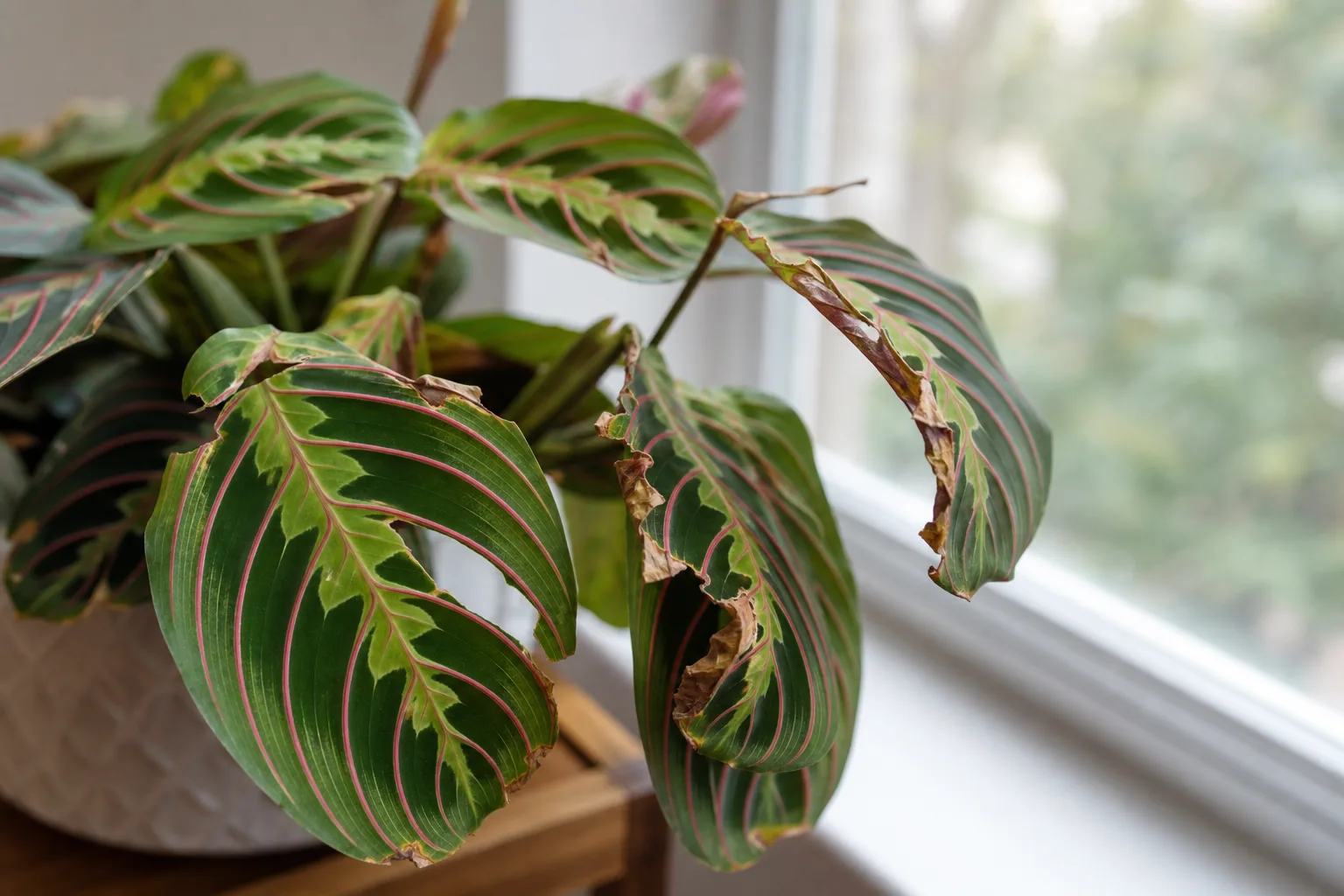
Wind Damage on Maranta Leuconeura: Causes, Checks & Fixes
This guide covers wind damage on Maranta Leuconeura. See also the general Wind Damage guide, watering, and light pages for this plant.
Wind Damage on Maranta Leuconeura: Causes, Checks & Fixes
Quick answer
Wind damage on Maranta Leuconeura-the classic red-veined prayer plant-shows up as torn or curled patterned leaves, crispy brown margins, and drooping thin stems after the plant sits in a draft, HVAC blast, or gusty spot. This is environmental injury on thin tropical foliage, not a mysterious disease.
First step: move the pot away from the airflow source into a stable location with Maranta Leuconeura light guide, steady warmth, and humidity above 60%. Do not repot, fertilize, or heavily prune on day one. Maranta leaves will not heal torn tissue, but calm air lets the plant redirect energy to new growth.
What wind damage looks like on Maranta Leuconeura
Prayer plants carry broad, thin leaves (often to about 5 inches long) with striking red veins and green patterning. That leaf shape looks dramatic when airflow strips moisture or snaps tissue.
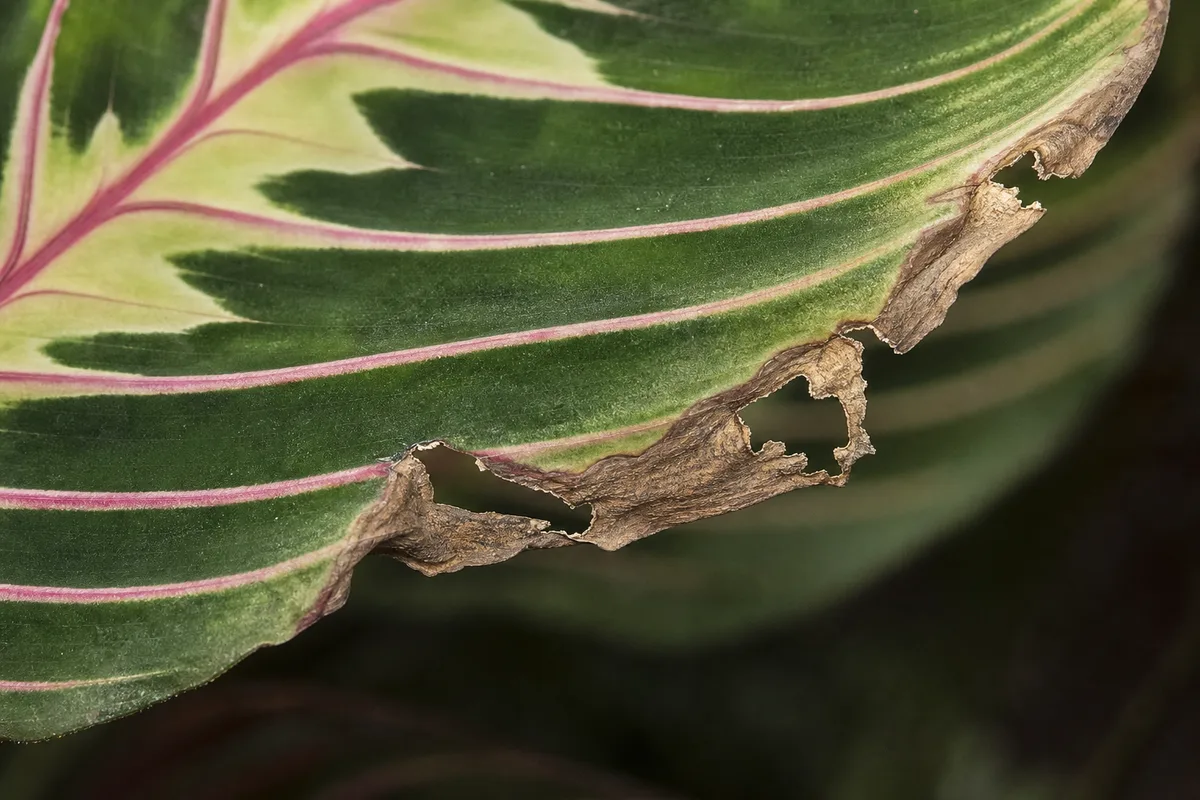
Wind Damage symptoms on Maranta Leuconeura - compare with healthy tissue on the same plant.
Typical wind and draft injury:
- Torn or ragged leaf margins on one side of the plant-the side facing the vent, fan, or open window
- Crispy brown edges or tips that appear within hours to a few days after a dry heat blast or cold draft
- Curling leaves that roll inward to reduce surface area-often paired with dry air, not just underwatering
- Drooping or limp stems on the low-growing clump after desiccating airflow
- Interrupted prayer movement-leaves may stay partially folded or fail to close smoothly at night when stress is active
- One-sided damage-only stems near the register or drafty door show symptoms while inner leaves look normal
What wind damage is not:
- Uniform yellowing on old lower leaves with soggy soil (overwatering on Maranta Leuconeura pattern)
- Sticky residue with insects on undersides (pest honeydew)
- Round brown spots with yellow halos spreading plant-wide (leaf spot disease)
- Slow fade in a dim corner with no recent airflow change (low light)
Cosmetic edge burn on a few outer leaves while new center leaves stay firm and patterned usually means the plant can recover once placement is fixed.
Why Maranta Leuconeura gets wind damage
Maranta leuconeura is a tropical perennial native to Brazil that evolved on the humid forest floor in part shade-not in open windy canopy edges. Missouri Botanical Garden notes it prefers temperatures that do not dip below 60°F and performs best with bright indoor light without strong direct sun, consistently moist soil, and extra humidity from a humidified room or pebble tray.
That biology makes prayer plants sensitive to rapid air movement combined with temperature swings:
HVAC and seasonal drafts. Indoor plants are sensitive to drafts or heat from registers. Winter heating drops humidity while blowing hot dry air across thin leaves. Summer air conditioning can chill foliage below the plant’s comfort zone when vents aim directly at the pot.
Window and door exposure. A pot on a winter windowsill gets cold glass radiating chill on one side while warm room air hits the other-localized stress Maranta shows as curl and edge burn. Frequently opened exterior doors create repeated cold blasts.
Forced airflow from fans. Ceiling fans, box fans, and desk fans speed transpiration on leaves that already lose water quickly in dry indoor air. Maranta needs even moisture in the mix; wind dries leaf tissue faster than roots can replace it when humidity is low.
Transport and relocation shock. NC State Extension warns that wind during transport can tear leaves and desiccate delicate foliage, and recommends moving container plants away from cold drafts from outside doors and drying heating ducts when bringing them indoors. A prayer plant carried in a car with AC vents on the passenger seat often arrives with curled margins even if soil is moist.
Outdoor summer mistakes. Brief outdoor shade sessions fail when steady breeze hits thin Maranta leaves. The problem is not outdoor air alone-it is wind plus exposure swings on foliage that lacks a waxy cuticle.
Maranta’s low, spreading habit also means outer leaves take the first hit while inner growth may look fine, which can delay diagnosis if you only glance at the center.
How to confirm the cause
Work through these checks in order:
- Timeline - Did symptoms appear within days of turning on heat, opening a window, moving the pot, running a new fan, or transporting the plant?
- Directional pattern - Is damage worse on the side facing a vent, door, or fan? One-sided browning strongly suggests airflow, not uniform watering error.
- Air source map - Stand near the pot and feel for moving air from registers, returns, fans, or drafty gaps. Even a faint steady breeze on your skin can be too much for prayer plant leaf quality.
- Soil moisture - Stick a finger 2 cm deep. Wind damage can occur with moist soil because desiccation hits leaves first. Soggy mix with sour smell points away from pure wind injury toward root problems.
- New growth check - Unfurl the newest rolled leaves at the center. Clean patterning and firm tissue mean the plant is still viable; widespread collapse of new tips suggests combined cold and moisture stress.
- Temperature at the pot - If a thermometer near the plant reads below about 60°F after a cold draft, chilling can trigger leaf drop on houseplants in addition to visible edge burn.
- Humidity context - Dry winter rooms below 40% humidity amplify wind desiccation. Confirm whether a humidifier was off when damage started.
If damage appeared with no airflow change, inspect for spider mites (fine stippling, webbing) or fluoride brown tips from tap water-those mimic edge burn but lack a directional pattern.
First fix for Maranta Leuconeura
Move the pot out of the draft path into a stable microclimate today.
Choose a spot with bright indirect light, no direct sun, no register blast, and humidity support-a humidifier, pebble tray, or grouped plants. Let the plant sit there without further moves for at least two weeks.
Do not repot, fertilize, mist heavily on fuzzy timing, or prune more than one or two fully dead leaves on day one. Each extra stressor competes with recovery while the plant rebalances water loss across damaged leaves.
Step-by-step recovery
After relocation:
- Raise humidity steadily - Aim for 60% or higher near the foliage using a cool-mist humidifier or pebble tray. Grouping plants raises local humidity; misting alone rarely fixes dry winter air.
- Hold watering steady - Keep soil consistently moist at 2 cm depth without waterlogging. Wind-stressed leaves may look thirsty, but flooding wet mix invites root rot on Maranta Leuconeura on Maranta’s fine roots.
- Trim only fully dead tissue - Snip leaves that are entirely brown or torn beyond half the blade with clean scissors. Leave partially damaged leaves if green tissue remains-they still photosynthesize.
- Pause fertilizer - Skip feed until new growth looks healthy for two weeks. Salt on stressed roots worsens tip burn.
- Support bent stems lightly - If thin stems kinked but are still green, stake loosely with a soft tie rather than forcing them upright aggressively.
- Acclimate before the next move - If the current spot is too dark, shift gradually over a week toward brighter indirect light rather than jumping to a new windowsill with new drafts.
Watch for resumed nightly prayer folding-that rhythm returning is a good sign the plant feels stable again.
Recovery timeline
First 48–72 hours: Leaf curl may soften once air is calm and humidity rises, though torn edges stay as-is.
One to two weeks: New leaves should begin unfurling with clean patterning if warmth stays in the 65–80°F range and soil moisture is even.
Three to four weeks: Outer damaged leaves remain cosmetic blemishes until you trim them or the plant replaces them slowly. Judge success by firm stems, active new rolls, and no spreading edge burn.
Severe cold exposure below 60°F with limp stems and wet soil may take longer or require root inspection if decline continues despite stable air.
Lookalike symptoms to rule out
Low humidity alone browns tips evenly in dry rooms without a directional tear pattern-fix humidity, but no vent needs relocating.
Fluoride or chlorine in tap water causes brown tips on sensitive Maranta cultivars over weeks, not hours after a draft event. Switch to filtered or overnight tap water if tips brown on all sides with no airflow story.
Underwatering wilts the whole plant with light, dry pot weight. Wind damage often hits one side while mix still feels moist.
Spider mites cause stippling and fine webbing, especially in hot dry air-but confirm with magnification rather than assuming wind.
Draft stress vs. draft plus overwatering sympathy - Owners sometimes soak a drooping prayer plant after a vent blast. Wet roots plus damaged leaves slow recovery; confirm moisture before adding water.
Mistakes to avoid
Do not leave the plant in place and only mist leaves while the register still blows-that treats symptoms, not the cause.
Do not blast the plant with a fan “for air circulation” immediately after damage. Gentle room air is fine; forced drafts are not.
Do not repot on arrival from a nursery or after transport shock unless roots are clearly failing. Environmental change alone can cause temporary leaf drop on houseplants for up to a few weeks.
Do not place Maranta on a sunny windowsill to “help it recover” after wind injury-too much sun bleaches prayer plant leaf colors and adds light stress to already damaged tissue.
Do not prune the entire canopy back hard unless stems are truly dead. Maranta stores energy in rhizomes and remaining leaves; over-pruning slows rebound.
Maranta Leuconeura care cross-check
Wind damage recovery sticks better when baseline care matches Maranta Leuconeura overview:
- Light: Medium to bright indirect-never strong direct sun on recovering leaves
- Water: Every 5–7 days typical; keep top 2 cm moist, not saturated
- Humidity: 60%+ preferred; more tolerant than Calathea but still tropical
- Temperature: 18–27°C (65–80°F); avoid sustained exposure below 18°C (65°F)
- Soil: Moisture-retaining, well-draining mix with perlite and coco coir
Fix airflow first, then align these factors. Changing water, pot, and placement all at once makes it impossible to know what helped.
How to prevent wind damage next time
Map vents before you set the pot. Situate Maranta at least several feet from supply and return registers, and avoid hanging baskets in the direct path of ceiling fan blades.
Buffer winter windows. Use insulated glass or pull pots back from cold panes at night. A sheer curtain reduces radiating chill without darkening the plant excessively.
Humidify dry heat seasons. Run a humidifier when indoor relative humidity drops-most homes lack sufficient humidity for tropical foliage in winter.
Transport carefully. Cover foliage loosely when moving the plant; keep it out of car AC vents. Gradually acclimate when shifting from outdoor to indoor conditions over about a week when seasons change.
Choose calm outdoor spots if you summer the plant outside-deep shade with near-zero wind and rain protection. Thin prayer plant leaves do not tolerate gusts the way tougher-leaved houseplants might.
When to worry
Treat as urgent when:
- Temperature at the plant stayed below about 60°F after a prolonged cold draft, especially with wet soil
- Stems collapse and feel mushy at the base-not just limp from dry air
- New center leaves abort or blacken within a week of the event
- Most of the canopy desiccated while soil remains soggy and smells sour-possible combined wind shock and root rot
Cosmetic torn edges on a firm plant with active new growth are not urgent once you have moved it. Trim for appearance when you are bored, not because the plant requires emergency surgery.
Conclusion
Wind damage on Maranta Leuconeura is a placement problem on thin tropical leaves-not a reason to panic-repot or drench the plant. Move it out of the draft, stabilize humidity and temperature, hold other changes, and watch for clean new prayer leaves. Old torn tissue will not perfect itself, but a calm environment lets this rhizomatous plant push fresh patterned foliage within weeks.
When to use this page vs other Maranta Leuconeura guides
- Maranta Leuconeura watering guide - Use for routine moisture checks before assuming wind damage is the main issue.
- Maranta Leuconeura problems hub - Browse all 40 common issues on this species.