Ants on Maranta Leuconeura: Causes, Checks & Fixes
Quick answer
Ants on Maranta Leuconeura are a warning sign, not the root problem. They almost always farm honeydew from aphids, mealybugs, or scale on soft new leaves and leaf undersides. First step: follow the ant trail and inspect new growth for sap-sucking pests before treating ants.
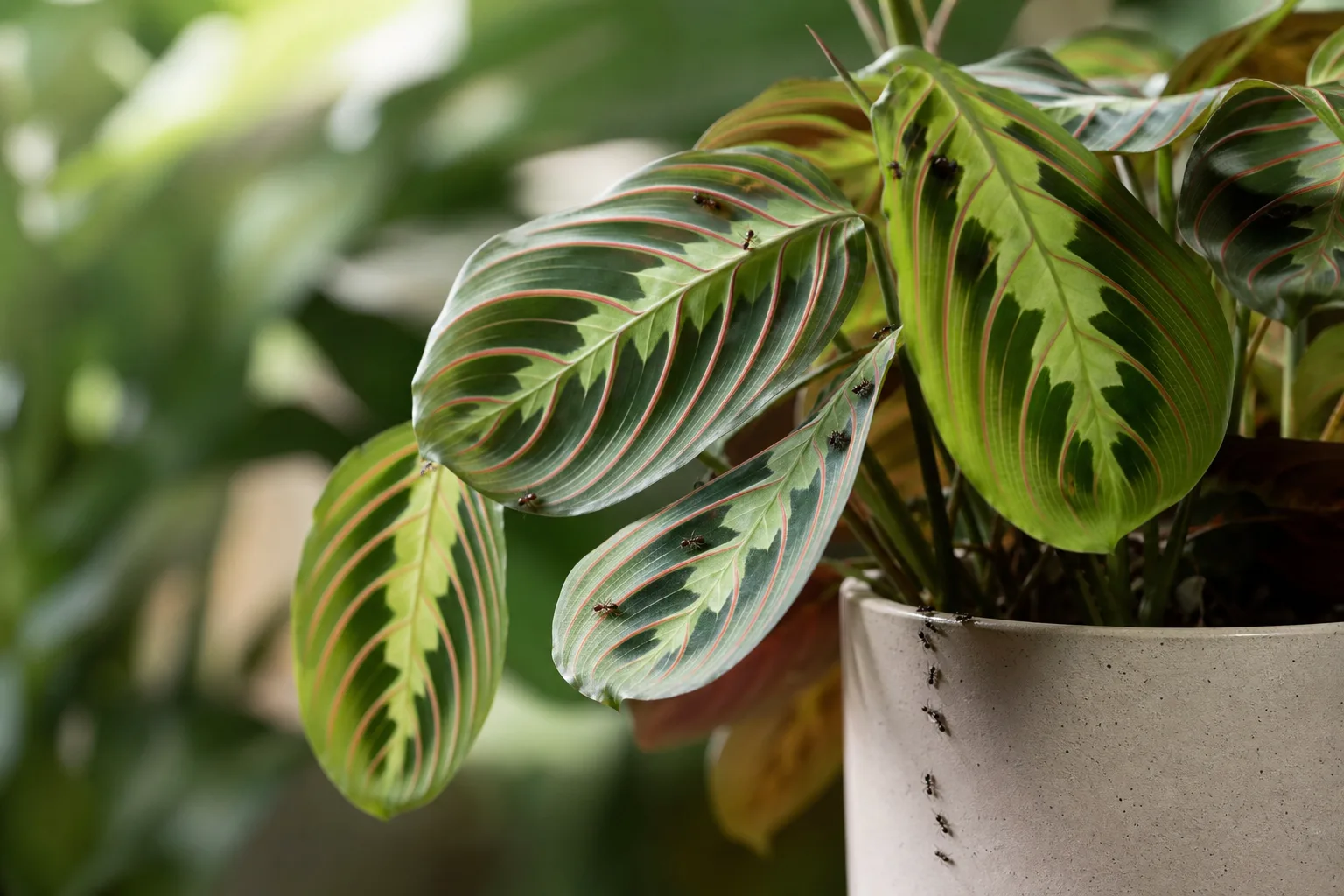
Ants on Maranta Leuconeura: Causes, Checks & Fixes
This guide covers ants on plant on Maranta Leuconeura. See also the general Ants on Plant guide, watering, and light pages for this plant.
Ants on Maranta Leuconeura: Causes, Checks & Fixes
Quick answer
When ants march across your prayer plant pot, they are usually after honeydew-the sugary waste that aphids, mealybugs, and soft scale excrete while feeding on sap. On Maranta leuconeura, those pests settle on the tenderest tissue: newly unfurling leaves, soft stem tips, and sheltered undersides where humidity stays high. Arizona Extension notes that ants may become protective of aphid colonies, farming them for ready access to that food source.
Your first job is not ant spray. Follow the trail to the pest. Inspect new growth with a hand lens, wipe or rinse off any aphids or mealybugs you find, and remove sticky residue from leaves and the pot rim. Once the sap feeders are under control, ants typically disappear within a few days.
What ants on Maranta Leuconeura look like
Ants on prayer plant show up as steady lines along the pot exterior, up the drainage holes, across a pebble tray, or onto lower stems. You may notice them most when the Maranta is actively pushing new patterned leaves from its rhizome-exactly where UC IPM describes aphids clustering on soft, new plant growth.
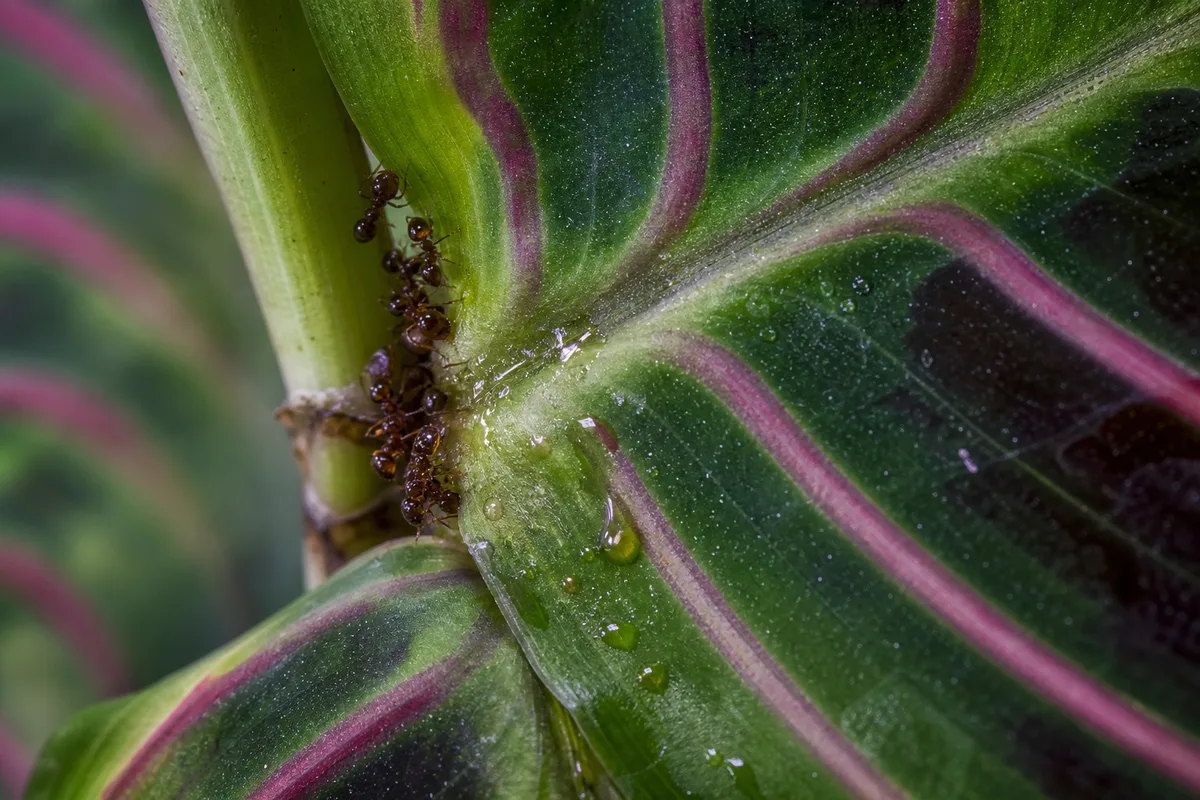
Ants on Plant symptoms on Maranta Leuconeura - compare with healthy tissue on the same plant.
Common companion signs on Maranta:
- Shiny, sticky leaf surfaces or a tacky pot rim from honeydew
- Black sooty mold on upper leaves below a heavy infestation
- Curled or puckered new shoots still opening, with insects underneath
- White cottony mealybug patches in leaf axils and along thin stems
- Ants pausing at cane joints rather than chewing foliage
Prayer plant leaves normally fold upward at night. Ant damage is different: affected new leaves stay distorted during the day, feel tacky, and carry visible pests when you flip them over. If folding looks normal on clean leaves but one shoot is sticky with ants at its base, focus inspection on that shoot only.
Why Maranta Leuconeura attracts ants
Ants are not a random prayer plant weakness-they arrive because Maranta culture creates what honeydew producers need, and ants exploit the reward.
Constant soft new growth. Happy Marantas in Maranta Leuconeura light guide with evenly moist soil produce fresh leaves regularly. UC IPM notes that aphids feed on soft, new plant growth and that over-fertilization pushes tender shoots they prefer. Spring growth on a well-fed prayer plant can host aphids before you notice stickiness on the patterned upper surface.
Humid indoor culture. Missouri Botanical Garden recommends keeping Maranta leuconeura soils consistently moist in a humidified room. That environment suits foliage plants but also keeps pest colonies comfortable on sheltered undersides where rinses do not reach easily.
Ant protection breaks natural control. Indoors, lady beetles and lacewings are scarce. When ants discover honeydew, UC IPM emphasizes that managing ants helps beneficial insects control aphids-without ant control, the pest colony you knock off once can rebound quickly.
Introduction routes. Most infestations arrive on new nursery plants, shared cuttings, or prayer plants that summer outdoors and return through an open window. Mealybugs hide in leaf axils; aphids reproduce fast in warm rooms. Ants are often the visible clue that arrives after the sap feeder is already established.
Spills and bait confusion. Ants may also scout saucers where fertilizer water, sweet drinks, or food residue collected. That pattern looks like a pest problem until you wipe the area and ants do not return to stems.
How to confirm the cause
Work through these checks before you spray anything:
- Follow the ant line to where it ends-usually honeydew, pests, or both on new growth.
- Hand lens inspection of the newest rolled leaves and undersides. Aphids are pear-shaped; mealybugs look cottony; scale forms fixed bumps with honeydew on soft types.
- Sticky test - Honeydew feels tacky and may grow wipe-able sooty mold. Healthy prayer plant leaves are not sticky unless pests or residue are present.
- Pot and tray check - Ants on the exterior with stickiness on stems below strongly suggest farming, not random foraging.
- Neighbor scan - Inspect Calathea, Stromanthe, and other tropicals on the same shelf. Ants often signal an infestation on a different pot in the same room.
- Spill rule-out - Clean the saucer and shelf; if ants leave stems alone, the source was residue.
- Virus caution - Penn State Extension links cucumber mosaic virus on Maranta to aphid transmission. Bright yellow line patterns on distorted new leaves after heavy aphids need isolation.
If you find no pests, no honeydew, and ants only pass across the pot once, monitor for a week before chemical treatment.
First fix for Maranta Leuconeura
Follow the ant trail, then isolate the plant and inspect new growth for aphids, mealybugs, or scale.
Move the Maranta away from other houseplants. Trace where ants congregate-usually the pot rim, a stem joint, or the underside of the topmost unfurling leaf. Use a hand lens to confirm sap feeders, then remove them: rinse leaf undersides and new shoots with lukewarm water, dab mealybugs with a cotton swab dipped in alcohol, or wipe aphid clusters with a damp cloth.
University of Minnesota Extension lists washing and physical removal as first steps for indoor plant pests. Wipe honeydew from leaves, stems, and the pot rim so ants lose their food source.
Do not reach for ant bait or insecticide on day one if you have not found the pest yet. Do not drench the crown when rinsing-Illinois Extension warns that water standing on prayer plant stems can trigger rot. Tip the pot so water runs away from the rhizome.
Step-by-step recovery
After the initial inspection and pest removal:
- Repeat rinsing or wiping every two to three days until two weekly inspections find no live sap feeders. UMN Extension notes that if pests are detected, isolate the plant from others.
- Apply insecticidal soap only if colonies persist. Use a product labeled for houseplants, coat tops and undersides thoroughly, and repeat weekly because soap has no residual activity. UMN Extension warns against homemade soap mixes that can burn foliage-especially important on thin prayer plant leaves.
- Wipe sooty mold off upper leaves with a damp cloth once honeydew production stops. The mold is cosmetic but blocks light if thick.
- Use ant bait stations near the pot (not in the soil) only after pest numbers drop, if ants still defend remaining colonies. Clemson HGIC notes that ants feed on honeydew produced by aphids, mealybugs, and soft scales-eliminating the source is more durable than killing scouts alone.
- Sticky barriers on shelf legs or pot hangers can block ant highways while you treat the plant above.
- Inspect neighbors that shared the same window or shelf for two weeks before mixing the collection again.
Because Maranta leuconeura is non-toxic to cats and dogs per ASPCA, rinsing and labeled soap treatments are practical in pet homes-still keep pets away until sprays dry and place ant baits where animals cannot reach them.
Recovery timeline
Ant traffic often drops within one to three days once honeydew is wiped and sap feeders are removed. Persistent mealybug colonies in leaf axils may need two to three weeks of repeated wiping or soap cycles.
Judge success by clean new leaves rolling normally at night, not by old sticky patches on mature foliage. Old honeydew stains and sooty mold wipe away; distorted leaf tissue rarely flattens to perfect form.
Improvement signs: fewer ants, no fresh stickiness, new shoots unfurling without insects underneath.
Worsening signs: ants returning to the same new leaf clusters after treatment, spreading sooty mold, or mosaic yellow line patterns on new growth per Penn State Extension.
Lookalike symptoms to rule out
Normal prayer plant movement - Leaves folding at night without stickiness, insects, or daytime distortion is healthy nyctinastic behavior, not ant damage.
Fungus gnats - Small flies above damp soil do not produce honeydew trails on leaves. Let the surface dry slightly between waterings without letting the pot go bone dry.
Spilled fertilizer or food on the saucer draws ants without any stem stickiness. Clean and observe.
Low humidity crisping - Brown dry edges from dry air or fluoride in tap water do not come with honeydew or ant lines on new shoots.
overwatering on Maranta Leuconeura stress - Yellow lower leaves with wet soil and no pests on undersides point to root issues, not ant farming.
Mistakes to avoid
Do not spray ants before finding the honeydew source-you treat the symptom and leave the pest colony intact.
Do not drench the crown when rinsing. Prayer plant rhizomes and stems rot easily when water sits in the center.
Do not stop after one wipe. UC IPM and UMN Extension both emphasize repeat applications are usually necessary because contact treatments miss hidden nymphs in curled leaves.
Do not return an isolated plant to the shelf after a single clean day. Hold it two weeks with weekly checks.
Do not increase fertilizer during recovery. Soft nitrogen-rich shoots invite reinfestation.
Do not ignore ants while treating only leaf spots or humidity-farming ants protect the pest that caused the stickiness.
Maranta Leuconeura care cross-check
While clearing ants and their pest partners, keep baseline care steady-swinging watering or light mid-infestation adds stress.
- Light: Bright indirect light per Missouri Botanical Garden; too much sun bleaches patterned leaves.
- Water: Keep mix evenly moist at about 2 cm depth; allow slight drying in winter but do not let the pot go bone dry mid-recovery.
- Humidity: Target 60% or higher; steady humidity supports recovery without the dry air that favors spider mites.
- Temperature: Above 60°F; cold drafts weaken new growth and slow recovery.
- Crowns: When rinsing, tipping the pot beats overhead soaking that pools at the stem base.
Ants are the alarm, not the engine. Fix the sap feeder first; ant trails usually resolve once the sugar source is gone.
How to prevent ants next time
Scout leaf undersides weekly, especially on the newest prayer plant leaves after spring growth starts. UMN Extension recommends examining plants when you water or clean them.
Quarantine new Marantas and cuttings two weeks before placing them near Calathea or other tropicals.
After summer outdoors, rinse and inspect before the plant re-enters your home.
Use balanced fertilizer at half strength monthly in active growth-not heavy nitrogen that pushes soft shoots aphids prefer.
Wipe honeydew promptly when you see shine on leaves so ants never establish a trail.
Keep ant barriers on shelves where you have had honeydew problems before, and place baits only where pets cannot access them.
Wash hands and tools after handling infested plants; UMN Extension notes pests can spread on hands and watering cans.
When to worry
Escalate when ants cover the pot daily despite a week of pest removal, when sooty mold blocks most of the leaf surface, or when mosaic distortion appears on new leaves after heavy aphid activity. Penn State links maintain good aphid control to preventing cucumber mosaic virus on Maranta-virus-suspect plants may not fully recover and should stay isolated.
A few ants on the saucer with no stem stickiness may only need cleaning. Ants on every new unfurling leaf with mealybug cotton in the crown need sustained treatment and possibly trimming the worst stems if hidden colonies persist.
Conclusion
Ants on Maranta leuconeura are scouts for honeydew, not chewers of prayer plant tissue. Follow their trail to aphids, mealybugs, or scale on soft new growth, isolate, remove the sap feeder before you bait ants, and keep crowns dry while you rinse. Steady humidity, weekly undersides checks, and prompt honeydew cleanup prevent a few ants on the pot rim from becoming a sticky, patterned-leaf mess across your whole tropical shelf.
When to use this page vs other Maranta Leuconeura guides
- Maranta Leuconeura watering guide - Use for routine moisture checks before assuming ants on plant is the main issue.
- Maranta Leuconeura problems hub - Browse all 40 common issues on this species.