Bud Drop on Maranta Leuconeura: Causes, Checks & Fixes
Quick answer
Maranta leuconeura rarely blooms indoors-when buds appear and drop early, unstable humidity, drafts, or watering swings during bud set are the usual triggers. First step: leave the pot where it is, run a humidifier to hold 55–60% RH, and keep soil evenly moist without repotting or moving the plant.
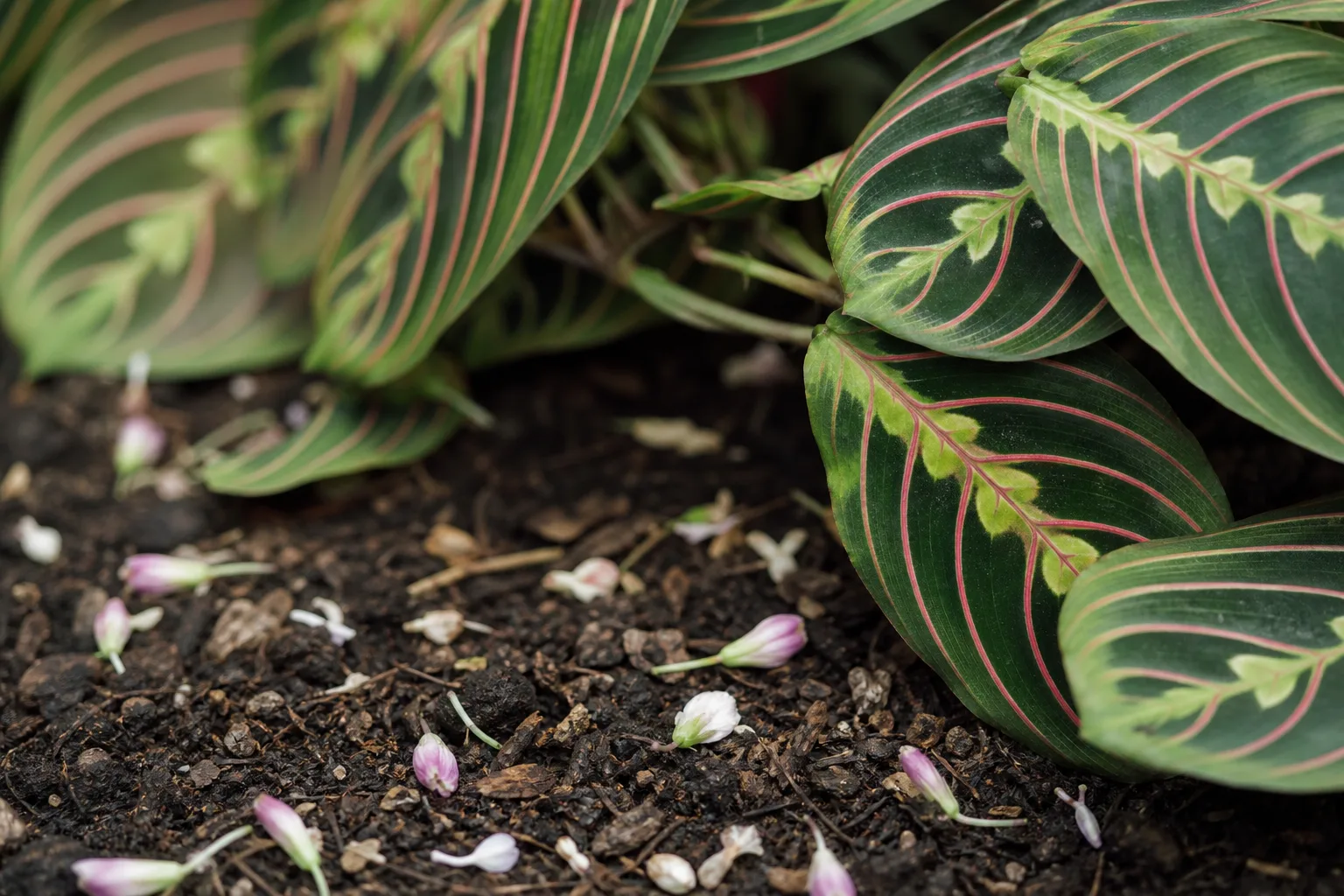
Bud Drop on Maranta Leuconeura: Causes, Checks & Fixes
This guide covers bud drop on Maranta Leuconeura. See also the general Bud Drop guide, watering, and light pages for this plant.
Bud Drop on Maranta Leuconeura: Causes, Checks & Fixes
Quick answer
Bud drop on Maranta leuconeura means flower buds form on slender stalks from the leaf axils, then yellow, shrivel, or fall before opening. Prayer plants rarely flower indoors, so seeing buds at all usually means the plant was happy enough to try-losing them is almost always a stability problem, not a mystery disease.
The most common triggers are sudden humidity drops, cold or hot drafts, inconsistent watering while buds set, recent Maranta Leuconeura repotting guide, or moving the pot to a new room. overwatering on Maranta Leuconeura during bloom can also push the plant into survival mode and abort buds before they open.
First step: leave the pot exactly where it is, run a humidifier until RH at leaf height holds 55–60%, and keep the top 2 cm of mix evenly moist without repotting, relocating, or heavy feeding. Stabilize the environment for one to two weeks before trying anything else.
What bud drop looks like on Maranta Leuconeura
Prayer plant flowers are easy to miss until you know where to look. Buds emerge as small, pale green or ivory cones at the junction where leaf stems meet the short rhizomatous crown-not at leaf tips. Over several days the stalk elongates and buds swell into tiny two-lipped flowers that are white with purple spots.
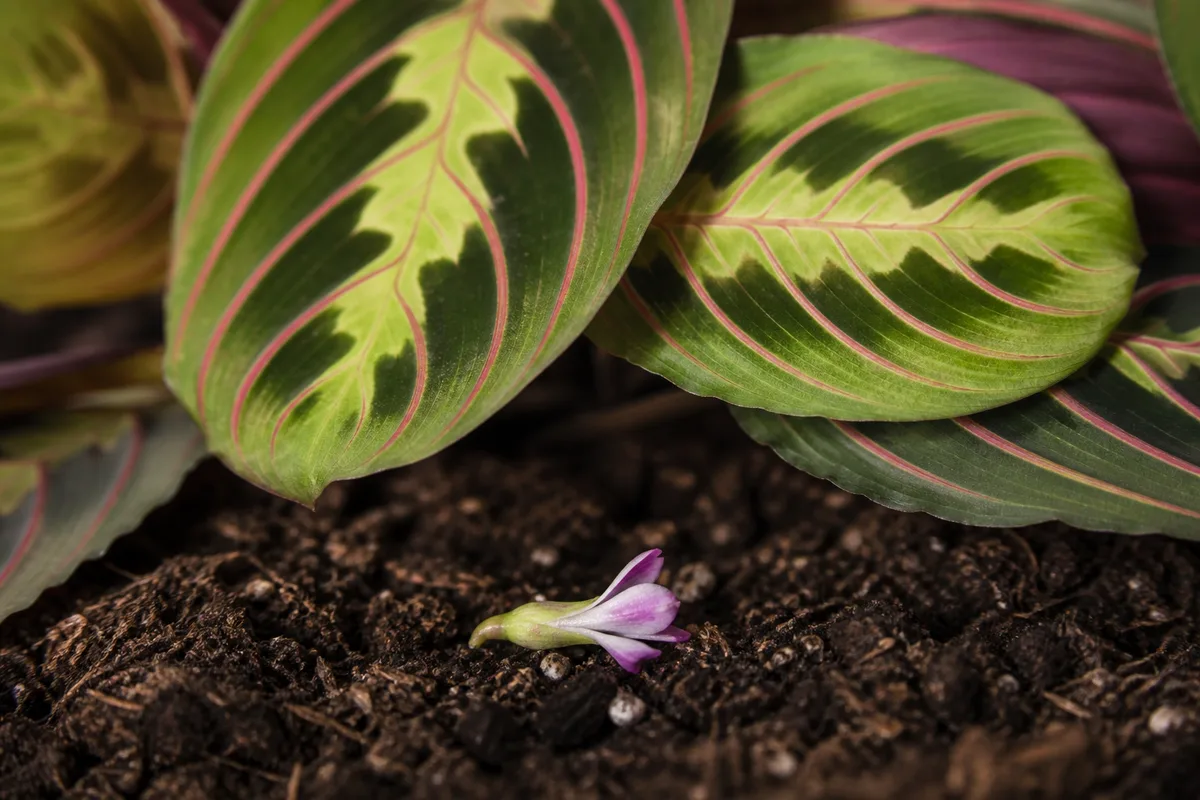
Bud Drop symptoms on Maranta Leuconeura - compare with healthy tissue on the same plant.
Stress-related bud drop:
- Buds turn yellow or brown and fall while still closed
- Stalks stay green but lose all buds within days of a care change
- Buds shrivel and feel dry or papery before opening
- Drop follows repotting, relocation, heat or AC startup, or a dry-air episode
- New foliage growth slows at the same time buds abort
Normal flower behavior (not a problem):
- Individual flowers open in the morning, wilt by evening, and fall if unpollinated-a natural cycle for Marantaceae blooms
- Spent stalks eventually brown and dry after the bloom sequence finishes
- Plant otherwise holds leaf color, nightly folding, and firm stems
Because Maranta is grown primarily for showy patterned foliage, many owners never see buds. When they appear and vanish, the pattern and timing of the loss tell you whether care slipped during a delicate bloom phase.
Why prayer plant drops buds
Maranta leuconeura evolved on humid Brazilian forest floors where light, moisture, and temperature stay relatively steady. Indoor bud formation is a luxury the plant attempts only when roots, humidity, and light align-then any shock makes it shed reproductive tissue first to protect the rhizome.
Environmental instability is the leading cause. Prayer plants are intolerant of cold drafts and low humidity. A winter heating blast, AC vent, or leaky window can desiccate developing buds within days while older leaves still look fine.
Watering swings during bud set matter because Maranta needs consistently moist-but not waterlogged-soil. Letting the mix go bone dry aborts buds; keeping crowns saturated while roots struggle invites stem rot and forces the plant to drop flowers to conserve energy.
Recent repotting or relocation disrupts the fine shallow roots that support bloom stalks. Even a beneficial long-term move can trigger bud abort if done while stalks are visible.
Light mismatch plays a role. Too little light prevents blooming entirely; too much direct sun scorches leaves and stresses the plant during bud development. Bright, indirect light matches the part-shade conditions Maranta Leuconeura overview prefers.
Heavy nitrogen feeding can push leaf growth at the expense of flowers. Over-fertilization also burns margins and adds root-zone stress when buds are forming.
Age and maturity matter too. Young plants often produce foliage for years before attempting flowers indoors. A first bloom cycle that fails is common; repeated aborts on a mature plant point to care instability instead.
How to confirm the cause
Work through these checks before cutting stalks, repotting, or changing fertilizer:
- Timeline - Did buds appear after late-winter growth resumed? Did they drop within 48 hours of a move, repot, dry spell, or thermostat change? Timing strongly implicates environment.
- Hygrometer at leaf height - Readings below 45% during bud set support low humidity; stable 55–60% suggests look elsewhere.
- Soil moisture at 2 cm - Evenly moist mix with aborting buds may mean a recent dry swing or draft, not current underwatering. Soggy mix with yellowing leaves points to overwatering.
- Stalk and bud texture - Dry, papery buds favor air or water stress. Black, slimy buds suggest fungal issues from wet foliage or poor airflow.
- Location audit - Note proximity to heat vents, radiators, open windows, and direct sun. Maranta bud stalks are slender and desiccate faster than mature leaves.
- Root spot check - If the pot feels heavy and smells sour, slide the plant out briefly. Firm, pale roots support an environmental diagnosis; mushy roots mean address rot before expecting blooms.
- Pest scan - Inspect undersides for spider mites or mealybugs. Sap loss during bud formation can abort flowers even when humidity looks acceptable.
If buds opened at least once and individual flowers wilted in the evening before falling, you may be seeing normal unpollinated flower drop rather than premature bud blast.
First fix for Maranta Leuconeura
Stop moving the plant and stabilize humidity and watering for two weeks.
Place a cool-mist or ultrasonic humidifier within 1–2 metres of the pot and aim for 55–60% RH at leaf height. Keep the top 2 cm of mix evenly moist using filtered or settled water-the same rhythm you use for healthy foliage. Do not repot, rotate rooms, prune heavily, or apply bloom fertilizer while stalks are still green.
Move the pot only if it sits in a direct draft or hot sunbeam; otherwise leave orientation unchanged. Prayer plants map their light and microclimate; even a short move during bud set can trigger abort.
Check the hygrometer daily. When RH holds steady and no new buds shrivel for seven to ten days, the immediate crisis is over whether or not the current stalk reblooms.
Step-by-step recovery
After the environment stabilizes, support the plant in this order:
- Hold fertilizer - Skip feeding until new leaves open cleanly for two to three weeks. Resume half-strength balanced liquid feed monthly in spring and summer only if growth is active.
- Protect from temperature swings - Keep ambient temps in the 18–27°C (65–80°F) range and away from glass that chills below 15°C at night.
- Maintain filtered water - Fluoride and salts that brown leaf tips also stress bud tissue on sensitive Maranta cultivars.
- Decide on stalk management - If you grow prayer plants for foliage, snip green stalks at the base once abort is complete so energy returns to leaves. If you want future blooms, leave tan or brown stalks until fully dry.
- Scout pests weekly - Dry recovery periods invite spider mites; treat confirmed infestations before the next bloom attempt.
- Plan repotting for early spring - If roots are crowded, repot before the next bloom cycle starts, never while fresh buds are visible.
Avoid stacking stress. Maranta recovers from bud drop when care becomes boring-not when every variable changes at once.
Recovery timeline and what improvement looks like
Bud drop recovery is measured in seasons as much as days:
- 3–7 days - No additional buds shrivel; soil moisture and RH stay stable.
- 2–4 weeks - New foliage leaves emerge with normal folding at night; any remaining stalk turns brown without spreading rot.
- Next late spring to early summer - Mature plants in stable humidity may produce new stalks-the typical outdoor bloom window for this species.
Dropped buds do not reopen. Success means the plant returns to healthy foliage and optionally sets new stalks in a future cycle. During an active bloom, expect slower new leaf production -that trade-off is normal.
Signs the problem is worsening:
- Crown or stem bases softening while soil stays wet
- Blackened, slimy buds with musty odor
- Widespread yellowing leaves unrelated to a single old leaf aging out
- Mite webbing spreading despite humidifier use
Those patterns mean escalate beyond bloom troubleshooting-inspect roots and pests before the next growing season.
Lookalike symptoms to rule out
| What you see | More likely cause | Quick differentiator |
|---|---|---|
| Closed buds fall after dry heat or move | Bud drop from stress | Sudden timing; firm roots; event preceded loss |
| Open flowers wilt by evening and fall | Normal unpollinated cycle | Buds reached open stage; one flower per day pattern |
| No buds ever form | Immaturity or low light | Plant young or in dim corner; vigorous foliage only |
| Black slimy buds | Fungal botrytis / wet foliage | Prolonged leaf wetness; poor airflow |
| Yellow leaves, soggy soil | Overwatering / root rot on Maranta Leuconeura | Sour smell; mushy roots |
| Sticky leaves, stippling | Sap-feeding pests | Insects on undersides; honeydew present |
Bud drop and general leaf yellowing from overwatering can overlap-confirm soil moisture and root firmness before blaming humidity alone.
Mistakes to avoid
- Repotting when buds appear - Root disturbance during bloom almost always aborts stalks.
- Moving the pot for “better light” mid-cycle - Even beneficial light changes stress bud development.
- Overwatering after bud loss - Soggy crowns rot faster than dry air kills buds.
- Bloom booster on a stressed plant - High phosphorus feed on drought- or rot-stressed roots adds salt stress without fixing the trigger.
- Removing stalks too early - Green stalks still move nutrients back to the rhizome; wait until fully brown unless you deliberately prioritize foliage.
- Expecting showy flowers - Maranta blooms are small and ornamentally minor; foliage remains the main reward indoors.
Maranta care cross-check
Bud retention depends on the same baseline that keeps leaves folding at night:
- Light - Bright indirect; no direct sun that heats and dries stalks.
- Humidity - 55–60% minimum at leaf height; higher during winter heating.
- Water - Evenly moist top 2 cm in growth season; avoid standing water on crowns.
- Temperature - 18–27°C (65–80°F); protect from cold drafts below 15°C.
- Soil - Moisture-retaining but well-draining mix; never leave roots in stale water.
- Fertilizer - Light and seasonal; not a first response to dropped buds.
If those factors stay steady through winter, late-spring bud formation is more likely on mature plants.
How to prevent bud drop next time
- Humidify before heating season - Do not wait for crispy leaves or shriveled buds to start the humidifier.
- Repot in late winter, not during visible stalks - Finish root work before the bloom window.
- Keep the pot in one place through bud development - Treat bloom phase like orchid spike care: stable wins.
- Water on soil checks, not panic - Maintain even moisture at 2 cm depth rather than alternating flood and drought.
- Use filtered water year-round - Reduces stacked stress on bud and leaf tissue.
- Accept foliage-first goals - Snipping stalks early is valid if flowers are not your priority.
Conclusion
Bud drop on Maranta leuconeura is disappointing but usually reversible. Prayer plants attempt flowers only when conditions already favor healthy foliage-losing buds means something shifted during a fragile phase, most often humidity, drafts, watering, or root disturbance. Stabilize the environment in place, keep moisture and air steady, and judge recovery by new leaves and optional stalks next season, not by buds that already fell.
When to use this page vs other Maranta Leuconeura guides
- Maranta Leuconeura watering guide - Use for routine moisture checks before assuming bud drop is the main issue.
- Maranta Leuconeura problems hub - Browse all 40 common issues on this species.