Repotting Stress on Maranta Leuconeura: Causes, Checks &
Quick answer
Repotting stress on prayer plant follows fine-root disturbance plus too many changes at once. First step: leave the plant in the same light, run a humidifier beside it, hold fertilizer for four weeks, and keep soil evenly moist without soaking the crown.
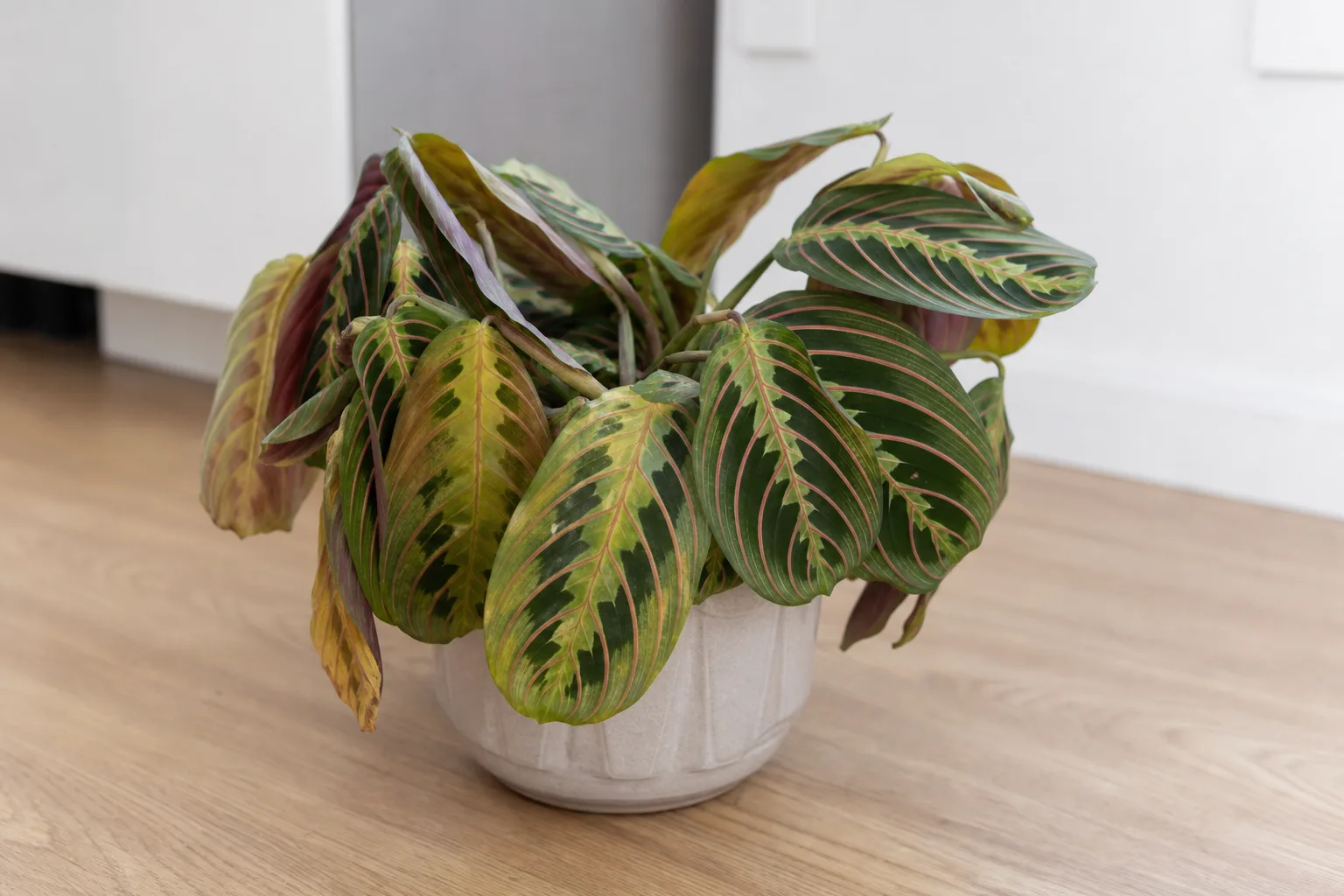
Repotting Stress on Maranta Leuconeura: Causes, Checks & Fixes
This guide covers repotting stress on Maranta Leuconeura. See also the general Repotting Stress guide, watering, and light pages for this plant.
Repotting Stress on Maranta Leuconeura: Causes, Checks & Fixes
Quick answer
Maranta Leuconeura repotting guide stress on Maranta leuconeura is the temporary setback prayer plants show when fine roots are disturbed, soil texture changes, or you change too many variables at once. The plant redirects energy from patterned foliage to rebuilding its shallow rhizome network, so leaves wilt, yellow, curl, or stop their signature nightly fold even when the mix feels adequately moist.
First step: stabilize the environment and wait. Leave the pot in the same bright indirect light, run a humidifier within a metre of the plant, withhold fertilizer for at least four weeks, and keep the top 2 cm of mix evenly moist without pouring water onto the crown. Do not repot again, move rooms, or increase watering to “help” a drooping prayer plant - that stacks stress onto already damaged roots.
What repotting stress looks like on Maranta Leuconeura
Transplant shock on prayer plants usually appears within three to fourteen days of repotting and often affects much of the plant at once. Watch for these patterns:
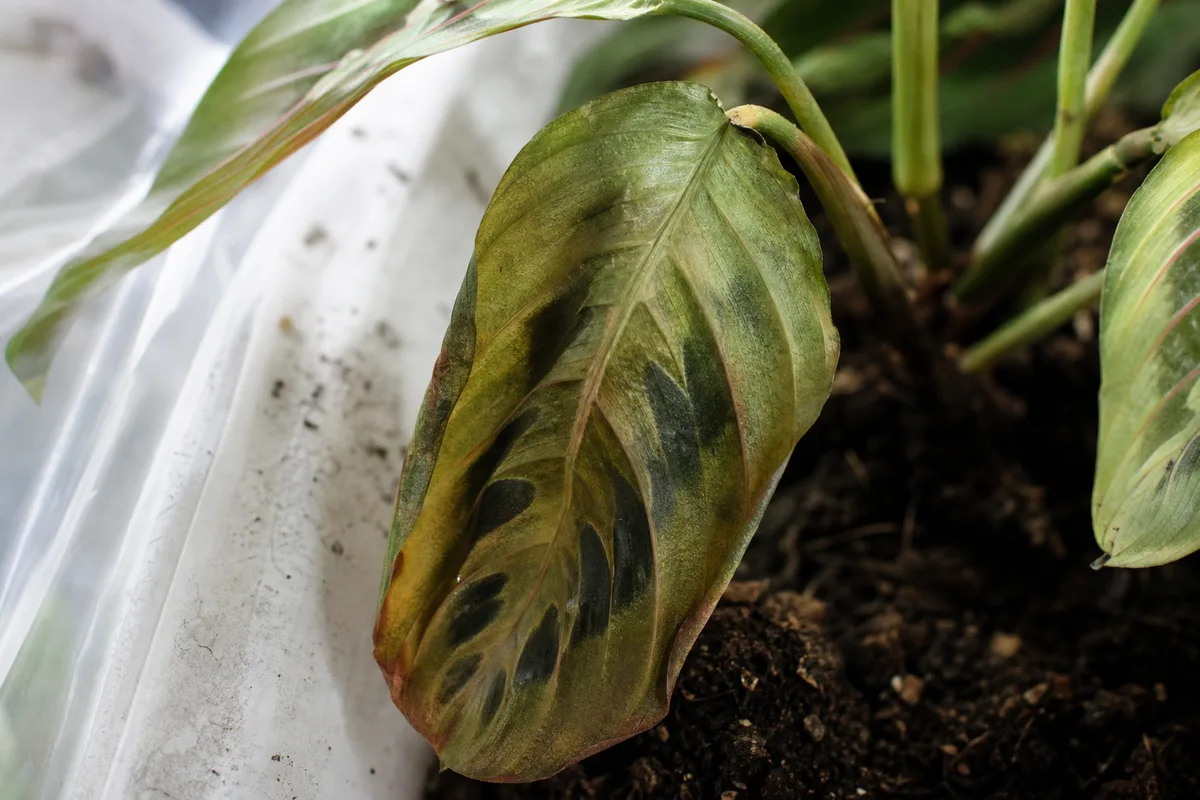
Repotting Stress symptoms on Maranta Leuconeura - compare with healthy tissue on the same plant.
Early signs:
- Leaves drooping or curling inward despite moist soil at 2 cm depth
- Older leaves turning pale yellow while newer growth looks stalled
- Reduced or absent nightly leaf-folding - leaves stay flat instead of rising after dark
- Slight leaf drop on outer stems, especially on trailing sections of a basket
- Faded variegation as the plant conserves resources
Progressed stress:
- Multiple stems wilting together while soil stays wet longer than before
- Brown crispy edges spreading on several leaves at once
- No new rolled leaves emerging for three or more weeks after repot
- Crown bases softening and soil developing a sour smell - this crosses into rot, not simple shock
Healthy prayer plant roots are pale and firm. Repotting stress keeps roots structurally sound but temporarily limits water uptake through torn fine root hairs. If roots feel mushy or smell swampy, you are past transplant pause and into a drainage or watering problem.
Why prayer plant gets repotting stress
Maranta leuconeura spreads through short, rhizomatous stems with fine surface roots adapted to tropical forest floors - not deep anchoring. Those delicate roots tear easily when old mix is shaken off, circling roots are teased apart, or divisions are pulled apart at repot. Until new root hairs form contact with fresh particles, the plant cannot move water efficiently even if you water on schedule.
Several Maranta-specific factors make the reaction look dramatic:
- Shallow root zone - Most absorbing roots sit near the soil surface; heavy root washing removes the working layer the plant depends on daily.
- High humidity demand - Prayer plants need humid air; repotting during dry winter heating or right after moving away from a humidifier accelerates leaf wilt while roots rebuild.
- Moisture-sensitive crowns - Water pooling on rhizomes after a heavy post-repot soak invites stem rot that mimics and worsens shock.
- Low tolerance for stacked changes - Changing pot size, soil recipe, room placement, and Maranta Leuconeura watering guide the same week overwhelms a species that prefers boring, steady care.
Timing matters. Repotting in late winter or early spring - just before active growth - gives Maranta the best recovery window. Summer repots can work if humidity stays high, but winter repots in cold, dim rooms leave disturbed roots in mix that dries slowly and stays cold, extending vulnerability.
Oversizing is a common trigger. Jumping two pot sizes leaves a ring of fresh, wet compost around a small root ball. The outer zone stays saturated while inner roots cannot explore it quickly - exactly the pattern that produces wilt plus heavy, slow-drying soil on prayer plants.
How to confirm repotting stress is the cause
Work through these checks before repotting again, pruning heavily, or pouring extra water:
- Repot timeline - Did symptoms begin within two weeks of transplant? Sudden whole-plant droop right after repot strongly favors shock.
- Soil moisture at 2 cm - Moist mix plus limp leaves fits disturbed uptake. Bone-dry mix suggests underwatering during recovery. Wet, heavy mix with yellowing from the base up suggests overwatering on Maranta Leuconeura.
- Smell and crown - Neutral smell and firm stems at soil line support shock. Sour odor or soft crowns mean rot - a different fix.
- Root spot-check - Slide the plant partly out if safe. Firm, pale roots with no slime support shock. Mushy brown tissue means trim and repot into fresh airy mix.
- Environmental changes - Did you also move the plant, turn on heat, or repot every houseplant the same weekend? Multiple shifts make shock more likely.
- Leaf movement - Partial nightly folding still happening suggests roots are functioning enough for recovery. Completely flat leaves for two weeks with wet soil warrant a root inspection.
If symptoms appeared before any repot, look at underwatering, low humidity, pests, or cold drafts instead.
First fix for Maranta Leuconeura
Hold every variable steady for two to three weeks: same light, stable 55–60% humidity, light consistent moisture, no fertilizer.
Place a cool-mist or ultrasonic humidifier beside the pot and confirm RH at leaf height with a hygrometer. Keep the plant in bright indirect light - not a dark corner and not direct sun that further stresses wilted leaves. Water when the top 2 cm feels barely dry, using filtered or overnight-settled water to avoid stacking fluoride tip burn on transplant stress.
Do not:
- Repot again to “fix” droop
- Fertilize to “boost” recovery
- Move the pot between rooms every few days
- Soak the pot because leaves look thirsty
- Mist heavily at night, which keeps prayer plant foliage wet and invites fungal issues
Patience is the treatment. Prayer plants with intact crowns and neutral-smelling mix usually reestablish fine roots before you need secondary intervention.
Step-by-step recovery
Once the environment is stable, support recovery in this order:
- Maintain humidity - Run the humidifier daily through the first month after repot, especially if heating or AC is active.
- Water lightly and consistently - Small drinks when the top 2 cm dries slightly; empty saucers so crowns never sit in standing water.
- Hold fertilizer - Resume half-strength monthly feeding only after two to three weeks of clean new growth.
- Trim only fully dead leaves - Remove yellow or brown leaves that are papery and dry. Leave partially green foliage attached; the plant may mobilize nutrients from older leaves to fund new roots.
- Scout for pests - Stressed prayer plants attract spider mites in dry air. Check undersides weekly; rinse with lukewarm water if stippling appears.
- Avoid further division or propagation - Wait until new rolled leaves emerge before taking cuttings, unless stems are clearly rotting and you need salvage propagations.
If droop persists beyond three weeks with firm roots and appropriate moisture, inspect whether the new pot is oversized or the mix drains too slowly - adjust watering to match actual dry-down speed rather than repotting again immediately.
Recovery timeline and what improvement looks like
Mild repotting stress on prayer plants often turns the corner within seven to fourteen days when humidity and light stay steady. Deeper disturbance - full soil replacement, division, or winter repot - may need three to four weeks.
Positive signs:
- New leaves emerging as tight rolled tubes
- Nightly folding returning on fresh growth
- Soil drying at a predictable rate between waterings
- Yellowing stops spreading to additional leaves
- Stems firm at the crown
Warning signs:
- Crown softening while soil stays wet
- Sour smell from drainage holes
- Multiple stems collapsing together after ten days of heavy watering
- No new growth and continued leaf drop past four weeks
Old yellow or crisp leaf tissue will not revert to perfect patterns. Success means the plant stabilizes and pushes healthy new foliage.
Lookalike symptoms to rule out
| What you see | More likely cause | Quick differentiator |
|---|---|---|
| Whole-plant droop days after repot, firm roots | Repotting stress | Recent transplant; neutral soil smell |
| Yellow leaves, soggy mix, sour smell | Overwatering / root rot on Maranta Leuconeura | Mushy roots; worsens with extra water |
| Crispy edges, moist soil, no recent repot | Low humidity | Dry room air; winter timing |
| Light pot, dry soil, firm roots | Underwatering | Soil pulls from sides; no repot timeline |
| Silver stippling on undersides | Spider mites | Pests visible; often follows dry stress |
| Bleached patches on upper leaves | Direct sun scorch | Sun-facing damage, not post-repot timing |
Overwatering after repot is the most dangerous lookalike because wilted leaves invite extra water, which suffocates healing roots on moisture-loving Maranta.
Mistakes to avoid
- Watering heavily because leaves droop - Damaged roots cannot absorb a flood; saturated mix suffocates regrowing root hairs and rots rhizomes.
- Fertilizing within the first month - Salts burn tender new root tips on a plant already in survival mode.
- Repotting twice in one season - If the first pot and mix were adequate, stability beats another disturbance.
- Moving to a new room “for better light” - Change one variable at a time; relocation plus fresh soil doubles shock.
- Choosing an oversized pot - Extra wet compost around a small root ball is a common prayer plant failure after enthusiastic spring repotting.
- Repotting on arrival day - New Marantas need quarantine and rhythm learning unless mix is clearly failing or pests are present.
- Ignoring humidity - Dry air accelerates wilt while roots are rebuilding below the surface.
Maranta care cross-check during recovery
While the plant settles, confirm these basics stay consistent:
- Light - Bright indirect light; avoid direct sun on wilted foliage.
- Temperature - 18–27°C (65–80°F); keep away from cold window glass and heat vents.
- Humidity - Target 55–60% RH at leaf height; higher helps during recovery.
- Water quality - Filtered or settled water reduces edge burn stacked on stress.
- Soil - Moisture-retaining but airy mix; top 2 cm should feel evenly moist, not waterlogged.
- Crown hygiene - Water the soil, not the stem bases; never leave standing water on crowns.
Maranta is more forgiving than Calathea but still belongs in the fussy tropical foliage group - judge recovery by newest growth, not older patterned leaves that were already mature at repot time.
How to prevent repotting stress next time
- Repot in late winter or early spring - Align with the start of active growth so roots regenerate quickly.
- Upsize one pot size only - About 2–5 cm wider in diameter, not a dramatic jump.
- Water the day before repotting - Moist roots handle gentle handling better than brittle dry ones.
- Keep as much root ball intact as practical - Tease circling roots lightly; avoid bare-rooting unless rescuing rot.
- Use fresh, well-draining indoor mix - Match the 60% compost, 20% perlite, 20% coco coir balance Maranta already prefers.
- Return to the same spot - Keep light and humidity stable for at least two weeks post-repot.
- Delay fertilizer one month - Let new white root tips establish before feeding.
- Repot only when needed - Crowded roots, water running straight through, or stalled growth in good light - not because the calendar says so.
Conclusion
Repotting stress on Maranta leuconeura looks alarming because prayer plants react on every leaf at once - wilt, yellowing, and paused nightly movement are normal when fine roots are rebuilding. Confirm firm crowns and neutral-smelling soil, then stabilize humidity and light instead of stacking more interventions. Most prayer plants recover when you give disturbed roots time, consistent moisture, and a humid, boring environment. Judge success by new rolled leaves folding cleanly at dusk, not by old foliage returning to its pre-repot perfection.
When to use this page vs other Maranta Leuconeura guides
- Maranta Leuconeura watering guide - Use for routine moisture checks before assuming repotting stress is the main issue.
- Maranta Leuconeura problems hub - Browse all 40 common issues on this species.
- Transplant Shock on Maranta Leuconeura - Different entry point when symptoms overlap with repotting stress.
- Root Rot on Maranta Leuconeura - Different entry point when symptoms overlap with repotting stress.
- Wilting on Maranta Leuconeura - Different entry point when symptoms overlap with repotting stress.