Transplant Shock on Maranta Leuconeura: Causes, Checks &
Quick answer
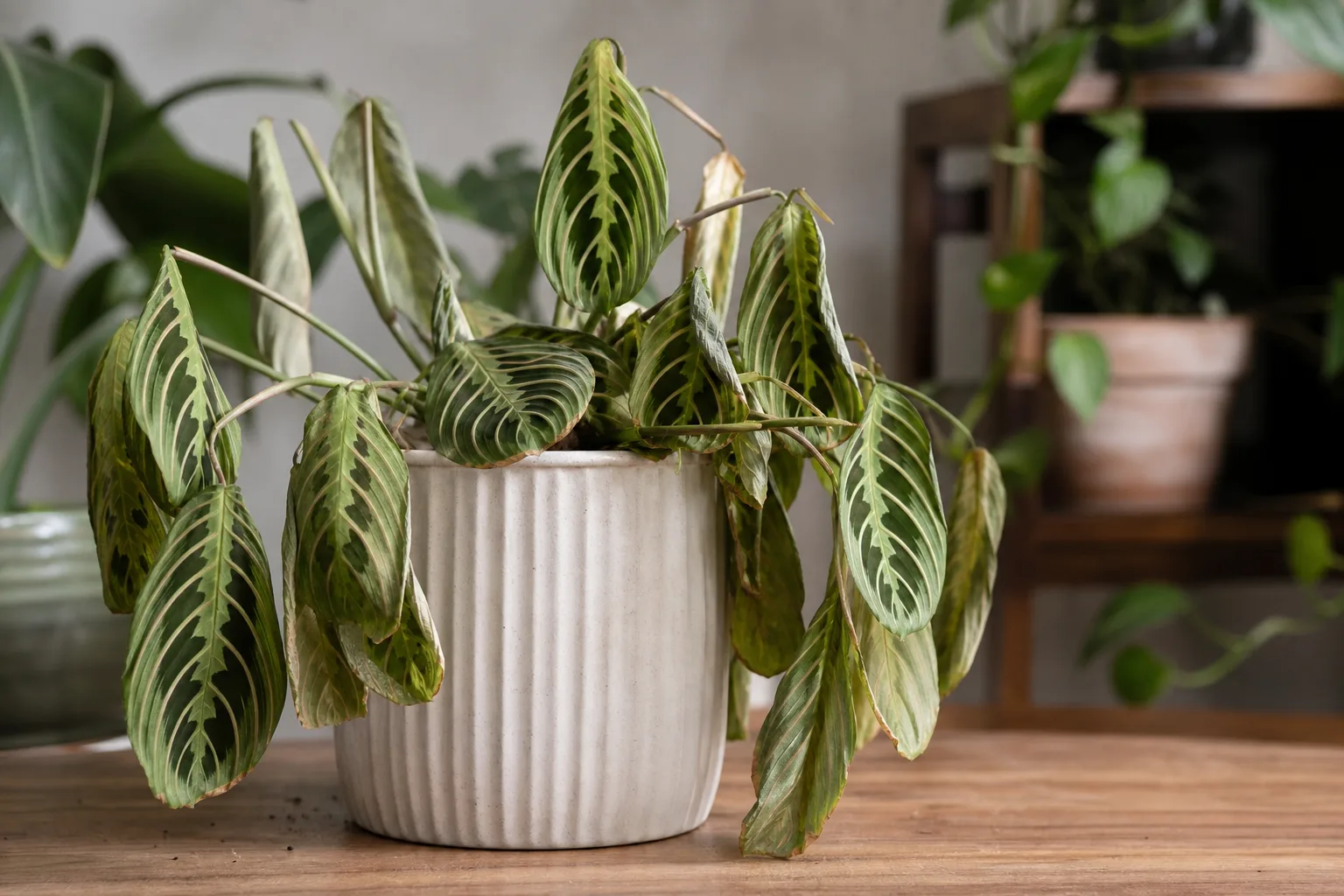
Transplant shock on prayer plant shows as wilt, yellowing, or curled leaves right after repotting while roots rebuild. First step: leave the plant in one stable spot with bright indirect light and 60%+ humidity-no second repot, no fertilizer, no room-hopping.
Transplant Shock on Maranta Leuconeura: Causes, Checks & Fixes
This guide covers transplant shock on Maranta Leuconeura. See also the general Transplant Shock guide, watering, and light pages for this plant.
Transplant Shock on Maranta Leuconeura: Causes, Checks & Fixes
Quick answer
Transplant shock on Maranta leuconeura shows up as sudden wilting, yellowing, or curling across most of the plant within days of Maranta Leuconeura repotting guide or division. Prayer plants redirect energy from foliage to repair fine, rhizomatous roots that break easily when old soil is stripped or the root ball is teased apart. Leaves may hang limp even when mix feels moist because damaged roots cannot match what patterned foliage loses to dry indoor air.
First step: leave the plant in one stable location with Maranta Leuconeura light guide and roughly 60% humidity, and keep soil evenly moist without waterlogging-while making no other changes for at least two weeks. Do not repot again, do not fertilize, and do not bounce the pot between rooms while feeder roots rebuild.
What transplant shock looks like on Maranta Leuconeura
On prayer plants, shock is easiest to read when timing is clear-you just repotted, divided a clump, or moved a freshly potted plant to a much brighter or drier spot.
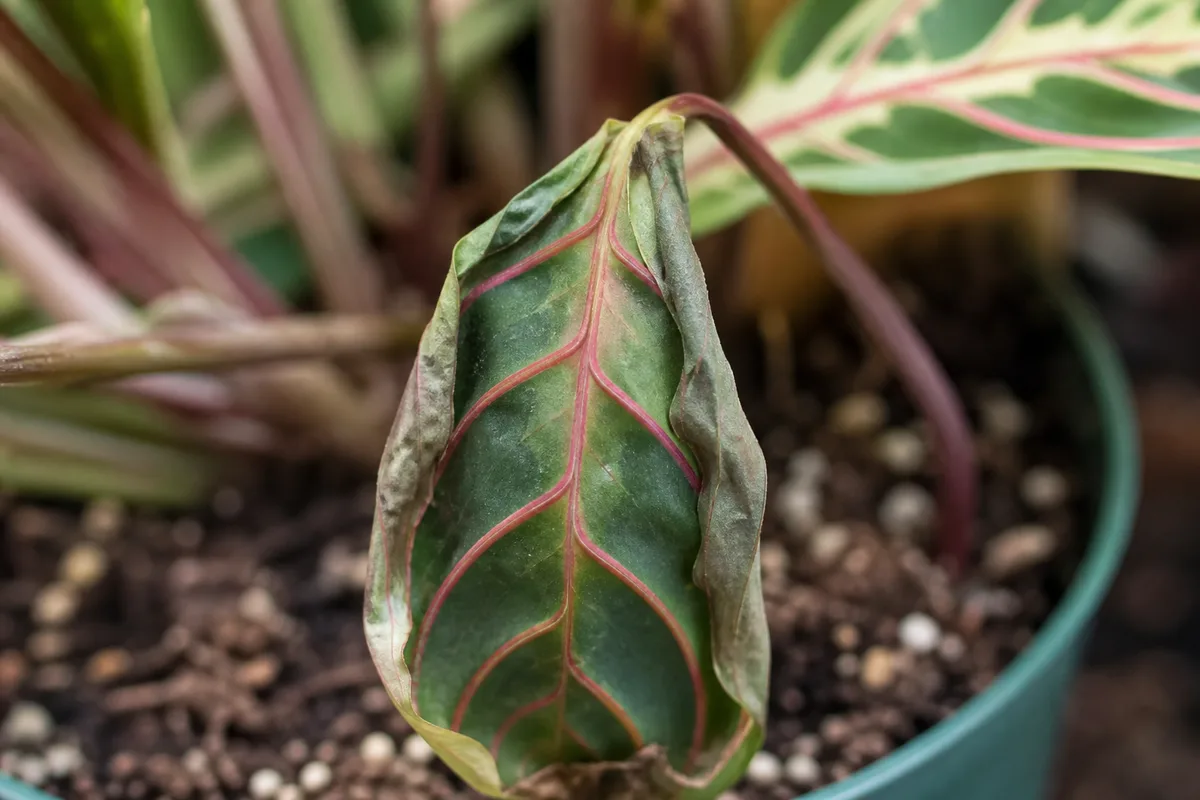
Transplant Shock symptoms on Maranta Leuconeura - compare with healthy tissue on the same plant.
Typical signs:
- Patterned leaves droop, curl inward, or yellow across several stems at once-not one isolated lower leaf.
- The nightly leaf fold looks weak: leaves stay partly open, flat, or limp instead of rising cleanly at dusk.
- Stems feel firm at the rhizome, but the whole clump looks collapsed.
- Mix at 2 cm depth reads moist-not bone dry, not swampy-yet the plant still wilts.
- A few older leaves yellow and drop while new tips stall.
What damaged tissue will not do: Yellow or curled leaves rarely return to their pre-repot posture. Recovery means firm rhizomes, fresh rolled leaves that close at night, and stopped spread of wilt-not perfect old foliage.
Because Maranta is a low, clump-forming plant with thin stems, shock can look dramatic even when the plant is saveable. Do not assume collapse means death until roots and crowns are checked.
Why Maranta Leuconeura gets transplant shock
Prayer plant is a tropical rhizomatous perennial from Brazil that grows as a spreading ground cover in humid shade. Indoors it depends on a shallow mat of fine roots that prefer consistently moist, well-drained soil-a balance that breaks when roots are disturbed and the environment shifts at the same time.
Root disturbance. Repotting tears feeder roots and exposes rhizomes to air. Until new white tips form, uptake lags even in wet mix. Aggressive soil removal, division, or scoring a tight root ball increases damage on a species already sensitive to handling.
Oversized pots and heavy mix. Moving into a pot more than 1–2 inches wider, as Clemson Extension advises against for houseplants generally, leaves outer soil wet while the old root ball dries-or keeps the entire mass soggy in dim light. Both patterns mimic drought and rot simultaneously.
Environmental flip. Prayer plants need bright indoor light without strong direct sun and high humidity. Repotting plus a move to a hot windowsill, AC draft, or dry heating vent stacks two stresses. Maranta is intolerant of frost and temperatures below about 60°F; cold repotting rooms add injury on top of root shock.
Wrong timing. Repot during spring and summer while actively growing, not when the plant is ailing, dormant, or already stressed. Late-winter repots on a plant pushed by grow lights can still work, but winter room air is drier and growth is slower-recovery takes longer.
Stacked interventions. Fertilizing, heavy pruning, misting on a schedule, and repotting the same week multiply shock. Prayer plants recover from one stable change at a time more reliably than from a care overhaul.
Crown wetness after repot. Do not allow water to stand on crowns-top-watering into a sunken rhizome after repot invites stem rot that looks like ongoing shock.
How to confirm the cause
Link symptoms to a recent transplant, then rule out lookalikes:
- Timeline - Did wilt, curl, or yellowing begin within three to seven days of repotting, dividing, or moving to a new room? Shock fits that window.
- Rhizome and stem base - Press the crown gently. Firm tissue supports shock; soft, dark stems at soil level suggest rot.
- Soil moisture at 2 cm - Evenly moist with firm rhizomes points to shock. Bone dry mix suggests underwatering may dominate. Wet for days with spreading yellow lower leaves suggests rot.
- Pot weight and drainage - Water should exit drainage holes after a soak. A pot that stays heavy and smells sour needs root inspection, not more humidity alone.
- Leaf movement - Weak or absent nightly folding on multiple leaves after repot fits root stress. Normal fold on new tips while old leaves yellow suggests partial recovery.
- Pests - Check undersides for webbing, cottony clusters, or stippling. Stressed prayer plants attract spider mites, mealybugs, and thrips, but pests alone rarely cause same-day whole-plant collapse right after repotting.
- Temperature - Leaves blackening after exposure below 50°F point to cold injury per indoor plant diagnosis guides, not simple shock.
If the plant was not repotted and mix was not changed, look elsewhere-transplant shock does not appear without root disturbance or a major relocation.
First fix for Maranta Leuconeura
Hold the plant in one stable spot with bright indirect light, 60% or higher humidity, and evenly moist soil-while changing nothing else for two to three weeks.
Choose the brightest indirect location the plant had before repotting, or slightly gentler if it came from a greenhouse. Group it with other plants, run a humidifier, or set the pot on a pebble tray-prayer plants perform well with increased humidity. Water when the top 2 cm begins to dry, using filtered or overnight tap water if your home has fluoride brown-tip issues. Empty saucers so crowns stay dry.
Hold all fertilizer, pest sprays except plain water rinses, pruning beyond dead leaves, and second repots until you see firm new growth for several days. One boring environment beats a stack of rescue tactics.
Step-by-step recovery
After the stable placement above, work through these steps in order:
- Maintain moisture rhythm, not flood - Finger-check daily. Maranta wants soil kept moist with winter dry-down between waterings, not a perpetual swamp. Never let the pot sit in standing water.
- Protect from drafts and direct sun - Keep away from AC vents, radiators, and cold window glass. Too much sun bleaches leaf patterns; recovery needs stable indirect light.
- Remove fully yellow or crisp leaves only - Snip dead tissue with clean scissors to redirect energy. Leave partially green leaves unless they are mushy.
- Scout for pests weekly - Shock weakens plants. Rinse undersides with plain water if you see early webbing; avoid heavy oils on already limp foliage.
- Resume light feeding after stability - Wait until new leaves roll cleanly at night for two weeks, then use half-strength balanced liquid feed monthly during active growth. Reduce fertilizer from autumn to late winter regardless.
- Optional humidity boost, not leaf misting marathons - A humidifier raises ambient moisture more reliably than brief misting, which can wet crowns if water pools in leaf axils.
Recovery timeline
First 3–5 days: Expect limp leaves and stalled folding. Firm rhizomes and moist-not-soggy mix are positive signs.
Days 5–14: Many prayer plants show partial perk-up as white root tips form. One or two old leaves may yellow and drop-normal shedding during stress.
Weeks 2–4: New patterned leaves should emerge and fold at night. Old damaged foliage stays imperfect.
Beyond 4 weeks with continued decline: Shock is unlikely the main issue-inspect for root rot in poorly drained conditions, chronic underwatering, or crown decay from wet stems.
Success means firm rhizomes, fresh rolled leaves, and stopped wilt spread-not every old leaf greening again.
Lookalike symptoms
- overwatering on Maranta Leuconeura after repot - Wet heavy mix for days, sour smell, mushy roots when inspected. Wilt worsens after each deep soak on already saturated soil.
- Underwatering - Light pot, dry top 2 cm, crispy leaf edges. Recovery within hours of one thorough drink; no root disturbance required.
- Low humidity alone - Brown tips and edge curl on established plants without recent repot. Humidity fix helps without root trauma history.
- Cold damage - Blackened or water-soaked tissue after sub-50°F exposure. Does not improve with humidity alone.
- Root rot from pre-existing issues - Repotting reveals mushy roots; plant was declining before the move. Requires trim-and-repot into fresh airy mix, not passive waiting.
What not to do
Do not repot again unless mix is clearly wrong-pure peat with no perlite, no drainage holes, or visible rot requiring surgery. Do not fertilize during the first two to three weeks; salts stress roots that cannot absorb evenly.
Avoid moving the plant daily between rooms, stripping all old soil from healthy roots, or burying rhizomes deeper than before-crowns rot easily. Do not water on a calendar without checking dryness; soggy shock recovery invites root rot.
Skip major division and hard pruning in the same session as an urgent repot unless rot forces it. Do not place fresh repots in direct south window sun to “help growth”-bleaching and wilt follow.
How to prevent transplant shock next time
Repot only when needed-roots circling the pot, water running straight through, or mix exhausted-during spring and summer active growth. Do not repot ailing plants until pests or rot are treated.
Size up one step. Choose a pot only 1–2 inches wider with drainage holes. Pre-moisten airy mix-roughly potting compost with perlite and coco coir-to match what Maranta already had.
Water one to two days before repotting so roots stay supple. Handle the root ball gently; loosen circling roots without bare-rooting a healthy plant. Keep the rhizome at the same depth; never bury stems.
After repotting, match pre-move light and humidity before experimenting with brighter spots. Quarantine new nursery plants for two weeks before repotting on arrival day.
Because prayer plant is non-toxic to cats and dogs, fallen shock-dropped leaves are less risky around pets-but still remove debris so you can track whether yellowing continues.
When to worry
Escalate if wilt does not improve after three to four weeks of stable care, crowns soften, or yellowing spreads while soil stays wet. Unpot and inspect-trim mushy roots, repot into fresh mix, and discard if the rhizome is hollow.
A plant that perks overnight but collapses daily in the same spot may sit in a draft or dry microclimate; fix placement once, then wait. Complete loss of leaf pattern on new growth after repot suggests too much direct sun or repeated drought cycles-not shock alone.
Conclusion
Transplant shock on Maranta leuconeura is a temporary root–environment mismatch, not a death sentence. Confirm it with recent repotting, firm rhizomes, and moist-but-drained soil. Fix it by holding one stable bright indirect spot, keeping humidity high, and watering when the top layer dries-while roots rebuild. Repot in spring, size up modestly, handle shallow rhizomes gently, and save fertilizer until new prayer-plant leaves fold cleanly at night again.
When to use this page vs other Maranta Leuconeura guides
- Maranta Leuconeura watering guide - Use for routine moisture checks before assuming transplant shock is the main issue.
- Maranta Leuconeura problems hub - Browse all 40 common issues on this species.
- Repotting Stress on Maranta Leuconeura - Different entry point when symptoms overlap with transplant shock.
- Wilting on Maranta Leuconeura - Different entry point when symptoms overlap with transplant shock.