Holes in Leaves on Adenium: Causes, Checks & Fixes
Quick answer
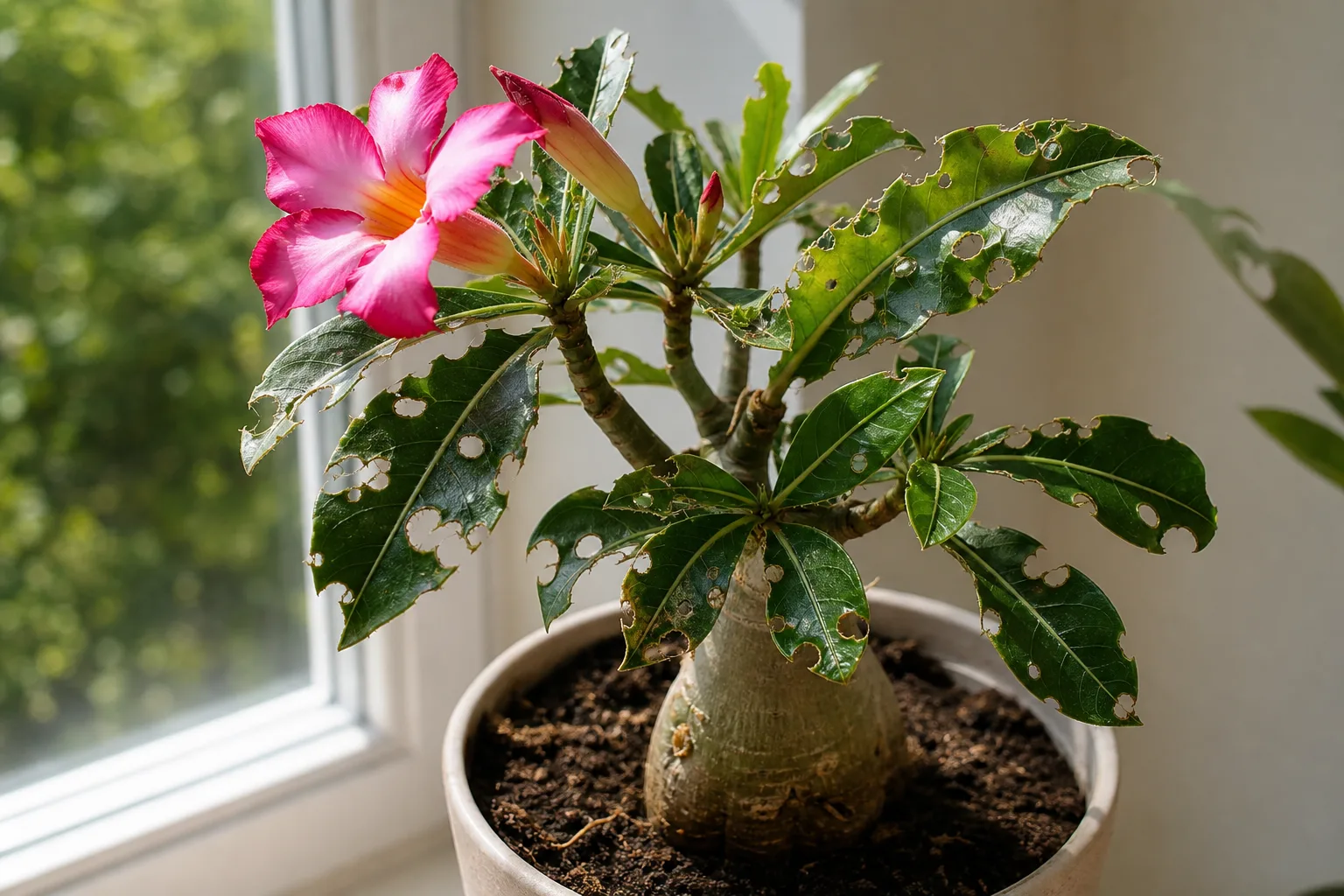
Holes in Adenium leaves almost always mean something is chewing-most often oleander caterpillars on outdoor plants in warm climates. First step: flip the newest leaves at dawn, hand-pick any orange larvae you find, and drop them into soapy water.
Holes in Leaves on Adenium: Causes, Checks & Fixes
This guide covers holes in leaves on Adenium. See also the general Holes in Leaves guide, watering, and light pages for this plant.
Holes in Leaves on Adenium: Causes, Checks & Fixes
Quick answer
You noticed a few ragged holes through thick, glossy Adenium leaves-not brown margins, not circular spots, but missing tissue that looks chewed. Because desert rose carries far fewer leaves per branch than oleander or most houseplants, even a small colony can make the plant look half-stripped within days.
In frost-free regions where oleander grows outdoors, oleander caterpillars are the usual cause. Adenium obesum shares the Apocynaceae family with oleander, so the same moth larvae that strip oleander hedges chew desert rose just as readily.
First step: inspect leaf undersides at dawn and hand-pick any larvae you find. Drop caterpillars into soapy water, then wait two days before adding sprays. Holes mean chewing-not drought, not fertilizer shortage, and not root rot on Adenium when the caudex stays firm.
This page is symptom-first (holes). For full pest ID, life stages, and moth/pupa scouting, see the oleander caterpillars on Adenium guide.
What holes look like on Adenium
Damage on desert rose follows a recognizable progression. Use this quick decision tree before you treat:
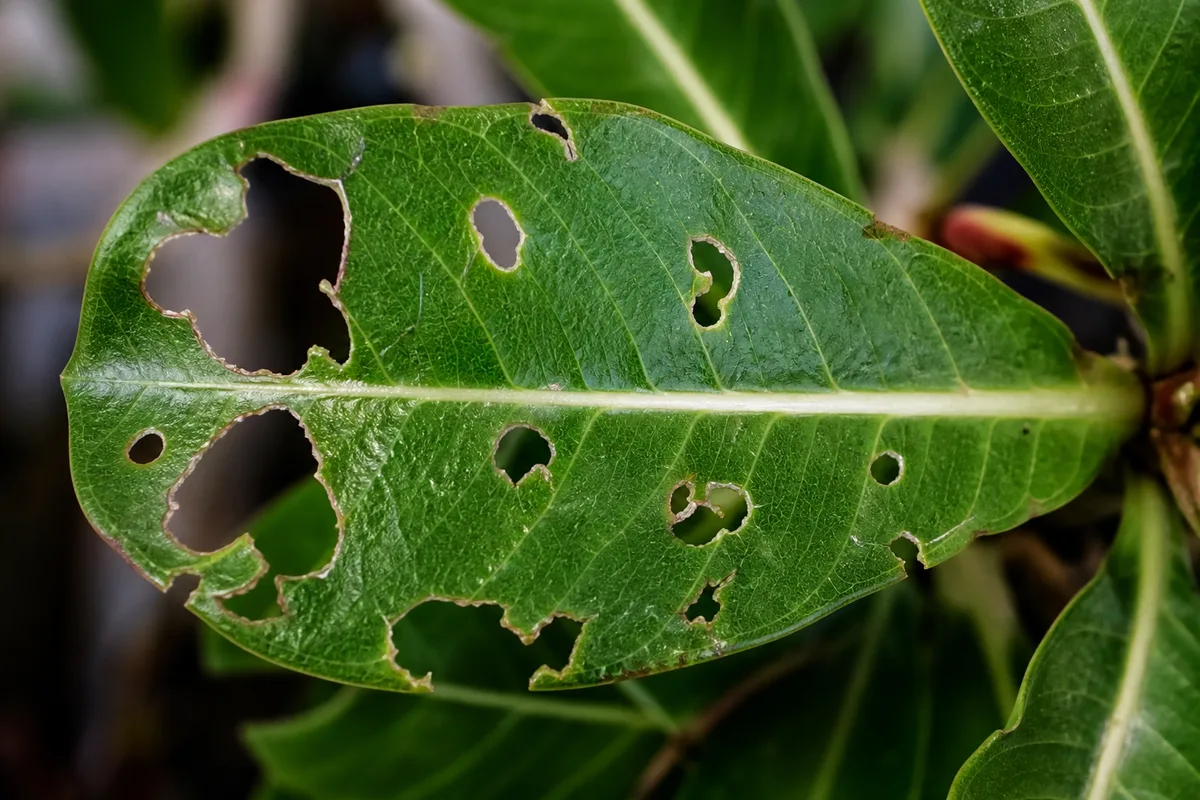
Holes in Leaves symptoms on Adenium - compare with healthy tissue on the same plant.
| What you see | Likely stage | What to do first |
|---|---|---|
| New shoots turning light brown, veins still green | Early skeletonizing | Flip undersides for small orange larval clusters |
| A few irregular ragged holes, no bare stems yet | Active chewing on mature leaves | Dawn hand-pick; check for frass pellets |
| Most leaves gone, bare branch tips, firm caudex | Heavy defoliation | Hand-pick survivors + destroy pupae on pot/walls; see caterpillars guide for Bt protocol |
Oleander caterpillar damage progression
- Early feeding skeletonizes new shoots from underneath, turning young terminals light brown before open holes appear through the blade.
- Active holes are irregular and ragged-not circular-and enlarge over several days as larvae grow and move to new tissue.
- Mature larvae are bright orange with tufts of black hairs on black bumps, easy to spot against green foliage when you flip leaves.
- Frass shows up as small black pellets on leaves, stems, or the pot rim.
- Egg clusters are pale cream to yellow spheres, less than 1 mm wide, grouped on leaf undersides of new growth.
Adenium’s sparse canopy makes each chewed leaf look dramatic. The same pest pressure on oleander-with dozens of leaves per branch-looks like minor nibbling; on a young desert rose with one flush per tip, it reads as catastrophe even when the swollen caudex still holds plenty of stored reserves.
Less common chewers and mechanical tears
Grasshoppers, beetles, or occasional loopers may nip thick succulent leaves but rarely produce the clustered underside feeding pattern and frass trails of oleander caterpillars. Mechanical scrapes from moving pots look different: clean tears without pellets or feeding trails, and they do not spread.
Why Adenium gets holes in leaves
Family tie to oleander. Adenium obesum belongs to Apocynaceae alongside oleander, plumeria, and allamanda. UF/IFAS notes that because desert rose is related to oleander, it is susceptible to oleander caterpillars-the primary chewing pest behind most ragged leaf holes in warm climates.
Where outbreaks happen. The moth is established in Florida, the Gulf Coast, and other frost-free regions where oleander grows outdoors. It recolonizes northern Florida each spring after winter cold kills local populations. Outdoor Adenium on patios in those regions is high risk; strictly indoor collections above zone 10 with no summer placement rarely see this pest.
Grafted plants are especially vulnerable. Commercial desert roses are often grafted onto oleander understock for faster growth and fuller blooms. Eggs laid on understock leaves below the Adenium scion are easy to miss until holes appear on the scion above-a pattern where understock damage precedes crown holes by one to two weeks is common on grafted patio specimens near oleander hedges.
Indoor and after-outdoor edge cases. A desert rose that spent summer on a Gulf Coast patio can return indoors with egg clusters you never noticed. Open windows near infested oleander on a balcony, or quarantine lapses when placing a new nursery plant beside established specimens, are the usual indoor explanations-not random moth flights into northern living rooms.
Timing with new growth. Damage often appears suddenly on spring flushes when tender new leaves attract egg-laying moths. Sparse winter foliage means each chewed leaf looks dramatic, but the same pest pressure hits harder when the plant leafs out heavily in warm weather.
Lookalike symptoms to rule out first
Not every leaf blemish is insect chewing. Run through this table before treating:
| What you see | Likely cause | How to tell apart |
|---|---|---|
| Irregular holes with frass and orange larvae | Oleander caterpillar | Holes enlarge over days; live insects on undersides |
| Crisp brown leaf margins, no droppings | Sun scorch | Follows sudden move to harsh sun; see sunburn on Adenium |
| Circular tan-to-black lesions, yellow halos | Fungal leaf spot | Spots, not missing tissue; see leaf spot disease |
| Silvery scarring on buds, distorted tips | Thrips | Rasping damage on new growth; no large chewed holes through mature blades |
| Clean tears, same size for weeks | Mechanical damage | No frass, no enlarging holes, no larvae |
If holes spread and you find frass or larvae, chewing insects are confirmed regardless of caudex firmness.
How to confirm the cause: step-by-step inspection
Work through this inspection in order:
- Flip the newest leaves and check undersides for orange caterpillars, egg clusters, or frass pellets.
- Inspect at dawn when larvae feed most actively; midday searches often miss hidden groups tucked against stems.
- Scan the graft union and nearby oleander if your plant is grafted-eggs may sit on understock foliage below the visible Adenium crown.
- Feel the caudex while you inspect. A firm base confirms the plant is not suffering root rot; holes with a firm caudex almost always mean pests, not watering failure.
- Watch for two days. Holes that grow without any insect present may mean a hidden colony on lower stems or pupae nearby-look again at dusk and check adjacent pots and walls for brown silk cocoons.
Confirmed oleander caterpillars show all three: ragged enlarging holes, visible larvae or eggs, and frass on leaves or the pot rim.
Treat as urgent when a small plant loses most of its leaves within a week or when every new spring shoot shows active feeding. Cosmetic holes on a few lower leaves during peak caterpillar season can wait for a dawn picking session.
First fix: hand-picking and safe handling
Hand-pick larvae at dawn. UF/IFAS Extension Charlotte County recommends handpicking on desert rose because it works quickly on sparse foliage and avoids unnecessary sprays. Check every leaf surface, including stem tips and the graft union. Drop caterpillars into soapy water rather than crushing them on the plant.
Wear gloves when handling chewed tissue or pruning damaged shoots. Adenium sap contains cardiac glycosides and irritates skin; keep picked larvae and pruned debris away from pets and children. If a dog or cat chews desert rose leaves, caterpillars, or pruning debris, contact your veterinarian promptly-desert rose is toxic to cats and dogs, and the ASPCA Animal Poison Control Center (888-426-4435) can advise on ingestion cases.
Make this one correction first. Do not repot, fertilize, and spray on the same day-you need to see whether picking alone stopped new damage before escalating.
If hand-picking is not enough
When larvae are small, hidden in tight clusters, or spread across a large outdoor specimen, apply Bacillus thuringiensis (Bt) with the kurstaki strain at dusk to actively chewed leaves. Bt must be eaten to work, so coat both leaf surfaces where feeding occurs. Reapply every 7–10 days until you find no new frass. For full Bt timing, pupae removal, and escalation steps, see the oleander caterpillars guide.
Avoid broad-spectrum insecticides unless a confirmed infestation persists after Bt and picking-those products can harm beneficial predators that also attack caterpillars.
Recovery: what to expect after feeding stops
Holed leaves are cosmetic-they will not regenerate missing tissue. Once feeding stops, desert rose typically re-leafs within several weeks during warm active growth with strong light.
Judge recovery by new tip growth, not old damaged leaves. Fresh leaves should emerge clean and full-sized. A firm caudex throughout defoliation is normal; softening or blackening at the base means a different problem-likely rot from wet soil, not caterpillars.
Flowering may pause briefly after heavy defoliation. Resume normal soak-and-dry watering only after new leaves appear and the mix dries through between drinks, per the Adenium watering guide.
Spring and summer flushes recover faster than winter-dormant plants that were chewed during a brief warm spell-expect new tips within two to four weeks in active growth, longer if the plant was already leafless for dormancy.
What not to do
Do not increase watering because leaves look damaged-chewing does not mean drought stress. Do not apply fertilizer to a stripped plant hoping for faster regrowth; feed only after new growth is established in warm weather.
Do not handle open stems or sap without gloves, especially around pets. Do not leave chewed foliage where dogs or cats can reach it.
Do not spray neem or horticultural oil as a blind first response. Oils can stress sun-exposed succulent leaves, and the wrong product wastes time while caterpillars keep eating.
Do not repot on day one. Holes with a firm caudex are a foliar pest problem, not a root problem.
Prevention for next season
Prevention is weekly scouting during spring and summer in caterpillar-prone regions. Check undersides of new flushes before holes spread across the plant-the gregarious early stage is easiest to control when larvae are small and clustered.
Keep desert rose in full sun with sharp drainage so regrowth stays vigorous after minor feeding. Quarantine new plants for two weeks and inspect grafted specimens carefully-the oleander understock often shows eggs first.
If oleander grows nearby, monitor those plants too. Controlling caterpillars on oleander reduces pressure on your desert rose collection. When bringing patio plants indoors for winter, inspect thoroughly so eggs or pupae do not ride inside unnoticed.
Align baseline care with the Adenium care hub so recovery flushes stay vigorous after any pest setback.
When to get help
Oleander caterpillars rarely kill desert rose outright when the caudex stays firm-even total defoliation is survivable. Worry when defoliation repeats every year and flowering or caudex swelling stalls.
If the caudex softens while you treat caterpillars, stop watering and inspect roots separately-two problems can overlap on overwatered outdoor plants. See overwatering on Adenium if the base turns mushy.
For repeated annual defoliation on outdoor specimens in Florida or Gulf Coast yards, contact your county extension office with photos of larvae, damage, and nearby oleander. For pet ingestion of plant tissue or larvae, call your veterinarian or the ASPCA Poison Control Center.
For moth lifecycle, pupal cocoons on walls, and adult polka-dot wasp moth scouting, use the oleander caterpillars deep-dive-this holes page focuses on symptom confirmation and the first safe fix.
When to use this page vs other Adenium guides
- Adenium watering guide - Use for routine moisture checks before assuming holes in leaves is the main issue.
- Adenium problems hub - Browse all 40 common issues on this species.