How to Propagate Adenium (Desert Rose): Seeds, Cuttings &
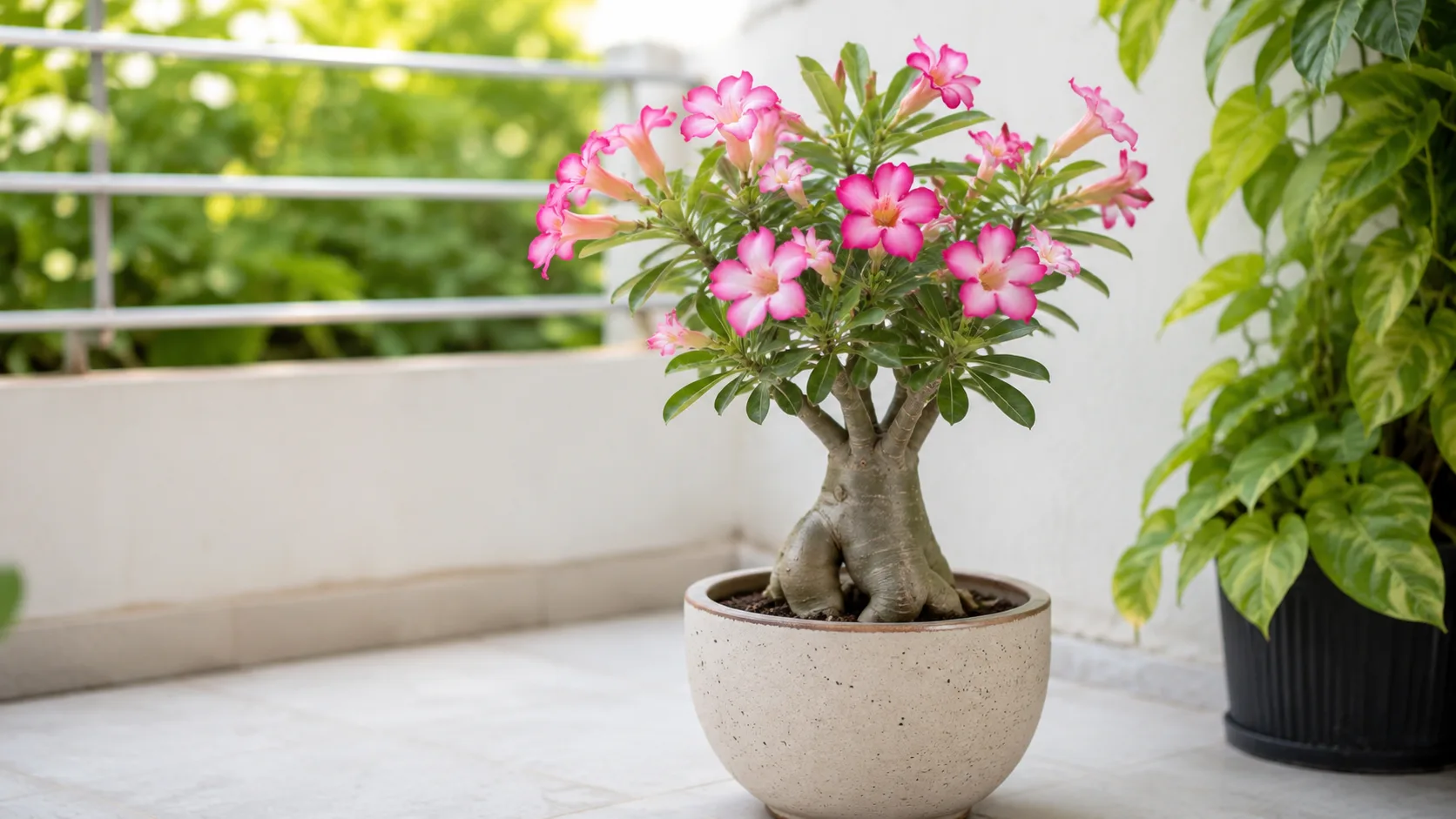
How to Propagate Adenium (Desert Rose): Seeds, Cuttings & Grafts
How to Propagate Adenium (Desert Rose): Seeds, Cuttings & Grafts
Adenium obesum - the plant most people call desert rose - can be multiplied three ways in cultivation: seeds, stem cuttings, and grafting (University of Arizona Cooperative Extension). Each path solves a different grower goal. Seeds often produce the fullest caudex and strongest root flare over time, but hybrid seedlings will not reliably match a named parent’s flower. Cuttings clone flower color and form, yet many cutting-grown plants develop a thinner base than seed-grown specimens in early years. Grafting is the industry shortcut for named cultivars: a desirable flowering scion united to vigorous or caudex-heavy rootstock.
Unlike template propagation pages written for rhizome plants or water-rooting houseplants, adenium propagation follows succulent caudex logic. Fresh soft cuttings need moisture and warmth inside a humid chamber, not a week of dry callusing on a shelf (University of Arizona Cooperative Extension). Mature woody segments root more like conventional succulent stems under coarse mix and optional bottom heat. Milky sap appears at every cut and carries real toxicity risk for pets and people. The sections below walk through method choice, supplies, numbered steps, first-month aftercare, sap safety, and failure troubleshooting so you can propagate desert rose without returning to search for missing instructions.
How Adenium Reproduces in Cultivation
In habitat, adeniums grow as caudiciform shrubs across arid regions of sub-Saharan Africa and the Arabian Peninsula, surviving seasonal drought by storing water in thickened stems and roots. Flowers are pollinated by insects outdoors; successful pollination produces paired cigar-shaped capsules called horns that split to release wind-dispersed seeds with tufts of hair at each end.
In pots and greenhouses, reproduction is deliberate. Sexual propagation (seed) reshuffles genetics - valuable for breeding, unpredictable for copying a labeled hybrid. Vegetative propagation (cuttings, grafting, air-layering) produces clones identical to the parent scion or cutting source (University of Arizona Cooperative Extension). Vegetative methods are the only way to preserve a registered cultivar name; seed from a named hybrid should never be sold under the parent’s cultivar epithet.
The swollen caudex is both ornamental and functional. Seed-grown plants typically develop a more pronounced basal swell than cutting-grown plants of the same age, though a cutting from a parent with a well-developed caudex can eventually form its own over several seasons of warm growth and restrained pot size (University of Arizona Cooperative Extension). Commercial double-flower and multi-color hybrids are often grafted because seed segregation is high and consumers expect flower certainty at purchase.
Air-layering is a valid vegetative option on thicker branches - notch, wrap moist sphagnum or coir in plastic, wait for roots, then sever (University of Arizona Cooperative Extension) - but this guide focuses on the three home methods most collectors use first: seed, cuttings, and wedge grafting. Air-layering steps follow the same warm-season and sap-safety rules as cuttings.
Choosing the Right Propagation Method
Pick your method before you pick up the knife. The decision tree is simple if you state your goal first.
Choose seeds when you want maximum caudex character, enjoy seedling variation, or plan to use seedlings as graft rootstock in a year or two. Accept that flower color and form may differ from either parent, especially with complex hybrids.
Choose stem cuttings when you need a genetic clone of a plant you already own, want a straightforward home method without grafting skill, and can accept a slimmer trunk profile in early years.
Choose grafting when you must replicate a named cultivar, need faster establishment than a slow-rooting cutting, or want a showy scion on a caudex-forming rootstock such as seed-grown Adenium arabicum or a vigorous A. obesum seedling.
Avoid water propagation as a primary method for adenium. The standard practice is a gritty, fast-draining medium - or a humid rooting chamber for soft cuttings - not a jar of standing water. Wet, airless conditions rot caudiciform tissue quickly because stem tissue lacks the water-storage tolerance that makes some succulents survive brief hydroponic experiments.
Method Comparison at a Glance
| Method | Best for | Caudex quality | Flower match to parent | Difficulty | Time to establish |
|---|---|---|---|---|---|
| Seed | Caudex development, breeding, rootstock | Usually strongest | Unpredictable with hybrids | Moderate | Days to germinate; months to robust seedling |
| Soft leafy cutting | Cloning tender new growth | Moderate; slower swell | Exact clone | Moderate–high | Weeks to months depending on warmth |
| Woody stem cutting | Cloning mature branches | Moderate | Exact clone | Moderate | Several weeks to months under heat |
| Wedge graft | Named cultivars, fast multiplication | Depends on rootstock | Scion flower preserved | High | Union in warm weeks; faster growth than weak cuttings |
When to Propagate Adenium
Propagate during active warm-season growth, when night temperatures stay consistently above about 50–60°F (10–16°C) and the plant is pushing new leaves (University of Arizona Cooperative Extension). In warm desert climates, that window often runs from spring through early fall; in temperate regions, late spring through summer is safest.
Early in the growing season is ideal for cuttings and grafts because stems are firming up but still have viable cambium, and the plant has months of warmth ahead to heal. Avoid taking cuttings or grafting in late fall or winter unless you can supply heat, strong light, and dry-air recovery conditions. Cool, wet soil during dormancy kills fresh propagations faster than almost any other mistake.
Do not propagate a stressed parent. If the plant recently shipped, suffered root rot on Adenium, or dropped leaves from cold drafts, stabilize it for several weeks first. Propagation multiplies genetics; it does not rescue bad culture. For seasonal watering context while your propagation establishes, see the adenium watering guide.
Supplies You Will Need
Gather clean tools and the right media before cutting. Sap flows immediately on every wound.
For all methods: sharp knife or pruners wiped with 70% isopropyl alcohol, nitrile gloves, eye protection, fast-draining succulent mix (see adenium soil guidance), small pots with drainage holes, labels, and a warm bright location.
For seeds: fresh seed, shallow trays or small pots, fine mix with pumice and coir, humidity dome or plastic cover, heat mat targeting 80–85°F (27–29°C), mesh bags to capture horn seeds before they blow away.
For soft cuttings: rooting hormone powder or liquid, clear humidity dome or sealed propagation box, coarse perlite-vermiculite or pumice-coir blend kept evenly moist (not waterlogged).
For woody cuttings: rooting hormone, coarse inorganic medium, optional bottom heat at 90–95°F (32–35°C) under mist or frequent light misting.
For grafting: disinfected blade, wedge-graft supplies, grafting tape or parafilm, optional small plastic bag for humidity during union healing.
Method 1: Growing Adenium From Seed
Seed is the path to the most natural caudex silhouette and the standard way growers produce rootstock for later grafting. It is not the path to duplicating a named double-flower hybrid from a packet labeled with a cultivar name.
Pollination and Seed Collection
Adeniums do not reliably self-pollinate. Two different clones - two separate plants - are usually required for viable seed set (University of Arizona Cooperative Extension). Hand pollination is possible but fiddly because flower structure is complex; outdoor plants often set seed when pollinators visit.
After successful pollination, paired horns elongate over weeks, then split to release cylindrical seeds. Wrap horns in a mesh bag before they open if you grow outdoors; seeds blow away easily. Collect promptly when pods begin to split. Fresh seed germinates far better than old seed; store dry and cool only if you must delay sowing.
Remember: seedlings from hybrid parents will not breed true. Do not expect a seedling to match either parent’s flower or assign it the parent’s cultivar name (University of Arizona Cooperative Extension).
Sowing, Warmth, and Germination
- Trim seed tufts. Snip the hair tufts (coma) flat at both ends of each seed so the seed lies flat on the mix (Adenium Culture, Tucson Cactus Society).
- Fill trays with moist, fast-draining medium - pumice and coir work well.
- Surface-sow seeds; press into contact but do not bury deeply.
- Cover with a humidity dome or plastic film to hold moisture.
- Apply bottom heat targeting 80–85°F (27–29°C) and place in bright light, not dark storage (University of Arizona Cooperative Extension).
- Expect germination in days with fresh seed under warm moist conditions - often within a week (University of Arizona Cooperative Extension).
- Ventilate daily to prevent mold; remove cover gradually as seedlings enlarge.
Treat seedlings with a fungicide labeled for damping-off if your tray history includes collapse at the soil line. Seedlings are faster-growing than many succulents but remain delicate for their first months.
Seedling Care and First Winter
Keep seedlings moist but not saturated during early weeks. They can take more water and light feeding than mature dormant plants because rapid growth is the goal. Use half-strength low-nitrogen fertilizer only after true leaves are well developed and the mix dries predictably between waterings.
Give seedlings strong light - full sun once acclimated, or bright grow lights - so stems stay compact. Leggy pale seedlings are a light problem, not a watering schedule problem.
First winter is the danger zone. Seedlings want warmth, bright conditions, and sparing water - dampen only if shriveling appears. Do not treat winter-dormant seedlings like summer stock plants. Damping-off and root rot are covered in the damping-off problem guide and root rot guide.
Method 2: Stem Cuttings
Stem cuttings clone the parent plant. They are practical for home growers who want the same flower color on a new plant without learning grafting. Understand one critical split: soft leafy cuttings and mature woody cuttings follow different moisture rules.
Soft Leafy Cuttings vs Mature Stem Cuttings
Soft leafy tip cuttings - young green growth with leaves attached - should not be left to dry and callus the way many cactus cuttings are. The freshly cut end should be dipped in rooting hormone and inserted immediately into moist, very well-drained medium inside a warm humid rooting chamber (University of Arizona Cooperative Extension). Think terrarium logic: moist, warm, moderately bright, excellent airflow when you ventilate.
Mature semi-woody or woody stem segments - longer branches that have lost lower leaves - root with less humidity but still need warmth and coarse medium. These behave closer to conventional succulent stem cuttings and tolerate somewhat drier surface conditions while roots form.
Taking a soft cutting and leaving it on a windowsill for a week to “callus” is one of the most common desert rose propagation failures. The cutting desiccates before it roots.
| Factor | Soft leafy cutting | Mature woody cutting |
|---|---|---|
| Pre-plant drying | No - plant immediately | Brief surface dry optional |
| Humidity | High - dome or sealed box | Moderate - open bench OK |
| Bottom heat | Helpful at warm room temps | 90–95°F (32–35°C) speeds rooting |
| Common failure | Shrivel from dry callus | Rot from cold wet mix |
Rooting Soft and Woody Cuttings
Soft cutting protocol:
- Select a healthy leafy branch early in the growing season.
- Cut with a sterile blade; expect milky sap - see Safety section below.
- Dip the cut end in rooting hormone.
- Insert into moist coarse mix (perlite-vermiculite or pumice-coir).
- Enclose in a humidity dome or propagation box at warm temperatures.
- Keep medium evenly moist, not soggy; ventilate daily.
- Transition to open air gradually when new growth or resistance to a gentle tug indicates rooting.
Woody cutting protocol:
- Take 4–6 inch (10–15 cm) semi-hardened segments or the next lower woody section below a soft tip (Adenium Culture, Tucson Cactus Society).
- Dip in liquid rooting hormone.
- Stick in coarse medium under mist or frequent light watering with bottom heat at 90–95°F (32–35°C) for fastest results (Adenium Culture, Tucson Cactus Society).
- Keep well watered; wilting cuttings often fail. A fungicide against water molds reduces losses (Adenium Culture, Tucson Cactus Society).
- Move to individual gritty pots after roots hold the medium when you lift the cutting gently.
A parent with a well-developed caudex can pass that tendency to cutting-grown offspring over several years, but early years may look more like a smooth stem than a fat base.
Rooting Environment and Timeline
Adenium cuttings root fastest with heat, bright light, and appropriate moisture for the cutting type - not dim shelves meant for low-light foliage plants. Established desert rose wants strong sun during active growth (Desert Botanical Garden).
Under professional mist and bottom heat at 90–95°F (32–35°C), vigorous semi-hardwood segments often root in two to four weeks (Adenium Culture, Tucson Cactus Society). Home setups without mist and controlled heat take longer - sometimes several weeks to a few months depending on ambient warmth, cutting type, and light - and cool rooms can stretch that to failure without any reliable calendar shortcut. Large hardened stems may take several months even in good conditions.
Signs of progress: firm base tissue, new leaf buds, slight resistance when you tug very gently. Signs of failure: translucency, blackening, sour smell, shriveling while the medium stays wet.
Method 3: Grafting Adenium
Grafting joins a scion (desirable flowering top) to a rootstock (vigorous roots or caudex-forming base). The result is not a genetic hybrid; it is a two-plant composite named after the scion cultivar (University of Arizona Cooperative Extension). Growers graft to multiply rare cultivars faster than cuttings allow, to pair showy flowers with a fat rootstock caudex, or to strengthen weak-branched clones on sturdier understock.
Selecting Rootstock and Scion
Rootstock: Healthy seed-grown plants about one year old with a visible caudex swell are common choices. Diameter should meet or exceed the scion. Vigorous A. obesum seedlings are the usual commercial rootstock; caudex-heavy species such as A. arabicum appear in specialty breeding for show caudex bases.
Scion: A firm branch with at least one vegetative bud, taken from the cultivar you want to replicate. Semi-active wood often takes better than either fully soft or fully dormant tissue.
Both partners should be in active growth for highest success. Sterilize tools between plants to reduce virus spread - mottled leaves and broken flower color can indicate viral infection spread by dirty blades. Discard visibly diseased stock rather than grafting onto it.
Wedge Graft Steps
Wedge (V-cut) graft gives a strong union on stems roughly ½ inch (1.25 cm) or thicker (Adenium Culture, Tucson Cactus Society).
- Prepare rootstock. Cut the stem horizontally 3–4 inches above the caudex on a single-stem plant. Split the stem vertically about 1 inch deep, then shape the slit into a V to receive the scion.
- Prepare scion. Cut the base into a matching symmetrical wedge exposing cambium on both faces. Length should fit the rootstock slit snugly.
- Insert scion so cambium layers align on at least one side; perfect 360° contact is ideal but one good face is mandatory.
- Wrap the union firmly with grafting tape or parafilm. Do not wipe away sap excessively - focus on clean cuts instead.
- Bag lightly for humidity if ambient air is dry, then place in bright shade avoiding scorching direct sun until the scion shows new growth.
- Remove wrap once the scion pushes leaves and the union swells - usually a few weeks in warm conditions.
Flat-cut or approach grafts are alternatives for thinner wood or when preserving rootstock top growth; wedge graft is the home-grower default for matching caudex stock to show scions.
Aftercare and Sucker Removal
Keep grafted plants warm and lightly humid until the scion leafs out. Introduce brighter light gradually. Water sparingly at first; increase as scion growth accelerates in summer heat.
Watch for suckers - shoots emerging below the graft union from rootstock tissue. They steal energy and will not flower like the scion. Pinch or cut them off early with sterile tools. If your plant is grafted and you see different leaf shape or flower color on lower shoots, you are looking at rootstock reversion, not a miracle branch.
If a graft fails mid-season - scion dries, union blackens - discard the scion attempt, let the rootstock recover in warmth, and retry during the next warm-season window rather than re-grafting into cool fall conditions.
For broader context on grafted vs seed-grown desert rose in cultivation, see the adenium overview. Post-establishment shaping ties to the adenium pruning guide.
First-Month Care After Propagation
New adenium plants - seedlings, rooted cuttings, or fresh grafts - need boring stability, not aggressive repotting and fertilizer.
Water: Seedlings stay lightly moist. Rooted cuttings and grafts get their first cautious drink only after roots hold or the scion is clearly alive; then shift toward soak-and-dry as the mix dries fully. Never let fresh propagations sit in cold wet soil.
Light: Move gradually toward full sun during active growth. Desert rose roots and shoots during establishment; weak light produces soft growth that rots easily (Desert Botanical Garden).
Fertilizer: Hold until new growth is obvious, then use quarter- to half-strength low-nitrogen feed during warm months.
Repotting: Do not repot on day one. Upsize only when roots circle the pot or the medium collapses. Repot in warm season per adenium repotting timing.
Quarantine: Keep new propagations separate from your collection for a few weeks to catch pests and rot before introduction.
Safety: Toxic Sap When Cutting
Every propagation cut releases milky sap. Adenium belongs to Apocynaceae, the same broad family as oleander, and contains cardiac glycosides toxic to pets and people (University of Arizona Cooperative Extension). The ASPCA lists desert rose (Adenium obesum) as toxic to dogs, cats, and horses, with vomiting, diarrhea, depression, irregular heartbeat, and death possible after ingestion. Veterinary references classify adenium among houseplants toxic to animals via cardiac glycoside mechanisms.
Before you cut:
- Wear nitrile gloves and eye protection.
- Keep plants away from pets and children during propagation.
- Wash sap off skin promptly; never touch your face or eyes with sap-contaminated gloves.
- Disinfect tools and dispose of sap-soaked paper towels in sealed trash.
- Contact a veterinarian or poison control immediately if a pet chews stems, leaves, or roots.
Bitter taste limits most accidental human ingestion, but propagation work concentrates sap exposure on your hands and tools - the risk is contact and pet access, not snacking.
Troubleshooting Failed Propagations
| Symptom | Likely cause | Fix |
|---|---|---|
| Soft cutting shriveled, dry | Incorrect dry callus on soft tissue | Retry with humid chamber; no pre-callus |
| Base blackens, sour smell | Too wet, too cool, poor airflow | Discard; restart with sterile mix and warmth |
| Seeds mold in tray | Overhead moisture, no ventilation | Vent dome; fungicide; surface-sow fresh seed |
| Graft scion dries out | Cambium mismatch, union too dry | Re-graft next warm season; align cambium |
| Shoots below graft look different | Rootstock suckers | Remove suckers; protect union |
| Seedling collapse at soil line | Damping-off | Remove victims; dry surface; airflow |
When rot appears, cut back to firm tissue or discard material rather than nursing mush indefinitely. Adenium can recover from aggressive surgery if remaining tissue is firm and kept dry, but prevention through warmth, drainage, and seasonal restraint is easier.
Related Adenium Care
Propagation timing should match the same seasonal rhythm as mature culture:
- Adenium overview - species profile, toxicity, and full seasonal rhythm.
- Adenium light - window placement for rooting and establishment.
- Adenium soil - gritty mix for seeds, cuttings, and grafts.
- Adenium watering - soak-and-dry after roots form.
- Adenium pruning - shaping after establishment.
- Adenium repotting - when to upsize rooted propagations.
FAQs
Will Adenium cuttings develop a fat caudex?
Cutting-grown adeniums can develop a caudex, but it often forms more slowly and less dramatically than on seed-grown plants in the first few years. If the parent had a well-developed caudex, a cutting from that plant can eventually swell at the base over several seasons of warm growth, good light, and restrained pot size. For the fastest caudex showpiece, seed or grafting onto caudex-heavy rootstock is usually the better path.
Do I need two Adenium plants to get viable seeds?
Yes, in most cases. Adeniums generally do not self-pollinate reliably, so two different clones - two separate plants - are usually required to exchange pollen and set seed. Hand pollination is possible indoors, and outdoor plants may be pollinated by insects. Even with successful pollination, hybrid seedlings will not breed true to either parent’s flower.
How long should I dry an Adenium stem cutting before planting?
It depends on the cutting type. Soft leafy tip cuttings should not be left to dry and callus; dip them in rooting hormone and plant immediately into moist medium inside a warm humid chamber. Mature semi-woody stem segments can root in coarse mix with less enclosure, and may tolerate brief drying similar to other succulent stems. Leaving soft green cuttings on a shelf for a week is a common cause of shriveling and failure.
Why is my grafted Adenium sending shoots below the graft?
Those are rootstock suckers, not branches of your named scion. Shoots emerging below the graft union draw energy from the rootstock and will usually have different leaf shape or flower color. Remove them early with sterile tools so the scion remains dominant. If suckers are allowed to grow, the plant can revert visually to the understock variety.
Is Adenium sap dangerous when I take cuttings?
Yes. Adenium sap contains cardiac glycosides and is toxic to dogs, cats, horses, and people if ingested, and it can irritate skin and eyes on contact. Wear nitrile gloves and eye protection when cutting, keep plants away from pets and children during propagation, wash off any sap promptly, and contact a veterinarian if a pet chews any part of the plant. The bitter taste limits most human ingestion, but propagation concentrates sap on your hands and tools.
Conclusion
First winter kills more adenium seedlings than summer mistakes. Keep seedling trays warm, bright, and sparingly watered through dormancy - link damping-off symptoms early via the damping-off guide rather than assuming collapse is normal. For cuttings and grafts, discard mushy material promptly; firm tissue above rot can be trimmed and retried only while the warm-season window remains.
Choose one method this season matched to your goal: seeds for caudex character, cuttings to clone what you own (with soft tips in humidity, not dry callus), grafting to multiply named flowers on strong rootstock. Gather gloves and sterile tools for sap safety, give new plants a stable first month, and tie ongoing culture to light, soil, and watering so your desert rose enters maturity on the rhythm that made propagation work in the first place.
When to use this page vs other Adenium guides
- Adenium overview - Start here for whole-plant context before deep-diving this topic.
- Adenium problems hub - Jump to symptom-specific fix guides when this care topic does not resolve the issue.
- Damping Off on Adenium - Escalate here when propagation adjustments are not enough.