Adenium Problems: Causes & Quick Fixes
Quick answer
Adenium is prone to 51 common issues - each link below is a plant-specific fix guide.
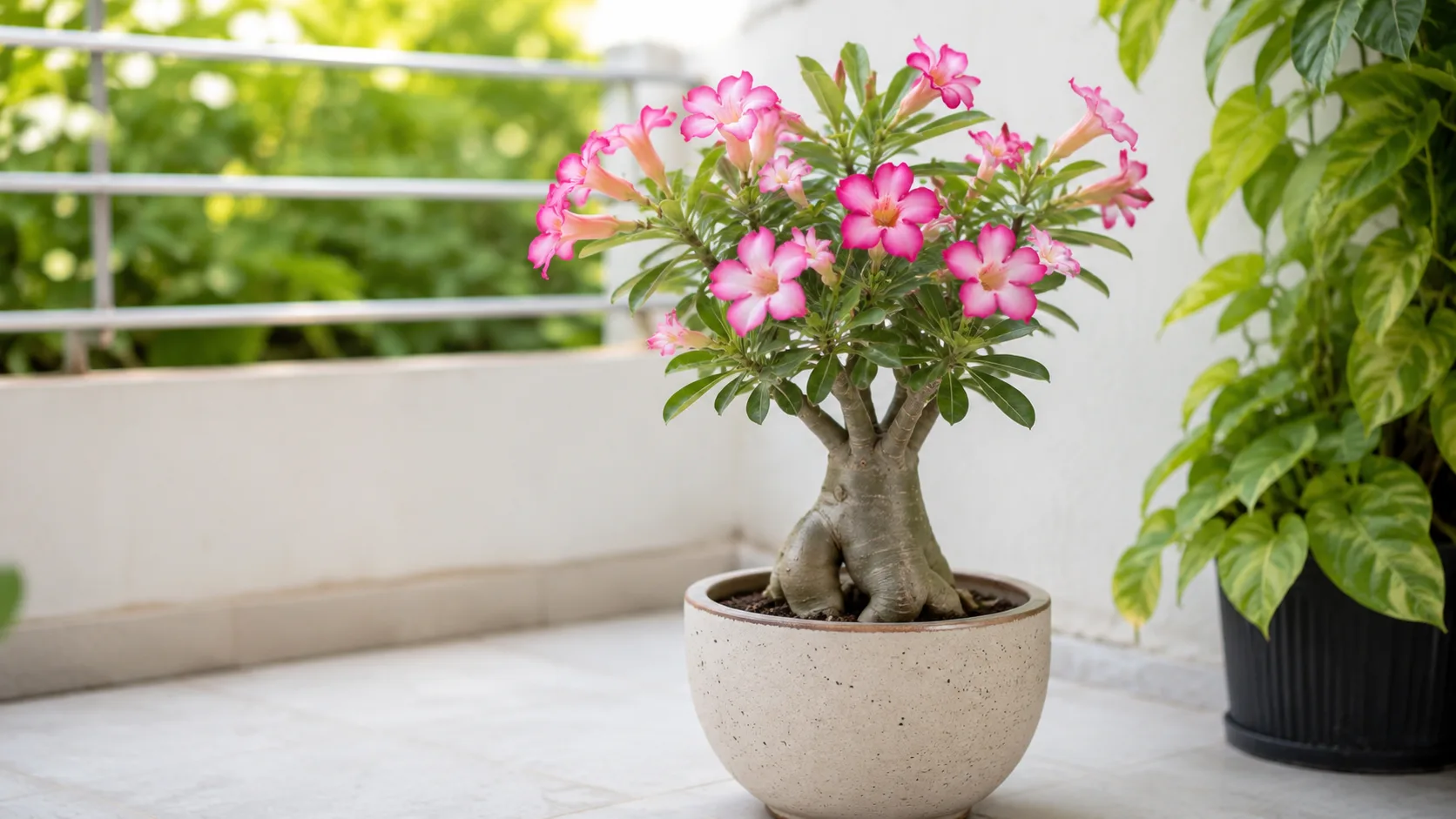
Adenium problems
Use the guides below to diagnose and fix common issues on Adenium. Each problem page explains why it happens on this species and what to do first.
Or use our problem diagnosis tool to narrow down symptoms.
Common problems on Adenium
Likely cause: Ants farming honeydew from aphid or mealybug infestations on tender Adenium shoots and buds.
Quick fix: Treat the underlying sap-sucking pests first; wipe honeydew and monitor stems until ants leave.
Full fix guide →Aphids
MediumLikely cause: Soft-bodied aphids cluster on new Adenium growth and flower buds, weakening shoots.
Quick fix: Spray stems and leaf undersides with insecticidal soap or neem oil; repeat weekly until clear.
Full fix guide →Black Spots
MediumLikely cause: Anthracnose (Colletotrichum) in humid/wet conditions causes yellowing then black spots and leaf drop on desert rose.
Quick fix: Move out of rain/high humidity, bottom-water only, remove spotted leaves, and improve airflow.
Full fix guide →Brown Tips
MediumLikely cause: Dry-down stress, excess salts, or fertilizer burn on leaf margins—common when watering or feeding is out of sync.
Quick fix: Check soil dryness and caudex firmness; flush salts if needed and resume soak-and-dry watering.
Full fix guide →Bud Drop
LowLikely cause: Flower buds abort when light is weak, soil stays wet, temperatures swing, or the plant was recently moved/repotted.
Quick fix: Stabilize placement in full sun, water only when dry, and inspect buds for aphids or thrips.
Full fix guide →Caterpillars
MediumLikely cause: Oleander moth larvae chew holes and strip leaves; common where Adenium is grafted onto oleander understock.
Quick fix: Hand-pick caterpillars and apply Bt at dusk on feeding sites; repeat every 10 days if needed.
Full fix guide →Cold Damage
HighLikely cause: Temperatures below ~50°F (10°C) cause blackened tips, leaf drop, and soft cold-stressed tissue on desert rose.
Quick fix: Move to a warm bright spot above 55°F, stop watering until firm, and prune only mushy tissue later.
Full fix guide →Crown Rot
HighLikely cause: Wet soil during cool or dormant periods rots the swollen caudex, often progressing from roots upward.
Quick fix: Stop watering, unpot, cut away all soft black caudex tissue, dry 2–3 days, then repot in gritty mix.
Full fix guide →Curling Leaves
MediumLikely cause: Leaves curl inward from water stress, aphid feeding, or heat after a sudden environment change.
Quick fix: Check soil moisture and caudex firmness; treat pests if present and stabilize light and temperature.
Full fix guide →Damping Off
HighLikely cause: Seedlings topple at the soil line when trays stay wet and lack airflow after germination.
Quick fix: Remove collapsed seedlings, improve ventilation, let mix dry, and use fast-draining seed-starting medium.
Full fix guide →Draft Stress
MediumLikely cause: Cold or dry drafts near windows and vents shock Adenium, causing leaf drop outside normal dormancy.
Quick fix: Move to a stable warm bright location away from AC, heaters, and drafty doors.
Full fix guide →Drooping Leaves
MediumLikely cause: Limp foliage usually signals root stress—either rot from wet soil or drought stress on a firm caudex.
Quick fix: Feel the caudex and check soil depth; adjust watering and inspect roots if the base is soft.
Full fix guide →Fertilizer Burn
MediumLikely cause: Too much fertilizer during weak light or dormancy builds salts that burn leaf margins and stress roots.
Quick fix: Stop feeding, flush with water if drainage is good, and resume half-strength feed only in warm active growth.
Full fix guide →Fungus Gnats
LowLikely cause: Gnats indicate soil staying too wet—especially dangerous during dormancy when roots are easily damaged.
Quick fix: Let soil dry completely, use yellow traps, and drench with BTI if larvae persist.
Full fix guide →High Humidity
MediumLikely cause: Humid stagnant air keeps leaves wet and soil slow-drying, triggering fungal leaf spot and rot.
Quick fix: Shelter from rain, improve airflow, bottom-water, and keep plants in full sun with dry foliage.
Full fix guide →Holes in Leaves
MediumLikely cause: Chewing insects—especially oleander caterpillars—eat holes through Adenium leaves and new growth.
Quick fix: Inspect leaf undersides at dawn, hand-pick larvae, and apply Bt to active feeding areas.
Full fix guide →Leaf Drop
MediumLikely cause: Leaves drop in cool dormancy, or from overwatering, cold drafts, and sudden environment changes.
Quick fix: If caudex is firm and season is cool, reduce water; if soft or soil is wet, check for rot.
Full fix guide →Leaf Spot Disease
MediumLikely cause: Fungal leaf spot from wet foliage and poor ventilation causes circular brown/black lesions and defoliation.
Quick fix: Remove spotted leaves, keep foliage dry, improve airflow, and avoid overhead watering.
Full fix guide →Leggy Growth
MediumLikely cause: Low light causes etiolation—long thin stems leaning toward the brightest window with sparse leaves.
Quick fix: Move to the sunniest spot or add grow lights; prune leggy stems back in early spring.
Full fix guide →Mealybugs
MediumLikely cause: Mealybugs hide in leaf axils and caudex crevices, sucking sap and excreting honeydew.
Quick fix: Dab clusters with rubbing alcohol or spray insecticidal soap into crevices; repeat weekly.
Full fix guide →Mold on Soil
LowLikely cause: Persistent moisture on the soil surface grows mold—an early sign the pot is staying too wet.
Quick fix: Scrape moldy top layer, reduce watering, improve airflow, and let the mix dry fully between drinks.
Full fix guide →Mosaic Virus
HighLikely cause: Viral infection causes leaf mottling and broken flower color; spread via sap and unsanitary tools.
Quick fix: Isolate the plant, sterilize tools, and destroy severely infected specimens to protect the collection.
Full fix guide →No Drainage Hole
HighLikely cause: Water pools in sealed pots, suffocating roots and rotting the caudex even with careful watering.
Quick fix: Repot immediately into a container with multiple drainage holes and fast-draining succulent mix.
Full fix guide →No Flowers
MediumLikely cause: Failure to bloom when light is below ~6 hours direct sun, dormancy watering is too high, or feed is too nitrogen-heavy.
Quick fix: Give full direct sun, dry the soil between waterings, and use low-nitrogen bloom fertilizer in warm months.
Full fix guide →Not Enough Light
MediumLikely cause: Insufficient direct sun causes stretched stems, pale leaves, and absent or weak flowering.
Quick fix: Move to the brightest south window or outdoors gradually; supplement with grow lights if needed.
Full fix guide →Overwatering
HighLikely cause: Wet soil suffocates desert-rose roots, causing yellow leaves, soft caudex, and fatal rot in cool weather.
Quick fix: Stop watering, confirm mix is dry 5–7 cm down, and inspect roots if the caudex feels soft.
Full fix guide →Poor Drainage
HighLikely cause: Heavy or water-retentive mix and blocked drainage keep roots wet, triggering rot within days.
Quick fix: Repot into gritty succulent mix with perlite/pumice and never let the pot sit in a full saucer.
Full fix guide →Powdery Mildew
MediumLikely cause: Humid stagnant conditions allow Oidiopsis/Leveillula mildew on crowded leaves and stems.
Quick fix: Increase airflow, keep foliage dry, remove affected leaves, and apply sulfur or neem if needed.
Full fix guide →Repotting Stress
MediumLikely cause: Root disturbance during repotting temporarily limits water uptake, causing wilt and leaf loss.
Quick fix: Repot only in spring, avoid watering for several days, and keep in bright stable warmth.
Full fix guide →Root Rot
HighLikely cause: Overwatering—especially during winter dormancy—rots roots and caudex until stems blacken and collapse.
Quick fix: Stop watering, unpot, trim all mushy roots/caudex tissue, dry 2–3 days, repot in gritty mix.
Full fix guide →Scale Insects
MediumLikely cause: Armored scale attaches to stems and leaves, sucking sap and causing yellowing and leaf drop.
Quick fix: Scrape visible scale, apply horticultural oil to stems, and repeat treatment every 10 days.
Full fix guide →Slow Growth
LowLikely cause: Insufficient sun, cool weather, recent dormancy, or root stress slows new leaves and caudex swelling.
Quick fix: Move to full direct sun, resume spring watering/feeding after dormancy, and check caudex firmness.
Full fix guide →Spider Mites
MediumLikely cause: Hot dry indoor air favors spider mites causing stippled yellow leaves and fine webbing on Adenium.
Quick fix: Rinse foliage, increase humidity briefly, and apply insecticidal soap or neem every 5–7 days.
Full fix guide →Likely cause: Sap-sucking pests excrete honeydew that coats leaves and can lead to sooty mold.
Quick fix: Identify and treat the pest, wipe sticky leaves, and monitor for returning insects.
Full fix guide →Likely cause: Sudden intense sun on unacclimated plants burns leaf edges and can trigger defoliation.
Quick fix: Move to bright indirect light, remove dead leaves, and re-acclimate to direct sun over 1–2 weeks.
Full fix guide →Thrips
MediumLikely cause: Thrips rasp growing tips and buds, leaving silvery scars that deform new leaves and flowers.
Quick fix: Shake stems over white paper to confirm, use blue sticky traps, and treat with spinosad or insecticidal soap.
Full fix guide →Underwatering
MediumLikely cause: Extended dry periods in active growth dehydrate the caudex and cause curling, browning, and leaf loss.
Quick fix: Water deeply when soil is dry throughout, then return to soak-and-dry intervals.
Full fix guide →Wilting
MediumLikely cause: Wilting stems and leaves occur with rotting wet roots or with drought on an otherwise firm caudex.
Quick fix: Check caudex firmness and soil moisture at depth before watering again.
Full fix guide →Wrong Soil Mix
HighLikely cause: Standard potting mix or moisture-retentive soil keeps Adenium roots wet and initiates rot.
Quick fix: Repot into gritty succulent mix with perlite, sand, or pumice and excellent drainage.
Full fix guide →Yellow Leaves
MediumLikely cause: Yellow leaves signal cool dormancy, overwatering/root stress, or anthracnose—not always disease.
Quick fix: If caudex is firm and season is cool, reduce water; if soil is wet, inspect roots immediately.
Full fix guide →Low Humidity
MediumLikely cause: Adenium evolved for arid climates and tolerates normal indoor humidity without a humidifier. Crisp leaf edges usually mean underwatering, salt burn, or sun scorch-not dry air. First step: feel the cau
Quick fix: See plant-specific guide for step-by-step fixes.
Full fix guide →Brown Leaves
MediumLikely cause: Common brown leaves pattern on Adenium under indoor care stress.
Quick fix: Inspect roots, watering, light, and pests; adjust one variable and monitor new growth.
Full fix guide →Pale Leaves
MediumLikely cause: Common pale leaves pattern on Adenium under indoor care stress.
Quick fix: Inspect roots, watering, light, and pests; adjust one variable and monitor new growth.
Full fix guide →Distorted Leaves
MediumLikely cause: Common distorted leaves pattern on Adenium under indoor care stress.
Quick fix: Inspect roots, watering, light, and pests; adjust one variable and monitor new growth.
Full fix guide →Whiteflies
MediumLikely cause: Common whiteflies pattern on Adenium under indoor care stress.
Quick fix: Inspect roots, watering, light, and pests; adjust one variable and monitor new growth.
Full fix guide →Leaf Miners
MediumLikely cause: Common leaf miners pattern on Adenium under indoor care stress.
Quick fix: Inspect roots, watering, light, and pests; adjust one variable and monitor new growth.
Full fix guide →Nitrogen Deficiency
MediumLikely cause: Common nitrogen deficiency pattern on Adenium under indoor care stress.
Quick fix: Inspect roots, watering, light, and pests; adjust one variable and monitor new growth.
Full fix guide →Iron Deficiency
MediumLikely cause: Common iron deficiency pattern on Adenium under indoor care stress.
Quick fix: Inspect roots, watering, light, and pests; adjust one variable and monitor new growth.
Full fix guide →Magnesium Deficiency
MediumLikely cause: Common magnesium deficiency pattern on Adenium under indoor care stress.
Quick fix: Inspect roots, watering, light, and pests; adjust one variable and monitor new growth.
Full fix guide →Potassium Deficiency
MediumLikely cause: Common potassium deficiency pattern on Adenium under indoor care stress.
Quick fix: Inspect roots, watering, light, and pests; adjust one variable and monitor new growth.
Full fix guide →Calcium Deficiency
MediumLikely cause: Common calcium deficiency pattern on Adenium under indoor care stress.
Quick fix: Inspect roots, watering, light, and pests; adjust one variable and monitor new growth.
Full fix guide →