Desert Rose Bud Drop: Caudex Checks & Fixes
Quick answer
Bud drop on Adenium usually means flower buds abort when light is weak, soil stays wet, temperatures swing, or the plant was recently moved or repotted. First step: stop moving the pot, confirm the mix is dry before watering again, and give the plant your sunniest stable spot.
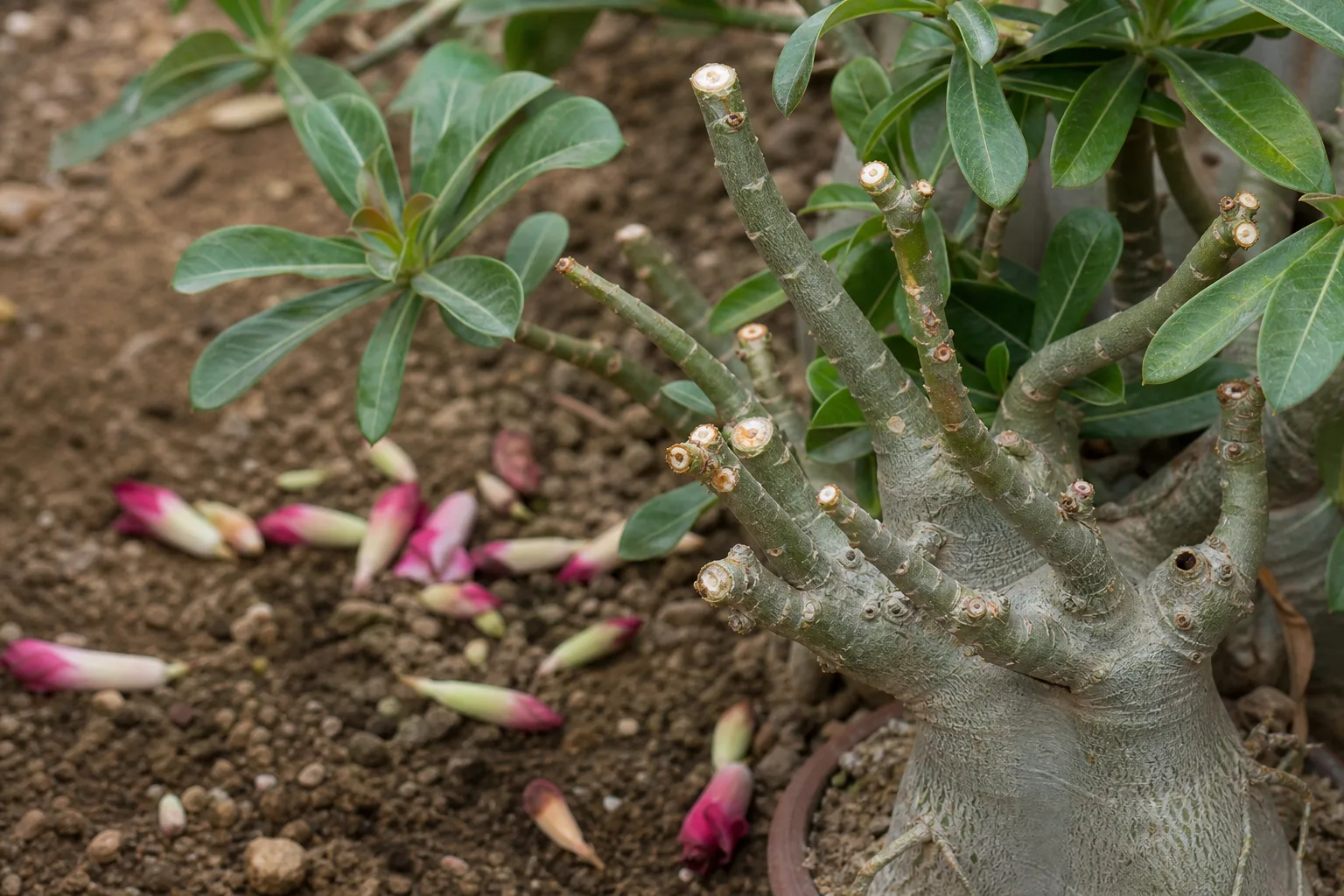
Bud Drop on Adenium: Causes, Checks & Fixes
This guide covers bud drop on Adenium. See also the general Bud Drop guide, watering, and light pages for this plant.
Bud Drop on Adenium: Causes, Checks & Fixes
Quick answer
Bud drop on Adenium obesum (Adenium overview) means flower buds form at branch tips, then yellow, dry, and fall before opening. On this sun-loving caudex plant, that almost always signals stress during bud set-not a mysterious bloom disease.
First step: leave the pot where it is, confirm the mix is fully dry before the next drink, and move it to the sunniest stable location you can offer without stacking other changes the same day.
Adenium invests heavily in each bud. When roots stay wet, light drops below what flowering requires, or the plant was recently repotted or relocated, it aborts buds to protect stored energy in the caudex. A few dropped buds after one hot afternoon or a missed watering is normal; repeated cycles every flush mean conditions need correction. For baseline light and watering rhythm, see the Adenium light guide and watering guide.
Why Adenium gets bud drop
Desert rose is built for bright, dry conditions-not the steady moisture and indirect light many houseplants prefer. Adenium will not flower under low light conditions, and plants need six hours or more of bright light each day to maintain profuse summer bloom. When light is weak, the plant may still push buds, then drop them because it cannot sustain both caudex storage and flower development.
Weak light and flowering demand
Indoors, a south- or west-facing window with six or more hours of direct sun is the minimum for reliable flowering in the Northern Hemisphere. East windows often produce leafy growth with aborted buds. If your plant never forms buds at all, insufficient light or immaturity is more likely-see the no flowers on Adenium guide rather than treating abortion alone.
Watering stress and caudex storage
Adenium roots rot quickly in soggy mix (too much water can lead to root rot), and even early root stress-before the caudex softens-can abort buds. Allow soils to dry between waterings and never let a container sit in a full saucer during active growth. overwatering on Adenium during bud formation is more damaging than a brief dry spell on a firm caudex. Persistent wet soil with a softening base points toward root rot rather than a simple bloom failure.
Environmental shock (repot, move, drafts)
Adenium repotting guide, moving indoors for winter, shifting to a new window, or exposure to cold drafts and AC vents all disrupt water uptake and hormone balance. Chill below about 55°F can trigger leaf yellowing and drop; buds often go first because they are the most expendable tissue. Bud loss within two weeks of repotting usually traces to repotting stress-hold water and light steady rather than repotting again.
Pests on tender buds
Aphids and mites cluster on new Adenium growth; thrips rasp bud tissue and leave silvery scars. Warm shoot tips let thrips populations build fast, so a small infestation can abort an entire bud cluster within days. Sticky residue or distorted bud scales point to sap feeders rather than pure cultural stress-confirm with the Adenium aphids guide or thrips guide before you only adjust watering.
Immaturity and first bloom cycles
Most hybrids flower within one to two years from seed under warm, bright conditions; slower species or weak indoor light can push first reliable bloom to two or three years. Grafted desert roses on mature rootstock often flower sooner because the scion skips early juvenile growth-bud drop on a new graft during its first flush usually traces to transplant or light shock, not immaturity alone. A young seedling that drops its first buds may simply need more age and stronger sun-not emergency treatment. Ethylene from ripening fruit indoors is rarely the main cause on Adenium (unlike some orchids), but keep buds away from gas stoves and closed fruit bowls if abortion repeats in the kitchen.
What bud drop looks like on Adenium
Healthy desert rose buds appear as small rounded or pointed structures at the tips of recent growth, often pink-tinged before opening. With bud drop, you will see:
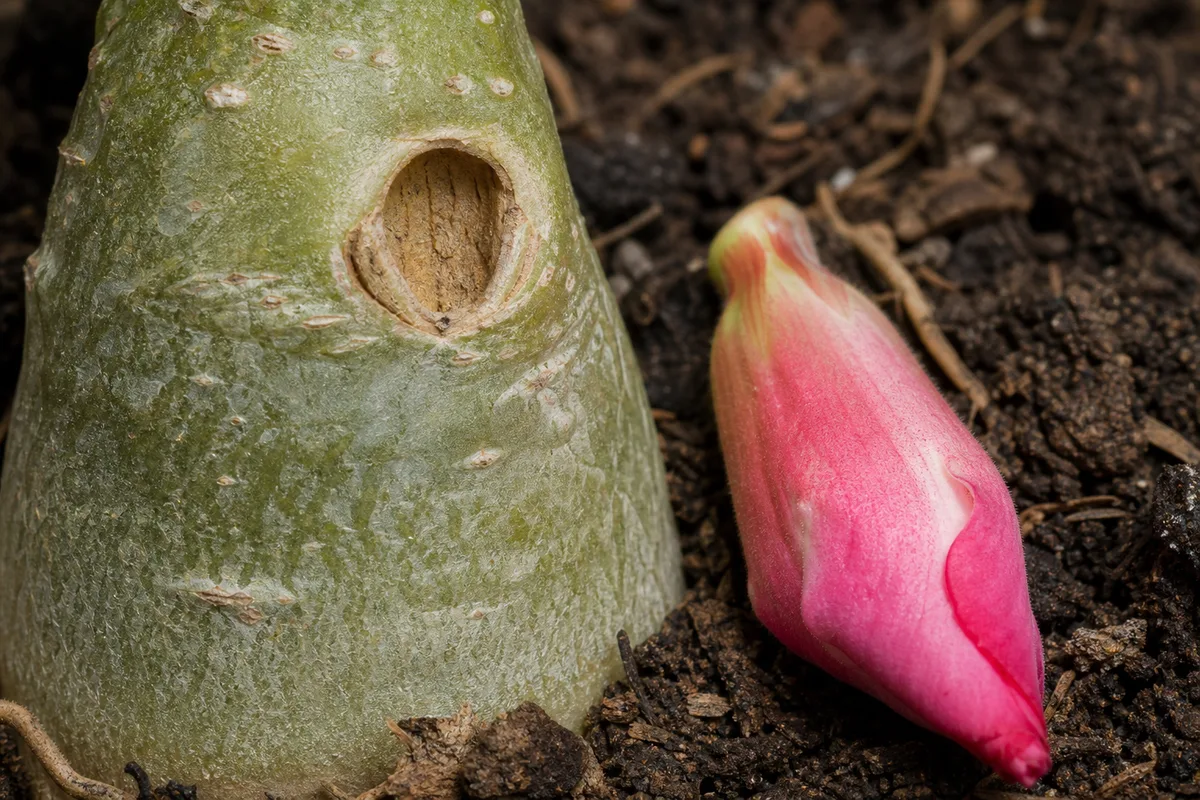
Bud Drop symptoms on Adenium - compare with healthy tissue on the same plant.
- Buds that turn yellow or brown, shrink, and detach with a dry snap
- Bare branch tips after a flush where buds were visible days earlier
- Sometimes simultaneous leaf curl or drop if watering or cold stress is involved
- Sticky shiny coating or tiny insects on bud scales when pests are involved
Compare the caudex while you inspect. A firm, plump base with dropped buds usually means cultural stress or pests. A soft or wrinkled caudex with wet soil suggests root problems-bud drop may be an early warning before stems blacken.
During winter dormancy, all leaves and flowers drop as part of the natural cycle. That is not the same problem as bud abortion during warm active growth.
How to confirm the cause (six checks)
Work through these checks in order before repotting, feeding, or spraying:
- Caudex firmness - Press the swollen base gently. Firm tissue supports a light or watering fix; soft tissue demands a root inspection first.
- Soil moisture at depth - Insert a finger 5–7 cm into the mix. Wet soil during bud set strongly implicates overwatering or poor drainage.
- Direct sun hours - Count how many hours of unfiltered sun the pot receives. Indoors, a south or west window with six or more hours is the minimum for reliable flowering.
- Recent changes - Note repotting, relocation, or bringing the plant inside within the last two weeks. Timing that matches bud loss confirms shock.
- Temperature and drafts - Check proximity to AC vents, heaters, and cold windows. Night temperatures below 55°F (13°C) stress Adenium.
- Bud and shoot inspection - Use a magnifying glass on bud scales and new leaves. Pear-shaped aphids, fine webbing from mites, or silvery thrips scarring confirm pest-related drop.
If soil is wet and the caudex is softening, treat possible rot before chasing bloom fixes. If the caudex is firm, soil is dry, and light is weak, sun correction is the priority.
Symptom triage table
Use caudex firmness and soil moisture together-they tell you faster than guessing about fertilizer.
| Caudex | Soil 5–7 cm down | Sun / recent change | Likely cause | First action |
|---|---|---|---|---|
| Firm | Dry | Fewer than 6 h direct sun | Weak light | Move to brightest stable spot; acclimate if outdoors |
| Firm | Wet or saucer full | Any | Overwatering / poor drainage | Stop watering; empty saucer; check drainage |
| Firm | Dry | Repot or move within 2 weeks | Environmental shock | Hold pot still; dry rest 10–14 days |
| Firm | Dry | Sticky buds, insects visible | Aphids / thrips | Rinse shoots; insecticidal soap on new growth |
| Softening | Wet | Any | Early root rot | Stop water; inspect roots per root-rot guide |
| Firm | Dry | Cool nights below 55°F | Chill stress | Warm stable spot; accept dormancy if seasonal |
First fix for Adenium
Stabilize the environment-one change at a time. Do not repot, prune heavily, fertilize, and relocate on the same day.
Your first action: hold the pot in place, skip watering until the mix is dry throughout, and move it to maximum direct sun (or add a grow light if indoors). If buds were dropping after a recent repot, give the plant ten to fourteen days of warm bright rest with minimal water so roots re-establish.
After stability, inspect buds closely. If aphids or mites are present, rinse shoots with water and treat with insecticidal soap on new growth-repeat every four to seven days until clear. Do not apply oil or soap sprays in harsh midday sun-temperatures above 90°F increase phytotoxicity risk on tender succulent growth.
Only after the caudex stays firm and new growth looks healthy should you consider a phosphorus-forward fertilizer at half strength during warm months. Never feed a stressed desert rose hoping to force buds back.
Recovery timeline
On a firm plant corrected during active summer growth, new buds often appear within two to six weeks. Outdoor plants in full sun usually recover on the shorter end; indoor specimens at a bright window often need the full four to six weeks because lower light slows the next flush.
Recovery is slow if the plant is still recovering from repot shock-expect one full growth flush before reliable bloom returns.
Signs you are on track:
- Firm caudex and upright stem tips
- New leaves opening cleanly without curl
- Fresh bud initials forming at branch ends
Signs the problem is worsening:
- Softening caudex or blackening stem bases
- Continued bud drop through multiple flushes despite dry soil and strong sun
- Yellowing leaves spreading upward from older foliage with wet mix
Fall and winter drops tied to dormancy are normal. Resume watering gradually in spring when new leaves emerge, then judge the next bud cycle.
Documented home case (Austin, TX, June 2024): A 10-inch potted Adenium on a covered patio lost a full bud cluster three days after being moved indoors for a heat wave. Caudex firm, soil dry 6 cm down, south window offering roughly four hours of direct sun. Plant held in place, watering skipped until mix dried throughout, then placed on the brightest west windowsill with no repot or feed. First new bud initials visible at branch tips on day 22; second flush held through opening on day 38.
Lookalike symptoms
Normal dormancy - When temperatures cool and you reduce water for winter rest, Adenium drops all leaves and flowers. That seasonal rest is expected, not a fixable bud-drop problem.
Root rot - Bud drop plus soft caudex, sour soil smell, and limp stems means rot, not light stress alone. Stop watering and inspect roots before chasing bloom advice. Follow the root rot guide when the base softens.
No buds at all - If the plant never forms buds, insufficient light or immaturity is more likely than bud drop. See the no flowers guide rather than treating abortion.
Repotting stress - Wilt, yellow leaves, and aborted buds within days of root disturbance on a firm caudex usually mean shock, not rot. See repotting stress for dry-rest recovery.
Opened flowers fading quickly - Short-lived blooms are normal; desert rose flowers last days, not weeks. Only buds that fail before opening count as bud drop.
What not to do
Do not increase watering because buds fell-wet roots are a common cause, not a cure. Do not repot while buds are visible unless rot is confirmed. Do not move the plant repeatedly between rooms hunting better bloom. Do not feed heavily with nitrogen during stress; that pushes leaves at the expense of flowers. Do not ignore a soft caudex while focusing only on lost buds.
Wear gloves when handling cut stems-the milky sap irritates skin and Desert Rose is toxic to dogs, cats, and horses if ingested.
How to prevent bud drop on Adenium
Prevention follows desert rose biology, not generic houseplant bloom advice:
- Give six or more hours of direct sun during the warm season, outdoors when temperatures stay above 55°F
- Use gritty, fast-draining mix-roughly equal parts potting soil, coarse sand, and pumice or perlite-and water only when the pot feels light and soil is dry deep down
- Repot in early spring before bud set, not during visible buds or summer heat
- Quarantine new plants and inspect shoot tips weekly for aphids and thrips
- Reduce water sharply in cool months and accept dormancy without forcing winter bloom indoors
- Acclimate gradually when moving from shade to full sun to avoid scorch stress that can also abort buds
Stable, boring care through bud formation beats heroic interventions every time.
Related Adenium problems
Bud drop overlaps with several sibling guides-use these when your checklist points past simple bloom abortion:
- No flowers - buds never form; light or age is the usual blocker.
- Root rot - soft caudex, sour soil, black stems; rot beats cosmetic bud loss.
- Repotting stress - wilt and bud abort within days of root disturbance on a firm base.
- Aphids - sticky buds and clustered insects on tender shoots.
- Adenium overview - baseline caudex care, dormancy, and light for the full species picture.
When to escalate
Escalate immediately if the caudex softens, stems blacken at the base, or soil smells sour while buds drop-that is rot, not a wait-and-see bloom issue. Unpot, trim mushy roots, and dry before any fertilizer or aggressive sun move.
Also act promptly if bud drop follows repotting and the mix stays wet for more than a week despite dry-down care-post-repot overwatering turns shock into rot quickly.
Cosmetic bud loss on a firm caudex with dry soil and improving new growth can wait for one stable care correction through the next flush. No emergency repot, heavy prune, or bloom booster required.
If buds abort through three consecutive warm-season flushes despite firm tissue, strong sun, dry-down watering, and clean pest checks, contact your local cooperative extension office with photos-they can help rule out uncommon disease before you keep changing care.
When to use this page vs other Adenium guides
- Adenium watering guide - Use for routine moisture checks before assuming bud drop is the main issue.
- Adenium problems hub - Browse all 40 common issues on this species.