Aphids on Adenium: Causes, Checks & Fixes
Quick answer
Sticky new shoots with a firm caudex usually mean aphids, not overwatering. Isolate the plant and blast colonies off branch tips and buds with a firm water stream before reaching for spray.
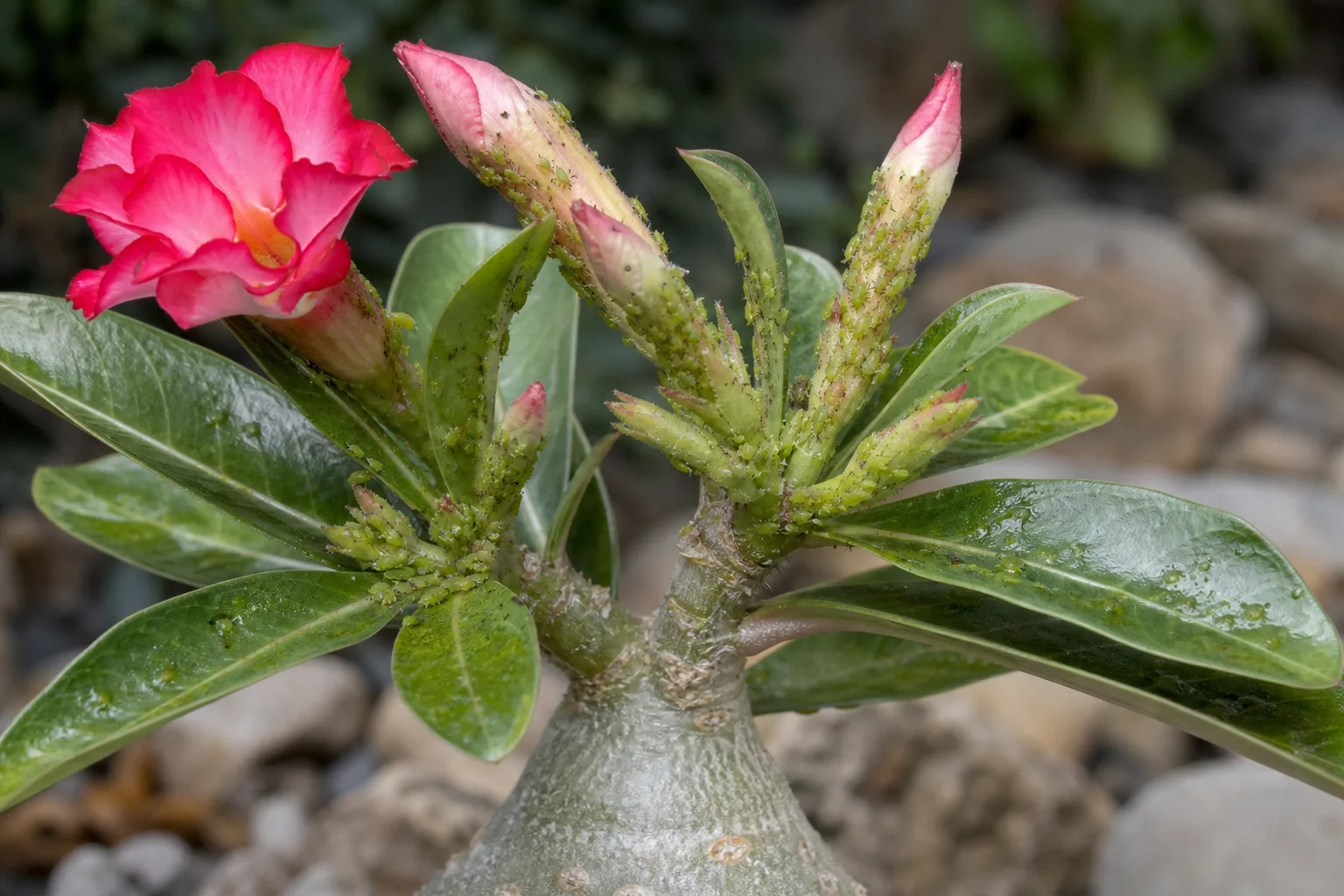
Aphids on Adenium: Causes, Checks & Fixes
This guide covers aphids on Adenium. See also the general Aphids guide, watering, and light pages for this plant.
Aphids on Adenium: Causes, Checks & Fixes
Quick answer
If your Desert Rose has sticky, curling new shoots but the caudex still feels firm, aphids are a more likely culprit than overwatering on Adenium. Adenium obesum pushes its softest tissue at branch tips and swelling flower buds during warm active growth-exactly where aphids cluster to feed on sap.
First step: isolate the plant and blast colonies off with a firm stream of water, focusing on leaf undersides and buds. A soft, mushy caudex on wet mix is a different emergency-see the Adenium root rot guide before you treat pests.
Aphids are slow-moving and visible without magnification once numbers build, but they reproduce quickly in warm weather. Catching them before honeydew attracts ants or sooty mold is far easier than rescuing a bloom flush already weakened by sap loss.
Why desert rose gets aphids on new shoots and buds
New growth and buds are the target. UF/IFAS lists aphids among outdoor pests on desert rose. On Adenium, that means damage often appears on the newest leaves and flower buds while older foliage and a firm caudex look otherwise normal-the pest is feeding on tender tips, not the swollen base.
Warm weather speeds outbreaks. Indoor plants moved outdoors for summer-or brought back inside without inspection-often carry aphids on shoots that were invisible at lower populations. Winged aphids can travel between hosts on air currents, so a patio desert rose can pick up pests from nearby hibiscus or oleander without direct contact.
Soft, over-fed shoots attract pests. Excess nitrogen during strong light produces succulent growth aphids favor. Clemson Extension notes that high nitrogen promotes aphid reproduction-on desert rose, that often traces to bloom-boosting fertilizer applied while days are already long and warm. Match feeding to the Adenium fertilizer guide instead of pushing soft tips.
Entry routes are predictable. New nursery imports, open windows in warm weather, and shared greenhouse benches introduce winged aphids. Ants attracted to honeydew on stems often signal an established colony higher on the branch-not a separate ant problem to ignore.
What aphids look like on Adenium
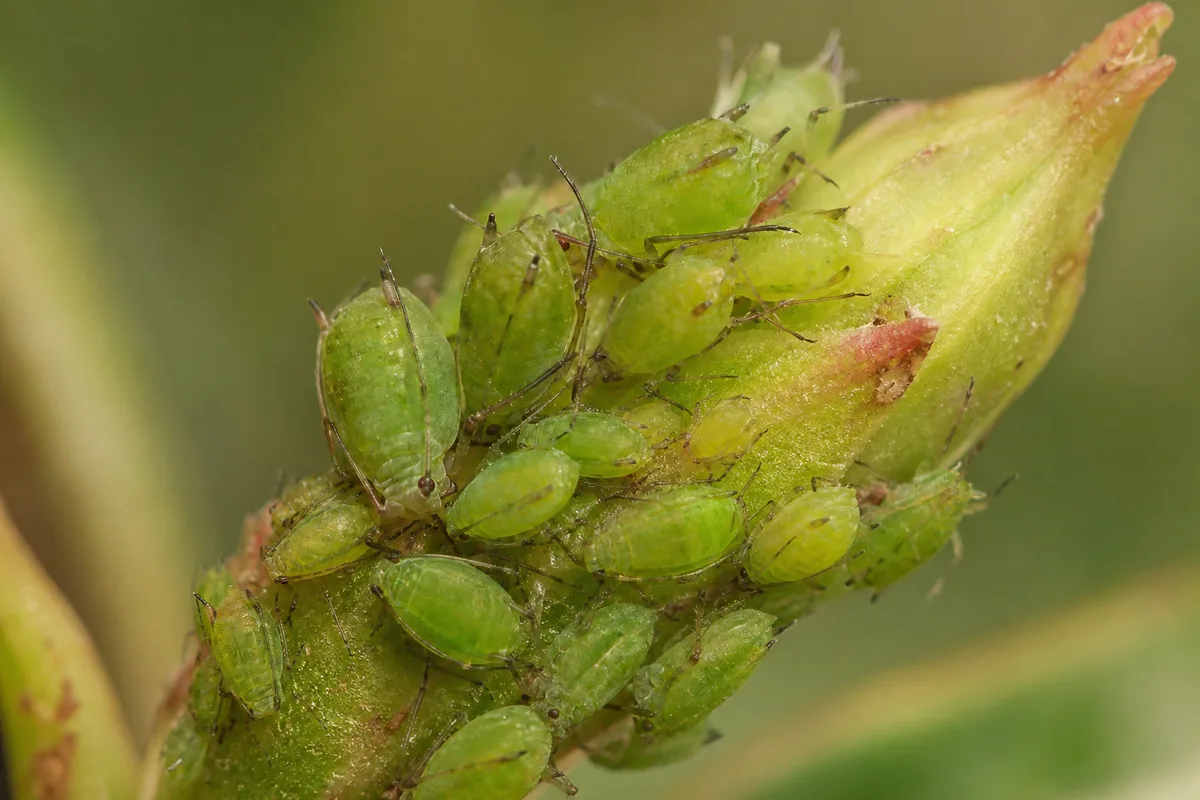
- Small pear-shaped insects-green, black, pink, or yellow-clustered on new shoots and flower buds
- Colonies tucked under young leaves and along tender stem tips
- Sticky, shiny honeydew on leaves or pot rims
- Ants traveling up stems toward branch tips
- Curling, yellowing, or stunted newest leaves while the caudex stays firm
- Dropped flower buds when feeding is heavy-buds that abort will not reopen; wait for the next flush
- Sooty mold growing on untreated honeydew
- White cast skins left on leaf undersides after molting
Aphids symptoms on Adenium - compare with healthy tissue on the same plant.
On glossy desert rose leaves, honeydew is especially obvious-wipe a fingertip along a new leaf; tacky residue that returns within a day means sap feeders are still active.
Confirm aphids vs. overwatering, mealybugs, scale, mites, and sun scorch
Work through checks in order so you do not spray pests while the caudex is rotting from wet soil:
- Caudex press - Firm swollen base with damage only on tips points to insects. Soft or mushy caudex on damp mix means rot risk first.
- Branch-tip scan - Start at the newest growth and any swelling buds.
- Underside check - Colonies often hide below young leaves pressed against stems.
- Honeydew test - Wipe a leaf; if stickiness returns within a day, sap feeders are still active.
- Ant trail follow - Ants on a firm caudex usually lead to aphids above, not root problems below.
Symptom lookalike comparison
| What you see | Likely cause | Key check |
|---|---|---|
| Soft pear-shaped insects on fresh shoots | Aphids | Colonies move when disturbed; honeydew on tips |
| White cottony masses in caudex crevices | Mealybugs | Stationary wax; alcohol turns them orange-gray |
| Hard brown bumps that do not move | Scale insects | Scraping reveals tissue underneath |
| Fine webbing and yellow stippling on older leaves | Spider mites | Dry indoor air; mites on undersides, not bud clusters |
| Brown crispy leaf edges after sudden sun move | Sun scorch | No insects; damage follows exposure change |
| Limp stems, soft caudex, wet mix | Overwatering / rot | No insect clusters; sour soil odor possible |
Confirmed diagnosis - Pear-shaped insects plus honeydew or ants on branch tips with a firm caudex. Suspected - Sticky tips without visible insects may need a magnifying glass on the youngest leaves before treating.
First fix: isolate, rinse, and treat safely
Isolate the plant away from other houseplants and outdoor specimens until you see no new aphids for at least two weeks after treatment.
Blast colonies off with water first. Use a firm stream of water on new shoots, leaf undersides, and flower buds. This is the lowest-risk first fix for desert rose-no residue on glossy leaves and no chemical exposure around pets.
Morning rinse timing for full-sun plants
Schedule rinses in early morning so foliage dries quickly in full sun. Wet leaves sitting through a hot afternoon can scorch desert rose foliage. Outdoor patio plants in peak summer should be rinsed before direct midday heat, then allowed to dry in open air-not under a covered porch that holds humidity.
Repeat every two to three days to knock down nymphs that hatch between rinses.
Insecticidal soap and neem on succulents
If colonies remain after two or three rinses, apply insecticidal soap or neem oil labeled for ornamentals. Clemson Extension recommends a 1 to 2% soap solution (about 2½ to 5 tablespoons per gallon of water) and coverage until runoff, with repeat applications every four to seven days until pests are gone.
Critical rules for Adenium:
- Spray early morning or late evening-do not apply above 90°F or in full midday sun on outdoor plants; heat-stressed succulents are more prone to leaf burn.
- Coat tops and undersides of young leaves and buds; contact sprays only kill insects they touch.
- Patch-test one lower leaf or a single bud cluster and wait 24 hours before treating the whole plant.
- Avoid stacking repot, heavy prune, or fertilizer the same week you start spray-that masks whether pests or care stress caused the setback.
Wipe honeydew from leaves with a damp cloth. Wear gloves when handling stems-Desert Rose is toxic to cats and dogs and the milky sap can irritate skin.
What not to do the same day
Do not increase watering because leaves look stressed-check caudex firmness first. Do not apply oil sprays at midday on sun-exposed outdoor desert roses. Do not use harsh indoor pesticides without ventilation. Do not ignore ants-they protect aphid colonies from predators.
Recovery timeline and bloom expectations
Visible aphids should clear within one to two weeks of consistent rinsing or soap treatment. Expect clean new shoots within three to five weeks during active growth. Distorted young leaves will not fully flatten once they harden. Buds that dropped from feeding are gone for that cycle-judge success by the next clean flush, not by reopening old buds.
A firm caudex throughout treatment is a good sign. Softening at the base means rot or overwatering-not aphids-and needs a different response immediately.
How to prevent aphids on Adenium
Quarantine every new Adenium for two weeks before placing it near other plants. Inspect branch tips weekly during spring and summer active growth. Rinse foliage occasionally when you water, especially after moving plants between indoors and outdoors.
Keep care aligned with the full Adenium care hub-full direct sun, gritty fast-draining mix, and dry-down watering so growth stays firm rather than overly soft. Outdoor desert roses often see fewer pest issues when air movement is strong and plants cycle through natural winter leaf drop-conditions that interrupt aphid populations. Indoor specimens that never rest still need regular tip inspections when temperatures rise.
When to escalate - chronic infestations and pet safety
Escalate if new shoots repeatedly emerge coated in aphids after three full treatment cycles, if sooty mold covers most foliage, or if ants make colonies impossible to rinse away. Chronic feeding during bloom season can stall caudex swelling and weaken the plant over months even when rot has not started.
For heavy, recurring outdoor infestations, a local extension office or certified IPM professional can confirm the pest and discuss options. Systemic insecticides such as imidacloprid move through plant sap and can take weeks to reach feeding sites-Clemson Extension warns they are highly toxic to pollinators and should not be used on bee-attractive blooming plants. On a desert rose in full flower, contact rinses and soaps are usually safer first choices than soil drenches unless an expert recommends otherwise for your situation.
Pet ingestion: If a cat or dog chewed stems, leaves, or treated foliage, contact your veterinarian or ASPCA Poison Control at (888) 426-4435 immediately-Desert Rose contains cardiac glycosides that can cause vomiting, irregular heartbeat, and worse.
Aphids alone rarely kill a mature Adenium with a firm caudex, but they can ruin a flowering season and open the door to secondary stress if you respond with extra water or fertilizer.
Before you water again
Sticky curled tips on a firm caudex mean rinse aphids off branch tips first-not another drink. Soft caudex on wet mix means rot protocol, not pest spray. That single check keeps most desert rose owners from making the problem worse while they treat the right cause.
When to use this page vs other Adenium guides
- Adenium watering guide - Use for routine moisture checks before assuming aphids is the main issue.
- Adenium problems hub - Browse all 40 common issues on this species.
- Sticky Leaves on Adenium - Different entry point when symptoms overlap with aphids.
- Ants on Plant on Adenium - Different entry point when symptoms overlap with aphids.
- Curling Leaves on Adenium - Different entry point when symptoms overlap with aphids.