Mealybugs on Adenium: Causes, Checks & Fixes
Quick answer
White cottony wax in caudex folds with a firm swollen base usually means mealybugs, not drought. Isolate the plant and dab each cluster with 70% alcohol on a cotton swab before spraying insecticidal soap into protected crevices weekly.
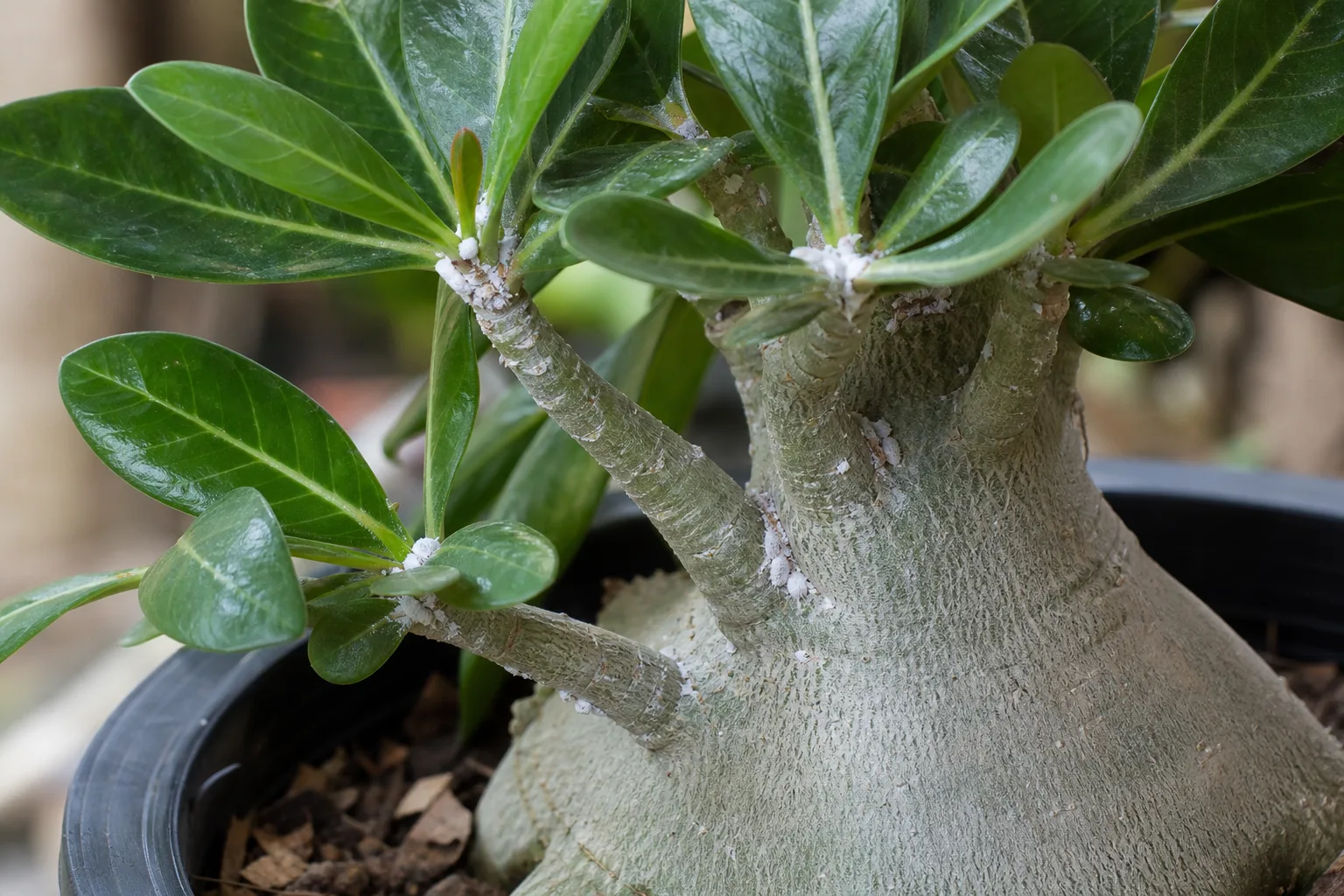
Mealybugs on Adenium: Causes, Checks & Fixes
This guide covers mealybugs on Adenium. See also the general Mealybugs guide, watering, and light pages for this plant.
Mealybugs on Adenium: Causes, Checks & Fixes
Quick answer
If your Desert Rose has white cottony wax in caudex folds but the swollen base still feels firm, mealybugs are a more likely culprit than drought stress. Adenium obesum packs its stems and caudex with tight leaf axils and bark-like overlapping skin-exactly where mealybugs hide in protected sites to feed and lay eggs.
First step: isolate the plant and dab every visible cluster with 70% isopropyl alcohol on a cotton swab, working alcohol into caudex crevices where rinsing never reaches. A soft, mushy caudex on wet mix is a different emergency-see the Adenium root rot guide before you treat pests.
Mealybugs suck sap, excrete sticky honeydew, and weaken new shoots and buds. They reproduce in hidden joints, so one pass rarely clears an infestation-plan on weekly repeats until no new wax appears for two inspections.
Why desert rose gets mealybugs in caudex crevices
Sheltered anatomy invites colonies. The sculptural caudex and tight leaf axils create pockets where pests escape rinsing and predators. UF/IFAS lists mealybugs among pests that affect Desert Rose, especially on plants kept in warm rooms year-round where natural enemies are absent.
Introduction beats watering as the trigger. Most infestations start on stressed or recently purchased plants. Mealybugs hitchhike on nursery stock, shared tools, bonsai-show benches, or hands moving between pots. Weak light and soft, overfed growth from excess nitrogen can host larger colonies-UC IPM notes that high nitrogen stimulates tender growth where mealybugs prefer to lay eggs-but the usual entry route is a new import that skipped quarantine.
Dormancy does not clear them. During winter leaf drop, fewer leaves remain, yet mealybugs persist in bare caudex folds until warm growth resumes. A leafless desert rose with ants on the pot rim or sticky residue on the caudex still needs inspection-not a watering increase.
Root-washed display forms hide pests. Collectors who lift the caudex above soil for bonsai-style display should check under overlapping bark-like skin where the base meets the mix. White wax tucked beneath lifted skin is easy to miss from above.
Ants on the pot or bench often signal honeydew from mealybugs, aphids, or scale-not a separate problem to treat first.
What mealybugs look like on Adenium
- White or gray cottony ovals clustered in leaf axils, stem crotches, and caudex grooves
- Sticky, shiny leaves; black sooty mold on honeydew in heavy infestations
- Slow yellowing, curling, or premature leaf drop on heavily fed shoots
- Flat tan or brown disks on stems suggest scale insects, not the fluffy wax of mealybugs
- Fine stippling and webbing point to spider mites instead
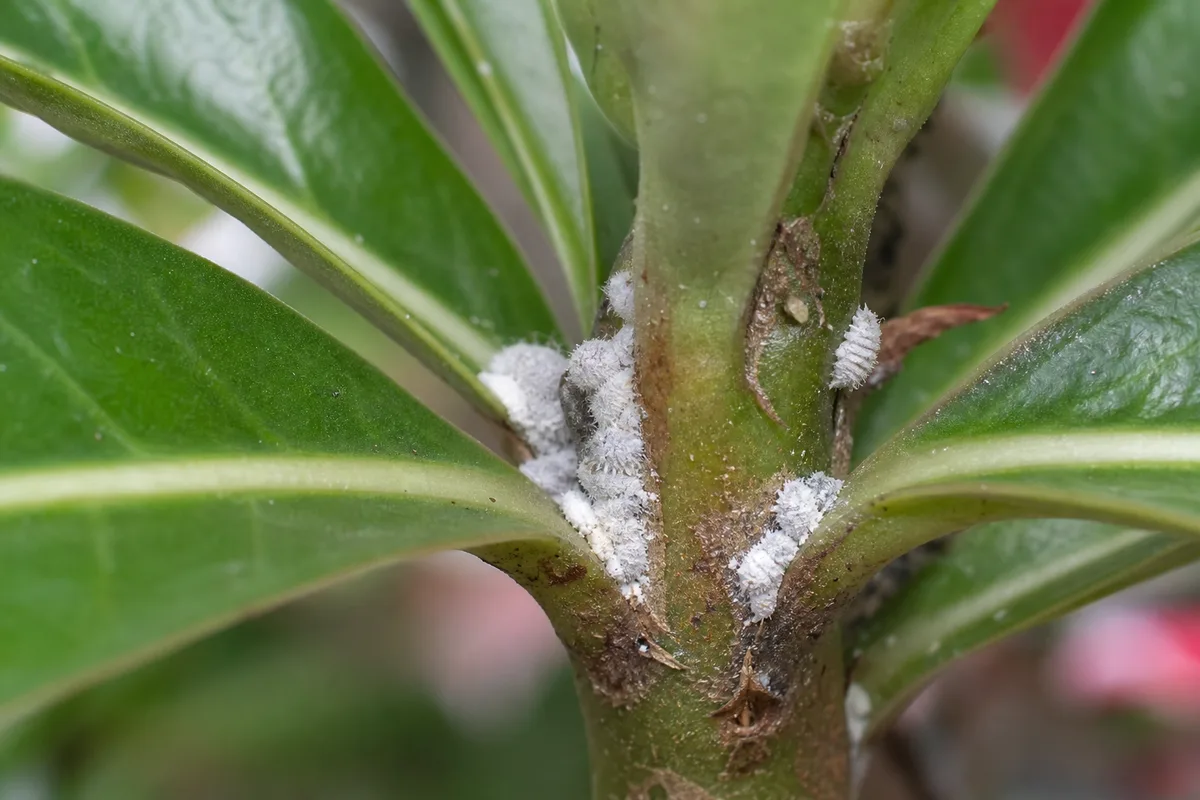
Mealybugs symptoms on Adenium - compare with healthy tissue on the same plant.
On Desert Rose, check the lifted caudex and root-washed display forms extra carefully-pests hide under overlapping bark-like skin where the base meets soil. Arizona Extension notes that root mealybugs appear as powdery white signs on roots and inside pots on adeniums and recommends inspecting roots when aboveground wax is absent but the plant stays weak.
Confirm mealybugs vs. powdery mildew, scale, mites, and drought stress
Work in good light with a magnifying glass if needed. Pull leaves back at the crown and trace every fork down to the caudex.
- Caudex press - Firm swollen base with white wax in folds points to mealybugs. Soft caudex on damp mix means rot risk first.
- Crevice scan - Stationary white waxy clumps that dissolve when touched with alcohol confirm mealybugs.
- Alcohol swab test - Press a swab onto one cluster; mealybugs turn orange-gray when killed. Mineral deposits and dust do not.
- Soil-line check - If stems look clean but the plant stays weak, slide it partly out of the pot and inspect the soil line and upper roots for root mealybugs.
- Lookalike rule-out - Flat white powder only on leaf tops may be powdery mildew, which needs different care.
Symptom lookalike comparison
| What you see | Likely cause | Key check |
|---|---|---|
| Flat white film on leaf tops | Powdery mildew | Wipes off as powder; no cottony clumps in crevices |
| Tan/brown raised bumps on stems | Scale insects | Hard disks; scraping reveals tissue underneath |
| Fine webbing, stippled leaves | Spider mites | Dry air; mites on undersides, not caudex grooves |
| White wax in caudex crevices only | Mealybugs | Stationary cottony masses; alcohol turns them orange-gray |
| Firm caudex, dry soil, no wax | Drought stress | No insects; see Adenium watering guide |
| Ants without visible wax | Hidden sap feeders | Inspect crevices, buds, and soil line |
Confirmed diagnosis - Cottony wax plus honeydew or ants in caudex folds with a firm caudex. Suspected - Sticky residue without visible insects may need a magnifying glass in the deepest grooves before treating.
First fix: isolate, alcohol dab, and soap safely
Isolate the affected Desert Rose away from other succulents until you see no new wax for at least two weekly checks.
Dab each visible mealybug and egg mass with a cotton swab soaked in 70% isopropyl alcohol, pressing into caudex crevices and leaf axils. UC IPM recommends testing alcohol on a small area first and repeating weekly until the infestation is gone.
Test alcohol before full treatment
Test alcohol on one leaf or a small caudex patch if the plant was recently repotted or sits in strong midday sun-Adenium can be sensitive to harsh contact treatments. Schedule dabs in early morning so alcohol evaporates before hot afternoon sun hits outdoor specimens in full direct sun.
Insecticidal soap application in caudex crevices
After dabbing, spray insecticidal soap to coat stems, leaf undersides, and the soil line. CSU Extension recommends contact sprays that reach hidden crawlers-on desert rose, aim the nozzle into forked joints and under lifted caudex skin where swabs cannot reach.
For labeled ready-to-use products, follow package intervals. If mixing concentrate, Clemson Extension suggests a 1 to 2% soap solution (about 2½ to 5 tablespoons per gallon of water), coating until runoff, and repeating every four to seven days. Do not apply above 90°F or in full midday sun on outdoor plants-heat-stressed succulents burn more easily.
Repeat weekly for at least three weeks; eggs and crawlers hide in protected joints and survive a single pass.
What not to do the same day
Do not stack Adenium repotting guide, heavy pruning, and multiple pesticides on the same day-make pest removal the one change, then watch the caudex for five to seven days. Do not blast the caudex with oil-heavy sprays without testing; desert rose is sensitive to some pesticide formulations. Do not increase watering because leaves look stressed-sap loss from pests is not fixed by wet soil.
Wear gloves when removing infested tissue-the milky sap is toxic and can irritate skin.
Step-by-step recovery
- Isolate the plant and inspect the full caudex, stems, and soil line-including under lifted bark on display forms.
- Dab every cottony cluster with alcohol; dispose of swabs in sealed trash.
- Spray insecticidal soap into crevices the swab could not reach.
- Wipe sticky honeydew from leaves so sooty mold does not spread.
- Re-inspect weekly; repeat treatment until no new wax appears for two checks.
- If root mealybugs are present and control fails after three cycles, repot into fresh gritty mix after rinsing roots-only then, not on day one.
Recovery timeline
Visible clusters often collapse within days of alcohol dabbing. Full control typically needs two to three weekly repeats because of hidden eggs. Expect clean new leaf tips within two to three weeks once effective. Old scarred tissue does not revert, but a firm caudex and wax-free new growth mean the plant is winning.
How to prevent mealybugs on Adenium
Quarantine every new Adenium for two weeks before placing it near other plants. Scout caudex grooves and leaf axils monthly during active growth. Keep Desert Rose in full direct sun with gritty, fast-draining mix so growth stays firm rather than soft and succulent-align watering with the Adenium watering guide so you do not confuse pest stress with drought.
Clean pruners between plants, and treat the first white wax spot before mealybugs spread across a windowsill collection. For baseline culture that keeps caudex tissue firm, see the full Adenium care hub.
When to escalate - buds, root zone, and pet safety
Escalate when colonies cover flower buds, multiple branches carry wax, or ants farm the plant heavily. Root-zone infestations combined with a softening caudex need faster action than a few axil clusters on an otherwise firm plant. Mealybugs will not kill a healthy Adenium overnight, but unchecked feeding during the main growing season can stall blooming and leave the caudex depleted going into dormancy.
For chronic root-mealy infestations that survive three full soap-and-alcohol cycles, a local extension office or certified IPM professional can confirm the pest and discuss next steps. UC IPM notes that plant spikes or granules containing imidacloprid may reduce mealybug crawler numbers on houseplants, but these systemic products are less reliable against mealybugs than against other sap feeders and should be avoided on flowering plants when possible because of pollinator risk. On a desert rose in bloom, contact alcohol dabs and repeat soaps are usually safer first choices than soil drenches unless an expert recommends otherwise for your situation.
Neem oil and horticultural oil can suppress younger nymphs with less wax, but always patch-test on one leaf or caudex patch and apply in cool morning hours-oils on heat-stressed outdoor desert roses in afternoon sun can burn glossy foliage.
Pet ingestion: If a cat or dog chewed stems, leaves, or alcohol-treated tissue, contact your veterinarian or ASPCA Poison Control at (888) 426-4435 immediately-Desert Rose contains cardiac glycosides that can cause vomiting, irregular heartbeat, and worse.
Before you water again
White wax in caudex folds on a firm caudex means dab mealybugs first-not another drink. Soft caudex on wet mix means rot protocol, not pest spray. That single check keeps most desert rose owners from making the problem worse while they treat the right cause.
When to use this page vs other Adenium guides
- Adenium watering guide - Use for routine moisture checks before assuming mealybugs is the main issue.
- Adenium problems hub - Browse all 40 common issues on this species.
- Sticky Leaves on Adenium - Different entry point when symptoms overlap with mealybugs.
- Ants on Plant on Adenium - Different entry point when symptoms overlap with mealybugs.
- Yellow Leaves on Adenium - Different entry point when symptoms overlap with mealybugs.