Yellow Leaves on Desert Rose: Dormancy, Rot & Anthracnose
Quick answer
On Adenium, yellow leaves usually mean cool-season dormancy, overwatered roots, or fungal leaf spot-not a nutrient shortage. First step: feel the caudex and probe soil 5–7 cm deep; if the base is firm and the season is cool, cut back water; if the mix is wet, inspect roots before watering again.
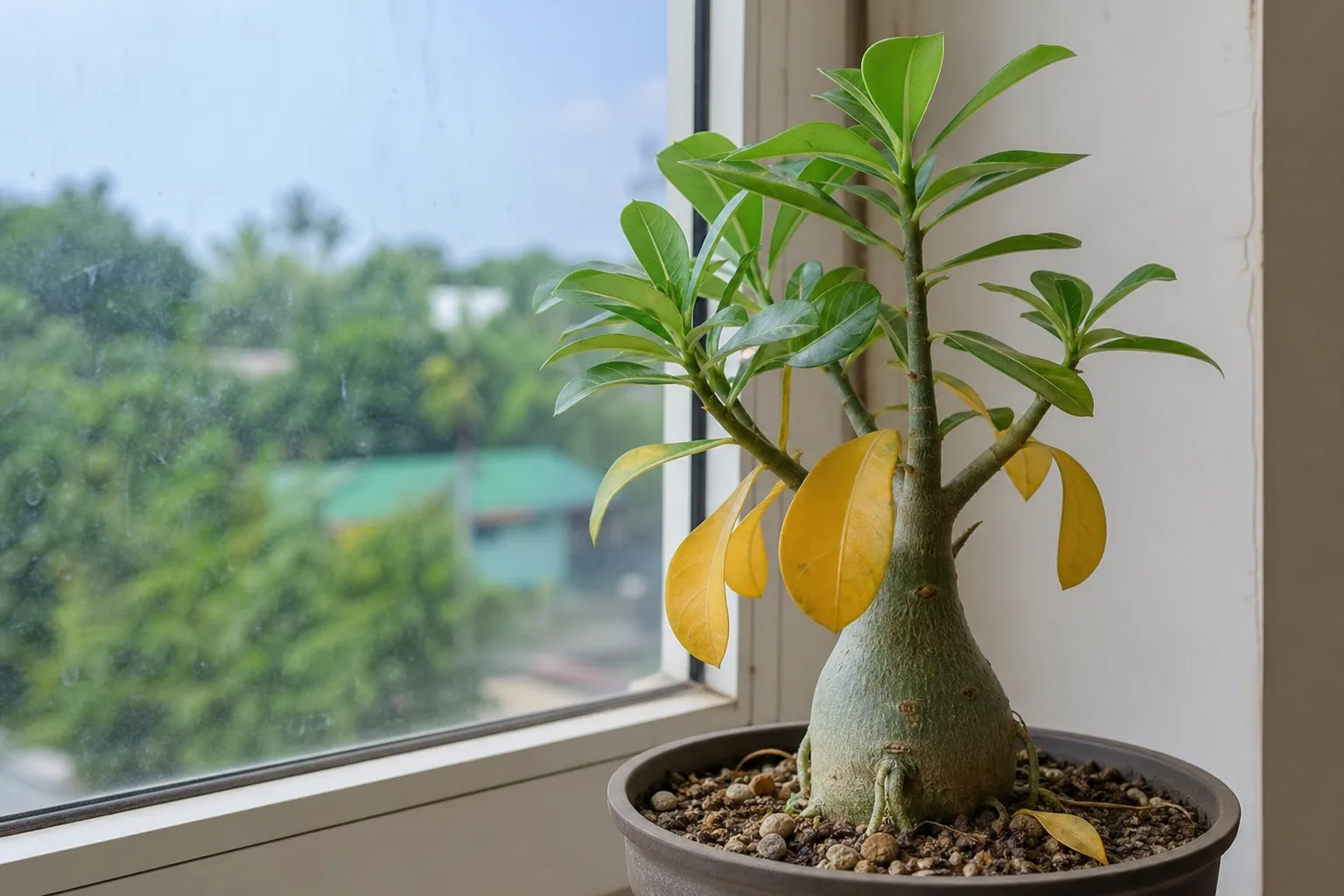
Yellow Leaves on Adenium: Causes, Checks & Fixes
This guide covers yellow leaves on Adenium. See also the general Yellow Leaves guide, watering, and light pages for this plant.
Yellow Leaves on Adenium: Causes, Checks & Fixes
Quick answer
Yellow leaves on Adenium obesum (Adenium overview) are common-and often normal. Adenium sheds foliage during cool winter rest, when roots sit too wet, or when anthracnose infects damp leaves. The symptom is not one disease; the pattern and the caudex tell you which path to take.
First move: press the swollen base with your thumb. If the caudex is firm and outdoor or indoor temperatures have dipped below about 55°F, stop watering and let the plant rest. If the caudex is firm but soil is wet 5–7 cm down during warm growth, skip the next drink and check roots before you water again. If you see yellow halos around brown spots, keep foliage dry and improve airflow-do not shower the plant.
| What you find | What it usually means | Read next |
|---|---|---|
| Bottom-up yellow, firm caudex, cool season | Normal dormancy | Adenium watering guide - reduce drinks |
| Uniform yellow, wet mix, warm growth | Root stress from overwatering | Overwatering or root rot if base softens |
| Yellow halos + brown spots | Anthracnose on wet foliage | Stay on this page; fungicide section below |
| Pale yellow + wrinkled firm caudex, dry mix | Drought stress | Underwatering - deep soak when dry |
| Stippling + webbing | Spider mites | Spider mites on Adenium |
For baseline culture, see the Adenium overview, soil guide, and watering guide.
What yellow leaves looks like on Adenium
Yellowing on Desert Rose shows up in distinct patterns. Match what you see before you treat:
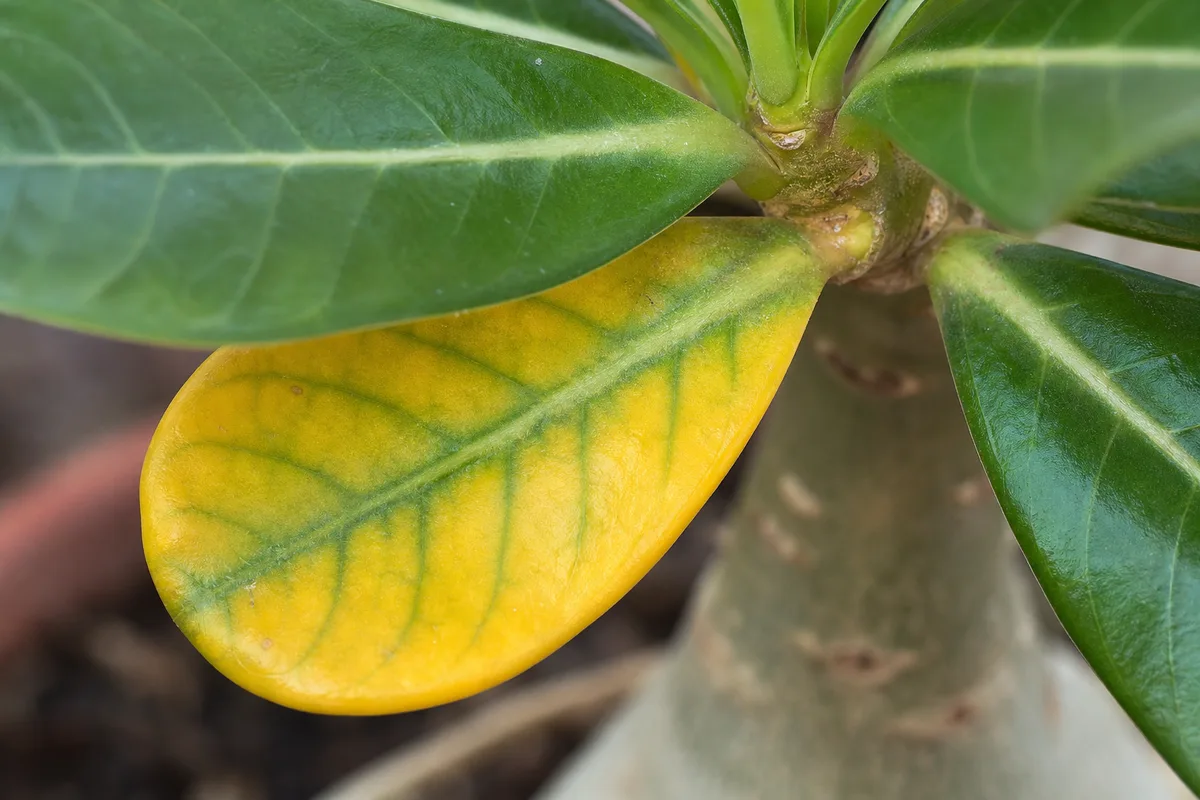
Yellow Leaves symptoms on Adenium - compare with healthy tissue on the same plant.
- Seasonal bottom-up yellowing - older leaves fade to yellow, then drop one by one while the caudex stays firm and hard. Common in late fall through winter when growth slows.
- Uniform pale yellow on many leaves - often paired with wet, cool soil, limp stems, or a pot that has not dried in a week. Points to root stress from overwatering.
- Yellow halos around brown or black spots - small lesions that expand and pull leaves off; classic anthracnose signature on desert rose in humid or rainy weather.
- Stippled yellow between leaf veins - fine pale dots with possible webbing on undersides; spider mites in hot, dry indoor air.
- Yellowing only on new shoots - check leaf axils for cottony mealybugs or clustered aphids on buds.
- Sudden yellow after a cold night - leaves pale and drop after exposure below roughly 50°F; tips may blacken.
A few yellow lower leaves on an otherwise firm plant in active summer growth may simply be old leaf turnover. Concern rises when yellow moves into new tips, pairs with wet soil, or spreads with spots during warm weather.
Why Adenium gets yellow leaves
Desert rose stores water in its caudex and evolved for bright, warm, dry conditions-not the steady moisture many houseplants expect. Yellow leaves usually trace back to one of these mismatches:
Cool-season dormancy
When temperatures fall below about 55°F, Adenium slows down and drops leaves as part of its natural cycle. UF/IFAS notes that chill in the 55°F–35°F range causes leaf yellowing and leaf drop. All foliage may disappear through a three- to four-month winter rest; that is normal if the caudex remains firm.
Overwatering and root stress
Wet soil suffocates fine roots on a drought-adapted plant. Roots cannot deliver water or nutrients, so leaves yellow and drop-even though the problem is too much water, not too little. Overwatering during dormancy is especially dangerous because the plant is not using moisture and rot can move into the caudex within days. See overwatering and root rot when the base softens.
Anthracnose and fungal leaf spot
Colletotrichum fungi cause yellowing around necrotic lesions on Adenium leaves. Wet foliage after rain, misting, or overhead watering lets spores infect. High humidity and poor airflow turn a few spots into rapid defoliation. This is a moisture problem first and a disease second-see also leaf spot disease for deeper symptom photos.
Insufficient light during active growth
Adenium needs bright sunlight-six hours or more daily-to flower and maintain compact growth. Weak light in a warm room slows water use, so soil stays damp longer and roots yellow leaves indirectly. Pale, stretched stems often accompany the yellowing.
Pests and environmental shock
Spider mites stipple leaves yellow in dry, hot indoor conditions. Aphids and mealybugs drain sap from new growth. Recent Adenium repotting guide, a move indoors for winter, or a cold draft near a window can trigger temporary yellowing and drop on a firm caudex.
Nutrient deficiency can yellow leaves on some houseplants, but on Adenium it is a late suspect. Fix water, light, and seasonal rhythm before reaching for fertilizer.
How to confirm the cause
Work through these checks in order. Each step narrows the list without stacking treatments:
- Caudex firmness - Firm and smooth: dormancy, early overwatering, or leaf spot are still manageable. Soft, sunken, or foul-smelling: treat as rot immediately.
- Season and temperature - Cool months plus firm caudex strongly favor dormancy. Yellowing during hot growth with wet soil favors root stress or anthracnose.
- Soil moisture at depth - Push your finger 5–7 cm into the mix. Soggy during warm weather confirms overwatering. Dust-dry with a slightly wrinkled but firm caudex points to underwatering instead.
- Leaf pattern - Even yellowing without spots differs from yellow halos around brown blotches. Stippling and webbing mean mites; cottony clusters mean mealybugs.
- Recent care changes - Repotting, moving indoors, rainy week outdoors, or increasing water in winter? Timing that matches the yellowing is diagnostic.
- Light level - Count direct sun hours. Less than six in warm months raises risk for weak growth and slow soil dry-down.
If the caudex is firm, soil is drying on schedule, and no spots appear, seasonal rest or a single old leaf aging out is likely-not an emergency.
The first fix to try
Feel the caudex and probe the soil before you change anything else.
That single check prevents the most common mistake: watering yellow leaves that are already drowning. If the base is firm and the season is cool, hold water and place the pot in the brightest cool spot you have-do not fertilize or repot during rest. If the base is firm but soil is wet during active growth, skip the next scheduled drink and do not mist or overhead-water until the mix dries throughout.
Only after this pause should you unpot for root inspection-if soil stayed wet or the caudex is softening. One correction today beats repotting, pruning, feeding, and spraying on the same afternoon.
Step-by-step recovery
After the first check, add these steps based on what you confirmed-one at a time:
If dormancy is the cause
- Reduce watering to near zero while temperatures stay cool per the watering guide.
- Keep the plant in bright light above roughly 55°F; do not let it freeze.
- Wait for spring warmth, then resume soak-and-dry watering as new tips appear.
If overwatering or wet soil is the cause
- Stop watering until the mix is dry 5–7 cm down.
- Empty saucers; confirm drainage holes are open.
- If the caudex softens, unpot, trim mushy roots and caudex tissue, air-dry two to three days, and repot into gritty succulent mix per the soil guide.
- Resume watering only when new growth shows and soil dries fully between drinks.
If anthracnose spots are present
- Move to Adenium light guide where leaves dry within hours.
- Remove leaves with more than half their area spotted; bag and discard them.
- Keep water off foliage-bottom-water or pour at the soil line only.
- Improve airflow between pots or run a low fan indoors.
- Fungicide when spots keep spreading: UF/IFAS recommends copper-based fungicides labeled for anthracnose on ornamental succulents when cultural fixes fail after a week of dry foliage. Apply per label rates-typically every 7–14 days until new growth stays clean. Rotate with another mode of action if labels allow; never spray during peak midday heat on stressed plants.
If pests are confirmed
- Isolate the plant.
- Rinse or wipe undersides for mites; see spider mites for repeat treatment. Dab mealybugs with alcohol or use insecticidal soap on aphids.
- Repeat weekly until new growth stays clean.
Recovery timeline and what to expect
Yellow leaves will not turn green again. Track recovery by the caudex and new tips:
- Days 3–7 - Yellowing stops spreading; firm caudex; pot weight drops as soil dries (if overwatering was the issue).
- Weeks 2–4 - New leaves emerge green and firm during warm growth; spotted old foliage may still drop.
- After dormancy - Spring warmth brings a full leaf flush; flowering follows if light is strong.
If stems blacken from the base upward or the caudex stays soft despite dry care, salvage may require cutting above healthy tissue-or the plant may not recover.
Lookalike symptoms
| What you see | Often confused with | How to tell apart |
|---|---|---|
| Bottom leaves yellow and drop | Overwatering | Dormancy: cool season, firm caudex, dry or lightly watered soil. Overwatering: wet mix, often warm months. |
| Yellow halos + black spots | Sunburn | Sunburn: bleached or crispy patches on sun-facing leaves after a sudden move. Anthracnose: round spots with yellow rings after wet weather. |
| Uniform yellow + limp leaves | Underwatering | Underwatering: light pot, very dry mix, slightly wrinkled firm caudex. Root rot: wet soil, soft base. |
| Pale yellow + long thin stems | Nutrient deficiency | Low light etiolation is far more common on Adenium than nitrogen shortage; check sun hours first. |
| Yellow new growth | Natural aging | Aging hits oldest leaves first. New-tip yellowing with pests, wet soil, or spots needs action. |
Mistakes to avoid
- Watering more because leaves look “thirsty” - yellow from wet roots worsens with another drink.
- Fertilizing during dormancy or root stress - salts burn margins when roots are already compromised.
- Misting or showering to clean spotted leaves - rewets foliage and spreads fungal spores.
- Repotting on day one - only necessary for mushy roots, failed mix per the soil guide, or blocked drainage.
- Keeping Adenium in low light while adjusting water - weak sun slows dry-down and invites rot.
- Stacking fixes - repot, hard prune, feed, and spray the same day adds stress when the plant needs one clear correction.
How to prevent yellow leaves
Prevention on Desert Rose is mostly environmental fit:
- Grow in full direct sun for at least six hours during active growth.
- Use gritty, fast-draining mix and pots with open drainage holes per the soil guide.
- Water only when dry 5–7 cm down in warm months; cut back sharply in cool dormancy.
- Keep water off leaves-no misting, no overhead watering.
- Shelter outdoor pots from extended rain in humid climates.
- Move plants gradually when shifting between indoor and outdoor light.
- Inspect the caudex weekly during the growing season; firm tissue is your early warning system.
When to worry
Treat as urgent if:
- The caudex feels soft, sunken, or smells sour.
- Stems blacken at the soil line and the damage climbs.
- Yellowing with spots spreads to new leaves after a week of dry foliage and corrected placement.
- More than half the foliage drops in a week during warm active growth.
Seasonal yellowing on a firm caudex in cool weather is manageable-reduce water and wait. Cosmetic yellow on one or two old lower leaves with clean new tips during summer is low priority.
When to use this page vs other Adenium guides
- Adenium watering guide - Use for routine moisture checks before assuming yellow leaves is the main issue.
- Adenium problems hub - Browse all 40 common issues on this species.
- Overwatering on Adenium - Different entry point when symptoms overlap with yellow leaves.
- Underwatering on Adenium - Different entry point when symptoms overlap with yellow leaves.
- Not Enough Light on Adenium - Different entry point when symptoms overlap with yellow leaves.