Adenium Watering Guide: Schedule, Soil Checks & Mistakes
Adenium Watering Guide: Schedule, Soil Checks & Mistakes
Adenium Watering Guide: Schedule, Soil Checks & Mistakes
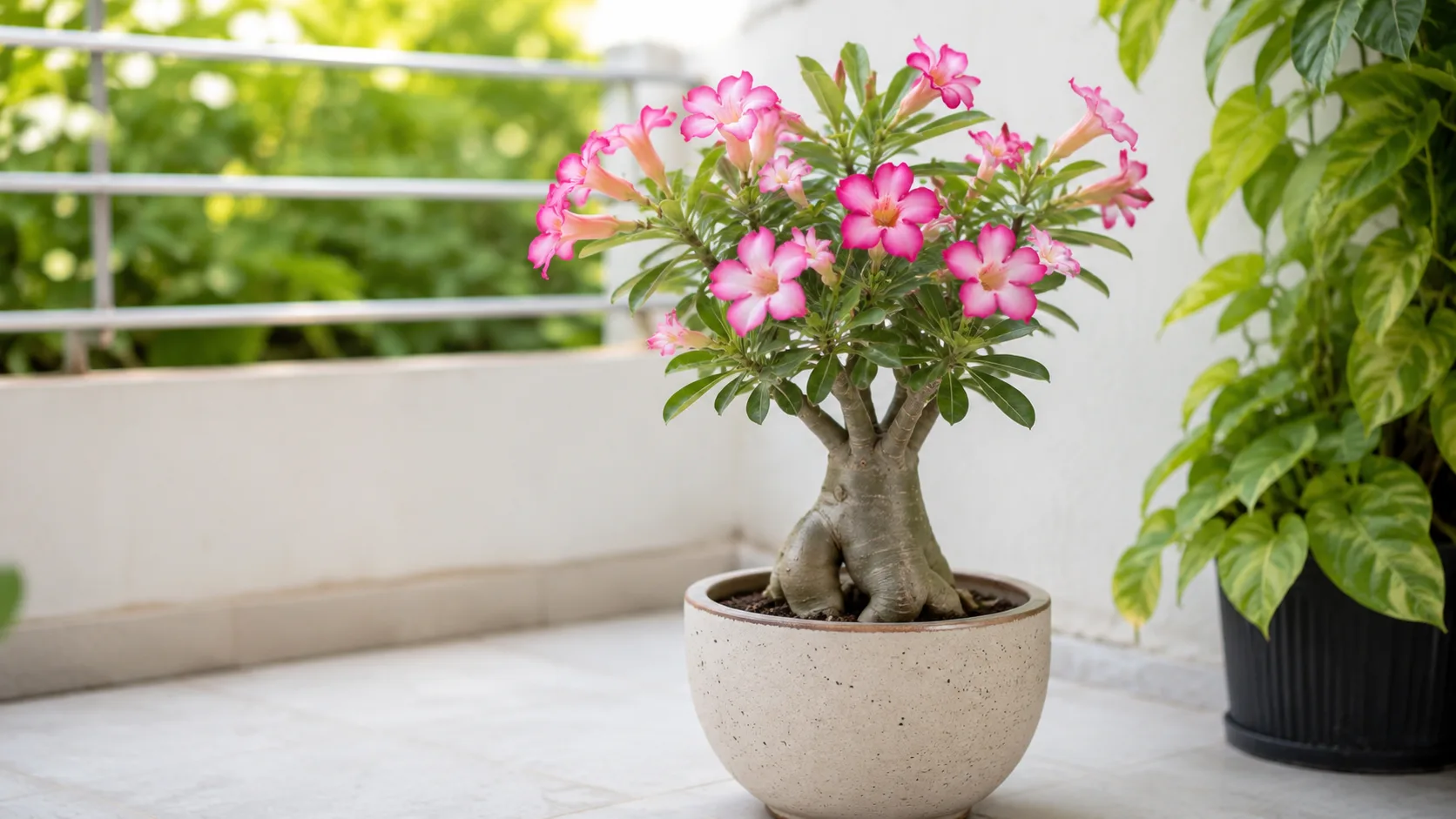
Adenium watering is not a houseplant hydration routine you can set and forget. Adenium obesum - the Adenium overview sold in most succulent collections - evolved across sub-Saharan Africa and the Arabian Peninsula where long dry seasons alternate with brief heavy rains that drain through gritty soil within hours. The plant stores that water in thick stems, succulent leaves, and especially a swollen base called the caudex. Indoors, the biology translates into one rule that beats every app reminder: check the pot and caudex, then water - never water because a calendar said so.
The main mistake is not underwatering on Adenium. It is keeping roots wet in cool, dim conditions while the caudex still looks plump on top. overwatering on Adenium produces a soft, mushy caudex, blackening stems, and root rot on Adenium that can kill an otherwise tough plant. Winter makes the risk worse because cooler nights slow growth, extend dry-down time, and push adenium into dormancy - a rest period where water should drop sharply or stop entirely depending on temperature. This guide covers how often to water by pot size and season, the moisture checks that actually work for desert rose, dormancy exceptions for warm apartments, rot recovery with propagation salvage, and how watering interacts with soil drainage and light placement.
Why Adenium Watering Is Different
Caudex storage and the native dry season
Adenium is a caudiciform succulent - a plant that builds a water-storage trunk or base and tolerates drought far better than constant moisture (University of Arizona Cooperative Extension). In habitat, rainfall is seasonal. The plant fills its caudex during wet periods, then survives weeks or months with little new water while leaves may yellow and drop. That cycle is normal, not a crisis.
Container culture changes the math. A pot has finite drainage, no underground water table, and often less light than outdoor desert scrub. The caudex still stores reserves, which is why a slightly wrinkled trunk during dormancy can be acceptable while a soft, spongy caudex with wet soil is an emergency. NC State Extension notes that adenium stores water in leaves, stems, and roots - so the plant can ride out a missed drink longer than it can ride out soggy mix.
Seedlings vs mature specimens read differently on the same schedule. Young plants with thin caudices shrivel faster during dormancy and may need a light monthly drink in warm storage when the upper mix is bone dry. Large mature specimens with massive storage bases often need no winter water at all in cool rooms (Desert Botanical Garden). Shallow bonsai pots dry the surface quickly but hold less total volume - check depth more often in summer, and treat cool-season wet soil as even more dangerous because the reduced root zone has less oxygen buffer.
What goes wrong when the calendar wins
A fixed “every seven days” schedule fails because pot volume, root mass, soil grit, room temperature, and light intensity all change how fast mix dries. A 6-inch terracotta pot in a south window in July may need water several times a week during peak growth. The same plant in a cool spare bedroom in January may need no water for weeks if nights stay below 50°F (10°C) (Desert Botanical Garden).
Calendar watering also hides the deadliest combination: cold roots plus wet soil. The Arizona-Sonora Desert Museum warns not to water at all when nights stay consistently below 50°F and to withhold water completely when the plant is dormant and leafless - even if dormancy lasts months. Watering on schedule through that window is how healthy caudexes develop rot in one winter.
Daily dribbles fail caudiciforms differently than foliage plants. A peace lily tolerates constant surface moisture; adenium needs the full root zone to dry between soaks. Partial top-ups keep the upper inch damp while the center stays stale - the pattern that produces soft caudex rot without ever looking “soaked” from above.
The Check-Before-Calendar Rule
Treat every watering as a decision, not a habit. Before you lift the can, run through three questions: Is the root zone dry at depth? Does the caudex feel firm rather than soft and mushy? Are night temperatures warm enough that water will not sit cold and stagnant around roots?
If the mix is still cool or damp 5–7 cm down, wait - even if the surface looks pale and cracked. If the caudex is firm and the pot feels light, you can usually wait longer than you think. If the caudex is soft and the soil is wet, you are past a simple dry-down problem; skip watering and inspect roots. The RHS recommends watering freely in the growing season when the compost dries out, and keeping plants much drier in winter - the dry-out check comes first, the season adjusts how aggressively you apply that rule.
Use this quick gate before every watering session:
- Dry at 5–7 cm depth? If no, wait.
- Caudex firm (not mushy)? If soft with wet soil, inspect - do not water.
- Nights above 50°F or plant in active summer growth? If no, default to dry unless caudex shrivels in a warm room.
- Pot drains freely and saucer empty? If no, fix drainage before adding more water.
How Often to Water Adenium by Season and Pot Size
There is no honest universal interval. What follows is a starting framework from extension and botanical-garden sources, adjusted by your checks - not a rule to obey blindly.
| Season / growth phase | Pot under 10 in (25 cm) | Pot 10–12 in+ | Night temps below 50°F |
|---|---|---|---|
| Peak summer active growth | Deep soak 3–4× per week when mix dries fully | Deep soak ~2× per week when mix dries fully | Hold water; cold + wet = rot |
| Spring / fall moderate growth | Every 7–14 days when dry at depth | Every 14–21 days when dry at depth | Reduce sharply; check caudex only |
| Cool winter dormancy | Little to no water; light drink only if caudex shrivels in warmth | Usually no water if cool; monthly at most if warm and shriveling | Bone dry regardless of pot size |
Table frequencies reflect outdoor Arizona peak-growth benchmarks from University of Arizona Extension and Desert Botanical Garden. Stretch intervals indoors in air-conditioned rooms where evaporation is lower.
Peak summer active growth
During warm months with strong light, adenium can use water aggressively. Think soak, drain, dry, repeat - not daily dribbles that keep the upper inch moist while the center stays stale. In full sun and heat, Desert Botanical Garden notes adenium tolerates temperatures up to about 120°F (49°C) in well-draining soil without the rot problems common in constantly wet mix.
Indoor growers in air-conditioned rooms should not copy outdoor Arizona frequency blindly. AC lowers evaporation; dimmer windows slow uptake. Use the table as an upper bound in bright heat, then stretch intervals if the skewer still shows moisture at depth after two days.
Cooler months and reduced growth
As days shorten and nights cool, stretch the interval even if the plant still carries leaves. Soil stays wet longer; the caudex draws on stored water. Many plants need water every two to three weeks in autumn - sometimes less - but only when dryness checks pass. NC State advises decreasing water while dormant; the trigger is both season and the actual moisture in your pot.
Winter dormancy and exceptions
“Zero water all winter” is too simple for every home. The accurate rule is temperature-conditional:
- Nights below 50°F (10°C): Keep plants dry. Do not resume until nights stay above 50°F and new growth appears (University of Arizona Cooperative Extension).
- Warm indoor storage above ~55°F with bright light: You may need a light drink every three to four weeks only if the caudex shrivels significantly - dampen the upper inch or two, not a full soak (Desert Botanical Garden).
- Flowering during dormancy: UA Extension notes adenium may flower while dormant; still keep dry in cool storage. Warm-room bloomers can receive the light shrivel-only drinks above.
Leaf drop in winter is normal for many plants (Arizona-Sonora Desert Museum). Yellowing leaves with wet soil in a cool room are not normal - that is overwatering during rest.
Best Moisture Checks for Adenium
Finger and skewer at 5–7 cm depth
Surface color lies. Push a finger or dry wooden skewer 5–7 cm (2–3 in) into the mix. Water only when that depth is completely dry. If the skewer emerges with soil clinging or feels cool, wait. In small pots, check closer to the bottom by tipping the container gently or using a longer skewer - the root zone matters, not the decorative top dressing.
Moisture meters can mislead in very coarse gritty mixes because probes read unevenly between perlite and mineral chunks. Treat a meter as one signal among several, not a single authority - if the skewer says dry but the meter says wet, trust the skewer and caudex firmness over the display.
Caudex firmness test
For adenium, the caudex is as important as the soil. Gently squeeze the swollen base between thumb and fingers:
- Firm and solid with dry soil → no water needed yet.
- Slightly yielding with very dry soil → time for a thorough soak.
- Soft and mushy with wet soil → overwatering; do not add more water.
- Marked shriveling with bone-dry soil during warm weather → underwatered; soak and drain.
Desert Botanical Garden notes young dormant plants may need light monthly water to avoid shriveling, while large specimens often need none - the caudex read helps you tell which camp your plant is in.
Pot-weight comparison: Lift the pot two days after a full watering and notice the heft. When it feels noticeably lighter and dryness checks pass, schedule a soak. Weight is especially useful for wide shallow bonsai pots where finger depth is awkward.
Caudex state decision table
Use this table when soil dryness and caudex feel disagree - the situation that sends most growers back to image search.
| Caudex feel | Soil at 5–7 cm | Likely meaning | Urgency | Action |
|---|---|---|---|---|
| Firm, smooth skin | Dry | Healthy wait state | Low | No water; recheck in 2–3 days |
| Slightly wrinkled, still firm | Dry | Normal draw-down or cool dormancy | Low–medium | Soak if warm active growth; wait if nights below 50°F |
| Marked shrivel, firm tissue | Bone dry | Underwatered in active season | Medium | One full soak, drain, resume checks |
| Soft, gives under pressure | Wet or cool-damp | Rot beginning | High | Stop water; unpot and inspect roots today |
| Soft at base, black streaks | Any moisture | Advanced caudex rot | Critical | Salvage cuttings per propagation guide; discard if stem is hollow |
Reference states to compare against your plant:
- Firm + dry: Caudex skin taut like a firm apple; no give when squeezed; soil skewer clean and dry at depth.
- Acceptable winter shrivel: Light vertical wrinkles on a still-firm caudex; soil dry; nights cool; leaves may have dropped - not an automatic drink signal.
- Soft + wet emergency: Spongy give under gentle thumb pressure; soil clings to skewer; may smell sour at drainage hole - treat as rot until proven otherwise.
Signs You Are Watering Too Much
Overwatering shows up as a soft, mushy caudex, blackening stem tissue at the soil line, yellow leaves that do not match normal dormancy drop, and soil that stays dark and cool many days after watering (NC State Plant Toolbox). Fungus gnats, a sour smell from the drainage hole, and leaves that look limp despite wet mix also point to root trouble - roots cannot take up water when they are rotting.
Common cause combinations: heavy peat mix in a dim corner, no drainage hole, a decorative cachepot holding runoff, or continuing summer frequency into a cool dormant period. Grafted adeniums can show rot at the graft union when the rootstock and scion dry at different rates - check firmness at both the caudex and the junction, not only the top dressing. Any one factor is risky; two or more together often produce fatal caudex rot.
What to do immediately when rot is suspected
- Stop watering until you inspect - more water never fixes rot.
- Slide the plant out and smell the root ball. Mushy black roots and foul odor confirm the problem.
- Trim all soft, brown, or slimy roots with clean scissors. Keep only firm, white or tan roots.
- Let the root ball air-dry for several hours in shade - do not bake in direct sun.
- Repot into fresh gritty mix in a clean pot with drainage. See the Adenium repotting guide for mix ratios and caudex exposure cautions.
- Wait one to two weeks before the first cautious soak, and only if the remaining root zone is dry - Desert Botanical Garden and extension sources recommend letting trimmed roots callus and dry before reintroducing moisture.
- Move to brighter, warmer conditions if the plant was in a dim cool spot - rot and low light reinforce each other.
Early intervention saves plants. A caudex that is soft at the very base with black streaks may not recover on the original roots - cut back to firm wood above the rot and follow the Adenium propagation guide to reroot stem cuttings or grafts. If the entire caudex is mushy with hollow stems, discard the plant and sterilize the pot rather than spreading pathogens to healthy specimens.
Signs You Waited Too Long
Underwatering is usually visible before it is fatal. A slightly wrinkled caudex with fully dry soil in warm active growth means the plant has drawn down reserves - give one thorough soak, let the pot drain, and resume check-based watering. Slight wrinkling during cool dormancy with firm tissue can be acceptable if nights are cold and you are intentionally keeping the plant dry.
Repeated drought in summer damages fine roots and causes leaf drop outside normal dormancy. When you finally water after a long dry spell, soak once and drain - do not compensate with daily sips that keep the surface damp without refreshing deep roots. If growth stays weak after correcting drought, review light placement before increasing water or fertilizer - weak out-of-season growth in dim warm rooms is often a light problem, not a thirst problem.
Seasonal and Temperature Triggers
Use temperature as a watering gate, not just a season name on the calendar:
- Above 50°F nights with new leaf growth: Resume sparingly in spring; increase frequency only as heat and light build (University of Arizona Cooperative Extension).
- Below 50°F nights: Hold water completely until warmth returns - this is non-negotiable for rot prevention (Desert Botanical Garden).
- Warm apartment (70°F+ nights) with leaves still on: Treat as partial active growth - water when nearly dry every 10–14 days, not full dormancy dryness, but still less than peak summer.
- Indoor nights above 70°F under weak light: Desert Botanical Garden warns this can force weak out-of-season growth; fix placement before increasing water and fertilizer.
Outdoor summer rain can supply deep moisture for patio specimens in fast-draining pots - skip manual watering when a storm has fully saturated gritty mix and the pot drains freely. Indoor plants never receive that natural dry-down between storms; do not copy outdoor rain logic for windowsill culture.
How to Water Adenium Cleanly
Water the mix evenly until excess runs freely from drainage holes, then empty saucers and cachepots immediately. Standing water at the bottom re-wets roots and salts the mix. One full drink per dry cycle beats partial top-ups every few days.
Wear gloves if you have sensitive skin. Adenium sap is milky and all parts are toxic if ingested - ASPCA lists desert rose as toxic to dogs, cats, and horses, with cardiac glycosides as the toxic principle. Wash hands after handling cut stems or heavy pruning at watering time, and keep plants away from pets and children who might chew leaves. If a pet ingests any part of the plant, contact your veterinarian or ASPCA Animal Poison Control (888-426-4435) immediately - do not wait for symptoms.
Avoid misting as a substitute for root watering - surface moisture does not refill the caudex and can encourage fungal spotting where water sits on leaves in cool rooms.
Terracotta vs glazed ceramic: Unglazed clay breathes and dries faster - often a safety advantage for beginners who tend to overwater. Glazed pots and plastic hold moisture longer, which can be fine in bright heat but dangerous in cool dormancy. A decorative ceramic cachepot without drainage is one of the fastest routes to caudex rot: the inner nursery pot may drain while the outer shell holds an inch of stale water. Always lift the inner pot out to water, soak, drain, and return only when dripping has stopped.
Watering After Repotting and New Purchases
Fresh repotting into a larger container slows dry-down because new mix holds water longer and roots have not yet filled the volume. Expect longer intervals for the first four to eight weeks even in summer - check depth, do not copy your old schedule from the previous pot size.
New nursery plants need an observation period, not an immediate repot-and-soak routine. Unless the mix is clearly failing or pests are visible, quarantine the plant, learn its dry-down speed in your home, and water only when checks pass. A common failure mode is repotting into heavy soil, watering on arrival, and placing the plant in a dim corner - the mix stays wet for ten days while the caudex softens.
If you must water a freshly repotted adenium, one moderate soak after repotting is enough; then wait until dryness checks pass before the next drink. Pair watering changes with stable light - do not simultaneously move to a new window, new pot, and new watering frequency.
Related Adenium Care
Watering never sits in isolation. When the pot stays wet too long, the fix is often sharper soil grit or brighter light for faster evaporation - not a different calendar.
- Adenium overview - species profile, toxicity, and full seasonal rhythm.
- Adenium soil - drainage mix that makes soak-and-dry possible indoors.
- Adenium light - how window placement changes dry-down speed.
- Adenium repotting - when to repot and how fresh mix slows watering.
- Adenium propagation - rerooting after severe rot trim.
- Adenium fertilizer - feeding only when growth and dry-down support it.
FAQs
What is the most reliable watering check for Adenium?
Push a finger or dry skewer 5–7 cm into the mix and water only when that depth is completely dry. At the same time, squeeze the caudex - it should feel firm, not soft or spongy. Combine soil dryness, caudex firmness, and pot weight rather than relying on any single signal.
Should Adenium be watered on a weekly schedule?
No. A weekly reminder to check the plant is fine; a weekly watering rule is not. Peak summer growth in a small bright pot may need water several times per week when dry, while the same plant in winter dormancy may need none for weeks. Let dryness and temperature decide, not the calendar.
Is winter caudex shrivel normal or underwatering?
Light wrinkles on a still-firm caudex with dry soil and cool nights are often normal dormancy draw-down - not an automatic drink signal. Marked shrivel with firm tissue and bone-dry soil in a warm active room means underwatering. Soft spongy tissue with wet soil is rot, not thirst. Use the decision table in the moisture-check section when unsure.
How do I water Adenium after repotting into a larger pot?
Water once moderately right after repotting if the new mix is dry, then wait. Larger fresh mix stays wet longer until roots fill the pot. Check 5–7 cm deep before the next soak - intervals often stretch two to three times longer than in the old container for the first month or two.
What is the safest way to water Adenium?
Apply water evenly until it drains freely from the bottom, then empty any saucer or cachepot so roots never sit in runoff. Wear gloves if sap irritates your skin, wash hands after handling, and keep the plant away from pets - desert rose is toxic if chewed. Contact a veterinarian or poison control immediately if ingestion occurs.
Conclusion
When a soft caudex meets wet soil, stop watering and inspect today - do not wait for more yellow leaves. Firm tissue above rot can be salvaged through trim and rerooting per the propagation guide; a hollow mushy base means discard and sterilize the pot. Between those extremes, adenium rewards growers who run the four-point gate before every drink: dry at depth, firm caudex, warm-enough nights, and empty drainage.
If watering still feels unpredictable after one full wet-to-dry cycle in your container, fix upstream conditions first - sharper soil mix, brighter light, or cooler winter storage that matches dormancy. Track skewer depth, caudex firmness, and pot weight through one complete cycle this week; that single observation teaches more than a year of calendar reminders and keeps the caudex firm through the next dormant season.
When to use this page vs other Adenium guides
- Adenium overview - Start here for whole-plant context before deep-diving this topic.
- Adenium problems hub - Jump to symptom-specific fix guides when this care topic does not resolve the issue.
- Overwatering on Adenium - Escalate here when watering adjustments are not enough.
- Underwatering on Adenium - Escalate here when watering adjustments are not enough.
- Root Rot on Adenium - Escalate here when watering adjustments are not enough.