Adenium (Desert Rose) Fertilizer: When, How & Mistakes
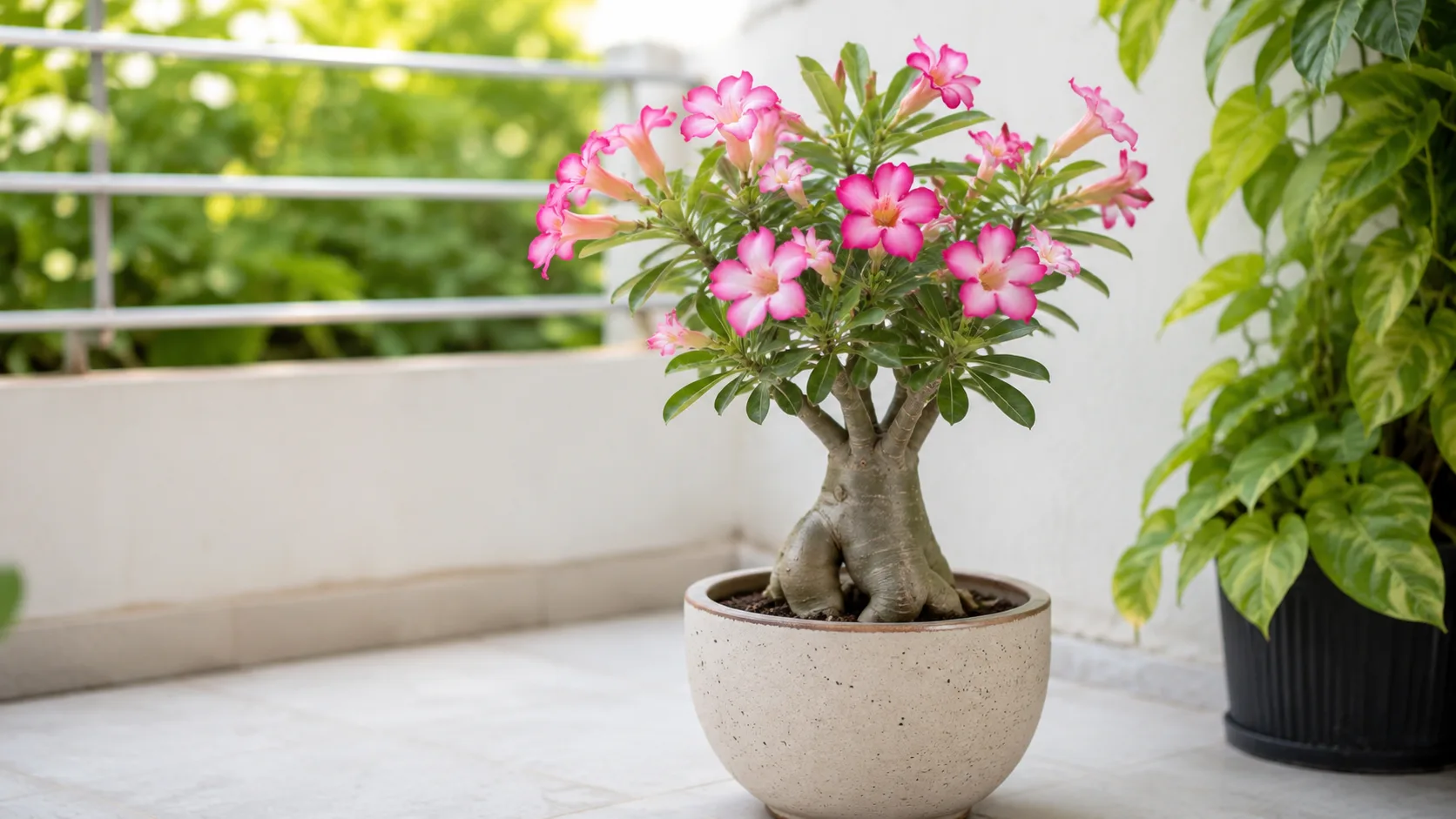
Adenium (Desert Rose) Fertilizer: When, How & Mistakes
Adenium (Desert Rose) Fertilizer: When, How & Mistakes
Adenium fertilizer is not about pushing a desert succulent to grow like a tropical foliage plant. Adenium obesum - the Adenium overview most growers buy - evolved across arid regions of sub-Saharan Africa and the Arabian Peninsula, where long dry seasons favor plants that store water in a swollen caudex and thick stems rather than maintaining a hungry, constantly expanding root mat (NC State Plant Toolbox). That biology means Adenium is a light, seasonal feeder: nutrients matter during warm active growth and flowering, but excess nitrogen or off-season feeding builds salts faster than the roots can use them - especially in small pots with gritty succulent mix.
The practical goal for most home growers is straightforward: use a low-nitrogen, higher-phosphorus-and-potassium water-soluble formula at quarter to half the label strength, feed on a conservative monthly rhythm from spring through early fall (roughly every 3–4 weeks when the plant is actively growing), and pause entirely when night temperatures drop below about 50°F (10°C) or when the plant is leafless and dormant (University of Arizona Cooperative Extension). Water onto moist soil, flush salts periodically, and skip feeding after repotting or during stress. Aggressive growers in bright greenhouses may feed weekly at low dose - but that is an advanced option, not the default for a windowsill Desert Rose.
This guide covers caudex vs. bloom feeding goals, NPK selection, a month-by-month calendar, how to reconcile extension frequency differences, recovery after burn, and the mistakes that cause more damage than skipping a season ever would.
Reviewed by the LeafyPixels Review Board against Arizona Cooperative Extension AZ1953, Desert Botanical Garden adenium guidance, UF/IFAS EP474, and NC State Plant Toolbox. Author: sai-ananth.
Quick Answer
Feed Adenium every 3–4 weeks from spring through early fall with a low-nitrogen liquid fertilizer diluted to half strength, applied only when the plant is in active growth and the soil is already moist. Pause all fertilizer when night temperatures fall below about 50°F (10°C) or when the plant is leafless and dormant - even if winter flowers appear. For bloom support, favor formulas with higher phosphorus and potassium rather than high nitrogen. Flush the pot with plain water monthly during the feeding season to prevent salt crust. Never feed a dry, stressed, or newly repotted Desert Rose.
Why Adenium Is a Light, Seasonal Feeder
Adenium belongs to the Apocynaceae (dogbane) family and grows as a caudiciform succulent - a plant that develops a thickened base for water storage while producing showy trumpet flowers on branch tips (University of Arizona Cooperative Extension). Unlike fast-growing tropical houseplants that consume nutrients year-round, Desert Rose metabolism tracks heat and day length. The active growth window runs roughly April through October in warm desert climates (Desert Botanical Garden), though indoor timing follows your room temperature and light more than the calendar on the wall.
Fertilizer replaces what watering and root growth pull from a fast-draining mix, but only up to the point roots can absorb without salt injury. Arizona Extension notes that fertilizing can stimulate growth and flowering, but encouraging growth is not always desired if you want to keep a specimen compact (University of Arizona Cooperative Extension). That single sentence explains why Adenium feeding is a tuning dial, not a rescue tool. Fix light, drainage, and dry-down rhythm first - then add nutrients on a conservative schedule.
Native arid biology and nutrient storage
In habitat, Adenium experiences extended drought during which it may drop leaves and rest. The caudex and stems hold reserves that carry the plant through dry spells. Container culture in lean, mineral-heavy mix depletes nutrients over seasons, which is why light feeding during active growth helps - but the plant tolerates skipped seasons far better than excess salts. Think of fertilizer as maintenance for a healthy, sun-soaked Desert Rose, not a substitute for the six or more hours of direct light flowering requires (UF/IFAS EP474).
How the Caudex Changes Your Feeding Goals
The swollen caudex is not decorative ballast - it is a living reservoir. Feeding strategy should match what you want the plant to do: firm, compact caudex development, branching foliage, or heavy bloom set. Those goals overlap but do not use identical NPK emphasis.
Compact caudex vs. pushing foliage growth
High nitrogen pushes soft, fast vegetative tissue - useful for young stock you want to size up, but counterproductive if you prize a tight, sculptural trunk. Arizona Extension recommends fertilizer low in nitrogen, moderate in phosphorus, and highest in potassium to support sturdy growth without weak floppy shoots (University of Arizona Cooperative Extension). Desert Botanical Garden adds that a fine limestone or gypsum surface dressing can supply calcium for sturdy cell walls (Desert Botanical Garden) - a detail advanced growers use when caudex tissue feels soft despite correct watering.
For caudex-focused culture, lean toward less frequent, weaker feeds and excellent light rather than weekly high-nitrogen doses. A firm caudex that swells slowly is healthier than a fast-enlarging base with mushy tissue.
Feeding for bloom set vs. vegetative push
Flowering demands energy. Adenium obesum and its hybrids need high light - six hours or more daily - to maintain summer blooms (UF/IFAS EP474). Phosphorus supports bud formation; potassium supports overall vigor and drought tolerance. A bloom-oriented formula with modest nitrogen (ratios such as 5-10-10 or similar low-first-number profiles) suits plants already in Adenium light guide with correct watering. Some species and hybrids bloom on different calendars - A. multiflorum and certain cultivars may flower in winter in warm conditions - but winter bloom does not automatically mean winter feeding if nights are cool and the plant is otherwise dormant (more below).
When to Fertilize: Active Growth, Bloom, and Dormancy
Timing follows temperature and visible growth, not guilt over a skipped month. Feed when Adenium pushes new leaves, stems are firm, and nights stay warm. Stop when metabolism drops - even if a few flowers persist.
The 50°F night-temperature cutoff
Arizona Extension is explicit: watering and fertilizing may continue until night temperatures drop below 50°F (10°C); after that point, water should be held off and plants moved to shelter (University of Arizona Cooperative Extension). A. obesum, the most common cultivated species, shows cold damage below about 50°F (University of Arizona Cooperative Extension). Roots in cold, wet, salty soil are a rot recipe - so the fertilizer pause and the watering pause are linked safety rules, not separate chores.
Never feed a leafless, dormant caudex sitting in a cool storage spot. The plant cannot metabolize nutrients; salts accumulate while roots are vulnerable. Winter flowers on a cool windowsill are a notorious trap - the blooms look active, but if nights are below 50°F and leaves have dropped, hold food and keep soil much drier per your watering guide.
Spring wake-up protocol
In spring, let rising temperatures stimulate growth before you pour on water and fertilizer. Arizona Extension advises avoiding watering until nighttime temperatures stay above 50°F, then watering sparingly when new leaves appear (University of Arizona Cooperative Extension). Apply the same logic to feeding: first half-strength feed only after you see active new growth and stable warm nights - typically mid-spring, not a fixed March date. Resume the regular 3–4 week rhythm over two to three weeks rather than doubling dose to “catch up.”
Which Fertilizer and NPK Ratio to Use
The best Desert Rose fertilizer for most homes is a complete water-soluble formula used at quarter to half label strength. You want enough nitrogen for steady leaf development without soft tissue, elevated phosphorus for roots and flowers, and potassium for firm growth and stress tolerance.
Low nitrogen, higher phosphorus and potassium
Arizona Extension’s ideal profile: low nitrogen, moderate phosphorus, highest potassium (University of Arizona Cooperative Extension). Desert Botanical Garden concurs that low nitrogen with higher phosphorus and potassium fosters even growth and blooming (Desert Botanical Garden). Excess nitrogen produces weak floppy branches - a common complaint on A. obesum hybrids - and can suppress flowering when light is already marginal.
A balanced 10-10-10 or 20-20-20 liquid at half strength works as a simple baseline when bloom-specific products are unavailable, because dilution effectively lowers the nitrogen load per application. Avoid full-strength high-nitrogen lawn or foliage boosters.
NPK options at a glance
| Formula type | Example NPK | Best for | Caution |
|---|---|---|---|
| Low-N bloom / succulent | 5-10-10, 6-12-12 | Flowering plants in full sun | Still dilute to half strength |
| Balanced (diluted) | 10-10-10, 20-20-20 at ½ strength | General maintenance | Watch for soft growth if fed too often |
| High-N (avoid) | 20-10-10, lawn food | - | Leggy stems, fewer blooms, salt stress |
| Slow-release pellets | Balanced coated granules | Large outdoor containers only | Unpredictable in small pots; UF/IFAS mentions for outdoor culture (UF/IFAS EP474) |
Slow-release pellets in a 6-inch indoor pot are risky: release continues into cool months when the plant cannot use nutrients. UF/IFAS recommends pelletized fertilizer for outdoor summer culture in well-drained ground - a different context from a small caudex pot overwintering indoors.
Step-by-Step: Dilute, Apply, and Flush on Schedule
- Check prerequisites: Active growth, warm nights above 50°F, moist (not soggy) soil, no salt crust, not within 4–6 weeks of repotting.
- Dilute water-soluble fertilizer to half the label strength (quarter strength for young plants or caudex-focused culture) (Desert Botanical Garden).
- Water lightly the day before if the mix is dry - never apply concentrate to dry roots.
- Pour solution evenly across the soil surface until a small amount drains from the bottom. Keep fertilizer off leaves and caudex skin when possible.
- Flush with plain water once per month during the feeding season - one or two thorough soaks that leach salts without leaving the pot waterlogged for days.
- Log the date and watch the next two weeks of growth before repeating.
Conservative schedule (default for most indoor growers): half-strength feed every 3–4 weeks during active growth - aligned with Desert Botanical Garden’s monthly half-strength guidance for mature specimens (Desert Botanical Garden).
Aggressive schedule (bright greenhouse / outdoor desert summer): Arizona Extension notes fertilizer may be applied with each watering at quarter to half strength during peak growth for maximum effect (University of Arizona Cooperative Extension); UF/IFAS lists weekly low-dose liquid feed during summer for indoor culture (UF/IFAS EP474). Choose aggressive feeding only if the plant is in strong direct sun, drying its pot predictably, and showing continuous new growth - not on a cool windowsill.
Monthly Feeding Calendar
Use this as a framework; adjust to your climate, pot size, and light. See the Adenium overview for full seasonal care context.
| Month | Growth phase | Feeding |
|---|---|---|
| January–February | Cool dormancy (typical) | No feed - leafless or resting plants |
| March | Waking up (warm climates) | Wait for new leaves + nights >50°F; first ½-strength feed if growing |
| April–June | Active growth / spring bloom | Every 3–4 weeks at ½ strength; monthly salt flush |
| July–August | Peak summer growth | Every 3–4 weeks (or weekly low dose in greenhouse sun) |
| September | Slowing | Final light feed if still pushing leaves; taper frequency |
| October | Transition | Stop when nights approach 50°F consistently |
| November–December | Dormancy | No feed - even if occasional winter flowers in warm rooms |
Signs Feeding Is Working vs. Burn or Deficiency
Healthy feeding signals on Adenium look different from generic houseplant checklists. Watch for:
- Firm caudex that swells slowly without soft spots
- Bud set before heavy leaf flush on bloom-focused specimens
- Glossy deep green leaves (or stable variegation) without stretch
- Sturdy branch internodes - not long weak gaps between leaves
- Clean soil surface without white or yellow salt crust
- Repeat flowering on hybrids bred for long bloom seasons in warm bright conditions
Over-fertilizing signs include brown leaf tips and margins, white crust on soil and pot rim, sudden leaf drop despite moist mix, and stunted new leaves with burnt edges. These mirror salt toxicity patterns on other container succulents - damaged roots cannot regulate water even when soil feels wet.
Under-fertilizing shows as pale new growth, slow leaf production, and weak flowering only after you have ruled out insufficient light (the dominant reason for no flowers) and underwatering on Adenium. High light plus gritty mix depletes nutrients faster than a dim corner specimen - context matters.
Common Adenium Fertilizer Mistakes
- Feeding every watering at full strength in a small pot - salts outpace uptake.
- Winter feeding because flowers appear while nights are cool and leaves are gone.
- Applying fertilizer to dry soil - root burn on a drought-adapted plant.
- High-nitrogen food for bloom goals - soft growth, fewer flowers.
- Slow-release pellets in tiny containers - uncontrolled release into dormancy.
- Feeding immediately after repotting - fresh mix plus liquid feed doubles salt load.
- Feeding a stressed, rotting, or drought-shocked plant - nutrients before diagnosis.
- Ignoring monthly salt flush in a pot-bound specimen that never gets repotted.
- Chasing pale leaves with fertilizer when the plant needs more direct sun.
- Handling sap without gloves while pruning and feeding - cardiac glycoside irritant risk.
Recovery After Over-Fertilizing
Stop feeding immediately. Move the pot to a sink or outdoor drain and flush with plain room-temperature water two to three times over 30–60 minutes, letting the pot drain fully between passes. Remove visible salt crust from the soil surface. Pause fertilizer for 4–8 weeks while monitoring new growth - not old burnt leaf margins, which will not green up.
Recovery speed depends on burn severity, pot size, and whether roots were already stressed. New firm leaves and clean soil surface are the green light to resume at quarter to half strength, not full label rate. Badly damaged roots may need unpotting and rot inspection - fertilizer rescue cannot fix wet, cold dormancy rot.
Greenhouse and Warm-Climate Exceptions
If you maintain night temperatures above 60°F, strong supplemental light, and continuous new growth through winter, you may feed lightly at quarter strength every 6–8 weeks - still far leaner than summer. Desert Botanical Garden notes some cultivars are bred for near year-round blooming in warm bright environments (Desert Botanical Garden), but even then, match feed to visible growth rate, not calendar guilt.
Outdoor desert growers in Arizona and similar climates can follow Arizona Extension’s option to fertilize with each watering at quarter to half strength during peak summer (University of Arizona Cooperative Extension) - provided pots drain in seconds and nights stay warm. That is not the same plant as a dormant indoor caudex in a 55°F room.
Pet, Child, and Sap Safety
ASPCA lists Desert Rose (Adenium obesum) as toxic to cats, dogs, and horses. Toxic principles include cardiac glycosides, with reported signs including vomiting, diarrhea, depression, irregular heartbeat, and death (ASPCA). The Merck Veterinary Manual notes cardiac glycosides in Adenium obesum inhibit the Na+/K+ ATPase pump, causing myocardial excitation, bradycardia, ventricular arrhythmias, and hyperkalemia in animals (Merck Veterinary Manual).
Keep Desert Rose out of reach of pets and children. Wear gloves when handling cut stems or sap during pruning - contact dermatitis is reported (NC State Plant Toolbox). If ingestion is suspected, contact a veterinarian or poison control immediately. Fertilizer does not make the plant safe; it remains toxic in all seasons.
Conclusion
Adenium fertilizer success comes down to respecting desert biology: low nitrogen, higher phosphorus and potassium, quarter to half-strength dilution, and active-season-only feeding tied to the 50°F night-temperature rule. Feed every 3–4 weeks when the plant is growing in warm bright conditions; pause through dormancy even when blooms tempt you to pour on food. Flush salts monthly, skip feed after repotting, and fix light and watering before chasing pale leaves with a bottle.
When sources disagree on frequency, choose the schedule that matches your light and pot size - conservative for windowsills, aggressive only for greenhouse sun - and let firm caudex tissue and clean soil tell you whether the rhythm is working. Less is almost always more with Desert Rose. A skipped season rarely kills a healthy specimen; a double-strength winter feed on a dormant caudex can.
When to use this page vs other Adenium guides
- Adenium overview - Start here for whole-plant context before deep-diving this topic.
- Adenium problems hub - Jump to symptom-specific fix guides when this care topic does not resolve the issue.
- Fertilizer Burn on Adenium - Escalate here when fertilizer adjustments are not enough.
- No Flowers on Adenium - Escalate here when fertilizer adjustments are not enough.