Caudex-Safe Adenium Repotting: Timing, Pot Size & Recovery
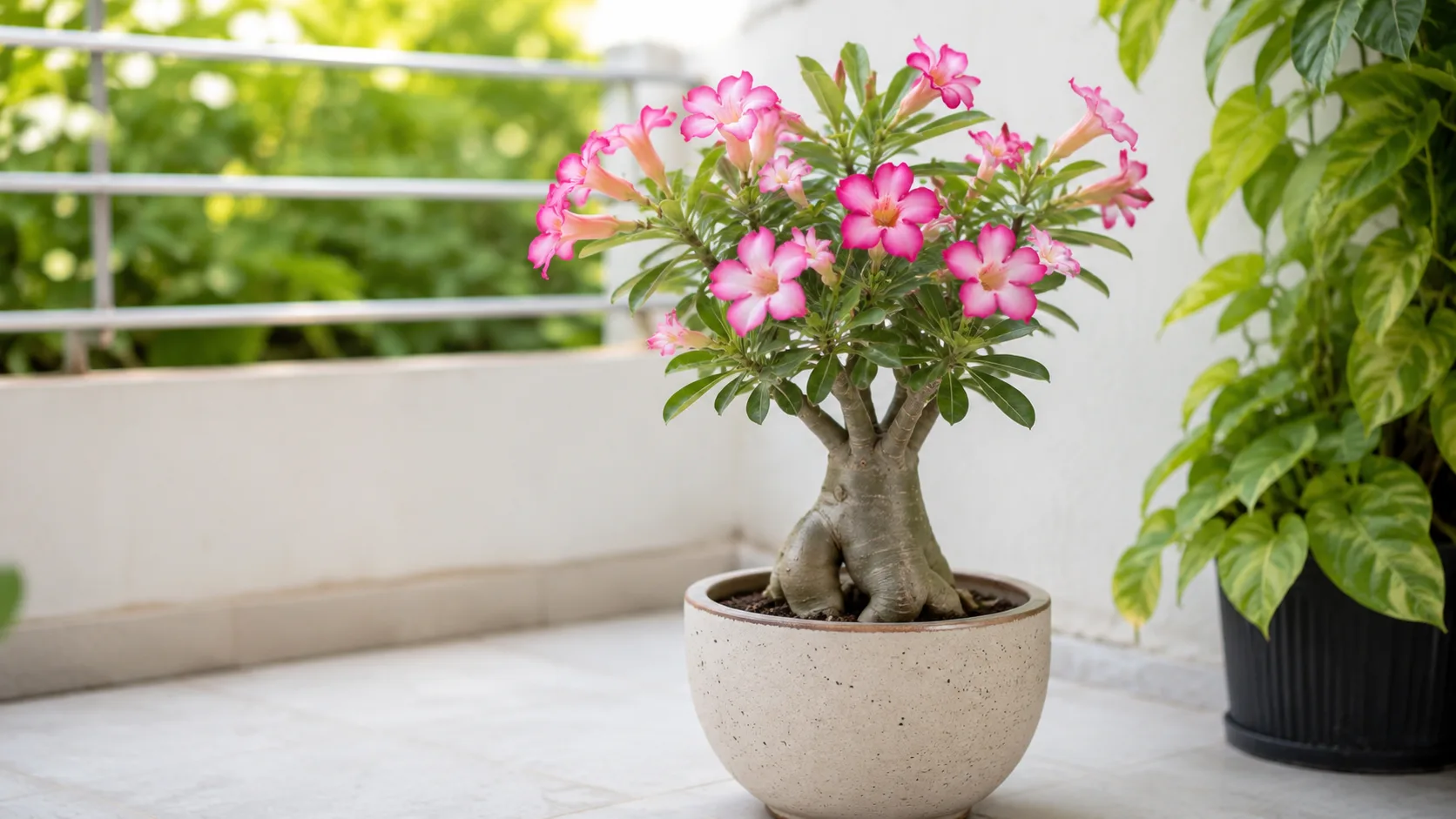
Caudex-Safe Adenium Repotting: Timing, Pot Size & Recovery
Caudex-Safe Adenium Repotting: Timing, Pot Size & Recovery
The moment after you repot a Desert Rose is when most growers lose the plant - not during the unpotting itself. Adenium obesum stores water in a swollen caudex and thick stems, so it can look fine for days while cut roots sit in wet, fresh mix and rot spreads upward from below. That is the real anxiety behind “adenium repotting”: you moved the plant to help it, watered because the leaves looked thirsty, and woke up to a soft caudex you cannot reverse. This guide is built around caudex-safe timing, shallow-pot architecture, and a post-repot dry-back protocol that matches how desert-adapted succulents actually recover - not the generic houseplant checklist of water lightly and wait two weeks.
Why Adenium Repotting Is Different From Other Houseplants
Caudex Water Storage and Slow Root Growth
Desert Rose belongs to the dogbane family (Apocynaceae) and evolved across arid regions of sub-Saharan Africa and the Arabian Peninsula, where long dry seasons favor plants that hoard water in thickened tissue rather than maintaining a dense fibrous root mat. NC State Extension describes the thick succulent stem - the caudex - as the structural base from which branches carry whorls of leathery leaves and summer trumpet flowers. The caudex is not decorative ballast; it is a living reservoir. When roots are disturbed at repotting, the plant can draw on caudex reserves for weeks while new root tips form, which is why wilting after transplant does not always mean “water me now.” It often means the opposite: disturbed roots cannot take up water yet, and the caudex is subsidizing the canopy until uptake resumes.
That biology also explains why Adenium tolerates being slightly pot-bound longer than fast-growing vines like pothos. A snug container limits excess soil volume, so the mix dries faster between drinks - and fast dry-down is the safety net for caudex plants. NC State’s genus profile notes that desert rose stores water in its succulent stems and withstands drought, but wet soil leads to root rots. Repotting is less about giving roots unlimited space and more about refreshing degraded mix, inspecting hidden rot, and optionally raising the caudex for display without drowning the plant in a pot it cannot colonize quickly.
Shallow Roots vs Deep Pots - Why Oversizing Causes Rot
Below soil, Adenium roots spread relatively shallow and horizontal compared with deep-rooted trees. Specialty growers emphasize bowl-shaped, thick-walled containers because massive caudex roots exert enormous pressure and because a wide shallow profile matches the root footprint better than a tall column of unused mix (Tucson Cactus and Succulent Society). When you jump two pot sizes - say from 6 inches to 10 - you surround a small active root zone with a deep reservoir of soil that stays wet for weeks after each watering. Slow root colonization makes that mismatch more dangerous on Adenium than on plants that fill a container in one season. Extension guidance for succulent repotting consistently flags overpotting as a primary rot trigger: the plant cannot drink fast enough to dry the extra volume.
When to Repot Adenium (Desert Rose)
Best Season: Spring and Early Summer Active Growth
Spring through early summer is the safest window for routine Adenium repotting, as new leaves emerge and temperatures climb into the 75°F to 95°F active-growth range UF/IFAS documents for container culture. Clemson HGIC advises repotting only while houseplants are actively growing - spring and summer - and avoiding dormant or flowering specimens unless necessary. For Desert Rose specifically, repot when you see fresh shoot growth, not while the plant is in cool winter rest with dropped leaves and zero water demand. NC State recommends bringing plants indoors when outside night temperatures reach 55°F and decreasing water during dormancy; stacking a full repot on top of that rest period adds stress when wound healing and root regeneration are slowest.
A practical baseline is every 2 to 3 years for a typical indoor specimen, matching slow-grower guidance in extension repotting literature and the LeafyPixels Adenium hub data. Fast growers in Adenium light guide that put on noticeable caudex swelling each season may need attention closer to every two years. A plant in a bright conservatory that barely adds one branch per year can often go three years - especially if you top-dress each spring by replacing the top inch of mix without disturbing the rootball (Clemson HGIC topdressing guidance).
Signs Your Adenium Actually Needs a Bigger Pot
Calendar dates are a weak trigger. Watch the plant and pot instead. Roots emerging from drainage holes or visible at the soil surface mean the caudex system has run out of horizontal room. Water that runs straight through in seconds without absorbing usually indicates the root-and-caudex mass has displaced most of the mix - there is little medium left to hold moisture, so the plant wilts quickly between sessions even though you water regularly. Stalled growth despite strong light and appropriate feeding suggests the root zone is exhausted. A caudex significantly wider than the pot rim creates top-heavy instability - common on mature specimens grown for bonsai display. Sour smell or white crust on old mix signals salt buildup and broken-down organic matter; refresh the soil even if the pot size stays the same.
You do not need every sign at once. Two or more together are a reliable green light during active season. A single yellow leaf or one slow branch is not, by itself, a repot mandate.
When Slightly Pot-Bound Is Fine - and When It Is Not
Adenium benefits from mild pot restraint because limited soil volume dries predictably. Many healthy specimens live years in the same container while the caudex swells above the rim - a look growers deliberately cultivate. Think of it as a scale: mildly snug (a few circling roots, steady growth) - wait until spring if performance is stable; moderately bound (water races through, growth slows, caudex overhangs the pot) - repot during warm weather; severely bound or failing (pot cracking, solid root disk, mushy roots, sour soil) - repot immediately even off-season, because the alternative is structural failure or rot.
If you like the current pot aesthetically, you can root-prune at repotting: trim the outer root layer with sterilized shears, replace all mix, and return the plant to the same container. Keep at least two-thirds of the healthy caudex-root mass intact.
Choosing the Right Pot and Soil
Shallow, Wide Pots for Caudex Health and Display
For caudex development and stability, choose a shallow, wide pot - a bonsai bowl or succulent dish - rather than a tall narrow cylinder. The goal is to match horizontal root spread, showcase the swollen base, and avoid a deep wet column beneath a small root zone. UF/IFAS notes that cultivated specimens are often “lifted” over successive repots to expose sculptural caudex and root character - a practice tied to display culture, not survival requirements, but one that works only when drainage and post-repot dryness are respected. Tucson Cactus and Succulent Society growers recommend thick-walled bowl-shaped containers because Adenium roots can fracture expensive thin ceramic as they expand.
Drainage holes are non-negotiable. A decorative pot without holes is a cachepot only. Keep the plant in a draining liner, water at the sink, and never let the caudex sit in pooled runoff.
One-Size-Up Rule With Worked Examples
Move up only 2 to 5 centimeters (1 to 2 inches) in diameter - one nursery pot size. A plant in a 6-inch (15 cm) pot steps to 7 or 8 inches, not 10 or 12. Worked example: a 15 cm terracotta bowl with a fist-sized caudex and circling roots graduates to an 18 or 20 cm shallow bowl - enough fresh gritty mix around the sides without creating a swamp in the center. Depth should increase minimally; width matters more. When reusing a pot, scrub with hot soapy water and a dilute bleach rinse if the previous occupant had rot.
Terracotta, Plastic, or Ceramic - What Dries Fastest
Unglazed terracotta pulls moisture through its walls, speeding dry-down - excellent for Adenium in humid homes or for growers who tend to water generously. The trade-off is faster drying in air-conditioned rooms, so check caudex firmness rather than watering on a calendar. Plastic nursery pots retain moisture longer and weigh less - fine if you already underwater or live in dry air. Glazed ceramic is neutral when drilled; without holes, treat it as outer decoration only. For top-heavy plants, choose a wide base or a heavier bowl for stability, not a tall narrow profile that tips easily.
Soil matters as much as pot material. NC State specifies potting soil appropriate for cacti and succulents in a container with several drainage holes - not standard peat-heavy indoor mix. For full mix ratios, amendments, and drainage tests, see the Adenium soil guide; this page focuses on the repot workflow, not duplicating the recipe. RHS cultivation guidance recommends peat-free loam-based compost with added sharp sand under glass - the same principle: mineral grit and fast percolation. University of Arizona Cooperative Extension container guidance for arid-adapted plants likewise stresses sharp drainage in restricted root volumes.
How to Repot Adenium Step by Step
Before You Start: Tools, Sap Safety, and Pre-Watering
Gather materials first: the new pot, fresh gritty mix (per soil guide), nitrile gloves, eye protection, clean pruning shears, a trowel, mesh for the drainage hole, newspaper, and optional cinnamon powder for cut rot. Sterilize blades in 70% isopropyl alcohol for five minutes.
Sap safety belongs in the procedure, not only in a closing disclaimer. NC State lists milky latex as poisonous, with cardiac glycosides causing contact dermatitis and serious symptoms if ingested; all parts - bark, flowers, fruits, leaves, roots, seeds, and stems - are toxic. The Merck Veterinary Manual notes that cardiac glycosides in Adenium obesum inhibit the Na+/K+ ATPase pump, causing myocardial excitation, bradycardia, ventricular arrhythmias, and hyperkalemia in animals. Wear gloves, keep pets and children away from the work area, wash skin promptly after contact, and bag trimmed tissue. The ASPCA lists Desert Rose as toxic to cats, dogs, and horses.
Pre-watering: If soil is bone dry and crumbles away from roots, water lightly one day before so the rootball holds together. If mix is already moderately dry and the plant is healthy, you can repot without pre-watering - many growers prefer slightly dry soil because wet mix sticks to caudex roots and makes handling heavier (Tucson Cactus and Succulent Society).
Removing the Plant, Inspecting Roots, and Positioning the Caudex
Tip the pot on its side, support the caudex with one hand, and tap or squeeze the container walls. Slide the plant out; never yank branches, which tear at the caudex junction. If stuck, run a knife around the inner rim. Brush away loose old soil and inspect roots. Healthy tissue is firm, tan to white, and dry to the touch. Rot is black or brown, mushy, and often smells sour - trim back to firm tissue with sterile shears and discard contaminated mix entirely.
Tease circling roots at the bottom and sides; avoid bare-rooting unless you are performing an emergency rot repot. Stripping all old soil removes fine root hairs that absorb water and can extend shock by weeks. Position the plant so the caudex sits at or slightly above the previous soil line - never bury the swollen base deeper than before. Deep burial invites stem and caudex rot in fresh wet mix. Optional caudex raising: lift the plant 1 to 2 cm higher than last season to expose more sculptural base, as UF/IFAS describes for display specimens - but raise gradually across successive repots, not several centimeters at once, and shield newly exposed tissue from intense sun until it toughens over a full growing season (Tucson Cactus and Succulent Society).
Add dry mix to the pot bottom so the crown sits about 2 cm below the rim. Backfill around the sides with fresh gritty mix, using a chopstick to settle soil without compacting it. Leave the top 2 cm empty for watering space. Do not pile mix against the caudex neck.
Post-Repot Care and Recovery Timeline
Watering Hold, Light, Temperature, and Fertilizer Rules
This is where Adenium repotting diverges most from generic houseplant advice. If you trimmed rot, removed significant root mass, or made large cuts, wait 5 to 10 days before the first watering so wounds can dry and callus in warm, airy conditions (Tucson Cactus and Succulent Society). Some growers hang the bare rootball in shade for several days after heavy root work before potting into dry mix - extreme, but illustrative of how seriously caudex culture treats wet cut surfaces. If roots were mostly intact and you only refreshed soil, a single light watering after potting may be acceptable, then return to the soak-and-dry rhythm in the Adenium watering guide.
Place the plant in bright light and warmth - ideally the same high-light placement it had before, avoiding hot south glass that cooks recovering roots for the first week. Night temperatures above 55°F support root regeneration per NC State dormancy guidance. Do not fertilize for 4 to 6 weeks. Fresh mix contains enough nutrients for slow spring growth, and new root tips are vulnerable to burn.
Recovery signals: Mild leaf drop or a one- to two-week growth pause is normal transplant shock if the caudex stays firm. New leaves or flower buds emerging in warm weather mean roots are working again - usually within 4 to 6 weeks. Persistent wilting with a soft caudex after three weeks points to rot or overpotting, not ordinary shock; unpot, trim mush, dry, and repot into barely moist gritty mix. Total defoliation with a firm caudex is alarming but often recoverable in spring - hold water, provide warmth and light, and wait for new shoots. See dormancy context in the Adenium overview.
A firm caudex is your best diagnostic tool after repot. Slight wrinkling on an otherwise hard base often reflects normal water redistribution while roots heal - not an automatic command to water. Press the caudex with a gloved thumb: rock-hard tissue with limp leaves usually means wait; spongy or yielding tissue means inspect below soil immediately. Clemson HGIC notes that slow-growing houseplants may take weeks to re-establish after repotting, so resist stacking extra stress from fertilizer, relocation, and heavy watering in the same fortnight.
Common Adenium Repotting Mistakes
Oversized deep pots top the list. A 6-inch plant in a 10-inch tall pot is a moisture trap Adenium roots may not colonize for an entire season. Watering too soon after root cuts is the second - fresh mix plus wounded roots plus enthusiasm equals caudex rot within days. Burying the caudex to stabilize a top-heavy plant trades short-term wobble for long-term stem rot; use a heavier shallow bowl instead. Peat-heavy “indoor potting mix” without amendment contradicts NC State’s cactus/succulent soil requirement and keeps roots wet in cool weather. Repotting during peak bloom can abort flower buds; if cosmetic flowers matter, wait until after the flush unless soil failure forces your hand. Winter routine repotting on a dormant leafless plant stacks cold stress on disturbed roots - postpone until new growth unless rot demands emergency action. Bare-rooting healthy plants strips absorbing root hairs unnecessarily. Ignoring sap exposure during root trim risks dermatitis and pet exposure - glove up every time.
Repotting for Special Situations
Emergency root-rot repot overrides season. Unpot immediately, trim all mushy caudex and root tissue to firm white or tan wood, let cuts dry 2 to 3 days in shade, then repot into completely dry gritty mix in a pot sized to the remaining root mass - often the same or smaller, not larger. Wait at least a week before the first cautious drink. Top-heavy mature specimens may need a wider ceramic bowl and a rock wedge at the base for stability, not a deeper pot. Top-dressing - replacing only the top 2 to 3 cm of mix - handles salt crust and minor compaction without full disturbance when roots are not circling (Clemson HGIC). Division at repot is uncommon on single-caudex specimens but possible when pups with their own roots appear; see the Adenium propagation guide for separation technique.
Cultivar and form differences matter at repot time. Compact grafted hybrids on short understock often need smaller shallow bowls and gentler root disturbance than seed-grown Adenium obesum specimens pushing thick caudex flare. Multi-branched show plants grown for bonsai display may prioritize width over depth even when roots are modest - stability and caudex presentation drive pot choice as much as root volume. NC State notes double-flowered cultivars and variegated leaf forms in trade; none change the drainage rules, but variegated clones under lower light stress more easily after repot, so keep recovery conditions bright and dry.
Pet and Child Safety During Repotting
Cardiac glycosides in Adenium latex make open-root work a YMYL moment for households with pets or children. The Merck Veterinary Manual explains that cardiac glycosides in Adenium obesum inhibit the Na+/K+ ATPase pump, which can cause myocardial excitation, bradycardia, ventricular arrhythmias, and hyperkalemia in animals. Bag all trimmed roots and wiped sap, work on a washable surface, and contact a veterinarian or poison-control service if ingestion is suspected. Do not leave gloves, pruners, or wet soil where curious pets investigate.
| Situation | Repot now? | Alternative |
|---|---|---|
| Roots at holes + spring growth | Yes - full repot | - |
| Salt crust, firm caudex, stable growth | Optional | Top-dress only |
| Soft caudex, sour soil | Yes - emergency | Trim rot, dry hold |
| Peak bloom, healthy roots | Delay if possible | Top-dress after flowers |
| Winter dormancy, firm caudex | Wait | Resume in spring |
| Water runs through, stalled growth | Yes - one size up | Refresh all mix |
Conclusion
Adenium repotting succeeds when you treat the caudex like a water bank, not a sponge. Repot in warm active growth, step up one shallow pot size, use cactus/succulent mix per extension guidance, keep the caudex at or above its prior soil line, and withhold water 5 to 10 days when roots were cut or rotted. Firm caudex plus patience beats panic watering every time. Use this post-repot checklist before you close the toolkit:
- Caudex positioned at or slightly above previous soil line - not buried deeper
- Pot only 2 to 5 cm wider; shallow bowl preferred over deep cylinder
- Fresh gritty mix from the soil guide - not unamended peat mix
- First watering delayed if roots were trimmed; follow watering guide after dry-back
- No fertilizer for 4 to 6 weeks; bright warmth above 55°F nights
- Gloves on for sap; pets and children clear of debris
- Firm caudex = wait; soft caudex = inspect roots immediately
Get those seven points right and Desert Rose usually rewards you with new shoots within a month - often before you need to search for a second opinion.
When to use this page vs other Adenium guides
- Adenium overview - Start here for whole-plant context before deep-diving this topic.
- Adenium problems hub - Jump to symptom-specific fix guides when this care topic does not resolve the issue.
- Repotting Stress on Adenium - Escalate here when repotting adjustments are not enough.
- Root Rot on Adenium - Escalate here when repotting adjustments are not enough.