Repotting Stress on Adenium: Causes, Checks & Fixes
Quick answer
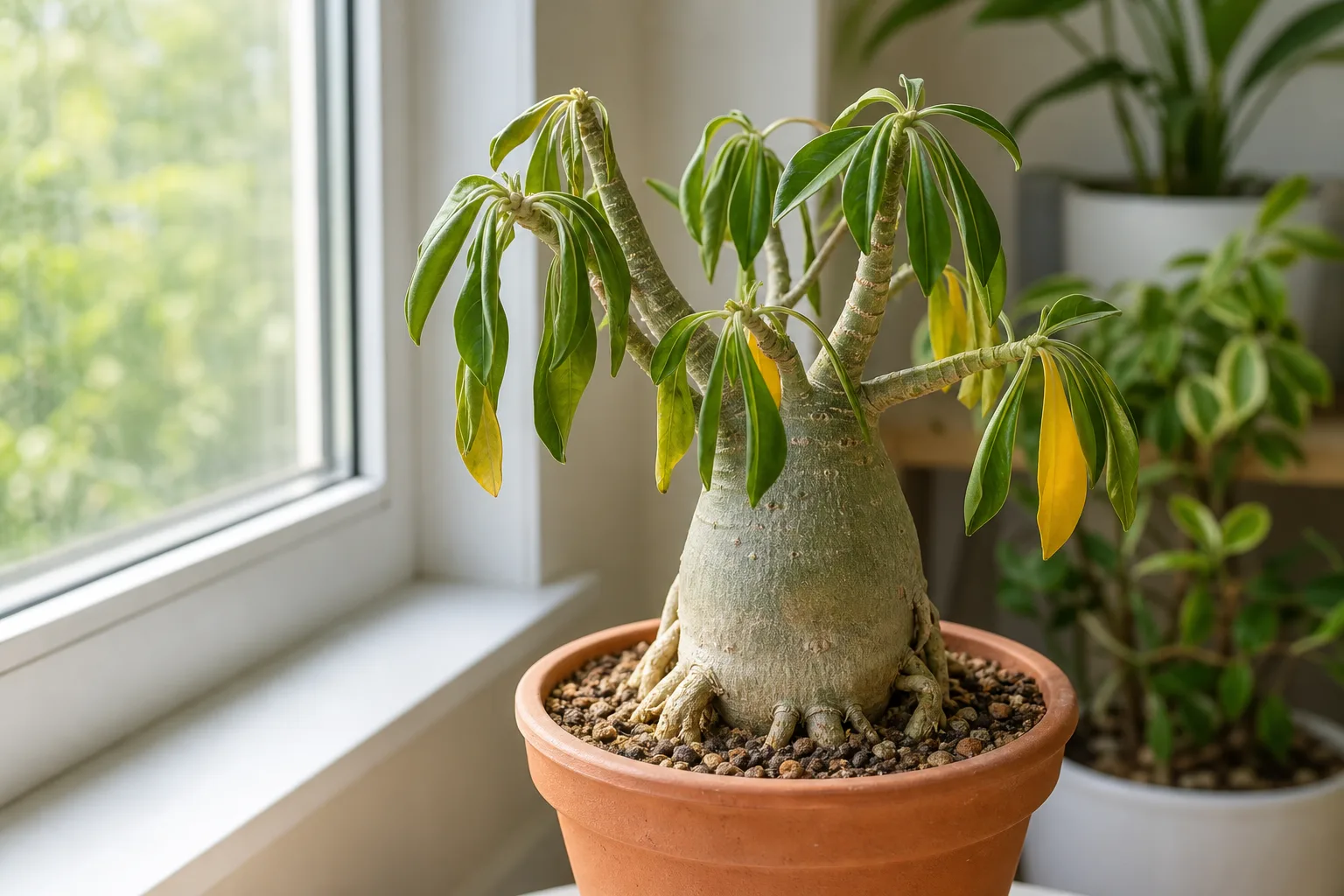
Repotting stress on Adenium shows as wilted leaves and paused growth within days of disturbing roots. First step: hold watering for several days, keep the plant in bright stable warmth, and do not move or repot it again.
Repotting Stress on Adenium: Causes, Checks & Fixes
This guide covers repotting stress on Adenium. See also the general Repotting Stress guide, watering, and light pages for this plant.
Repotting Stress on Adenium: Causes, Checks & Fixes
Quick answer
Adenium repotting guide stress on Adenium (Adenium obesum, Adenium overview) appears as drooping leaves, yellowing foliage, or dropped buds within days of root disturbance - while the caudex stays firm. First step: hold watering for several days, keep the plant in bright, stable warmth, and do not repot, prune, or feed until it stabilizes.
Desert rose stores water in its swollen caudex and fine roots. When those roots are trimmed, washed, or packed into new mix, uptake drops temporarily and leaves wilt even though the plant is not dying. Patience and dry rest usually beat aggressive watering.
What repotting stress looks like on Adenium
Early shock: Leaves soften and hang within one to five days of repotting. Lower leaves may yellow and drop. Flower buds often abort. New growth pauses for two to four weeks even in warm weather.
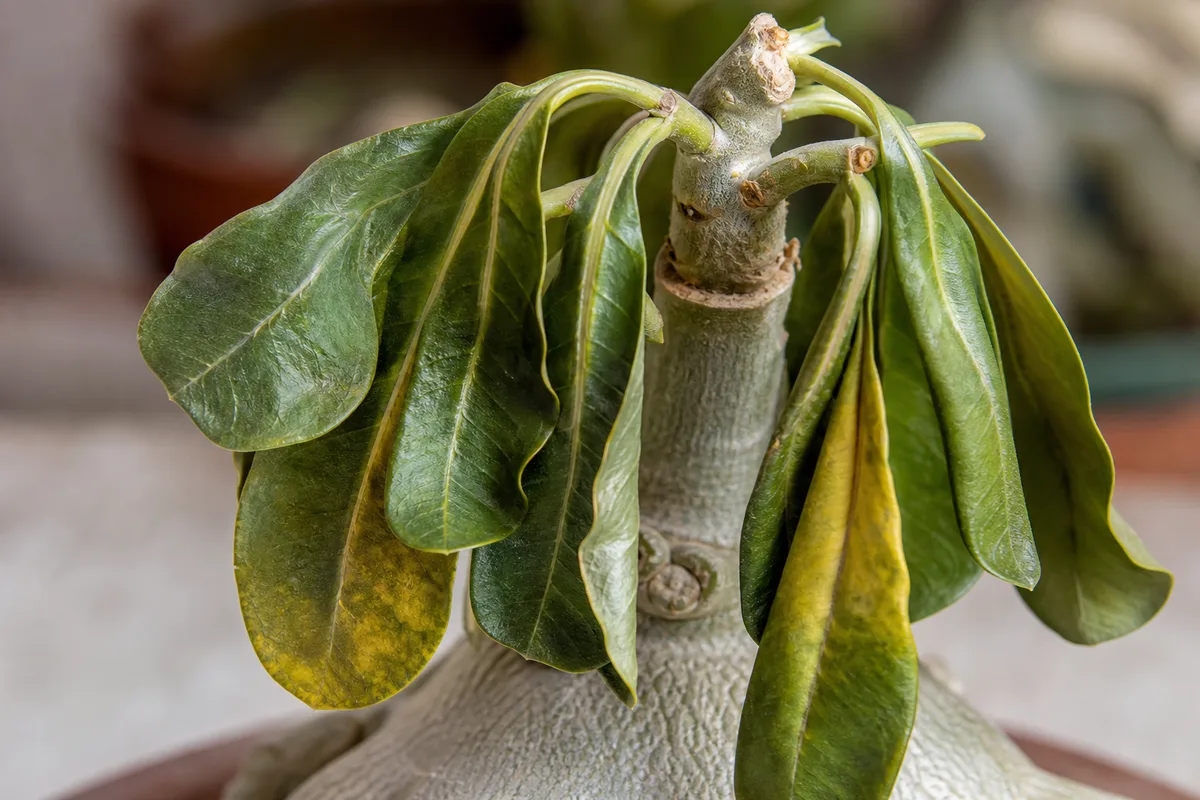
Drooping softened leaves and slight yellowing on lower foliage within days of repotting - the caudex stays firm while roots re-establish.
Versus rot: The caudex remains firm to the touch - not spongy or dented. Trimmed roots may look stubby or pale but should not smell sour or feel slimy. Stems stay green or gray-green; blackening at the soil line points away from simple shock.
Versus dormancy: Adenium naturally loses leaves in winter during cool rest. Repotting during dormancy stacks two stressors - leaf drop can look dramatic even when the caudex is healthy. Shock during active spring growth is easier to read because wilt appears against a backdrop of fresh leaves.
Pot-size clues: Moving into an oversized pot with heavy mix keeps soil wet longer - wilt may persist because roots cannot dry the volume, not because shock alone is worsening.
Normal post-repot pause stabilizes within two weeks on a firm caudex. Decline accelerates when the base softens or lower stems darken.
Why Adenium gets repotting stress
Root disturbance severs fine root hairs that absorb water. Until replacements grow, leaves lose turgor even though the caudex still holds reserves.
Desert rose is drought-adapted - it tolerates brief dry spells but reacts sharply when roots are handled. Lifting the caudex for display, aggressive root washing, heavy pruning at repot, or switching from tight pots to much larger ones all extend recovery.
Repotting into peat-heavy mix that stays wet suffocates recovering roots. Adenium needs sharp soil drainage; soggy new soil after disturbance is a common reason shock turns into rot.
Timing matters. Spring repot as temperatures rise lets roots rebuild quickly. Repotting in cool weather when the plant wants rest forces a leafless, slow-recovery plant to heal roots without active growth.
Stacking changes - repot plus move outdoors, plus first fertilizer, plus hard prune - multiplies stress on a species that prefers boring, stable care.
How to confirm the cause
- Timing - Did wilt or leaf drop begin within days of repotting or root trimming?
- Caudex firmness - Solid, slightly resilient base vs. soft or collapsing tissue.
- Soil moisture - New mix should feel dry several centimeters down before any water; constant wetness after repot suggests overcare.
- Root appearance - Shortened white or tan roots vs. brown mush with foul odor.
- Season - Active warm growth vs. cool dormant rest when some leaf loss is normal.
- Pre-repot health - Was rot or pest damage already present before the move?
If the caudex softens without a recent repot, or soil stays wet with blackening stems, treat as root rot on Adenium instead of shock.
First fix for Adenium
Stop watering and stabilize the environment - do not disturb again.
Place the plant where it receives strong light and steady warmth without drafts. Skip water for at least three to five days after repot so trimmed roots can callus and fine hairs can begin forming in dry mix. When you do water, use a light soak and let the pot drain fully.
Do not repot again, prune heavily, move between sun and shade, or apply fertilizer while leaves are drooping. One correction at a time.
Step-by-step recovery
- Confirm a firm caudex; if soft, unpot, trim rot, dry, and repot in gritty mix - that is rot treatment, not shock care.
- Keep in full sun or very bright direct light during warm active growth; avoid dark corners that slow root regrowth.
- Wait until mix is dry throughout before the first post-repot drink; empty saucers immediately.
- Maintain temperatures above roughly 55°F (13°C) - chill prolongs shock and triggers extra leaf drop.
- Remove only fully yellow or crisp leaves; leave partially green foliage to photosynthesize.
- Hold fertilizer for at least four weeks after repot - tender new roots burn easily.
- Watch for new tip buds or tiny leaves; that signals uptake is returning.
If you exposed the caudex for aesthetics, support the plant until roots anchor - a slightly tight pot helps stability during recovery.
Recovery timeline
Same-season spring repots on healthy plants: drooping often eases within one to two weeks; new leaves may take two to four weeks.
Fall or winter repots during rest: the plant may stay leafless longer - sometimes six weeks - before spring growth resumes. Firm caudex tissue throughout means waiting is normal, not failure.
Cosmetic leaf loss does not reverse; judge recovery by firm base tissue and fresh tip growth, not by old leaves rehydrating.
Lookalike symptoms
- overwatering on Adenium after repot - Soft caudex, sour soil smell, yellow leaves climbing the stem. More dangerous than shock alone; overwatering can lead to root rot on desert rose.
- underwatering on Adenium - Firm but slightly wrinkled caudex, very light pot, no recent repot event.
- Cold damage - Blackened tips or sudden leaf drop after exposure below ~50°F, with or without repotting.
- Root rot discovered during repot - Mushy roots found in the old pot; post-trim wilting may need rot protocol, not dry rest only.
- Sun scorch after outdoor move - Crisp brown leaf edges if repot coincided with harsh unacclimated sun.
What not to do
Do not water on a schedule “to help shock” - wet mix on damaged roots invites rot. Do not repot again out of impatience. Do not use standard peat potting soil without grit. Do not fertilize to force growth. Do not prune the caudex or major branches while the plant is wilted unless tissue is clearly rotten.
Wear gloves when handling cut stems - Adenium sap is poisonous and toxic to cats and dogs.
How to prevent repotting stress next time
Repot in early spring as new growth starts, roughly every two to three years or when roots densely fill the pot. Choose a container only one size larger with multiple drainage holes and a loose, sandy or gravelly, well-drained mix.
Disturb roots minimally - knock away only outer old mix; avoid unnecessary washing unless treating rot. Let the plant sit two to three days in dry new mix before the first light watering.
Keep six or more hours of bright light during active growth so roots rebuild quickly. Avoid repotting during winter dormancy unless rot forces an emergency move.
Adenium care cross-check
Repotting stress and rot both wilt leaves - caudex firmness is the divider. Pair any repot with dry-down watering, strong light, and cool-season rest when leaves naturally drop. Adenium tolerates being slightly pot-bound; oversized pots after repot are a common hidden cause of prolonged wilt.
When to worry
Escalate if the caudex softens, stems blacken at the base, wilting worsens after two weeks of dry stable care, or roots smell rotten when you inspect. Those signs mean rot or severe root damage, not routine shock.
Keep repot debris away from pets - Desert Rose is toxic to cats and dogs.
Conclusion
Repotting stress on Adenium is temporary wilting and leaf loss after root disturbance while the caudex stays firm. Hold water for several days, keep bright stable warmth, avoid repeat repots and fertilizer, and expect new growth within two to four weeks in active season. Soft caudex tissue or spreading black stems mean rot - act on that immediately instead of waiting out shock.
When to use this page vs other Adenium guides
- Adenium watering guide - Use for routine moisture checks before assuming repotting stress is the main issue.
- Adenium problems hub - Browse all 40 common issues on this species.
- Root Rot on Adenium - Different entry point when symptoms overlap with repotting stress.
- Wilting on Adenium - Different entry point when symptoms overlap with repotting stress.