Wilting on Adenium: Causes, Checks & Fixes
Quick answer
On Adenium, wilting almost always comes down to roots failing to move water-either because they are rotting in wet soil or because the mix has been dry too long. Before you water, press the caudex and check moisture 5–7 cm deep. A firm caudex with dry soil needs a deep soak; a soft caudex with damp soil means stop watering and inspect roots.
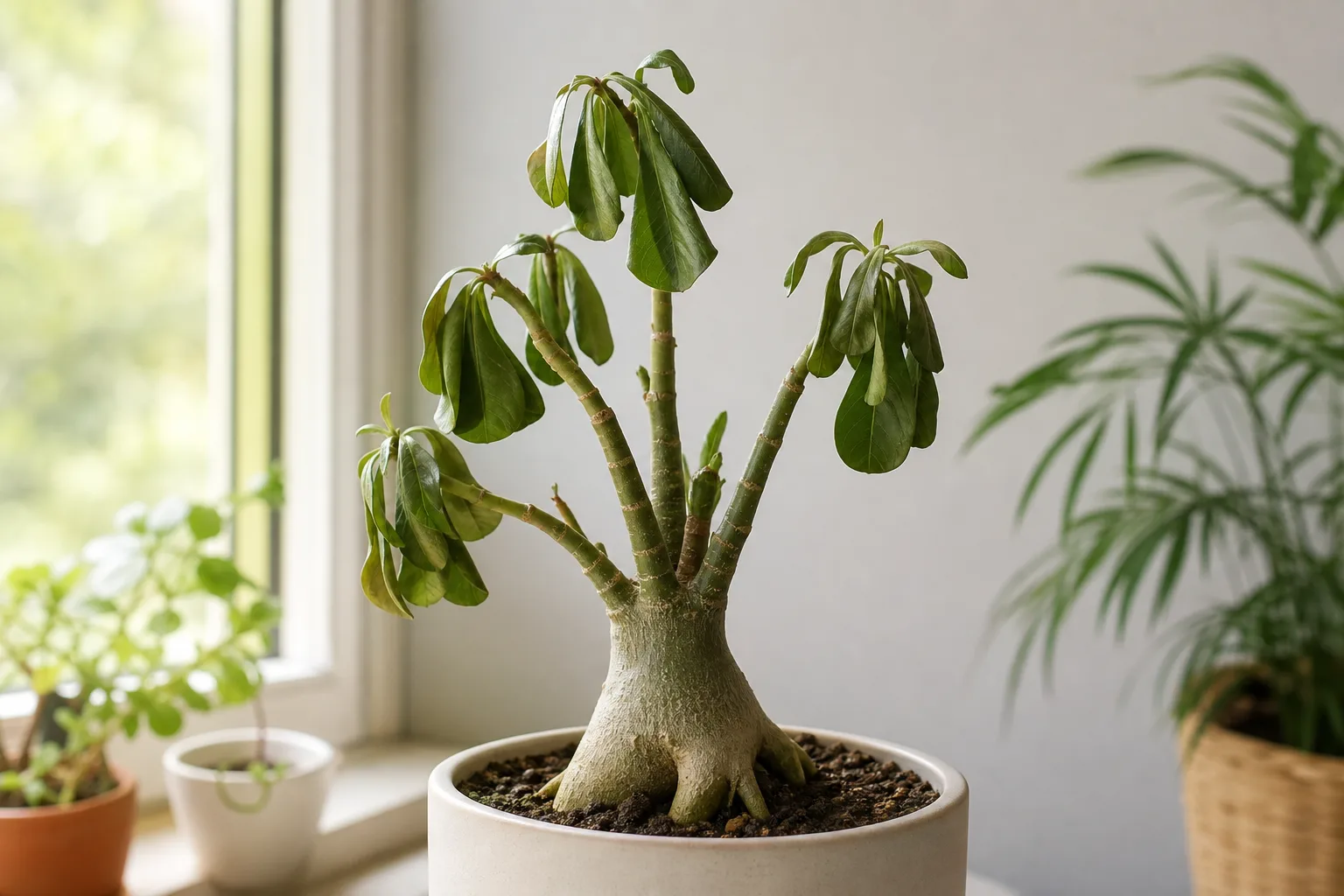
Wilting on Adenium: Causes, Checks & Fixes
This guide covers wilting on Adenium. See also the general Wilting guide, watering, and light pages for this plant.
Wilting on Adenium: Causes, Checks & Fixes
Quick answer
When an Adenium (desert rose) wilts, the leaves and stems go limp because water is not reaching them-not always because the plant needs more water. On this drought-adapted succulent, the same floppy look can mean rotting roots sitting in wet mix or a firm caudex that has used up its stored moisture. The single most useful first step is the caudex test: gently press the swollen trunk base, then check whether the soil is dry or damp several centimeters down. That one comparison tells you whether to soak or to stop watering and inspect roots.
What wilting looks like on Adenium
Wilting on desert rose is easy to spot but hard to read without touching the plant. Affected leaves lose their stiff, glossy look and hang downward along the stem. On a healthy plant in warm weather, the caudex feels hard, like a firm potato. Stems stay thick and upright even when a few lower leaves yellow with age.
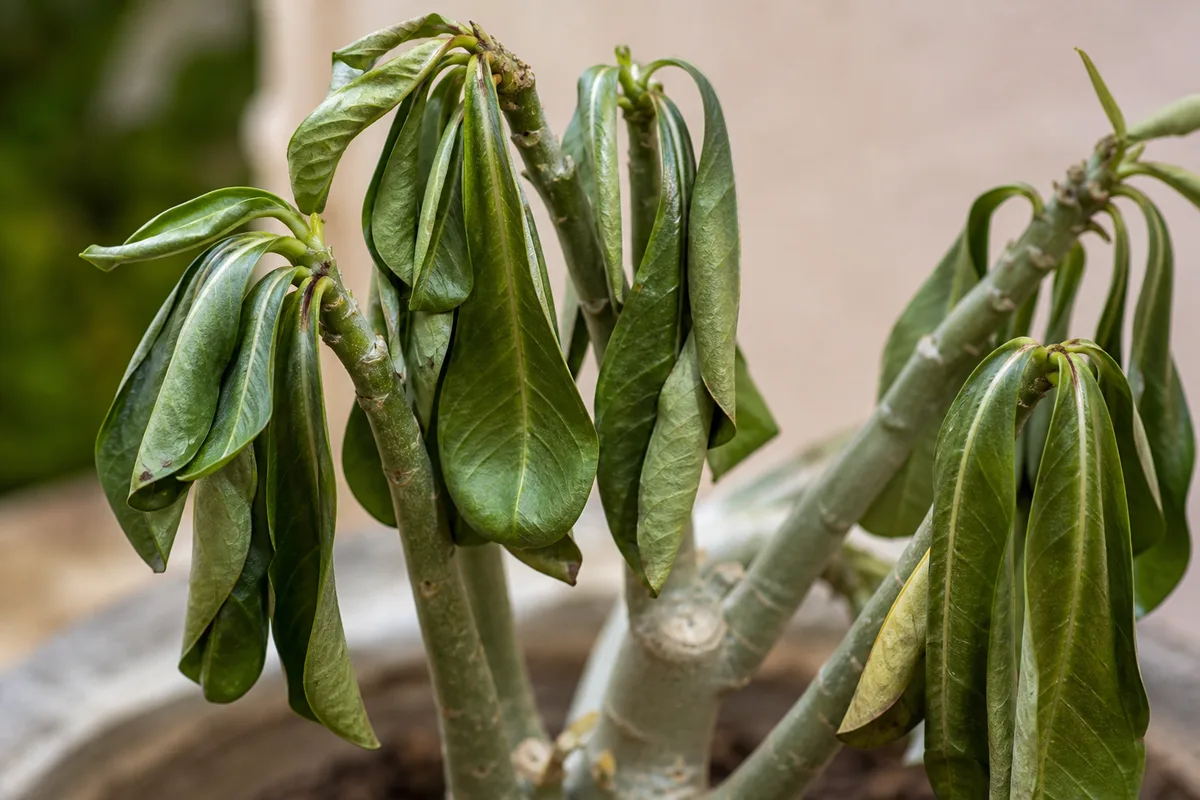
Limp, downward-hanging leaves on desert rose stems showing loss of turgor - the caudex may still feel firm in drought wilt, or spongy when rot is involved.
Problem wilting adds context clues. In dry wilt, the pot feels light, the mix is dusty several centimeters below the surface, and the caudex may show fine wrinkles while still feeling solid-not mushy. Leaf edges may curl or crisp before the whole leaf droops. In wet wilt, the soil stays cool and damp, lower leaves often turn yellow before they fall, and the caudex can feel spongy when you press near the soil line. A sour smell from the pot or darkening at the stem base suggests rot is already advancing.
Season matters. During cool winter rest, Adenium naturally sheds leaves and can look slightly droopy even when healthy. UF/IFAS notes that plants may droop in winter and re-leaf when warmth returns. Do not panic over bare, limp branches in dormancy if the caudex is still firm and you have been watering sparingly.
Why Adenium wilts
Adenium obesum stores water in its caudex, stems, and roots. It evolved for bright, hot, dry conditions and cannot tolerate wet feet for long. Most wilting cases trace back to a broken water pathway-roots too damaged to absorb, or soil too dry for too long during active growth.
overwatering on Adenium and root rot on Adenium (most common)
Overwatering is the leading killer of container-grown desert rose. When soil stays wet, oxygen around the roots disappears and fungal pathogens attack. Damaged roots cannot push water upward, so leaves wilt even though the mix is moist. Cool weather plus moisture makes this worse; Charlotte County UF/IFAS warns that cool temperatures combined with wet soil initiate stem and root rots.
This pattern shows up when owners water on a calendar, leave saucers full, use heavy peat mix, or keep watering through dormancy. A soft caudex with wet soil is the hallmark.
underwatering on Adenium during active growth
Adenium tolerates drought, but extended dryness in summer active growth still stresses the plant. The caudex releases stored water until leaves wilt. This is less common than rot in home care, but it happens when plants sit in small pots in Adenium light guide without a drink for weeks. Here the caudex stays firm; only the foliage collapses.
Adenium repotting guide and root disturbance
Repotting shocks the root system. Disturbed roots temporarily absorb less water, so the top growth wilts for days or weeks even with correct care. Wilting right after a spring repot-especially if watered heavily right away-often reflects transplant stress, not rot. The caudex should remain firm if rot has not already been present.
Cold and draft stress
Temperatures below about 50°F (10°C) damage desert rose tissue. Chill causes yellowing, leaf drop, and limp stems. Cold drafts from AC vents or winter windows produce similar stress outside normal dormancy. UF/IFAS lists chill tolerance down to 35–55°F with yellowing and leaf drop as expected responses.
Sap-sucking pests
Aphids, mealybugs, and scale drain sap from new shoots and can weaken stems enough to look wilted. Check leaf axils, the caudex crown, and tender tips for cottony clusters, sticky honeydew, or tiny armored bumps before assuming a watering problem.
How to confirm the cause
Work through these checks in order. Stop when the pattern is clear-do not rush to repot or fertilize.
- Caudex firmness - Press the base with your thumb. Firm and hard suggests drought, dormancy, or repot stress. Soft, yielding tissue suggests rot.
- Deep soil moisture - Push your finger 5–7 cm into the mix or lift the pot. Light and dry supports drought. Heavy and damp supports rot.
- Season and temperature - Cool months with leaf loss and firm caudex often mean normal dormancy. Sudden wilt after a cold night points to chill damage.
- Recent repot - Wilting within two weeks of repotting with a firm caudex usually means root disturbance, not emergency rot surgery.
- Pest scan - Inspect new growth and stem joints for insects or stickiness.
- Stem base color - Blackening or mush at the soil line confirms advanced rot and needs immediate intervention.
| What you find | Likely cause | Confirmed? |
|---|---|---|
| Firm caudex + dry deep soil + warm season | Underwatering | Yes - water deeply |
| Soft caudex + wet soil + yellow leaves | Root rot | Yes - stop water, inspect roots |
| Firm caudex + wilt 1–2 weeks after repot | Repotting stress | Likely - wait and stabilize |
| Firm caudex + cool weather + leaf drop | Dormancy or chill | Check temperature history |
| Sticky new growth + insects present | Pest sap loss | Yes - treat pests first |
The first fix to try
Press the caudex and check soil moisture at depth before you water again. That is the entire first action-no repotting, no fertilizer, no pesticide spray until you know which side of the wet-dry divide you are on.
If the caudex is firm and the soil is dry during active growth, water deeply until excess drains from the bottom, empty the saucer, and place the plant in bright sun. Recheck the caudex the next morning.
If the caudex is soft or the soil is damp, do not water. Move the plant to a warm, airy spot with strong light and let the mix dry. If the caudex is still soft after seven days of dry-down, unpot and inspect roots-trim only mushy tissue with a sterile blade, let cuts dry 24–48 hours, then repot into gritty mix.
Step-by-step recovery
When the plant is dry and firm
Water until the root ball is evenly moist, then drain fully. Avoid misting leaves; desert rose prefers dry foliage. Within a few hours to one day, leaves should feel slightly firmer. If they do not, roots may have partial damage-wait three days and water again only when the mix dries through. Resume a soak-and-dry rhythm: water when the top 5–7 cm is completely dry in summer.
When the plant is wet and soft
Stop all watering immediately. Tip the plant out of the pot and brush away mix. Healthy Adenium roots are firm and pale; rotted roots are brown, black, or mushy. Cut rot back to clean white tissue until every remaining root and caudex surface feels hard. Dust cuts with cinnamon or charcoal if you have it, then leave the plant in shade with good airflow for two to three days before repotting into fresh, mineral-heavy succulent mix. Wait another week before the first light watering. Recovery takes weeks to months depending on how much caudex tissue was lost.
When repotting caused the wilt
Hold off on water for three to five days after repotting so broken roots are not sitting in wet mix. Keep the plant in warm, bright, stable conditions-no fertilizer for at least a month. Mild wilt should ease as new white root tips appear. If the caudex softens during this wait, rot was already present before repotting; switch to the wet-and-soft protocol.
Recovery timeline and success signs
Mild drought wilt on a firm caudex often shows improvement within hours to one day after a proper soak. Repotting stress may take two to four weeks before new leaves open. Root rot recovery is slow: expect four to eight weeks minimum before you trust the plant again, and only if the caudex stayed partially firm after surgery.
Signs you are winning: the caudex feels harder than before, new leaves emerge at stem tips, wilt does not spread to additional branches, and soil dries at a normal pace between waterings.
Signs the problem is worsening: caudex softens further, stems blacken upward from the base, leaves yellow in clusters while soil stays wet, or no new growth appears after a month of corrected care. Advanced caudex rot often cannot be fully restored-salvage firm branches as cuttings if the main base is lost.
Lookalike symptoms
Normal winter droop - Leafless, slightly limp branches with a hard caudex in cool months are often dormancy, not disease. Reduce water and wait for spring warmth.
Leggy weak growth - Long thin stems with sparse leaves in low light can look sad but are etiolation, not wilt from water stress. Move to direct sun rather than changing the Adenium watering guide.
Sun scorch after a move - Sudden full sun on an indoor plant burns leaf edges and triggers drop. The caudex stays firm; acclimate gradually instead of soaking the soil.
Yellow leaves without limp stems - Yellowing alone may mean chill, overwatering, or anthracnose. Wilting specifically means turgor loss-check roots and moisture first.
Mistakes to avoid
Do not pour water on every limp desert rose. Wet-soil wilt gets worse with more water. Do not repot on day one unless you find mushy roots or a sealed pot with no drainage. Do not fertilize a wilted plant-salts stress roots that are already struggling. Do not move a stressed Adenium into deep shade; it needs bright light and warmth to recover, just not scorching midday sun on a dehydrated plant. Wear gloves when cutting rotted tissue; the milky sap is toxic to pets and can irritate skin.
How to prevent wilting
Grow Adenium in loose, sandy or gravelly, well-drained mix in a pot with drainage holes. Give at least six hours of direct sun during the growing season. Water only when the mix is dry 5–7 cm down while the caudex is still firm-frequency changes with season, not the calendar. In autumn, reduce water as temperatures fall below 55°F and let the plant rest with minimal moisture. Empty saucers after every watering. Inspect the caudex when you water during growth; catching early softening saves the plant before all leaves collapse.
When to worry
Treat wilting as urgent when the caudex feels spongy, stems darken at the base, or the soil smells sour. Those signs mean rot may be consuming the storage organ that keeps the plant alive. Slow, cosmetic wilt on a firm caudex during a heat wave is less alarming-correct watering and stable light usually fix it. If you are unsure, default to the caudex test rather than guessing. Desert rose forgives brief dryness far more often than it survives repeated sogginess.
When to use this page vs other Adenium guides
- Adenium watering guide - Use for routine moisture checks before assuming wilting is the main issue.
- Adenium problems hub - Browse all 40 common issues on this species.
- Underwatering on Adenium - Different entry point when symptoms overlap with wilting.
- Overwatering on Adenium - Different entry point when symptoms overlap with wilting.
- Root Rot on Adenium - Different entry point when symptoms overlap with wilting.