Best Soil for Adenium: Mix, Drainage & Pot Choice
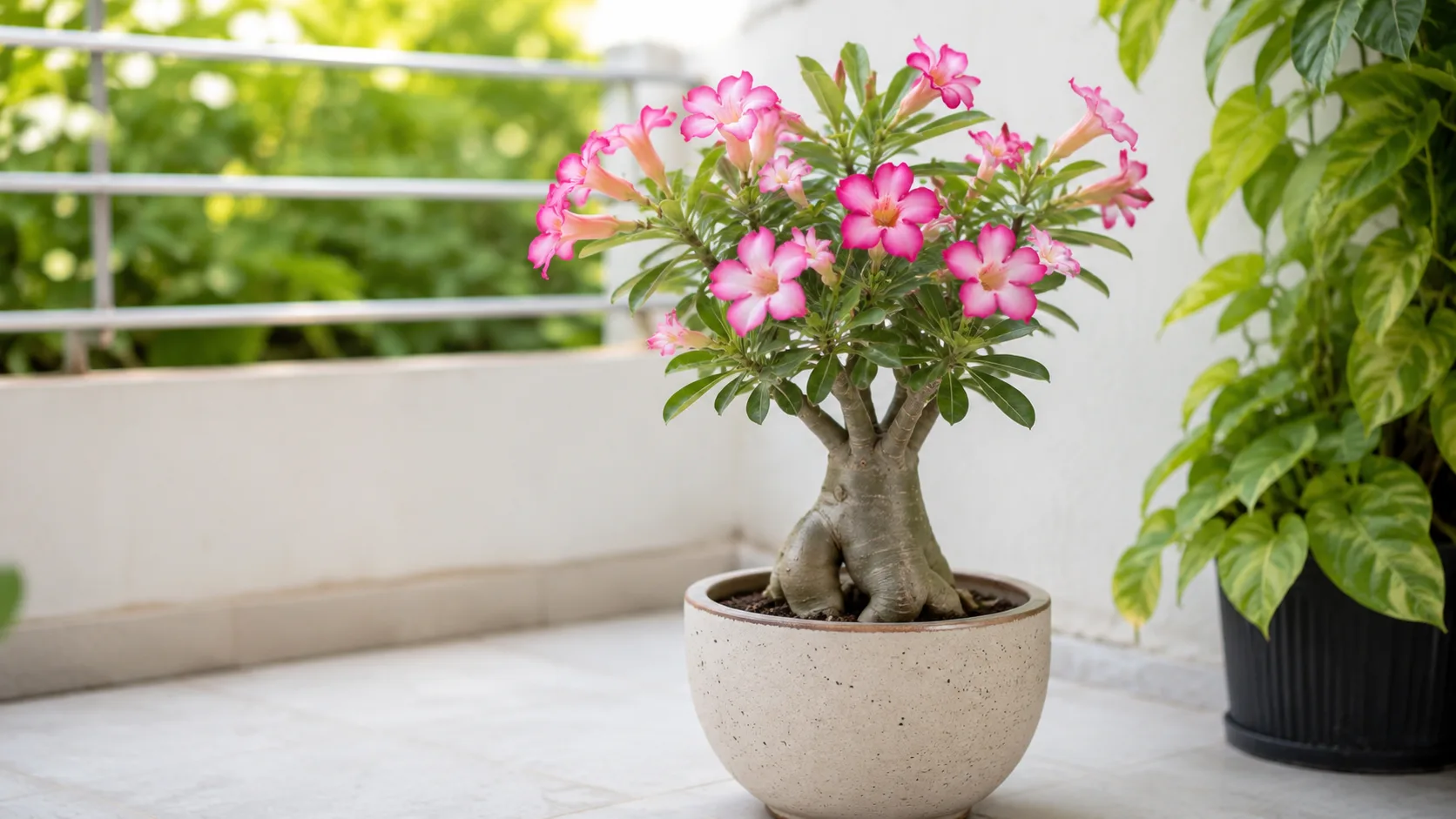
Best Soil for Adenium: Mix, Drainage & Pot Choice
Best Soil for Adenium: Mix, Drainage & Pot Choice
Author: sai-ananth · Reviewed by: LeafyPixels Review Board · Updated: 2026-06-15
The soil in an Adenium pot is not a background detail - it is the control system for oxygen, moisture, and rot risk around a swollen caudex that cannot tolerate cold, wet roots. Adenium obesum and its hybrids evolved across rocky, seasonally dry regions of sub-Saharan Africa and the Arabian Peninsula, where monsoon rains arrive fast and then disappear for months. In a container, you recreate that rhythm with mineral-heavy mix, sharp drainage, and a pot that dries predictably between drinks. Get the substrate wrong and no watering schedule will save the plant; get it right and generous summer watering becomes safe instead of suicidal.
This guide covers why bagged cactus soil alone is a weak long-term choice, which DIY ratios extension and desert-museum sources actually support, how to adjust recipes for humid homes versus hot windows, home drainage tests, caudex-safe planting depth, warm-season repot rules, and what to look for when you buy a pre-made gritty mix.
Why Adenium soil is not “just cactus soil”
Cactus and succulent bagged mixes are a reasonable starting point, not a finished Adenium substrate. University of Arizona Cooperative Extension states plainly that potting soil intended for houseplants - even when labeled as cactus mix - is typically too rich in organic matter to be the sole or main ingredient in Adenium media. The plants may grow well in highly organic media for a couple of years, then suffer as that organic fraction oxidizes and collapses into finer, water-holding particles a few years later. The preferred direction, per Tucson grower Mark Dimmitt cited in the same publication, is media that is mostly inorganic.
That distinction matters because Adenium is not a small desert cactus with shallow roots alone. It is a caudiciform succulent tree that stores water in thickened stems and a swollen base, tolerates generous watering in heat when drainage is excellent, and still dies quickly when the lower root zone stays saturated in cool weather. Specialty growers report success across a wide span - from 4:1 pumice to humus up to nearly pure commercial mixes - but only when aeration and drainage remain exceptional (Tucson Cactus and Succulent Society). The lesson is not one magic bag; it is that mineral structure must dominate.
Native monsoon rhythm and caudex storage
NC State Extension describes Adenium overview as a succulent perennial in the dogbane family native to arid regions of Africa and the Arabian Peninsula, grown in potting soil appropriate for cacti and succulents with several drainage holes. From the thick gray-green caudex, branches carry clusters of leathery leaves and summer trumpet flowers. The caudex is a living reservoir - not a decorative stump - and it subsidizes the canopy when roots are stressed. Wet, airless mix around that base is how crown rot starts even while upper leaves still look firm.
In habitat, seasonal drought favors plants that accept heavy rain briefly, then dry fast through rocky, porous ground. Your container must mimic fast percolation and air refill, not moisture retention. That is why Adenium culture in Arizona and at the Arizona-Sonora Desert Museum emphasizes heat, sun, and a porous mix rather than the peat-heavy indoor blends sold for foliage houseplants.
What Adenium needs from its root zone
Adenium needs three things from soil, in this order: excellent drainage, stable air spaces between particles, and a pH range that keeps nutrients available. Fertility is secondary; rot prevention is primary. Water should enter the mix, pass through the root zone, and exit the drainage holes without pooling. After a thorough watering, the pot should feel lighter within a few days in active growth - exact timing depends on heat, light, and pot material, which is why soil must be paired with the Adenium watering guide rather than a calendar.
The mix should also resist compaction. Peat-heavy blends that feel fluffy in the bag often sludge into a dense mat after a year of watering, shrinking air pockets exactly where fine roots need them. Mineral components - pumice, perlite, coarse sand, gravel, coconut coir chips - hold their structure longer and are the backbone of long-lived Adenium pots per UA Extension.
Air, minerals, and predictable dry-down
Think of particle size as the real variable, not brand names. Coarse ¼-inch (6 mm) grit leaves permanent air channels; fine dust fills pore spaces and traps water against the caudex. A useful benchmark in warm active growth: after watering until runoff, the top 2 to 3 cm should feel dry within 3 to 7 days in a typical bright indoor room. If the pot stays damp at depth for 10+ days without cool dormancy, the mix is too organic, the pot is too large, or light is too weak - add mineral material before changing your watering habit.
Adenium tolerates being slightly pot-bound because limited soil volume dries faster - a safety feature, not a neglect license. Oversized pots surround a small root zone with a deep wet column; extension guidance for arid-adapted container plants warns against overpotting for exactly that reason (UA Extension). Match soil texture to pot size: finer grit in small pots, coarser open mix in large bowls.
Best DIY soil mix for Adenium (default recipe)
Start with a Desert Museum–aligned ratio: 2 parts pumice or perlite to 1 part humus-based potting mix such as a quality succulent/cactus blend or coir-based commercial mix (Arizona-Sonora Desert Museum). That is roughly 67% mineral to 33% organic by volume - mineral-heavy without being pure rock.
Default recipe (one 6-inch pot):
- 2 cups pumice, perlite, or a blend of both
- 1 cup commercial cactus/succulent mix or coco coir–based potting mix
- Optional: ½ cup coarse horticultural sand or fine gravel for weight in top-heavy specimens
Blend dry in a bucket until the texture is uniformly chunky. Moisten a handful and squeeze firmly: the mix should fall apart immediately when you open your hand. A tight ball means too much peat or fine sand - add more pumice.
If you already own bagged cactus soil, treat it as the humus third, not the whole recipe. Amend with equal parts pumice until the finished blend passes the squeeze test. NC State requires cactus/succulent-appropriate potting soil; amending bagged mix to mostly mineral satisfies both that requirement and UA’s long-term inorganic preference.
Ratio sources and the squeeze test
The old 30% potting mix / 40% sand / 30% gravel formula sometimes circulated in generic succulent articles, but it is not the ratio documented in UA Extension AZ1953. That publication instead cites grower experimentation across wide ranges and recommends mostly inorganic media with excellent drainage. The Desert Museum’s 1:1 to 2:1 pumice-to-humus range is the clearest published recipe anchor for home growers.
Mark Dimmitt’s Tucson culture notes add practical context: Adeniums can perform in media from 4:1 pumice:humus up to highly organic blends only if watering and heat match - but for indoor collectors who cannot replicate Arizona summer intensity, the mineral-heavy end of that range is the safer default (Tucson Cactus and Succulent Society). When in doubt, add another scoop of pumice.
Recipe adjustments for humid homes and hot windows
One recipe does not fit every room. Adjust the mineral fraction before you adjust watering.
Humid indoor rooms (60%+ relative humidity, AC off): Shift toward 3:1 pumice to humus - about 75% mineral. Add coarse orchid bark or coconut chips for extra air channels. Use unglazed terracotta so sidewalls pull moisture away from the caudex zone. If fungus gnats or surface mold appear, the mix is staying wet too long; mineral content is still too low.
Hot south windows or outdoor summer patios above 27°C (80°F): The default 2:1 mix usually works. Adenium can take frequent deep watering in heat when drainage is sharp (Desert Museum). Avoid pure rock with zero organic matter unless you are prepared to fertilize lightly during growth; a small humus fraction holds trace nutrients and slightly buffers moisture between waterings.
Small pots under 15 cm: Use slightly finer pumice and a bit more humus so the tiny root zone does not dry in hours. Large shallow bowls for mature caudex specimens benefit from coarser, more open mix.
Cool-winter and dormancy tweaks
When nights stay below 10°C (50°F) and the plant drops leaves, soil moisture must fall with water demand. UA Extension directs growers to keep dormant Adenium dry, with at most light surface dampening if shriveling appears on young plants in warm bright storage. Do not rely on a moisture-retentive mix to “ride out” winter on a windowsill - cold plus wet organic media is the classic caudex rot pairing.
If you overwinter in a cool room, increase mineral content the preceding fall so the last warm-season waterings drain faster. Pair that with the dormancy rules in the Adenium watering guide; soil and water rhythm must move together.
Drainage speed: home tests that actually work
“Excellent drainage” is vague until you measure it. Two home tests calibrate any new mix before you stake a caudex on it.
Squeeze test: Moisten a handful, squeeze hard, release. Crumbly = pass. Solid ball = fail; add pumice.
Pot-weight dry-down: Weigh the pot after a full watering, then every two days. When weight drops noticeably and a finger at 5 to 7 cm depth finds dry mix, note the day count. Repeat after repotting into fresh mix. If dry-down slows by half within 18 months, organic matter is breaking down - refresh soil even if the plant still looks fine.
One-minute drainage procedure
- Fill a pot with your finished mix and a single drainage hole (same setup you will use for the plant).
- Water until steady runoff exits the bottom - about one-quarter to one-third pot volume.
- Start a timer. Water should not pool on the surface for more than a few seconds.
- Within 60 seconds, runoff should be continuous or completed; the surface should not look flooded.
- Lift the pot: excess water should not slosh inside a sealed cachepot.
If water sits on top or drains in a thin channel down the pot wall, the mix is too fine or has separated - remix with more pumice and avoid tamping when potting. This test matters more than folklore about “seconds” drainage; what you are verifying is no perched saturation at the root zone.
Pot choice and caudex-safe planting depth
Drainage holes are mandatory - preferably several (UA Extension). A decorative outer pot without holes is a cachepot only; water at the sink and never let the caudex sit in pooled runoff.
Choose a shallow, wide bowl rather than a deep cylinder for mature specimens. Adenium roots spread relatively horizontal; a deep unused column of mix stays wet longest. Go one pot size up at repot - about 2 to 5 cm wider - not a dramatic jump. UF/IFAS container culture guidance and the dedicated Adenium repotting guide cover the full warm-season workflow; this page focuses on the mix those pots should hold.
Caudex planting depth: Keep the swollen base at or slightly above the previous soil line - never bury the caudex deeper to stabilize a top-heavy plant. Many growers raise the plant gradually at each warm-season repot to expose more sculptural caudex and upper roots, which UA Extension notes may also protect those tissues from rot. Lift 1 to 2 cm per repot, not several centimeters at once, and shield newly exposed tissue from harsh direct sun until it toughens over a growing season.
Terracotta accelerates dry-down through porous walls - excellent in humid homes. Plastic retains moisture longer; pair it with a more mineral-heavy mix if you tend to water generously.
Why bottom gravel does not help
Do not add stones, pot shards, or gravel at the bottom of the pot to “improve drainage.” Washington State University Extension explains that water does not move easily from fine soil into a coarser layer below; instead, a perched water table forms at that interface and keeps the root zone saturated longer than a uniform gritty mix would. Fill the container with the same drainage material from top to bottom and rely on the drainage hole.
pH, minerals, and when to flush the mix
NC State Plant Toolbox lists cultural soil pH as acid to neutral (below 6.0 through 8.0), with good drainage and occasionally dry conditions. For container culture, aim for 6.0 to 7.5 - slightly acidic to neutral - where macronutrients remain available. Most mineral-heavy succulent mixes land in that band naturally.
Mineral mixes also resist the peat acidification drift that happens as organic matter decomposes. If leaf tips brown or white crust builds on the soil surface, flush the pot with plain water until runoff runs clear, or refresh the mix at the next warm-season repot instead of piling on fertilizer. Salt buildup and broken-down peat both mimic feeding problems while the real issue is substrate chemistry.
When to refresh soil and repot in warm weather
Refresh Adenium soil when:
- Water pools on the surface or races through without absorbing
- The mix smells sour or musty at the root zone
- Dry-down takes twice as long as it did last season
- White mineral crust or algae persists on top
- The plant has been in the same organic-heavy nursery mix for two or more years (UA Extension notes organic media begins oxidizing after a couple of years)
Repot only during the warm growing season - the earlier the better (UA Extension). Do not repot in fall or winter when growth is slow and wound healing is poor. Spring through early summer, as new leaves emerge and nights stay above 10°C (50°F), is the standard window - detailed steps live in the Adenium repotting guide.
A firm baseline is every 2 to 3 years for a typical indoor specimen, sooner if the mix fails the one-minute drainage test. Fast growers in Adenium light guide may need attention every two years; slow specimens in bright conservatories can sometimes stretch toward three if top-dressing with fresh grit each spring.
Stripping nursery media on new plants
When you buy a new Adenium, inspect the existing media. Plants from greenhouses or humid climates are often grown in peat-heavy, moisture-retentive mix that conflicts with home dry-down. UA Extension recommends repotting after purchase - removing all media from around the roots and replanting into a medium with known characteristics - during warm weather. If roots were not heavily damaged, you may water lightly after repot; if you trimmed rot, hold water several days per the repotting guide.
Do not repot on day one if the plant is mid-dormancy or the room is cool; quarantine, learn dry-down speed, and schedule repot for the next warm spell unless the current mix is clearly failing (sour smell, waterlogged caudex).
Soil mistakes that cause caudex rot
Using bagged cactus mix alone for years. It works briefly, then organic oxidation tightens the root zone. Amend to mostly mineral or refresh on schedule.
Overpotting into a deep large container. Excess mix stays wet; roots cannot colonize fast enough to dry it.
Burying the caudex for stability. Wet mix against the swollen stem invites crown rot; use a heavier shallow pot instead.
Cachepot runoff. Water drains from the inner pot and sits beneath the caudex - effectively bottom-watering into saturation.
Repotting in cool dormancy with fresh wet mix on cut roots.
Bottom gravel layers that create perched water (WSU Extension).
Fine play sand or beach sand that compacts and worsens drainage.
If the caudex stays soft for days after watering while leaves yellow, pause water, inspect roots, and repot into dry gritty mix in warm weather - soil correction beats light or fertilizer changes.
Practical checks after purchase and after watering
After purchase (first month): Quarantine new plants. Smell the root zone - fresh gritty mix smells earthy; sour means rot already present. Learn how many days your room takes to dry the pot at 5 to 7 cm depth before changing anything. Repot into known gritty media in warm season if the nursery mix is peat-heavy or waterlogged.
After every full watering: Confirm runoff exits freely. Empty cachepots. Press the caudex - it should feel firm, not spongy. If soil stays wet at depth while the caudex softens, the mix or pot size needs correction, not another drink.
Seasonal check: Before fall dormancy, verify mix still passes the squeeze test. If not, schedule spring refresh or top-dress with pumice until you can full repot.
Pre-made gritty mixes worth considering
If you prefer bagged products, choose mixes labeled for cacti and succulents with visible coarse particles - perlite, pumice, or grit on the label - then still run the squeeze test. Avoid “moisture control,” indoor tropical, or seed-starting blends.
Neutral options many growers use as the humus fraction (always amended with extra pumice for Adenium):
- Hoffman Organic Cactus and Succulent Soil Mix - amend 1:1 with pumice minimum
- Espoma Organic Cactus Mix - same amendment rule
- High-pumice specialty blends sold as “gritty mix” - often usable with little or no amendment in humid rooms
Even the best bag is a starting point. For long-lived caudex specimens, plan to add 30% to 50% extra pumice or perlite by volume unless you live in a hot, dry climate and monitor dry-down daily.
When shopping a new plant, reject specimens in sour, waterlogged, or moldy mix regardless of caudex size. Firm new growth and a hard caudex matter more than flower count.
Conclusion
Adenium soil is a mineral-first engineering problem, not a generic succulent afterthought. Anchor your default mix to 2 parts pumice or perlite : 1 part humus-based succulent mix, test it with the squeeze and one-minute drainage checks, pot in a shallow draining container with the caudex at or slightly above soil line, and refresh during warm weather - stripping unknown nursery media when you bring a new desert rose home. Pair those choices with the dry-down rhythm in the Adenium watering guide and the caudex-safe repot steps in the Adenium repotting guide. Get those pieces right and generous summer watering stops being a gamble. When in doubt, add pumice, repot in spring, and let the caudex tell you whether the root zone is dry enough to drink again.
When to use this page vs other Adenium guides
- Adenium overview - Start here for whole-plant context before deep-diving this topic.
- Adenium problems hub - Jump to symptom-specific fix guides when this care topic does not resolve the issue.
- Wrong Soil Mix on Adenium - Escalate here when soil adjustments are not enough.
- Poor Drainage on Adenium - Escalate here when soil adjustments are not enough.
- Root Rot on Adenium - Escalate here when soil adjustments are not enough.