Poor Drainage on Adenium: Causes, Checks & Fixes
Quick answer
Poor drainage on Adenium keeps the caudex waterlogged even when you water carefully. Do not add gravel at the pot bottom-that raises the wet zone. First step: stop watering, press the caudex for firmness, unpot, and repot into gritty mix with open drainage.
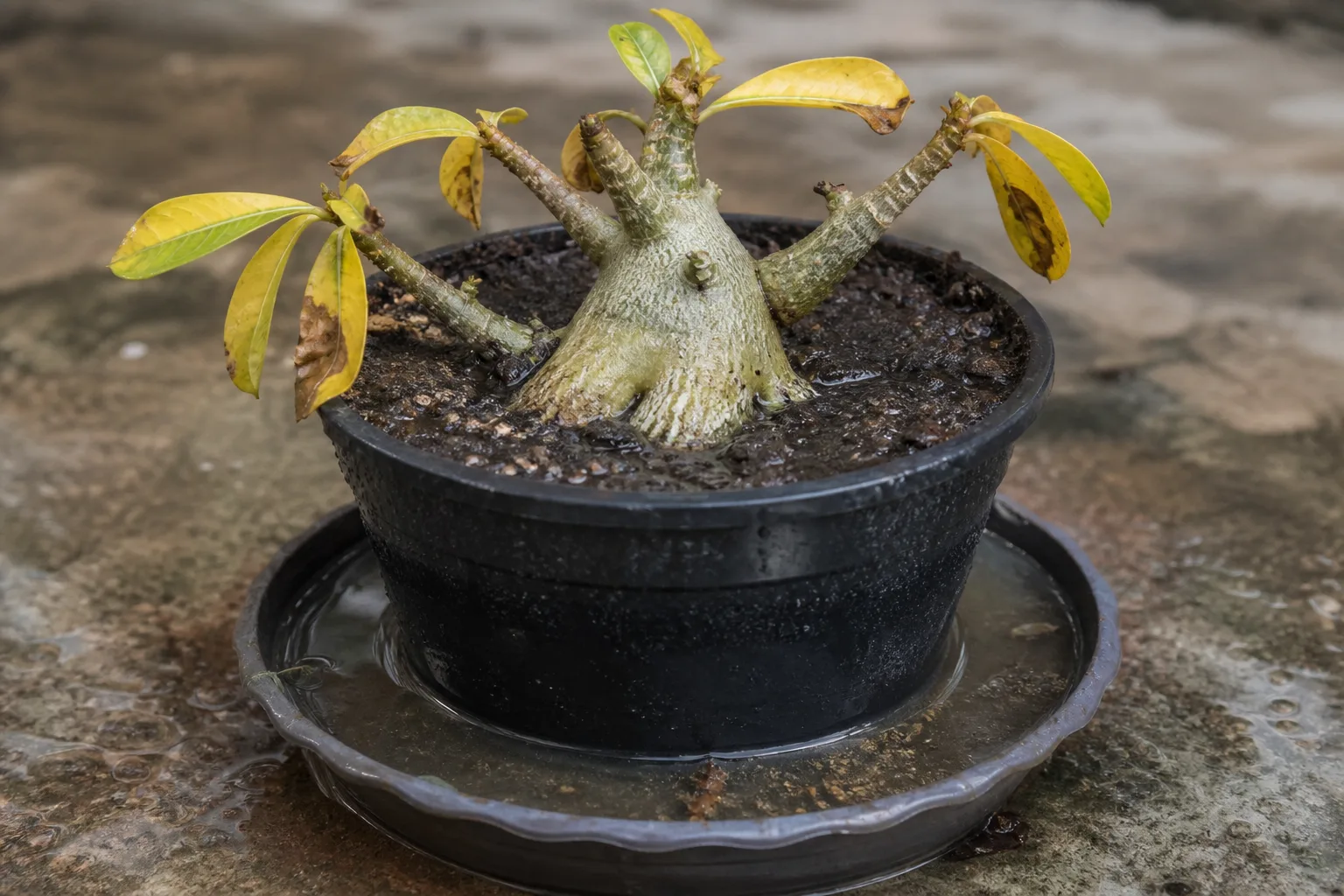
Poor Drainage on Adenium: Causes, Checks & Fixes
This guide covers poor drainage on Adenium. See also the general Poor Drainage guide, watering, and light pages for this plant.
Poor Drainage on Adenium: Causes, Checks & Fixes
Quick answer
Poor drainage on Adenium obesum (Adenium overview) means the root zone stays saturated even when you water carefully. The swollen caudex stores water for dry spells-it cannot tolerate sitting in wet mix.
Do not add gravel at the bottom of the pot. A coarse layer at the container base does not improve drainage and can keep soil above it saturated longer-the opposite of what desert rose needs.
First step: stop watering, press the caudex for firmness, unpot, and repot into loose, sandy or gravelly, well-drained soil mix with open drainage. Then allow soils to dry between waterings per the Adenium watering guide and never let the pot sit in a full saucer.
| What you feel | What it usually means | Read next |
|---|---|---|
| Heavy pot + soft caudex + wet core | Poor drainage / advancing rot | Stay on this page; repot into gritty mix |
| Light pot + firm, slightly wrinkled caudex | Underwatering | Underwatering on Adenium |
| Firm caudex + leaf drop in cool months | Winter dormancy | Watering guide - cut water, do not repot wet |
For mix recipes and home drain tests, see the Adenium soil guide. For culture context, start with the Adenium overview.
What poor drainage looks like on Adenium
Early signs are subtle: the pot stays heavy for days, the top inch may crust dry while the center stays damp, and watering feels like it runs straight through without soaking in. Fungus gnats hovering over the soil surface often appear before the caudex shows damage.
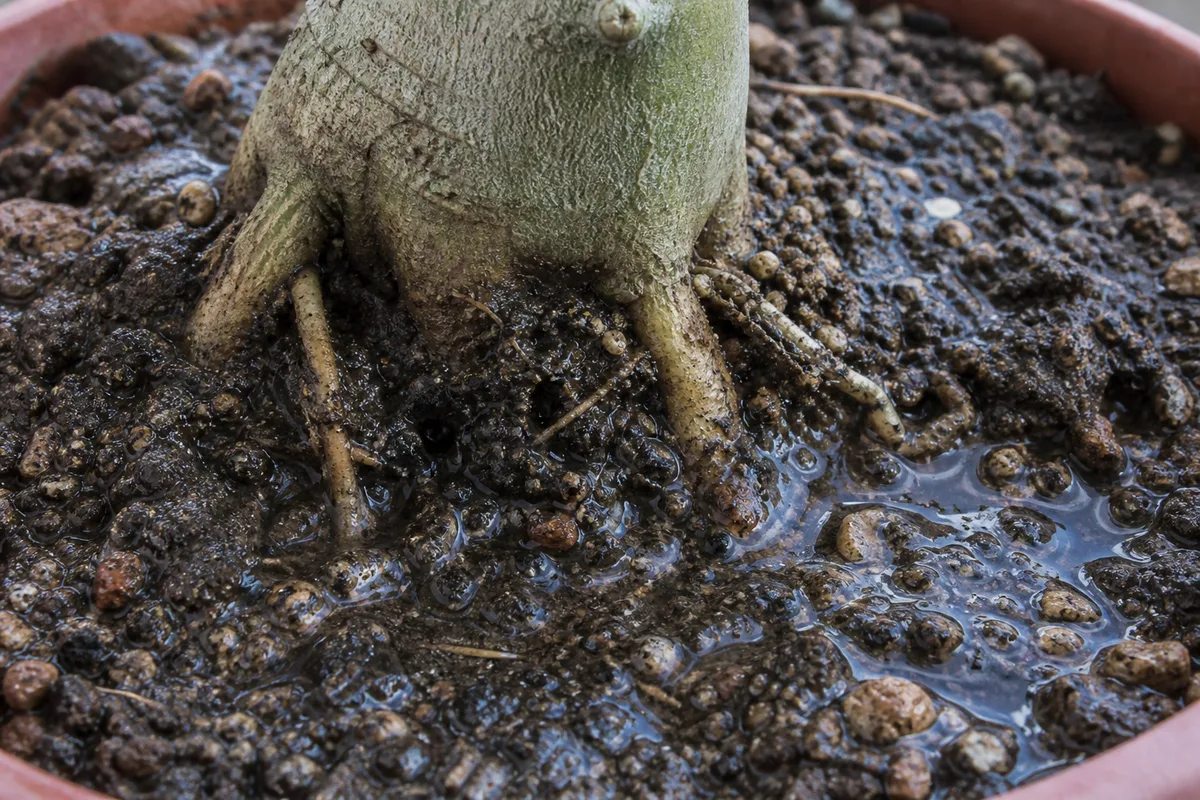
Poor Drainage symptoms on Adenium - compare with healthy tissue on the same plant.
As drainage failure progresses, leaves yellow and drop during warm active growth-not the normal seasonal rest. Stems may wilt despite wet soil because damaged roots cannot move water upward. The caudex, which should feel solid like a firm potato, starts to give when pressed. Advanced cases bring blackening at the stem base, a sour smell from the pot, and white mold on the soil surface.
Healthy Adenium in sharp drainage dries noticeably within a few days in full sun. If your mix still feels cool and damp a week after watering in summer, drainage has failed even when leaves look fine.
Why desert rose needs sharp drainage
Adenium evolved in arid African and Arabian climates. It stores water in its caudex and fine roots, then needs oxygen between drinks. Sharp soil drainage is required to prevent possible onset of rots-this is not optional for Desert Rose.
The most common triggers:
- Heavy peat-based potting mix without enough perlite, pumice, or coarse sand-standard indoor mix holds water far longer than this succulent can use. See wrong soil mix when the profile is the main problem.
- Blocked or missing drain holes-decorative pots, glued-in plugs, or no drainage hole cachepots that trap runoff keep the root zone anaerobic.
- Standing water in saucers that re-wets the mix from below after every watering.
- Oversized containers with excess soil volume the small root system cannot dry out, especially in low light.
- Cool dormancy with wet mix-roots are inactive in winter, so water sits longer and rot advances fast.
Low light compounds the problem. Adenium needs six hours or more of bright light each day to photosynthesize and use water at a steady rate. A plant in a dim corner with generous watering will stay waterlogged even in a pot with holes-review the light guide alongside drainage fixes.
Outdoor vs. indoor in humid climates
Collectors in rainy or humid regions face the same physics indoors and on patios: if water cannot leave the profile, the caudex rots. Outdoors, raise pots on feet, tilt saucers, and move plants under shelter during multi-day rain. Indoors, humidity matters less than mix grit and saucer discipline-a heavy peat plug in a sealed cachepot fails in Arizona dry air and Florida humidity alike.
How to confirm the cause
Work through these checks in order:
- Caudex firmness - Press the swollen base gently. Firm tissue means you caught drainage stress early; spongy or collapsing tissue confirms active rot heading toward crown rot.
- Drain hole function - Pour water through the pot. It should exit within seconds, not pool on the surface.
- Saucer and cachepot - Empty standing water. A sealed outer pot holds the inner pot in a water bath.
- Moisture at depth - Surface dry with a wet core means compacted or water-retentive mix, or a pot too large for the root ball.
- Mix texture - Slide the plant out. Dense, clumping soil that smells sour drains poorly. Crumbly gritty mix with visible perlite is what Adenium needs-the soil guide squeeze test confirms texture.
- Season and light - Wet soil during cool winter dormancy with reduced watering is especially dangerous. Confirm the plant gets strong direct sun during active growth.
overwatering on Adenium on good drainage shows occasional wilting with firm roots and mix that dries on schedule. Chronic saturation-heavy pot, gnats, soft caudex-points to mix or pot failure, not just watering frequency.
Symptom lookalike comparison
| What you see | Often confused with | How to tell apart |
|---|---|---|
| Heavy pot, soft caudex, sour smell | Overwatering on good mix | Overwatering: roots still firm if caught early; chronic wet core + soft base = setup failure |
| Firm caudex, leaf drop, cool room | Poor drainage | Dormancy: mix dry at depth, no gnats, no sour smell-reduce water only |
| Light pot, wrinkled firm caudex | Drainage failure | Underwatering: dry throughout; water once deeply, then resume dry-down rhythm |
| Wilting with wet soil | Root rot only | Same cause chain-drainage failure often becomes root rot; treat mix and pot first |
First fix for Adenium
Stop watering, unpot the plant, and repot into fresh gritty succulent mix in a container with open drainage.
Mix recipe and pot sizing
Use a blend heavy on mineral grit-roughly 30% potting mix, 40% perlite or coarse sand, and 30% fine gravel or pumice. Grow in potting soil appropriate for cacti and succulents in a pot with several drainage holes. The finished blend should look crumbly with perlite visible throughout-not a dark, spongy peat plug.
Choose a pot only slightly larger than the caudex and root mass; Adenium tolerates being slightly pot-bound and dries faster in a snug container. Full ratios and the one-minute pour test live in the Adenium soil guide.
Trimming rot and callus timing
Trim any brown, mushy root or caudex tissue back to firm wood. Let cut surfaces air-dry for two to three days before repotting into dry mix. Do not water immediately-wait at least a week so new roots search for moisture in a safe, aerated environment.
Make this one correction first. Do not stack fertilizer, pesticide sprays, and heavy pruning on the same day.
Step-by-step recovery
- Remove the plant from wet soil and shake off saturated mix.
- Rinse roots gently; cut all soft, black tissue with sterilized tools.
- Dust cuts with cinnamon or let them callus in bright, dry air for two to three days.
- Select a pot with multiple drain holes, sized for the trimmed root ball.
- Repot into fresh gritty succulent mix-no garden soil, no pure peat.
- Place in full sun so the mix dries predictably.
- Resume watering only when the mix is dry several centimeters down and the pot feels light-use the watering guide depth check, not a calendar.
- Empty the saucer completely after every watering.
Hold fertilizer until new tip growth appears-stressed roots cannot process salts. For pot choice and caudex exposure during repot, see the repotting guide.
Recovery timeline
Mild drainage stress with a firm caudex often stabilizes within one to two weeks after repotting and corrected watering. New root tips and fresh leaves at branch ends may appear in two to four weeks during warm active growth.
Severe caudex rot limits recovery. Soft tissue that has turned black will not refill-you are saving firm wood above the damage. If rot reaches most of the caudex, the plant may not be saveable. Honest success means a firm base, no spreading black tissue, and healthy new shoots-not perfect old leaves.
Causes to rule out
Poor drainage symptoms overlap with other Adenium problems:
- Overwatering on good mix - Wet soil from frequency, not blocked drainage; roots stay firm if caught early. Reduce watering rhythm before repotting.
- Underwatering - Light pot, dry mix throughout, and a firm but slightly wrinkled caudex. Water deeply once, then return to dry-down intervals.
- Winter dormancy - Plants usually lose their leaves in winter and go dormant with a firm caudex. Reduce water sharply; do not repot into wet mix during rest unless rot is confirmed.
- Cold damage - Temperatures below about 55°F cause yellowing and drop. Move to warmth before blaming drainage alone.
- Root rot from advanced saturation - Same wet-soil cause, but tissue is already mushy. Recovery requires aggressive trimming, not just a mix swap.
What not to do
Do not add gravel at the bottom of the pot-Illinois Extension notes that a gravel layer rarely improves drainage and can keep the root zone saturated. Do not repot into standard peat-heavy indoor mix without amending heavily with grit. Do not keep watering a wilting Desert Rose without checking caudex firmness first. Do not use oversized decorative pots that hold more wet mix than the plant can dry. Avoid watering during dormancy on a schedule meant for summer growth.
Wear gloves when cutting rot tissue-Adenium is toxic to cats and dogs and sap can irritate skin. If a pet chews trimmed tissue or sap, contact ASPCA Animal Poison Control (888-426-4435) or your veterinarian promptly.
How to prevent poor drainage next time
Match three variables together: gritty mix, open drainage, and strong light.
- Use cactus and succulent potting mix amended with extra perlite or pumice per the soil guide.
- Confirm drain holes are open before every growing season.
- Allow the plant to dry between waterings and empty saucers after each drink.
- Keep Adenium in six hours or more of bright light daily so water uptake matches your watering rhythm.
- Repot in spring when the caudex outgrows the pot-not into a container much larger than needed.
- During cool months, withhold water as the plant rests; wet dormant roots rot fastest.
Adenium care cross-check
Drainage prevention is inseparable from Desert Rose culture. A caudex plant in sharp mix but dim light will still stay wet too long. One in full sun but a sealed cachepot will drown from below. One in gritty soil with open holes but winter watering on a summer schedule will rot during dormancy. Align mix, pot, light, and seasonal watering together-see overview, soil, watering, and light.
When to worry - and when to propagate backup cuttings
Escalate immediately if the caudex collapses inward, black patches climb stems, or soil smells sour within days of repotting. Too much water can lead to root rot-on Adenium, that often starts as a drainage problem before it becomes fatal caudex loss.
If more than half the caudex is mushy, prepare firm stem cuttings as backup while attempting to save the base-follow the propagation guide for callus and dry-down rules. For chronic failures after two repots with verified gritty mix, contact your local cooperative extension office with photos before escalating to fungicides on caudex cuts.
When to use this page vs other Adenium guides
- Adenium watering guide - Use for routine moisture checks before assuming poor drainage is the main issue.
- Adenium problems hub - Browse all 40 common issues on this species.