Ants on Desert Rose (Adenium): Causes, Checks & Fixes
Quick answer
Ants on Adenium are a warning sign, not the root problem. They are almost always farming honeydew from aphids or mealybugs on tender shoots and flower buds. First step: follow the ant trail and inspect new growth for sap-sucking pests before treating ants.
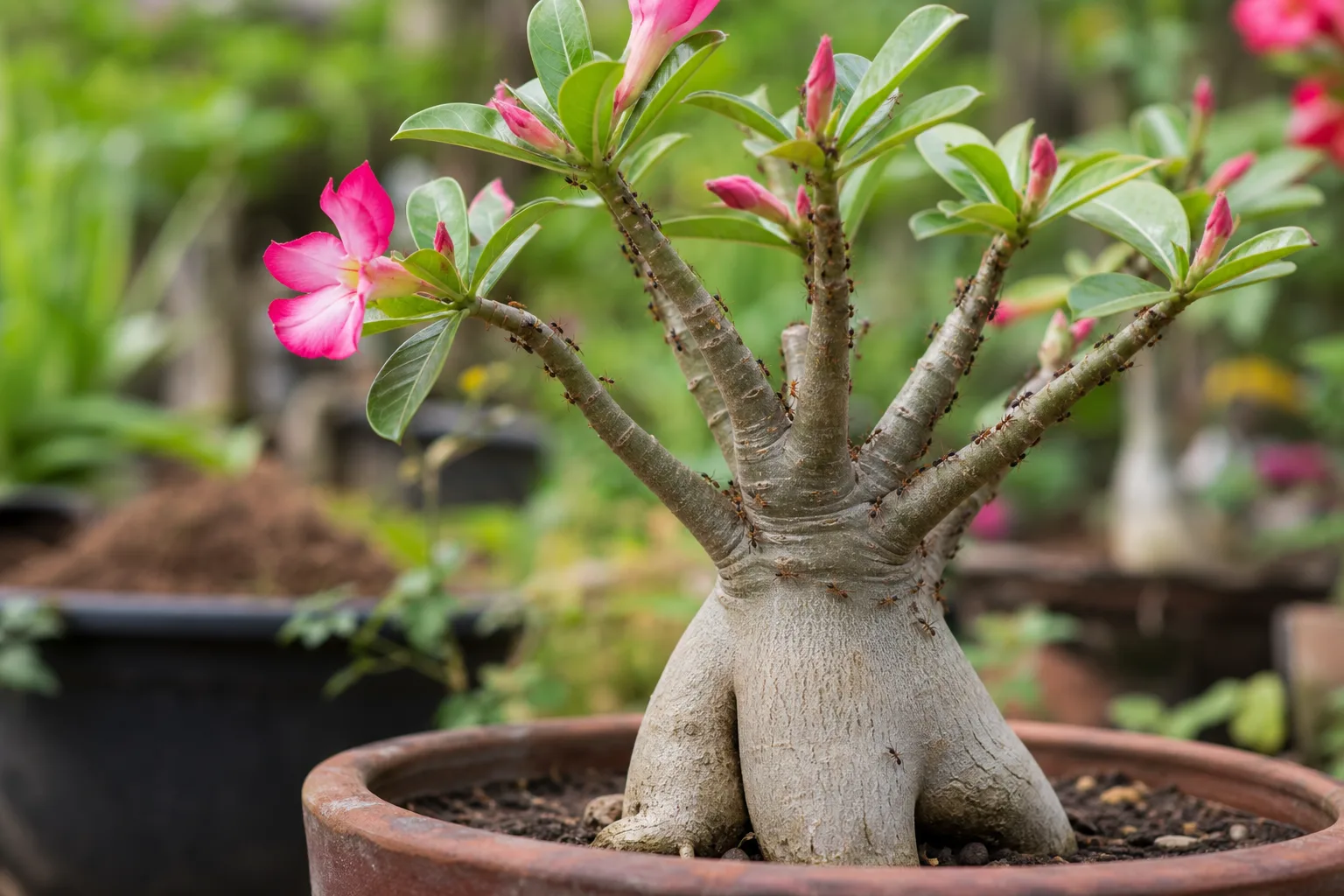
Ants on Desert Rose (Adenium): Causes, Checks & Fixes
This guide covers ants on plant on Adenium. See also the general Ants on Plant guide, watering, and light pages for this plant.
Ants on Desert Rose (Adenium): Causes, Checks & Fixes
Quick answer
You noticed ants climbing your Desert Rose during spring flush-and that timing matters. Warm active growth pushes soft shoots and swelling flower buds, the same tissue aphids and mealybugs target on Adenium. Ants are not eating the caudex; they are farming honeydew-sugary waste those sap feeders excrete-and protecting the colony from predators in exchange.
First step: follow the ant trail to the pest. Inspect new growth and buds before you spray or bait ants. If buds are coated with insects, treat that as urgent-lost blooms do not reopen on the same cluster.
A soft, mushy caudex on wet mix is a different emergency. Press the base now; if it gives, see overwatering on Adenium before you assume pests are the only problem.
Why ants show up on Desert Rose (and not because they eat the caudex)
Adenium obesum is drought-tough, but its spring flush produces exactly what sap-sucking insects prefer: tender, nitrogen-rich growth and prominent flower buds. Arizona Extension notes that aphids and mealybugs may appear on Adenium leaves and stems outdoors, though dormant plants that drop foliage in winter offer less food for these pests.
That dormancy cycle changes ant pressure. Outdoor desert roses that lose leaves in cool months often see pest numbers crash with the food supply-ants wander off when honeydew dries up. Indoor specimens that never go dormant still push soft tips year-round, so aphid colonies and ant trails can persist through winter unless you inspect during every warm spell.
Indoors, the picture is harsher. Without lady beetles and lacewings, aphid numbers can climb quickly on a windowsill Desert Rose. Ants discover the honeydew and defend the colony, which keeps the infestation going even when you knock pests off once.
Weak culture makes the cycle worse. Adenium kept in low light with slow-drying soil produces soft, stressed shoots that are easier for pests to colonize. Over-fertilizing during active growth pushes lush tip growth that aphids prefer-without the Adenium light guide and airflow this plant needs. Match feeding to the Adenium fertilizer guide instead of pushing soft shoots.
Common indoor ant species-and what they mean
Most ants on potted succulents are foraging workers, not a nest inside dry gritty mix. Argentine ants, odorous house ants, and pavement ants commonly enter homes and trail to honeydew on plants. They rarely chew Adenium roots in a fast-draining mix.
Nesting in the pot is uncommon on a properly dry Desert Rose but possible if soil stayed wet and organic. Distinct from honeydew farming: you would see soil disturbance and ants without sticky leaves or visible sap feeders on stems.
What you’ll see: trails, honeydew, and companion damage
Ants on Desert Rose show up as thin trails along stems, across the pot rim, or into caudex crevices. You might notice them most during warm active growth, when Adenium pushes soft new leaves and buds.
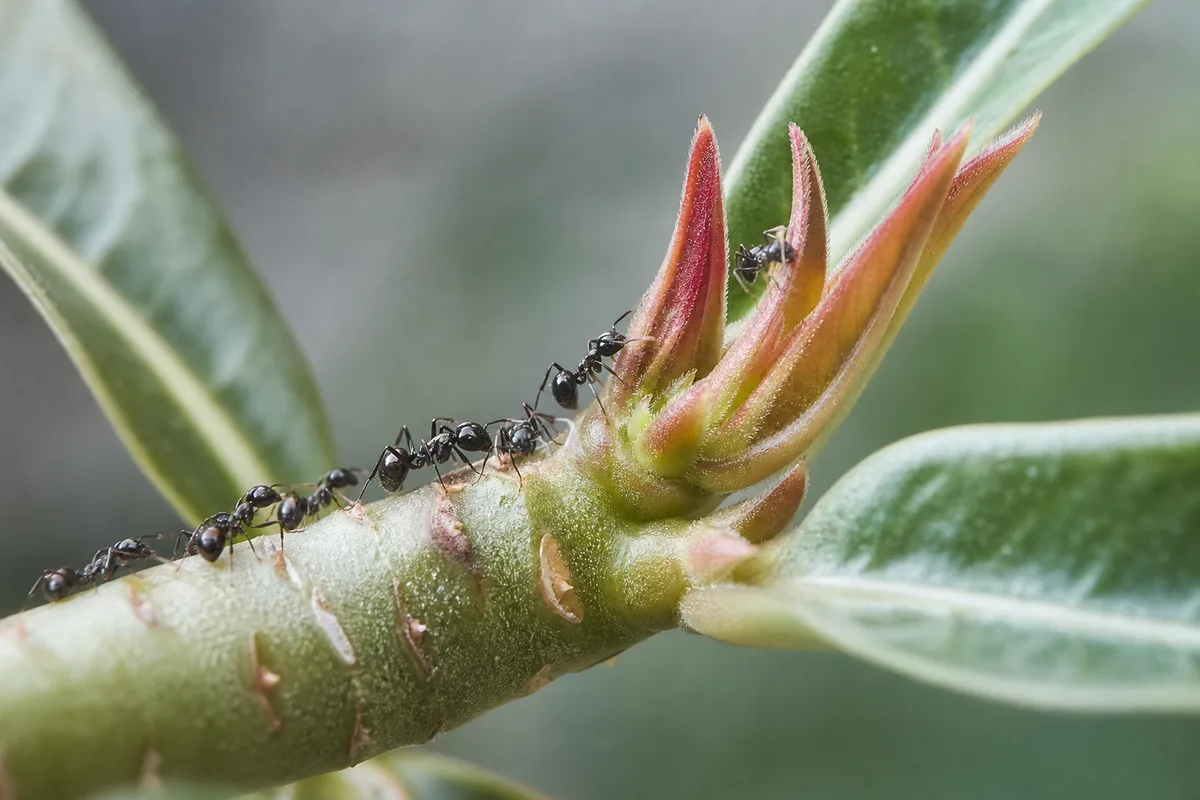
Ant trail along stem and pot rim with honeydew on tender new growth - follow the line to aphids or mealybugs before treating ants.
Common companion signs:
- Sticky leaves or pot surfaces from honeydew-the same residue covered in the sticky leaves guide
- Black sooty coating on leaves below a heavy infestation
- Distorted or curled new leaves where aphids have been feeding
- White cottony patches in leaf axils or caudex folds from mealybugs
- Hard brown bumps on older stems from scale insects
The caudex itself should stay firm. Ants alone do not rot the base-but if you also see a soft caudex and wet soil, treat that as a separate watering or rot issue before assuming pests are the only problem.
Inspect in this order: from ant trail to pest ID
Work through this inspection in order:
- Follow the ant line to where it ends-usually a cluster of pests, honeydew, or both on new growth.
- Check flower buds and stem tips for green, black, or pink soft-bodied aphids grouped on tender tissue. Bloom-season clusters are high-stakes; heavy feeding can abort buds before they open.
- Open leaf axils and caudex folds for white mealybug cotton; root mealybugs can leave powdery white deposits on soil and pot interiors per Arizona Extension guidance.
- Feel leaves and the pot rim for stickiness even if ants are not visible right now-dried honeydew confirms past or hidden feeding.
- Look for hard scale bumps on older stems; field ants also farm honeydew from scale and mealybugs.
If you find no pests, no honeydew, and ants are only passing through the pot, they may be foraging elsewhere. Still inspect neighboring plants-ants often signal an infestation on a different pot in the same room.
Lookalikes: nesting, spills, and pass-through ants
| Pattern | What it usually means | Key check |
|---|---|---|
| Ants + sticky new growth + insects on buds | Honeydew farming (aphids, mealybugs, scale) | Trail ends at pest cluster; wipe returns stickiness within a day |
| Ants in pot, no stickiness, disturbed soil | Possible nest in wet organic mix | Dry caudex, no honeydew; ants without stem trails |
| Ants on saucer only, clean stems | Spilled fertilizer, soda, or food residue | Wipe saucer; ants do not return to plant |
| Brief outdoor ant visit, no pests found | Migration from patio or garden | Rinse pot rim; re-inspect buds in three days |
First fix: remove sap feeders before touching ants
Inspect new shoots and buds, and physically remove the sap-sucking pests you find.
Move the plant away from others while you work. Outdoors, a firm jet of water from a hose can dislodge aphids and mealybugs from Adenium stems without chemicals-do this in morning or evening, not in harsh midday sun. Indoors, use a cotton swab dipped in rubbing alcohol on visible aphids and mealybug clusters, or wipe them off with a damp cloth.
After removal, wipe honeydew from leaves, stems, and the pot rim so ants lose their food source and you can spot any pests that return. Wait three to five days and re-inspect the same tips before adding sprays.
That single focused pass tells you whether you are dealing with a light hitchhiker problem or a colony that needs follow-up treatment.
If pests persist: soap, repeats, and when to bait ants
Once you have confirmed active aphids or mealybugs:
- Apply insecticidal soap to stems and leaf undersides, covering pests directly. Colorado State Extension notes soaps work on contact and have no residual effect-spray must wet the insects.
- Repeat every five to seven days for two to three cycles to catch newly hatched nymphs.
- Keep the plant in strong light and resume normal dry-down watering per the Adenium watering guide; do not compensate for pest stress by watering more often.
- Use enclosed ant bait stations on the floor near the pot-not in the soil-only after pest numbers drop, if ants still defend remaining colonies. UC IPM recommends slow-acting enclosed baits placed along trails rather than spraying foragers.
Adenium-specific cautions (sun, sap, caudex)
Wear gloves when handling cut stems-Adenium sap is irritant and the plant is toxic to pets. Keep bait stations where dogs and cats cannot reach them; loose granules near an indoor pot are a pet hazard even when the plant itself is the concern.
Avoid stacking Adenium repotting guide, heavy pruning, and pesticide on the same day. One intervention at a time makes it easier to see what helped.
Avoid applying oil or soap in hot direct sun, which can scorch Adenium leaves. Avoid harsh systemic chemicals indoors on a succulent caudex plant when soap and manual removal often suffice.
Recovery timeline on Desert Rose
| Timeframe | What to expect |
|---|---|
| 1–3 days | Ant traffic drops once honeydew is wiped and pests are removed |
| 1–2 weeks | With repeated soap treatments, new tip growth looks clean and unsticky |
| Same season | Flower buds may open normally if feeding stopped early; heavily distorted buds may abort |
Improvement signs: fewer ants, no fresh stickiness, firm caudex, healthy new leaves at the branch tips.
Worsening signs: expanding sooty mold, curling new growth with live aphids still present, ants returning to the same bud clusters after treatment-meaning the underlying pest was missed or protected in a crevice.
Cosmetic leaf damage from feeding does not heal, but Adenium often outgrows it with the next flush.
Mistakes that keep the cycle going
- Spraying ants only. You treat the symptom and leave the pest colony intact.
- Using harsh systemic chemicals indoors on a succulent caudex plant when soap and manual removal often suffice.
- Applying oil or soap in hot direct sun, which can scorch Adenium leaves.
- Increasing watering because leaves look stressed-wet soil weakens roots and does not deter aphids.
- Returning a quarantined plant to the collection before two weeks of clean inspections.
- Scattering loose ant bait in the pot where pets can reach it or borax can contact roots.
Prevention during spring flush and bloom season
Match normal Desert Rose care and add pest vigilance during growth:
- Quarantine new purchases for two weeks before placing them near other succulents.
- Inspect weekly from spring through fall, flipping leaves and checking buds before they open.
- Grow in full sun with gritty, fast-draining mix-stress from wet soil invites more problems than dry air.
- Feed lightly during active growth; excess nitrogen produces soft shoots that aphids prefer.
- Wipe dust from leaves occasionally so you can see early pest clusters.
Outdoor desert roses with strong airflow and natural winter leaf drop often see fewer indoor-style ant cycles. Windowsill plants that never go dormant need the most vigilant bud checks when temperatures rise.
When to escalate or call extension
Treat pest pressure as urgent if aphids or mealybugs cover flower buds during bloom season, if sooty mold coats most of the leaf surface, or if multiple plants in the same room show ants and stickiness. A local extension office can confirm pest ID from a sample if you are unsure.
Ants alone on a healthy, firm Desert Rose with no honeydew and no visible pests rarely justify chemical treatment-monitor for a week before intervening.
What to read next on Adenium pests
Use what you found during inspection to pick the right deep-dive:
- Aphids on Adenium - soft-bodied clusters on new shoots and flower buds
- Mealybugs on Adenium - cottony masses in caudex folds and root mealybug on pot interiors
- Scale insects on Adenium - hard bumps on older stems that ants also farm
- Sticky leaves on Adenium - honeydew cleanup and sooty mold after pests are gone
- Adenium watering - firm caudex checks when rot and pests overlap
- Adenium care hub - baseline light, soil, and dormancy for the full species picture
Your checklist for this week
- Follow today’s ant trail to buds, axils, and caudex folds.
- Remove visible aphids or mealybugs; wipe all honeydew.
- Re-inspect in three to five days before adding soap or bait.
- Open the pest guide above that matches what you found.
- Keep the plant isolated until two clean weekly checks pass.
When to use this page vs other Adenium guides
- Adenium watering guide - Use for routine moisture checks before assuming ants on plant is the main issue.
- Adenium problems hub - Browse all 40 common issues on this species.