Brown Tips on Adenium: Causes, Checks & Fixes
Quick answer
Brown tips on Adenium usually mean dry-down stress, excess salts from hard tap water or fertilizer, or sun scorch during active growth-not low humidity. First step: feel the caudex, probe soil 5–7 cm deep, and flush salts only if the pot drains well and the base is firm.
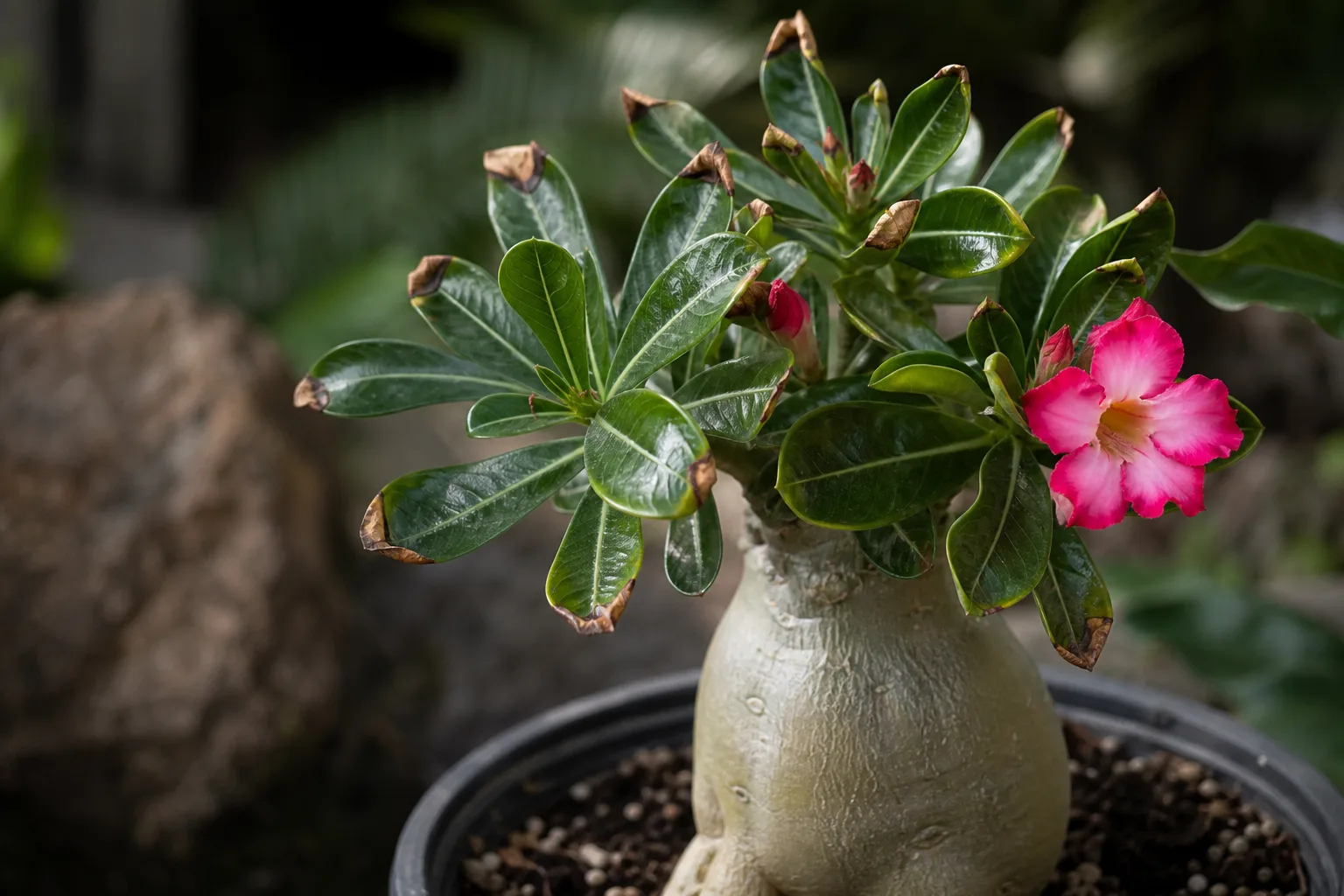
Brown Tips on Adenium: Causes, Checks & Fixes
This guide covers brown tips on Adenium. See also the general Brown Tips guide, watering, and light pages for this plant.
Brown Tips on Adenium: Causes, Checks & Fixes
Quick answer
Brown tips on Adenium (Adenium obesum, Adenium overview) almost always trace to how water and salts move through a drought-adapted caudex plant-not to the low-humidity issues that brown calatheas or peace lilies. During warm active growth in full sun, the most common causes are extended dry-down between waterings, mineral salts from hard tap water or fertilizer, and sudden harsh sun after a move.
Your first move: feel the caudex, probe soil 5–7 cm deep, and lift the pot. A light dry pot with a firm but slightly wrinkled base means underwatering on Adenium-see the Adenium watering guide for soak-and-dry rhythm. White crust on the soil surface plus recent feeding points to salt burn-flush only if drainage is excellent, then pause feeding until new growth looks normal. Do not mist for humidity; Desert Rose prefers dry to medium moisture and sharp drainage, not tropical humidity.
Why Adenium gets brown tips (not humidity)
Desert rose stores water in its caudex and thick leaves. Leaf tips are the last tissue to receive moisture when roots cannot keep up-either because the mix stayed dry too long in heat, or because damaged roots from wet soil fail to transport water even when the pot feels damp.
Four causes cover most home cases:
Underwatering during active growth. Adenium in six or more hours of bright light uses water fast in summer. Small pots in all-day sun can dry within days. Extended dry spells pull moisture from leaf margins first, leaving tan crispy tips while the caudex stays firm.
Salt and fertilizer burn. UF/IFAS recommends low-dose fertilizer during summer growth. Heavy or frequent feeding-especially on dry roots, in weak light, or during dormancy-builds salts that scorch leaf edges. A white crust on the soil surface is a classic salt signal.
Root stress from overwatering. Saturated mix kills feeder roots. Damaged roots cannot supply leaves normally, and margins can brown even when soil feels wet. This pattern usually comes with yellowing lower leaves or a soft caudex-not a bone-dry pot. Full rot workflow lives on the overwatering guide.
Sun scorch after sudden exposure. Adenium loves sun but can sunburn if moved from shade into harsh light without acclimation. Scorched tips often appear on the side facing the strongest afternoon rays within days of a move-distinct from slow drought crisping; see sunburn on Adenium for the acclimation path.
Adenium is not a humidity plant. Dry household air rarely causes tip burn here the way it does on ferns. Tropical houseplant guides that lead with humidifiers miss caudex biology-check water, salts, and light first.
What brown tips look like - by cause
Symptoms differ by cause:
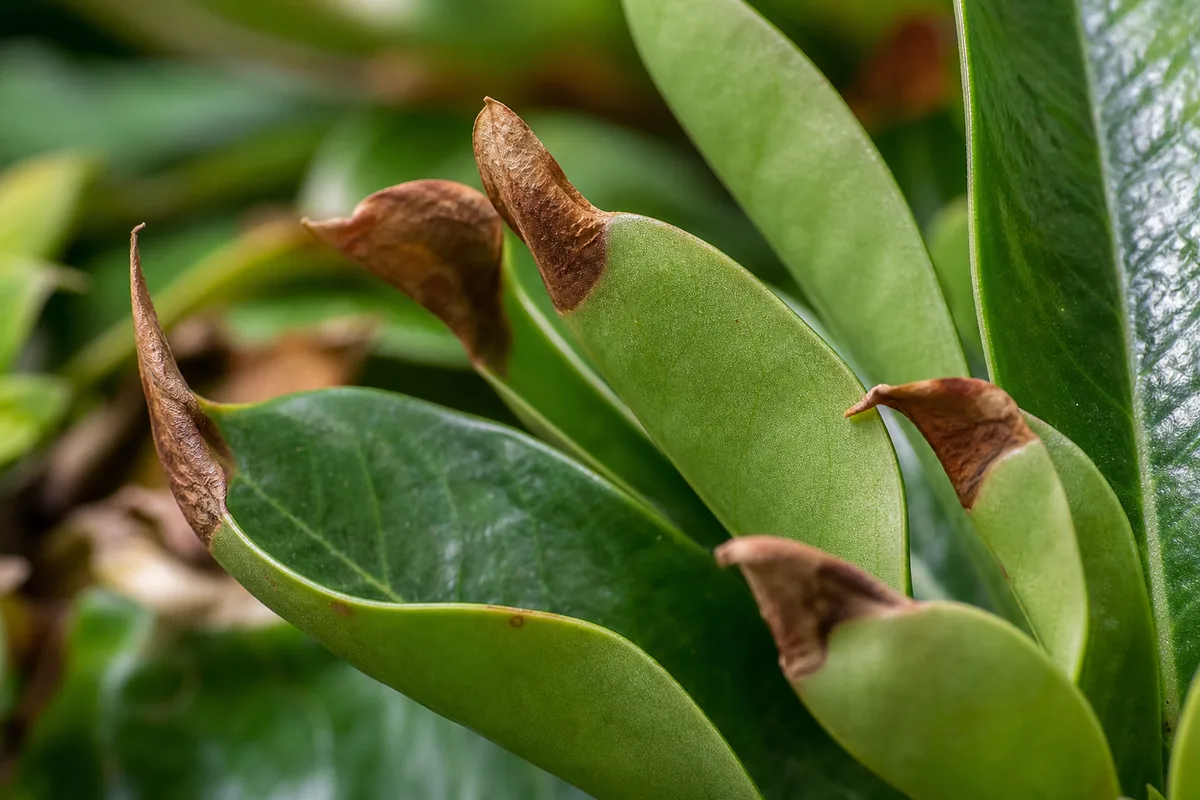
Brown Tips symptoms on Adenium - compare with healthy tissue on the same plant.
Drought-related tips
- Tan to brown, dry, crispy leaf margins-often starting at the tip and sometimes creeping slightly inward.
- Leaves may curl inward or feel leathery but not mushy.
- Pot feels light; soil dry 5–7 cm down.
- Caudex firm, sometimes slightly wrinkled-not soft.
- Often affects older leaves first during a hot dry spell.
Salt or fertilizer burn
- Crispy brown tips and edges, sometimes on multiple leaves at once.
- White or pale crust on soil surface or pot rim.
- Follows recent feeding or long-term fertilizer without flushing.
- Caudex usually still firm if rot has not started.
- New leaves may emerge with burned tips if salts remain high.
- Overlaps with dedicated fertilizer burn on Adenium when feeding was the trigger.
Rot-related margin browning
- Brown tips plus yellowing, limp leaves despite wet soil.
- Soft or spongy caudex; sour smell from mix.
- Progressive spread up stems-not isolated cosmetic edges.
- Overwatering is a leading killer of desert rose.
Sun scorch
- Bleached or brown patches on the sun-facing side, not random tips only.
- Appears within days after moving to stronger sun or after glass intensifies light.
- Stems stay firm; soil moisture pattern unchanged.
Seasonal dormancy browning
During winter dormancy, old leaves may yellow or drop with some edge browning-that can be seasonal, not a crisis, if the caudex is firm and you have reduced water appropriately.
Hard tap water and salt crust (not just fertilizer)
Salts do not only come from the feed bottle. Hard irrigation water leaves mineral deposits-calcium, sodium, and iron-that concentrate as water evaporates from the mix surface. On Adenium in small pots under all-day sun, that buildup can scorch margins even when you fertilize lightly.
Signals it is tap water, not overfeeding: white crust on the rim or soil top without a recent fertilizer application; tips browning on a plant you water on schedule but never flush; crust worse in terracotta that wicks minerals to the outer wall.
What helps: leach with plain water equal to two to three pot volumes when the caudex is firm and drainage is fast-same protocol as fertilizer flush. In very hard-water regions, alternate with rainwater or filtered water during the growing season. Do not bottom-water into a saucer of drained salts; that pulls minerals back into the root zone.
How to confirm the cause (7-step caudex checklist)
Work through this order before changing anything:
- Season and growth stage. Active summer growth demands more water than cool rest when leaves drop naturally. Do not diagnose tip burn on a dormant plant the same way as on a summer bloomer.
- Caudex feel. Firm and slightly wrinkled with dry soil = drought. Soft with wet soil = rot-stop watering and inspect roots.
- Soil moisture at depth. Push your finger or a skewer 5–7 cm down. Surface dust does not count; roots live deeper.
- Pot weight and drainage. Light pot, dry throughout = underwater. Heavy pot, wet days after watering = overwater risk.
- Recent feeding and water source. Any fertilizer in the last two to four weeks raises salt-burn probability. Check for white crust even if you did not feed-hard tap water counts.
- Light history. Did the plant move outdoors, change windows, or sit behind clean glass recently? Sun scorch clusters on the exposed side.
- Temperature. Cold below about 50°F can damage Adenium and darken leaf tips-different from slow drought crisping.
Write down which pattern matched. Brown tips from three different causes need three different first fixes.
First fix for Adenium
Match one action to what you confirmed:
- Dry soil, firm caudex: Water deeply until excess drains from the bottom, then empty the saucer. Wait until the mix dries 5–7 cm down before the next soak.
- Salt crust or recent overfeeding: Stop fertilizer. Flush with plain water equal to two to three pot volumes-only if the mix drains in seconds and the caudex is firm. Let the pot dry fully before resuming normal watering.
- Soft caudex, wet soil: Do not flush. Stop watering, unpot if needed, and trim mushy tissue-rot overrides tip cosmetics. Follow overwatering recovery before any cosmetic trim.
- Sun scorch after a move: Shift to bright indirect light for one to two weeks, then reintroduce direct sun gradually over seven to ten days.
Make one correction first. Do not repot, prune heavily, and fertilize on the same day.
Step-by-step recovery by cause
After underwatering
- Soak until water runs freely from drainage holes.
- Place back in full sun if the plant was already acclimated-shade only if leaves were sun-scorched separately.
- Resume soak-and-dry: water when dry 5–7 cm down, not on a calendar alone.
- Trim fully brown tips for appearance if you wish, leaving a thin brown edge to avoid wounding green tissue.
After salt or fertilizer burn
- Pause all feeding until new leaves emerge with clean margins.
- Flush as described above once; repeat after two weeks only if crust returns and drainage stays excellent.
- When growth resumes, feed at quarter to half label strength during warm months-never on dry or dormant plants.
After root stress (wet soil)
- Stop watering until mix dries throughout.
- If caudex softens further, unpot, cut black mushy roots and caudex tissue, air-dry two to three days, repot into gritty mix.
- Do not fertilize until firm new growth appears for several weeks.
After sun scorch
- Reduce direct sun temporarily.
- Remove fully dead leaves only.
- Acclimate back to full sun slowly; established desert rose needs strong light to bloom.
Recovery timeline - what success looks like
Drought-related tip burn often stabilizes within one to two proper watering cycles-new leaves in two to four weeks should show cleaner margins if sun and drainage are correct.
Salt burn recovery takes longer: one to three weeks after flushing before new growth looks normal, depending on how concentrated salts were.
Rot-related browning does not follow a cosmetic timeline. Firm caudex and no spread for seven to ten days after drying out is the minimum sign you avoided escalation.
Existing brown tips stay brown. Judge success by new foliage and a firm caudex, not by old leaves re-greening.
Documented home case (Phoenix, May 2025): A 6-inch terracotta Adenium in full patio sun showed crispy tips on lower leaves, light pot weight, and firm caudex with soil dry 6 cm down-classic drought in a heat wave. One deep soak, saucer emptied, then watering only when dry 5–7 cm down. New leaves at the branch tips emerged with clean margins in 19 days; old tipped leaves were left in place.
Lookalike symptoms to rule out
| Pattern | Likely cause | Urgency | First step |
|---|---|---|---|
| Crispy tips, dry deep soil, firm caudex | Underwatering | Low | Deep soak, then dry-down schedule |
| Crispy tips, white soil crust, recent feed or hard water | Salt/fertilizer burn | Medium | Stop feed; flush if drainage good |
| Brown tips plus yellow limp leaves, wet pot | root rot on Adenium / overwatering | High | Stop water; inspect caudex and roots |
| Bleached/brown sun-facing patches after move | Sun scorch | Medium | Shade briefly; re-acclimate |
| Blackened tips after cold exposure | Cold damage | High | Warm stable spot; dry rest |
| Circular brown spots with yellow halos | Fungal leaf spot | Medium | Dry foliage; remove spotted leaves-not tip burn |
Spider mite stippling and thrips scarring look different-silvery scuffs or fine dots, not uniform dry margin necrosis.
What not to do
Do not increase watering automatically when tips brown-confirm dryness first. Wet soil on a succulent caudex plant causes more harm than brief drought.
Do not feed to “green up” browned tips. Fertilizer during stress or dormancy worsens salt injury.
Do not mist for humidity. Adenium is adapted to arid conditions; misting does not fix tip burn and can encourage fungal issues on wet foliage in stagnant air.
Do not flush a pot that drains poorly or a plant with a soft caudex-you will waterlog rotting roots further.
Do not prune heavily and repot the same week unless rot forces it. One stress at a time.
Wear gloves when trimming-Desert Rose sap is toxic to people and pets and irritates skin.
How to prevent brown tips next time
Align care with how Adenium actually grows:
- Light: Full sun during warm active growth-six or more hours where possible per Missouri Botanical Garden guidance.
- Water: Soak when dry 5–7 cm down; cut back sharply in cool dormancy. Match rhythm to the watering guide rather than a calendar.
- Soil: Gritty, fast-draining mix-sharp drainage prevents rot that indirectly browns margins.
- Feed: Low dose in summer only; skip dormant months. Flush salts occasionally if you feed weekly or use hard tap water.
- Moves: Acclimate to stronger sun over one to two weeks. Bring containers inside before nights drop below 50°F in autumn.
Check the caudex weekly during the growing season. Firm tissue and clean new leaves mean your rhythm is working.
Related Adenium problems
Brown tips overlap with several sibling guides-use these when your checklist points past simple edge burn:
- Overwatering - soft caudex, wet mix, sour smell; rot beats cosmetic tips.
- Fertilizer burn - recent feeding with crust and multi-leaf edge scorch.
- Sunburn and scorched leaves - bleached patches after a sun move, not slow crisping.
- Adenium overview - baseline light, dormancy, and caudex care for the full species picture.
When to worry
Escalate immediately if the caudex softens, stems blacken at the base, or browning spreads from tips to whole leaves while soil stays wet-that is rot, not edge burn.
Also act promptly if tips turn black after frost or prolonged chill; cold-damaged tissue can rot in damp mix.
Cosmetic tips on a firm caudex with stable new growth can wait for the next scheduled dry-down check-no emergency repot or feed required.
When to use this page vs other Adenium guides
- Adenium watering guide - Use for routine moisture checks before assuming brown tips is the main issue.
- Adenium problems hub - Browse all 40 common issues on this species.
- Underwatering on Adenium - Different entry point when symptoms overlap with brown tips.
- Overwatering on Adenium - Different entry point when symptoms overlap with brown tips.
- Yellow Leaves on Adenium - Different entry point when symptoms overlap with brown tips.