Overwatered Desert Rose: Soft Caudex Checks & Fixes
Quick answer
Stop watering immediately and push your finger 5–7 cm into the mix. If the soil is wet and the caudex feels soft, overwatering is likely-do not water again until the mix is dry throughout and inspect roots only if the base stays mushy.
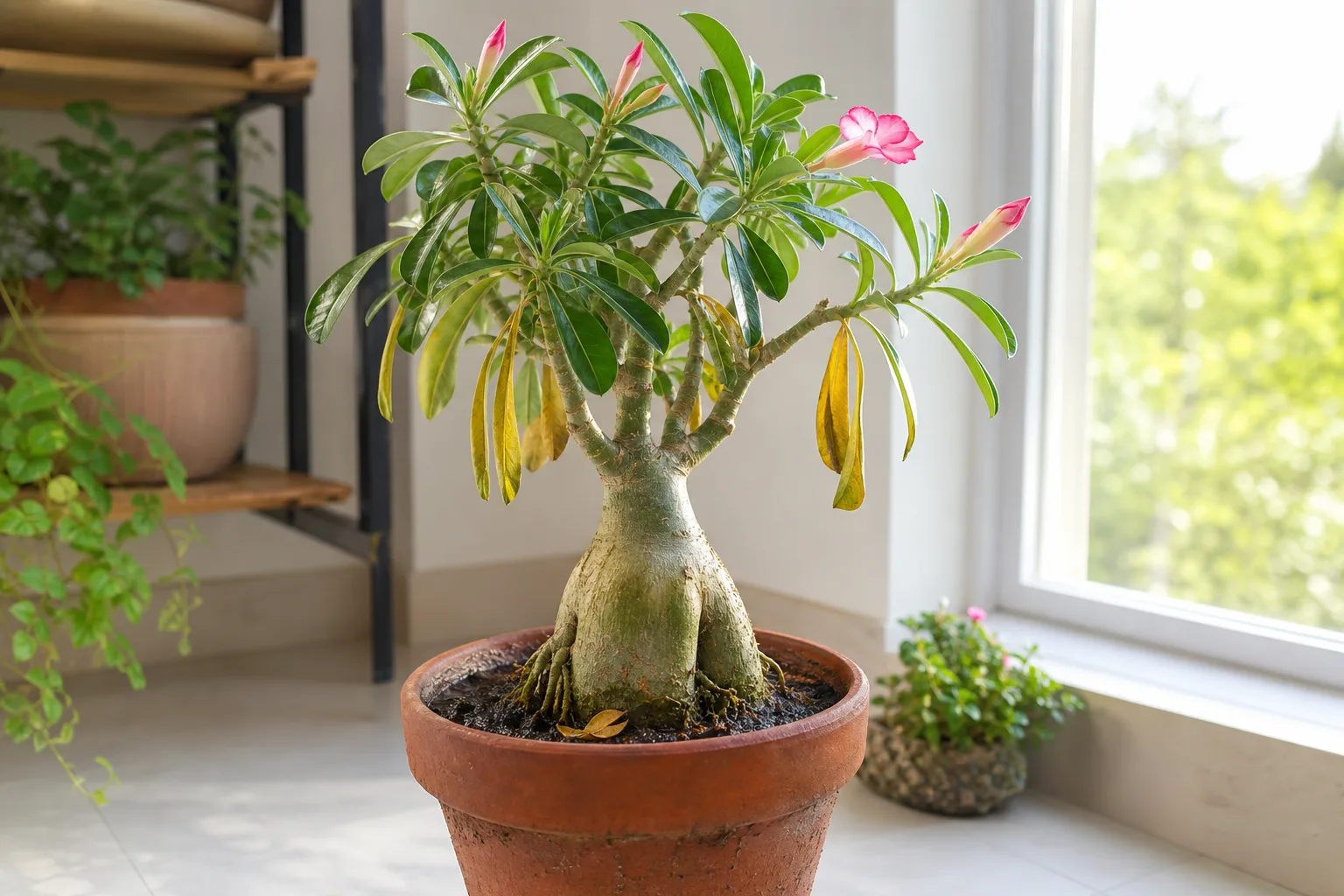
Overwatering on Adenium: Causes, Checks & Fixes
This guide covers overwatering on Adenium. See also the general Overwatering guide, watering, and light pages for this plant.
Overwatering on Adenium: Causes, Checks & Fixes
Quick answer
On Adenium obesum (Adenium overview), wet soil plus a soft caudex during warm active growth is the signature overwatering pattern-not a call for more water. The swollen caudex stores moisture like a reservoir; constant wetness suffocates fine roots and rot can climb into the base before leaves tell the full story.
First step: stop watering and press the caudex with clean fingers. If the mix is wet at depth and the base feels spongy, hold all water until you have confirmed the diagnosis.
| What you feel | What it usually means | Read next |
|---|---|---|
| Wet mix + soft caudex + yellow limp leaves | Overwatering (roots struggling) | Stay on this page; use recovery steps below |
| Dry mix + firm caudex + slight wrinkling | Underwatering | Watering guide-not a repot emergency |
| Dry mix + firm caudex + leaf drop in cool months | Winter dormancy | Watering guide-withhold water |
| Wet mix + blackening stem base | Advanced root rot or crown rot | Escalate to rot guides immediately |
Wilting with heavy wet soil is not thirst-it is damaged roots failing to move water upward. For baseline culture that keeps dry-down cycles predictable, see the Adenium overview, watering guide, and soil guide.
What overwatering looks like on Adenium
Overwatering on Desert Rose shows up in the root zone and caudex before the foliage tells the full story. Early signs include soil that stays damp several days after watering, lower leaves turning yellow and dropping, and stems that feel limp even though the mix is wet. As damage progresses, the caudex-the thick water-storage trunk-softens at the base. You may notice a sour smell from the pot, white mold on the soil surface, or fungus gnats hovering near wet mix.
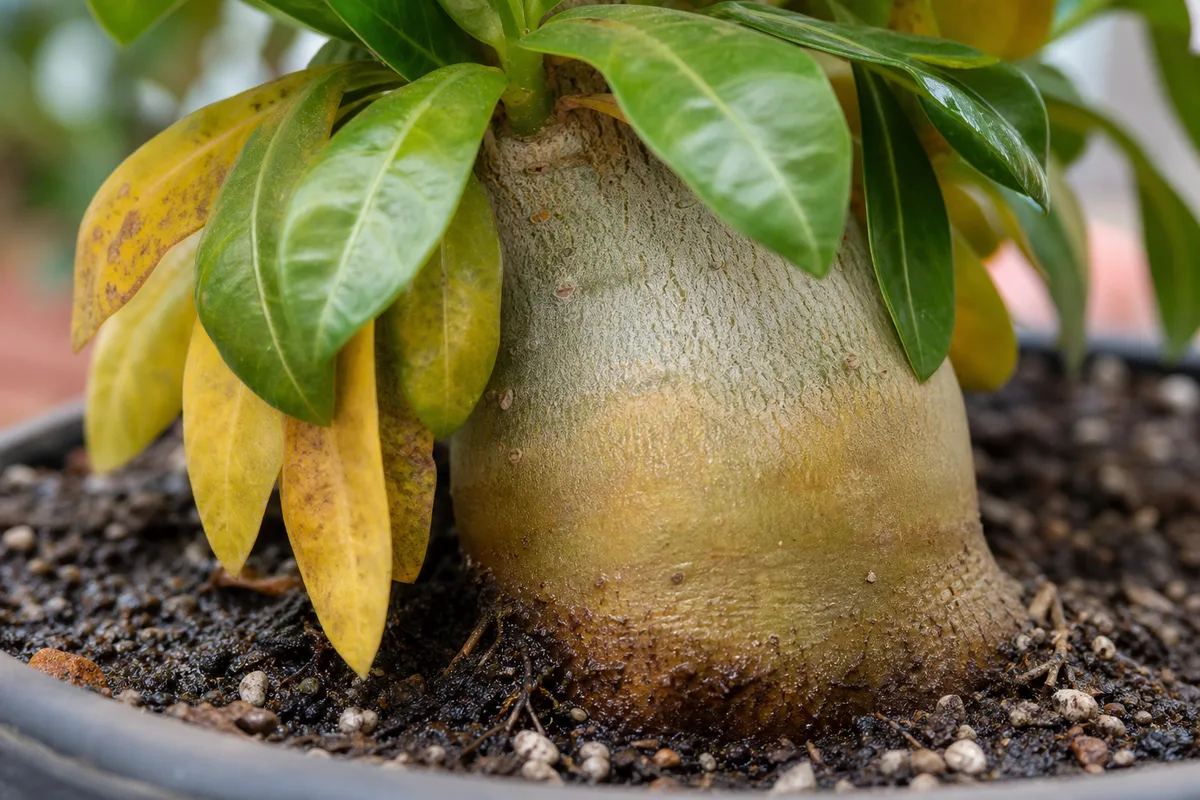
Damp gritty soil at the pot rim, slight sponginess where the swollen caudex meets wet mix, and yellowing limp lower leaves - the wet soil plus soft caudex pattern during active growth.
During active summer growth, a healthy Adenium caudex feels firm like a ripe apple. An overwatered one feels spongy or gives slightly when pressed. Leaf drop alone is not enough to diagnose the problem; Adenium naturally sheds foliage in winter dormancy. The combination of wet soil plus soft caudex during warm months is the classic overwatering pattern.
What to check without photos (text verification)
You can confirm much of this diagnosis by touch and smell when you cannot compare pictures:
- Caudex press test - firm tissue resists pressure evenly; overwatered tissue dents or feels hollow
- Depth moisture - surface dryness can hide wet roots 5–7 cm below; a heavy, cool pot usually means wet mix throughout
- Stem base color - darkening at the soil line on wet mix suggests rot moving up; see drooping leaves when limp foliage is the first clue
- Pot weight - note wet versus dry weight once (for example, a 25 cm nursery pot might read ~2.1 kg freshly watered versus ~1.4 kg fully dry); sudden heaviness days after you thought you watered lightly is a red flag
Why Adenium gets overwatering
Adenium obesum evolved in semi-arid Africa and the Arabian Peninsula as a drought-adapted succulent tree. Its caudex is a living water tank. Brief dry spells are safer than repeated soaking.
Several care habits push Desert Rose into wet soil:
Calendar watering. Watering every Sunday regardless of season ignores how fast the mix dries. Cool rooms, short winter days, and dormant plants use far less water than summer specimens in full sun.
Heavy or water-retentive mix. Standard peat-heavy potting soil holds moisture too long for a caudex plant. Without perlite, pumice, or coarse sand, water sits around fine roots even when the surface looks dry-see wrong soil mix when drainage is the root cause.
Dormancy mismatch. When temperatures drop below about 55°F (13°C), Adenium enters a rest period-leaves drop and growth pauses. Continuing regular watering while the plant is dormant is one of the most common ways rot starts. UF/IFAS guidance for overwintering is to withhold water for several months during the cool season.
Warm-indoor dormancy exception. If your plant stays above ~70°F (21°C) in a bright south window, it may not go fully dormant and the caudex can shrivel slightly on bone-dry mix. Desert Botanical Garden guidance notes young specimens in warm sunny storage may take light monthly water only when shriveling appears-never when the base is soft or soil stays wet. A firm caudex with fully dry gritty mix is the gate for any winter sip.
Poor drainage setup. Pots without holes, saucers left full after watering, or decorative cache pots that trap runoff keep roots saturated. An oversized pot with a small root mass also stays wet longer than the plant can use-see no drainage hole and poor drainage.
Weak light slowing dry-down. Adenium needs bright direct sun-six hours or more daily for strong flowering. In dim corners, soil dries slowly and roots remain wet even with modest watering.
How to confirm the cause
Work through these checks in order before changing anything else:
- Caudex firmness - Press the base gently with clean fingers. Firm and solid suggests the core is intact. Soft, mushy, or collapsing tissue means rot may already be inside.
- Soil moisture at depth - Surface dryness can hide wet roots below. Push a finger 5–7 cm down or lift the pot; a heavy, cool pot usually means wet mix.
- Season and temperature - Is the plant in winter dormancy with few leaves? Wet soil during rest is high risk. Active growth in warm sun changes how fast the plant uses water.
- Drainage and mix - Does water run freely from the bottom? Does the mix contain enough grit? Peat-only soil in a sealed pot strongly favors overwatering.
- Leaves and stems - Yellowing from the bottom up, blackening stem bases, and wilting with damp soil support overwatering. Crisp brown edges on a firm caudex with dry soil point elsewhere.
If the caudex is firm, the pot is light, and soil is dry throughout, underwatering or sun stress is more likely. Do not water until you know which direction the problem runs.
Symptom lookalike comparison table
| Symptom pattern | Overwatering | Underwatering | Dormancy | Root / crown rot |
|---|---|---|---|---|
| Soil at 5–7 cm depth | Wet for days | Bone dry | Usually dry | Often wet |
| Caudex feel | Soft, spongy | Firm, may wrinkle | Firm | Soft, may collapse |
| Leaf color / drop | Yellow, limp; wet soil | Crisp edges; dry soil | Seasonal drop; cool temps | Rapid yellow/black; stem base dark |
| Wilting | Yes, with wet mix | Yes, with dry mix | Minimal if firm caudex | Yes, worsening |
| First action | Stop water; inspect if soft | Deep soak when dry | Withhold water | Unpot; trim rot |
The first fix to try
Stop watering. Do not give another drink until you have checked soil at depth and assessed caudex firmness. This single pause prevents rot from spreading and gives you a clear baseline.
Move the pot to a bright spot so remaining moisture evaporates faster, but acclimate gradually if it has been in dim light-sudden harsh afternoon sun on stressed leaves can scorch. Do not stack Adenium repotting guide, pruning, fertilizer, or pesticides on the same day. One correction at a time makes it obvious what helped.
If the caudex is still firm after the mix dries completely, you likely caught the problem early. Resume watering per the Adenium watering guide-only when the soil is dry 5–7 cm down, then water deeply and empty the saucer within 30 minutes.
Step-by-step recovery when the caudex is soft
A soft caudex means waterlogged roots may already be dying. Escalate carefully:
- Unpot and inspect - Gently remove the plant and brush away mix. Healthy roots are firm and white or tan. Mushy brown or black roots are rot.
- Trim only rotten tissue - With a sterile knife, cut away soft caudex flesh and dead roots until you reach firm material. Wear gloves; Adenium sap is toxic. If a pet chews tissue or sap during cleanup, contact ASPCA Animal Poison Control (888-426-4435) or your veterinarian.
- Air-dry - Let the plant sit in shade with good airflow for two to three days so cuts callous.
- Repot in gritty mix - Use fast-draining succulent soil with perlite or pumice in a pot with drainage holes. Do not water for five to seven days after repotting.
- Resume sparingly - When you do water, soak thoroughly, then wait until the mix dries throughout before the next drink.
After trim: fungicide or not?
Physical removal of mushy tissue is the real treatment-fungicides do not cure established rot inside a caudex. Texas A&M Plant Disease Handbook notes copper fungicide may help protect fresh cut surfaces on succulents after wounding, but it is not a substitute for drying and gritty repot culture. Hydrogen peroxide drenches lack strong extension support for Adenium recovery and can stress already damaged roots-skip them unless a product label explicitly matches your situation.
Optional: after cuts callous, a thin copper fungicide dab on exposed hard tissue per label directions may reduce reinfection risk. Prioritize dry-down, airflow, and withholding water over chemical drenches.
If more than half the caudex is mushy with no firm tissue left, saving the plant is unlikely. Take a firm cutting above the rot line only if green stem tissue remains. When stems blacken from the soil line up, see the dedicated root rot and crown rot guides for surgical depth.
Recovery timeline and what to watch
Minor overwatering caught while the caudex is still firm often stabilizes within one to two weeks once watering stops and the mix dries. Yellow leaves may not green up again, but new tip growth in warm weather confirms recovery.
Moderate cases with some root loss take several weeks. Expect old leaves to continue dropping while the plant rebuilds roots. Do not fertilize until new growth looks normal-feeding stressed roots worsens salt buildup.
Severe caudex rot can take a full growing season to know whether the plant survived, and cosmetic scarring on the base is permanent. Improvement signs include a firming caudex, new leaves at branch tips, and soil that dries at a predictable pace between waterings. Worsening signs-spreading black tissue, a caudex that softens further, or collapse of the stem-mean rot is advancing and more aggressive trimming or disposal may be necessary.
Mistakes to avoid
Do not water because leaves look sad without checking soil first-wilting with wet mix is a classic overwatering trap and overlaps with drooping leaves from root damage. Do not mist leaves or run a humidifier to “help” a Desert Rose; excess ambient moisture slows soil drying and encourages fungus gnats.
Avoid repotting into a much larger container to “fix” watering. Extra soil holds more water and stays wet longer. Do not use standard indoor potting mix without adding coarse mineral grit.
Do not fertilize a stressed or rotting plant hoping to push new growth. Salts stress damaged roots further. During dormancy, withhold both water and feed regardless of how bare the branches look.
How to prevent overwatering next time
Match watering to the season. In warm active growth with strong sun, water deeply when the mix is dry 5–7 cm down-often every five to seven days in summer, less in cooler shoulder seasons. During winter rest below about 55°F (13°C), reduce to occasional sips or no water at all for weeks, depending on temperature and caudex firmness-details in the watering guide.
Use a gritty, sharply draining mix and a pot only slightly larger than the root mass. Always empty saucers after watering. Keep Adenium in full sun indoors or outdoors so the mix cycles between wet and dry quickly.
Learn your pot’s dry-down rhythm during the first month after purchase. Weigh the pot when freshly watered versus dry, or note how many days pass before the soil is dry at depth. That personal baseline beats any generic schedule.
Inspect the caudex weekly during the growing season. Firm tissue and new buds mean your watering rhythm is working. Softening at the base is an early alarm-cut water before rot spreads.
When to worry
Treat overwatering as urgent if the caudex softens, stem bases turn black, or the plant wilts while soil is wet during active growth. Those signs mean rot may be moving into the water-storage organ-open the root rot guide the same day.
Slow yellowing on a firm caudex with soil drying normally can wait for a schedule adjustment. But wet soil plus a soft base should not wait through another watering cycle-act immediately.
If you are unsure whether tissue is firm or mushy, unpot and look at the roots. A five-minute inspection prevents weeks of guessing and can save the plant when rot is still localized. For chronic rot after two trim cycles, contact your local cooperative extension office with photos before escalating to stronger fungicides.
When to use this page vs other Adenium guides
- Adenium watering guide - Use for routine moisture checks before assuming overwatering is the main issue.
- Adenium problems hub - Browse all 40 common issues on this species.
- Root Rot on Adenium - Different entry point when symptoms overlap with overwatering.
- Yellow Leaves on Adenium - Different entry point when symptoms overlap with overwatering.
- Wilting on Adenium - Different entry point when symptoms overlap with overwatering.