Crown Rot on Adenium: Causes, Checks & Fixes
Quick answer
Crown rot on Adenium starts when wet soil during cool or dormant weather rots the swollen caudex at the soil line, often spreading upward from roots. First step: stop all watering and gently press the caudex-if any tissue feels mushy, unpot immediately and inspect the base before the rot reaches healthy stems.
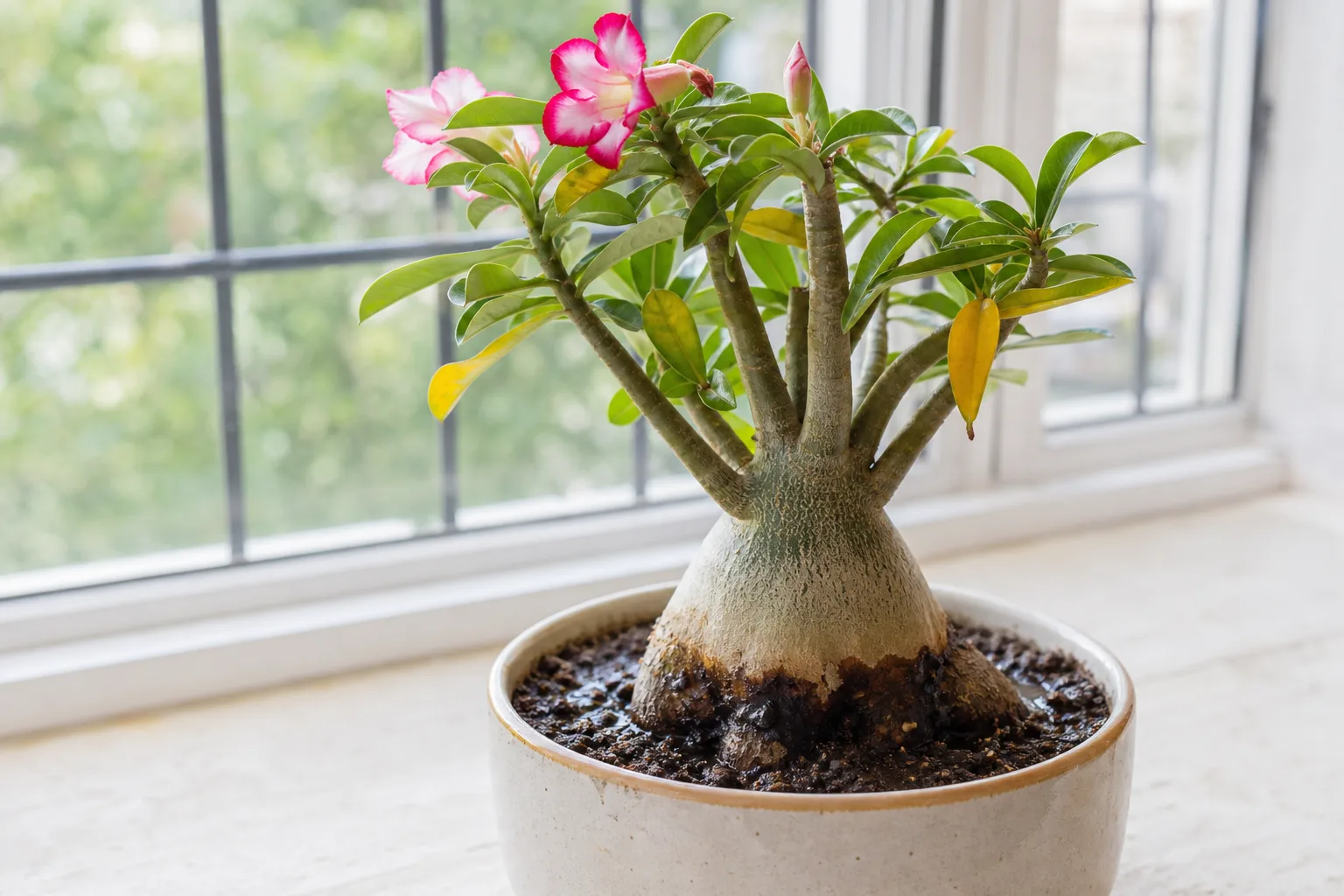
Crown Rot on Adenium: Causes, Checks & Fixes
This guide covers crown rot on Adenium. See also the general Crown Rot guide, watering, and light pages for this plant.
Crown Rot on Adenium: Causes, Checks & Fixes
Quick answer
Crown rot on Adenium (Adenium obesum, Adenium overview) is decay at the swollen caudex where stems meet the soil-the plant’s water-storage crown. It usually follows wet soil during cool weather or winter dormancy, when roots absorb little water and the mix stays damp for days. Above-ground signs include a spongy base, stems blackening at the soil line, yellow leaves on wet mix, and a sour smell when you lift the pot.
First step: stop watering. Do not give another drink to “help” a wilting Desert Rose. Gently press the caudex with dry fingers. If any section feels mushy, unpot the plant and inspect the base the same day. Recovery means cutting back to firm tissue, air-drying the wounds, and repotting into gritty mix-not waiting for leaves to green up on their own.
Caudex photo check (illustrative): Healthy desert rose caudex tissue feels firm like a smooth gourd; crown rot shows as a dented or spongy zone at the soil line with dark, wet bark. Original before/after diagnosis photos are pending for a future update-use the squeeze test and soil-moisture checks below until then.
Crown rot vs. root rot on Desert Rose
Searchers often land on different pages, but on Adenium the damage is usually the same story told from two angles. Root rot describes mushy roots below the soil; crown rot describes decay climbing into the caudex at the soil line. Because the caudex is the crown on desert rose-not a separate collar above roots-the two terms overlap heavily on this species.
| If you searched for… | What you are usually seeing | Where to read next |
|---|---|---|
| Soft caudex, black soil line, sour pot smell | Crown decay at the base | You are in the right place-confirm with the squeeze test below |
| Mushy roots after unpotting, wilt on wet mix | Root breakdown that may already reach the caudex | Root rot on Adenium - same surgery path, more root-focused triage |
| Leaf drop, firm caudex, dry cool soil | Normal winter dormancy | Adenium watering guide - withhold water unless the caudex clearly deflates |
Treatment is the same when tissue is soft: stop watering, trim to firm flesh, callus dry, repot into fast-draining mix. The distinction matters so you do not confuse dormancy leaf loss with rot-and so you do not bounce between two guides that repeat the same steps. Start here when the base feels spongy; start on root rot when you have already unpot and need a root-by-root inspection workflow.
What crown rot looks like on Adenium
On Desert Rose, the crown is the caudex itself-not a separate stem collar like on a fern or African violet. Healthy caudex tissue is firm, like a smooth gourd. When rot sets in, that firmness fails at the soil line first.
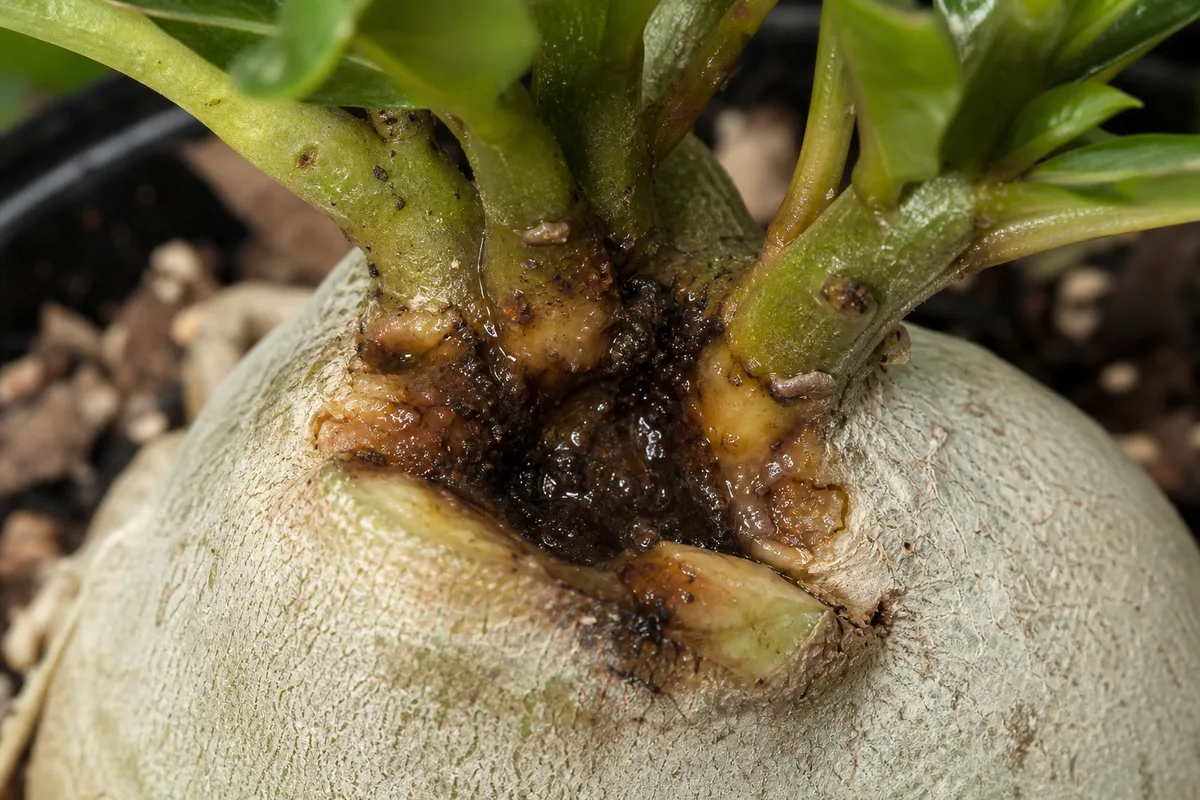
Crown Rot symptoms on Adenium - compare with healthy tissue on the same plant.
Watch for these Adenium-specific patterns:
- Soft or collapsing base. The lower caudex gives when pressed, sometimes only on one side. A thirsty plant wrinkles while staying firm; rot feels wet and squishy, like bruised fruit.
- Darkening at the soil line. Brown or black patches appear where the caudex disappears into the mix, then creep upward into lower stems.
- Stem base blackening. Branches look fine higher up but darken and soften where they attach to the caudex.
- Leaves yellowing on wet soil. Foliage may droop or drop even though the pot feels heavy and damp-root damage from overwatering means roots can no longer move water, so the plant shows drought stress while standing in moisture.
- Pot odor or fungus gnats. A sour smell from the drainage holes, surface mold, or persistent gnats often means the root zone has been wet too long.
During normal winter rest, Adenium drops leaves and rests with a firm caudex. Seasonal leaf loss on dry soil is not crown rot. The red flag is soft tissue plus moisture.
Lifted-caudex display pots: Growers who raise the caudex above the soil line for bonsai-style shaping expose more bark to air-which can help you spot early softness on the lower flank. It does not remove rot risk if the buried portion or saucer still holds water; check both the visible belly and the soil-contact zone weekly during cool months.
Why Adenium gets crown rot
Adenium evolved for arid Sub-Saharan African climates. Its caudex is a succulent stem built to store water through dry seasons. That same structure rots quickly when soil stays wet and roots stop actively drinking.
Water molds in wet caudex tissue
At home you rarely identify the exact organism, but Pythium and Phytophthora-often called water molds-commonly attack roots and crowns in saturated, poorly aerated mix. They turn firm storage tissue soft and dark. The practical response is the same regardless of label: remove all mushy flesh, discard contaminated soil, and stop recreating wet, cool conditions-not spraying while decay remains.
Dormancy watering is the usual trigger
In cool months, Adenium slows growth and sheds foliage as part of its natural cycle. UF/IFAS guidance for overwintering is to withhold water and let the plant rest for several months while temperatures are cold. Roots take up little moisture during this rest. Watering on a summer schedule leaves unabsorbed water around the caudex-the classic setup for crown rot indoors.
Growers often mistake leaf drop for thirst and water a dormant Desert Rose. That kindness is how crown rot starts. Match seasonal rhythm to the Adenium watering guide rather than a calendar reminder.
Poor drainage keeps the crown wet
Heavy peat potting mix, pots without drainage holes, and saucers that hold standing water all slow drying at the base. Adenium needs loose, sandy or gravelly, well-drained soil, and overwatering leads to root rot. On this species, rot at the roots and rot at the caudex are the same problem viewed from different angles-decay climbing into the stored-water crown.
Cool room temperatures below about 55°F (13°C) add risk. Chill slows drying and metabolism, so wet soil lingers longer around the base. Arizona Extension notes root rot is a danger when adeniums sit in cold, wet soil-especially if watered during dormancy or too early in spring.
Indoor humidity on a cold windowsill
A cool draft plus a heavy pot that dries slowly can keep the soil line damp for days even when you watered sparingly. Evaporation drops as temperatures fall; the caudex base stays wet longest. That combination mimics overwatering without you adding extra drinks-still a crown-rot setup if the squeeze test finds softness.
How to confirm the cause
Work through these checks in order before you cut or repot. You are confirming wet-soil decay at the caudex, not jumping to every Adenium problem at once.
The caudex squeeze test
With dry hands, press the caudex at the bottom, sides, and where stems emerge. Firm everywhere with dry soil deep in the pot points to dormancy or underwatering on Adenium, not crown rot. Any mushy zone with wet or cool-damp soil is highly suspicious.
What to inspect before you cut
- Soil moisture 5–7 cm deep. Stick a finger or dry skewer deep into the mix. Wet or cold-damp soil plus soft caudex strongly supports crown rot.
- Pot weight and drainage. A heavy pot days after watering, water in the saucer, or a sealed decorative pot liner traps moisture at the crown.
- Season and temperature. Cool months plus continued watering is the most common indoor pattern.
- Stem attachment points. Black, soft tissue where branches meet the caudex means decay has already moved above the soil line.
- Root smell and color (after unpotting). Brown-black, slimy roots with a rotten odor confirm fungal or bacterial breakdown. White or tan firm roots with a dry, wrinkled caudex suggest a different problem.
If the caudex is firm and soil is dry, hold off on surgery. A wrinkled but hard caudex on dry mix may only need a careful soak during active growth-not crown-rot treatment.
Crown rot vs. dormancy vs. root-focused rot
| Signal | Crown rot | Root rot (search entry) | Normal dormancy |
|---|---|---|---|
| Caudex feel | Mushy or dented at soil line | Often soft base after roots fail | Firm; may wrinkle slightly on dry soil |
| Soil | Wet or cold-damp 5–7 cm down | Usually wet; sour smell common | Dry through upper mix |
| Leaves | Yellow/droop on wet mix | Same wilt-on-wet pattern | Drop with little or no water for weeks |
| First move | Stop water; trim caudex same day | Stop water; unpot for root inspection | Withhold water; read watering guide |
The first fix to try
Stop watering immediately. Move the pot to a warm, bright spot and do not water again until you have inspected the caudex. This single step prevents fresh moisture from feeding decay while you decide whether surgery is needed.
If the caudex feels spongy, proceed to unpot and trim the same day. Crown rot in water-rich caudex tissue does not wait for a convenient weekend.
Step-by-step recovery
Once you confirm soft tissue, treat in sequence rather than all at once:
- Unpot and brush away old soil. Work gently so fragile rotted skin does not tear into healthy tissue.
- Trim all decay. With a sharp, sterilized knife or pruners, cut away every soft, brown, or black section of caudex and roots until you reach firm, clean flesh. It is normal to remove more than you expect on Adenium; partial cleanup leaves infection behind.
- Let cuts dry. Place the plant in bright shade with good airflow for two to three days so wounds callus. Do not water during this dry period.
- Optional wound protectant. After callus forms, some growers dust cuts with cinnamon or brush a thin layer of copper fungicide labeled for ornamentals onto exposed flesh-optional insurance, not a replacement for removing mush. UC IPM notes copper products can help protect aerial surfaces from Phytophthora; they do not revive tissue already destroyed.
- Repot into dry, gritty mix. Use a fast-draining succulent blend with plenty of perlite, pumice, or coarse sand-see the Adenium repotting guide for mix ratios. Choose a pot only slightly larger than the trimmed root mass, with open drainage holes. Discard old mix and wash the pot if you reuse it; do not recycle sour soil.
- Wait before watering. Hold the first drink until you see new growth or at least a week of stable firm tissue in warm weather. The first watering should be moderate, with the saucer emptied immediately.
Wear gloves and eye protection when cutting-Desert Rose sap is toxic to people and pets and irritates skin. Sterilize tools between cuts. Pet ingestion: If a dog or cat chews trimmed tissue, leaves, or sap, contact your veterinarian or ASPCA Poison Control at (888) 426-4435 immediately-cardiac glycosides in Adenium can cause vomiting, irregular heartbeat, and worse.
Lookalike symptoms
Several Adenium problems mimic crown rot from a distance. The caudex feel and soil moisture separate them.
| What you see | Likely cause | Key difference |
|---|---|---|
| Wrinkled but firm caudex, dry soil | Underwatering in active growth | Tissue stays hard; water carefully after confirming dryness |
| Leaf drop, firm caudex, cool season | Normal dormancy | No mushy base; withhold water unless caudex clearly deflates on dry mix |
| Black leaf spots, firm caudex | Fungal leaf spot / anthracnose | Damage on foliage, not spongy crown tissue |
| Wilt after repotting, firm caudex | Repotting stress | Temporary; roots disturbed but not decaying |
| Soft caudex, wet soil, sour roots | Crown rot | Mushy crown tissue; needs surgical trim |
Wilting with a firm caudex and dry soil is not crown rot. Wilting with a soft caudex and wet soil is.
Recovery timeline and what to expect
Damaged caudex bark does not heal cosmetically. A trimmed base may look scarred for years. Recovery means the tissue stops softening and the plant produces new roots and leaves.
- Days 1–7 after surgery: Wounds should dry and firm up. No watering yet. Any return of softness means more tissue must come off.
- Weeks 2–6: In warm, bright conditions, small leaf buds or root hairs may appear. First water only when you see active growth or confirmed firmness throughout.
- Months 2–4: New branches and caudex swelling signal long-term survival. Slow progress in cool weather is normal.
Annotated recovery snapshot (illustrative)
A dormant indoor desert rose watered weekly in a 60°F room developed softness on one caudex flank while soil stayed damp 5–7 cm down. After unpotting, roughly 40% of the lower caudex was trimmed to firm white-green flesh, callused three days in bright shade, then repotted dry into 50% mineral grit mix. At 72°F under a south window, the first tiny leaf bud appeared around week three; the caudex regained full firmness by week six. Original before/after photos pending for a future update-use firmness and new growth, not old scarred bark, as your progress markers.
If softness spreads after trimming, or the entire caudex collapses, move to propagation backup below.
When to propagate instead
When the base is mostly gone but upper stems stay firm, stem cuttings are the practical salvage path-not more watering. Take cuttings only from hard, green tissue; let cuts callus several days; root in dry gritty mix per the Adenium propagation guide. A saved caudex with no stems may still resprout if enough firm crown remains-cuttings are insurance when branches are healthy but the trunk base is hollow.
Mistakes to avoid
- Watering a soft caudex. Extra moisture accelerates rot. This is the most common fatal error.
- Leaving decay in place. “Wait and see” lets infection move into stems. Cut to firm tissue even when it feels drastic.
- Repotting into regular potting mix. Peat-heavy soil rewets the crown. Use mineral-rich, fast-draining mix.
- Reusing sour soil or an unwashed pot. Spores and bacteria linger in old mix and on pot walls.
- Feeding or foliar spraying during recovery. Fertilizer and pesticides stress a plant with no functioning root system. Stabilize first.
- Stacking fixes the same day. Do not combine surgery, repotting, pruning upper branches, and fungicide in one session. Stop the rot, dry, repot, then observe.
- Ignoring winter rest. Scheduled weekly watering through dormancy is how many indoor Desert Roses die at the crown.
How to prevent crown rot next time
During warm active growth with six or more hours of direct sun, water deeply only after the mix dries through the top 5–7 cm-details in the Adenium watering guide. During cool dormancy, withhold water for weeks at a time unless the caudex clearly deflates on already-dry soil.
Keep drainage aggressive: gritty mix, open holes, empty saucers. Give Adenium light guide or very strong light so the pot dries quickly. Avoid cold drafts and temperatures below 55°F while soil is damp.
Inspect the caudex weekly during the growing season and monthly in dormancy. A quick squeeze at the base catches crown rot when trimming still saves the plant.
When the plant may not be saveable
Use this checklist before you write off the plant or pivot to cuttings:
- Entire caudex is mushy with no firm zone remaining
- Stems detach from a hollow or weeping base
- Softness returns after two thorough trim-and-callus cycles
- Only upper branches remain firm-propagation is the salvage path
If any upper stem is still hard and green, take cuttings before discarding the pot. If the whole base is lost, compost responsibly and start fresh with sharper drainage discipline next time.
When to use this page vs other Adenium guides
- Adenium watering guide - Use for routine moisture checks before assuming crown rot is the main issue.
- Adenium problems hub - Browse all 40 common issues on this species.
Related Adenium guides
- Adenium overview
- Adenium watering
- Adenium light
- Adenium soil
- Adenium problems
- Ants on Plant on Adenium
- Aphids on Adenium
- Black Spots on Adenium
Related tool
Use the Plant Problem Diagnosis Tool to narrow causes for crown rot on this plant before changing multiple variables at once.