No Drainage Hole on Adenium: Causes, Checks & Fixes
Quick answer
A pot with no drainage hole traps water at the bottom and rots Adenium roots and caudex even when you water lightly. First step: move the plant into a container with open drain holes and fast-draining succulent mix-do not wait for more yellow leaves.
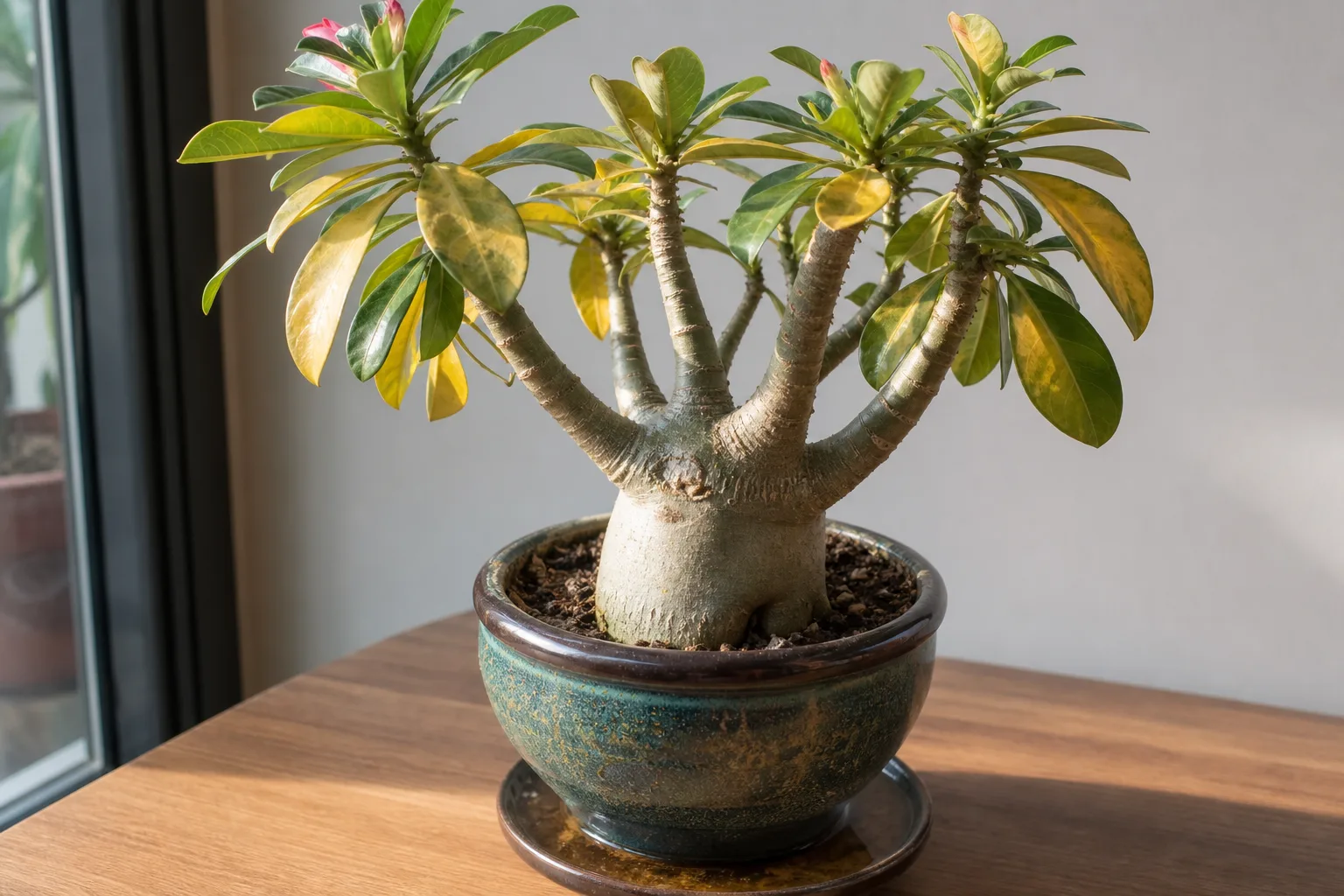
No Drainage Hole on Adenium: Causes, Checks & Fixes
This guide covers no drainage hole on Adenium. See also the general No Drainage Hole guide, watering, and light pages for this plant.
No Drainage Hole on Adenium: Causes, Checks & Fixes
Quick answer
You bought a sculptural glazed bowl with a perfect Adenium overview caudex-and no holes in the bottom. Two months later the trunk softens at the soil line while you swear you only watered lightly. Sealed containers trap water at the bottom and rot Adenium roots even when the surface looks dry.
First step: move the plant into a container with open drain holes and fast-draining succulent mix-do not wait for more yellow leaves. For mix ratios, see the Adenium soil guide. If the caudex is already spongy, pair Adenium repotting guide with the root rot workflow.
Adenium obesum needs a loose, sandy or gravelly, well-drained mix in full sun. A sealed ceramic bowl turns careful watering into chronic root suffocation-especially when overwatering can lead to root rot.
By sai-ananth · Reviewed by LeafyPixels Review Board · Last expert review: June 2026
What a sealed pot does to Adenium
Unlike moisture-loving tropicals, Adenium obesum cannot tolerate a wet root zone. When water has nowhere to exit:
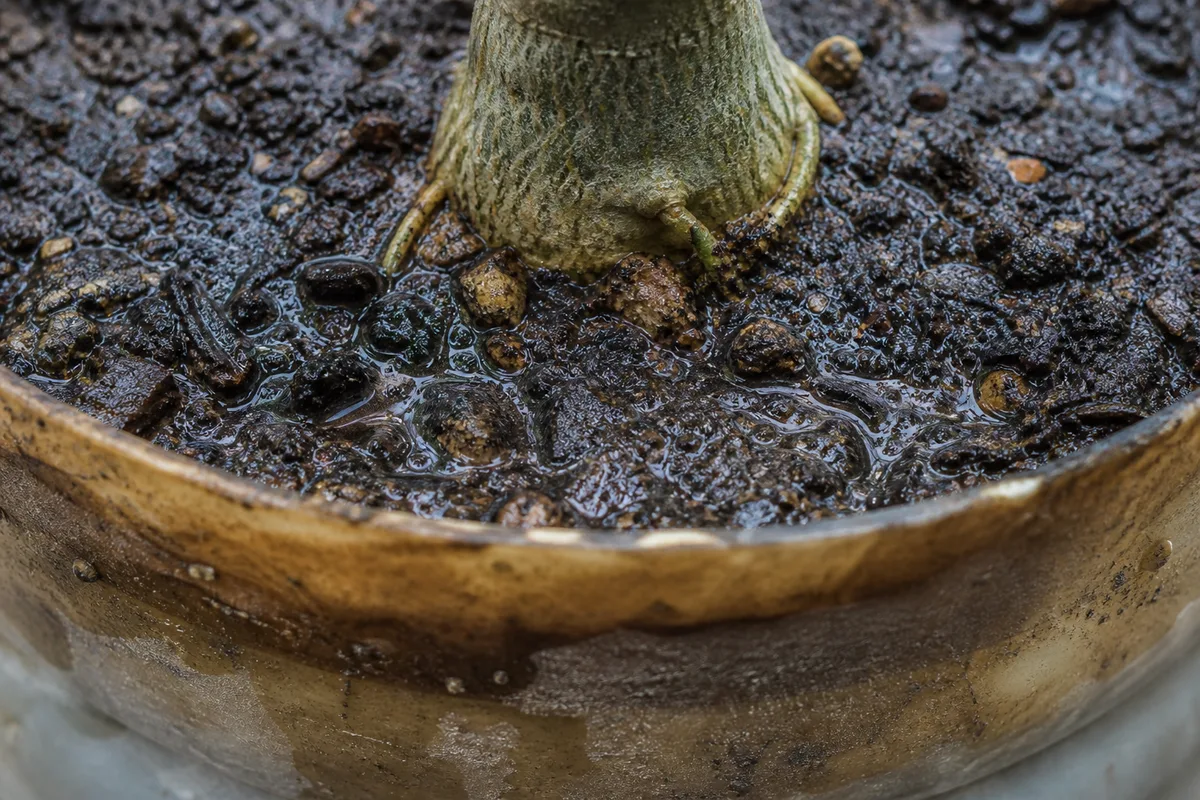
Waterlogged soil in a sealed decorative pot at the Adenium caudex base - trapped moisture without runoff.
- The caudex softens at the soil line while the upper trunk still looks normal.
- Leaves yellow and drop even though you reduced watering-deep soil stays saturated.
- The pot feels heavy for days after a single drink.
- Surface mold or fungus gnats appear because the mix never dries.
- Wilting happens while soil is wet-rotten roots cannot move water upward.
These signs mirror overwatering, but the trigger is often the container, not your calendar. A well-drained pot has at least one large drainage hole; sealed display pots violate that basic requirement.
Why Adenium is especially vulnerable
Caudex physiology - The trunk stores months of moisture. Roots need oxygen between drinks. Standing water at the pot bottom creates anaerobic conditions where rot fungi thrive-root rot fungi grow best in wet soils.
Winter dormancy - Cool rest with wet sealed soil is lethal. Adenium sheds leaves and barely drinks; water trapped in a bowl pot cannot evaporate fast enough. Water stagnation in saucers worsens caudex rot when temperatures drop-hold water sharply through dormancy per the watering guide.
Display and gift-pot culture - Desert Rose is sold in attractive glazed pots for gift tables. Those pots often lack holes. Treating it like a fern in a sealed planter ignores that Adenium needs sharp drainage and soils that dry between waterings.
Cache-pot habit - A nursery pot inside a decorative shell works only if you remove and drain after every watering. Pot coverings can hold water even when the inner pot has holes-check outer shells for standing pools.
How to confirm the problem
Run a five-minute pot audit before changing anything else:
- Hole check - Flip the pot. No holes, one clogged hole, or foil-wrapped bases all fail.
- Pour test - Water until runoff appears. If none exits in two minutes, drainage is blocked or absent.
- Cache-pot check - Lift the inner pot. Water sitting in the outer shell means roots breathe wet air continuously.
- Caudex press - Firm trunk is good. Spongy base with wet soil confirms trapped moisture damage.
- Depth probe - Surface may look dry while the bottom third is mud-common in tall sealed bowls.
If the caudex is firm, the pot drains freely, and saucers are emptied, look elsewhere (underwatering on Adenium, dormancy, pests). If the pot fails the pour test, container setup is the diagnosis.
First fix: repot into a draining container
Move Adenium into a pot with multiple open drainage holes and gritty succulent mix-this is the single first action, not a bundle of pruning, feeding, and spraying.
Steps:
- Choose a pot only slightly wider than the caudex-not a huge bowl that holds excess wet mix.
- Use cactus-style mix with perlite, pumice, or coarse sand per the soil guide; avoid peat-heavy bagged soil alone.
- Terracotta or unglazed clay helps edge moisture escape; glazed pots need more holes, not fewer.
- Set the caudex slightly above the new soil line-never bury the swollen base deeper than before.
- Do not water for three to five days after repot unless the caudex is firm and the season is warm active growth-see repotting stress for recovery expectations.
- Resume soak-and-dry watering only when the mix is dry several centimeters down.
If you love the decorative pot, keep it as a dry cache-lift the draining nursery pot out to water, let runoff finish, then return.
If rot has already started
When the caudex is soft, repotting into a draining pot is still urgent-but add rot surgery:
- Stop all watering and work in a ventilated area. Wear gloves-Adenium is toxic to cats and dogs.
- Unpot and rinse away old saturated mix.
- Cut away black, mushy roots and soft caudex tissue with a clean sharp knife; sterilize between cuts.
- Air-dry the plant one to two days until cut surfaces callus.
- Repot in dry gritty mix in a draining pot. Wait seven to ten days before the first light water.
If the stem base blackens, see crown rot. Trimmed caudex tissue does not swell back-judge success by firm remaining base and new tip growth.
Recovery timeline
| Stage | What to expect |
|---|---|
| Days 1–5 | No watering; caudex should stop softening if drainage fix worked. |
| Weeks 1–2 | Firm base, possible leaf drop as plant stabilizes. |
| Weeks 2–4 | New leaf tips in warm sun signal root recovery. |
| Month 2+ | Normal soak-and-dry rhythm; flowering returns only after sustained healthy growth. |
Worsening black stems, spreading softness, or foul odor mean rot advanced-salvage may require cutting the plant above healthy tissue and rerooting a cutting.
Lookalikes to rule out
Underwatering - Firm caudex, light pot, dry mix throughout. Fix watering, not holes.
Normal dormancy - Firm caudex, cool season, leaf drop with dry soil. Reduce water; do not repot into a sealed pot “for protection.”
Poor mix without sealed pot - Holes exist but peat-heavy soil still stays wet. Repot into grit; holes alone are not enough.
Overwatering in a draining pot - Saucer never emptied or watered on a schedule ignoring dry-down. Empty runoff; sealed-pot symptoms disappear once water can exit.
Mistakes to avoid
- Keeping the gift pot forever because it matches the décor.
- Watering into a sealed cache pot without lifting the inner container.
- One tiny drilled hole in a large glazed bowl-insufficient for a woody caudex plant.
- Adding rocks at the bottom instead of real holes-do not put stones in the bottom of the pot; they reduce root space without fixing drainage.
- Stacking fixes - pruning, fertilizer, and fungicide on the same day as emergency repot. Fix drainage first; watch the caudex one week.
- Continuing summer water volume in a sealed pot through winter dormancy.
How to prevent sealed-pot problems
- Buy or repot into draining containers before rot starts-spring repot is ideal as new growth begins.
- Empty saucers within 30 minutes; discard water beneath the pot after bottom watering.
- Inspect drain holes each season-roots can block exits on pot-bound Adenium.
- Quarantine new plants still in sealed nursery décor; repot or establish a strict lift-and-drain routine.
- Pair sharp mix + open holes + full sun-Adenium tolerates brief dryness far better than trapped wetness. See the Adenium overview for the full care rhythm.
Caudex firmness reminder
Water must exit within minutes; the caudex must stay firm. A draining pot with gritty mix is non-negotiable for Desert Rose-not an optional upgrade for advanced growers.
When to use this page vs other Adenium guides
- Adenium watering guide - Use for routine moisture checks before assuming no drainage hole is the main issue.
- Adenium problems hub - Browse all 40 common issues on this species.