Wrong Soil Mix on Desert Rose: Unpot Test & Gritty Repot
Quick answer
Wrong soil mix on Adenium means the pot holds moisture too long-usually standard peat-heavy potting soil, garden dirt, or moisture-control blends. First step: slide the plant out, confirm the mix is dense or sour, then repot into gritty succulent mix with perlite, pumice, or coarse sand.
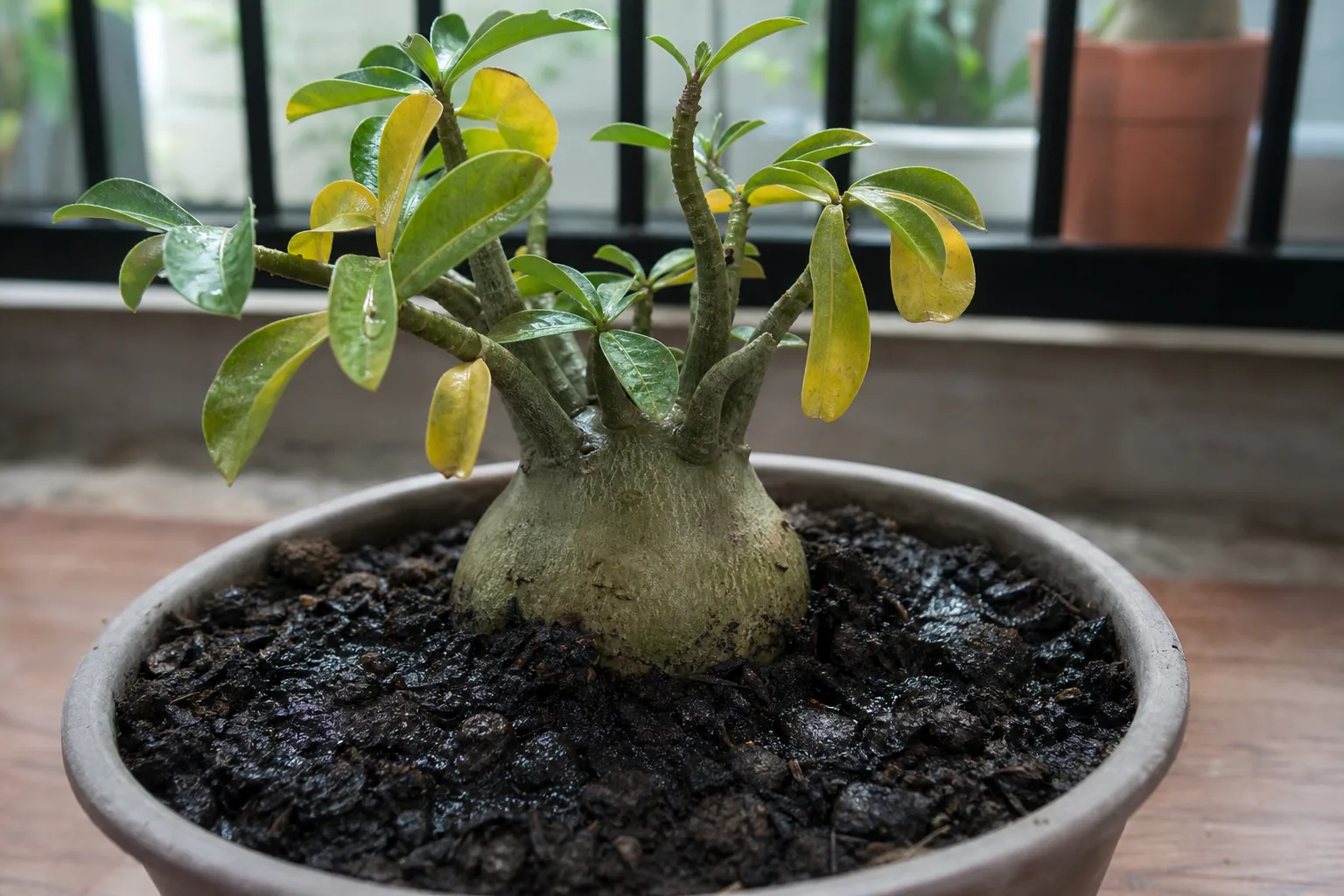
Wrong Soil Mix on Adenium: Causes, Checks & Fixes
This guide covers wrong soil mix on Adenium. See also the general Wrong Soil Mix guide, watering, and light pages for this plant.
Wrong Soil Mix on Adenium: Causes, Checks & Fixes
Quick answer
Adenium overview stores water in its caudex and evolved for a loose, sandy or gravelly, well-drained mix-not the moisture-retentive peat blends sold for tropical houseplants. When the mix stays wet for days, roots suffocate and rot follows even if you water carefully.
First step: unpot the plant and look at the root ball. If the mix is dense, sour-smelling, or still damp a week after watering, repot into gritty succulent mix per the Adenium soil guide. Do not add fertilizer, mist, or increase watering the same day.
| What you find | What it usually means | Read next |
|---|---|---|
| Dense wet peat, sour smell, firm caudex | Wrong mix caught early-repot now | Stay on this page; gritty repot below |
| Soft caudex on damp dense mix | Rot advancing in wet root zone | Root rot on Adenium - trim and dry before repot |
| Spongy tissue at soil line | Crown decay | Crown rot - soil-line triage |
| Pot heavy for days in otherwise good mix | Watering too often or poor drainage | Overwatering or poor drainage |
For baseline mix ratios and repot timing, see the soil guide, repotting guide, and Adenium overview.
Wrong soil is one of the most common reasons Adenium fails indoors. Fixing the mix solves more chronic problems than chasing leaf sprays or bloom boosters.
What wrong soil mix looks like on Adenium
Heavy soil damage rarely announces itself as “bad mix.” You see what wet roots do to a drought-adapted plant:
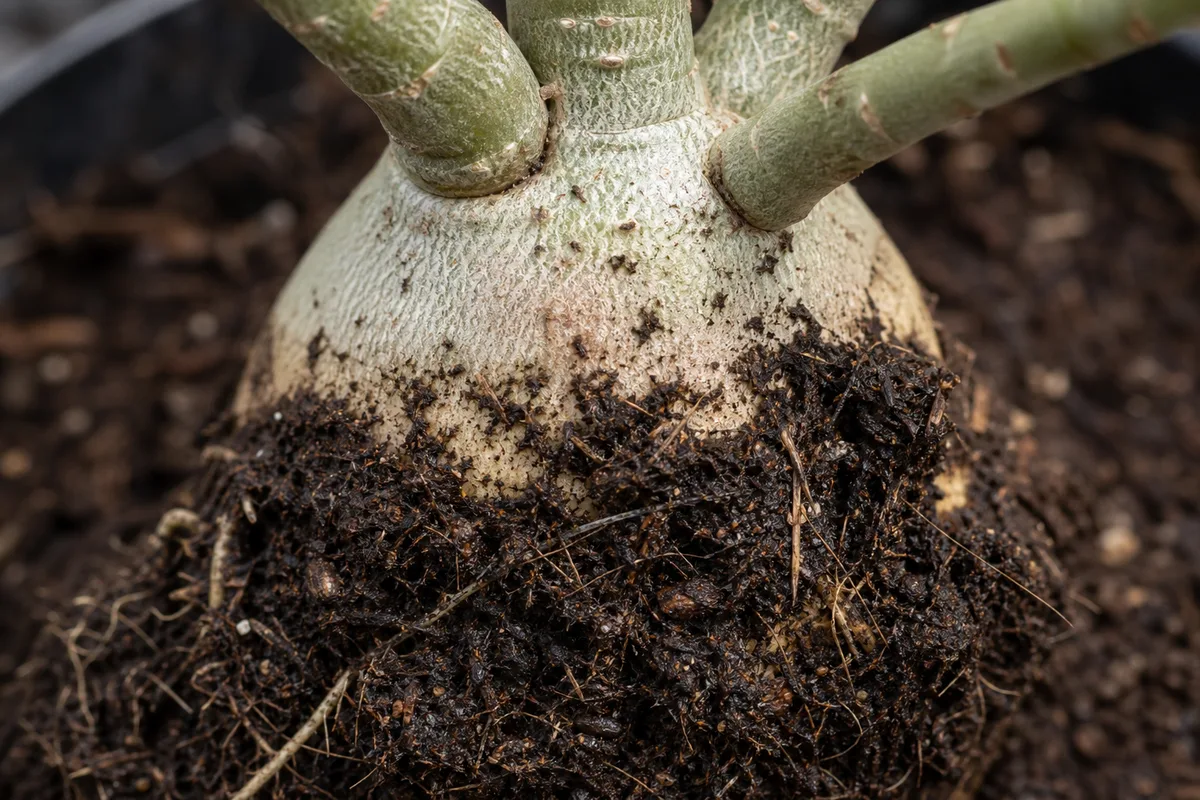
Wrong Soil Mix symptoms on Adenium - compare with healthy tissue on the same plant.
- Pot stays heavy for days - you watered three or four days ago but the center of the mix is still cool and damp.
- Water pools on the surface or runs down the sides without soaking in-signs of compacted or hydrophobic peat.
- Yellow leaves that drop from the bottom up during warm growth, not cool winter rest.
- Soft or spongy caudex when the mix has not dried through; firm caudex with a light pot points elsewhere.
- Fungus gnats hovering over the surface-larvae thrive in wet organic mix.
- White or gray mold on the soil top, especially in dim corners where evaporation is slow.
- Slow or absent flowering even with adequate sun-the root zone never dries enough for bloom energy.
- Sour or swampy smell when you slide the plant out; healthy gritty mix smells earthy, not stagnant.
During winter dormancy, Adenium may drop leaves with a firm caudex while you keep water minimal-that is seasonal, not proof your mix is fine. Worry when wet, dense soil and soft tissue appear during warm active growth.
Why Adenium fails in the wrong mix
Adenium obesum comes from arid regions of Africa and the Arabian Peninsula. It wants a root zone that dries quickly and holds air, not a sponge.
Standard problems with common mixes:
- Peat-heavy potting soil - holds moisture long after the top looks dry; compacts within a season and reduces oxygen at the roots.
- Garden soil or topsoil indoors - too fine, too dense, and often carries pathogens; it waterlogs in containers.
- Moisture-control or “water-saving” blends - designed for thirsty foliage plants; they keep desert rose roots wet too long.
- Old, broken-down mix - even a once-good blend turns to muck after two or three years without repotting.
- Oversized pot plus wrong mix - extra soil volume holds extra water around roots that cannot use it.
Adenium tolerates brief drought on a firm caudex far better than chronic wet feet. Dense soil turns normal watering into overwatering without you changing the schedule.
How to confirm the mix is the problem
Work through these checks before blaming pests or light alone:
- Unpot test - Slide the root ball out gently. Crumbly mix with white healthy root tips suggests the mix is acceptable. Clumping wet peat, black mushy roots, or a sour smell confirms failure.
- Drainage speed - After a full watering, water should exit the drainage holes within seconds and the pot should feel noticeably lighter within three to five days in warm growth.
- Finger probe at depth - Push 5–7 cm into the center. If it stays cool and damp while the caudex is softening, the mix is holding water the plant cannot shed.
- Caudex feel - Firm and smooth means you may have caught it early. Soft, discolored, or wrinkled-with-wet-soil tissue means rot may already be advancing.
- Mix recipe audit - List what went into the pot. Straight store potting soil, garden dirt, or “all-purpose” blend without grit is almost always wrong for desert rose-compare against the soil guide.
- Pot and saucer check - A full saucer or sealed decorative pot makes even decent mix behave badly; see poor drainage before blaming composition alone.
If the mix drains fast, smells fresh, and the caudex is firm but leaves are yellow, look at overwatering frequency or dormancy before repotting again.
First fix for Adenium
Repot into fresh, gritty succulent mix in a pot with drainage holes-one size appropriate to the root ball, not oversized.
That single root-zone correction matters more than adjusting water by a day or two while the plant sits in muck. Use a blend close to 30% potting mix, 40% perlite or coarse sand, 30% pumice or fine gravel (University of Arizona Cooperative Extension), or follow the ratios in the Adenium soil guide.
Timing: early spring as new growth starts is ideal per the repotting guide. Emergency repot is justified if the caudex is softening-saving firm tissue beats waiting for perfect season.
After repotting, hold water for several days so cut or disturbed roots callous. Place the plant in full sun so the new mix dries predictably. Do not fertilize until new growth looks healthy.
Step-by-step repot into the right mix
If the caudex is still mostly firm:
- Stop watering and let the old mix dry slightly so it releases the root ball more easily.
- Unpot and shake off old mix - remove as much dense peat as you can without tearing healthy roots.
- Inspect roots - trim black or mushy sections back to firm white tissue with sterilized pruners; let cuts air-dry if rot was present.
- Choose a pot only slightly wider than the caudex-desert rose flowers better slightly pot-bound and rots in excess wet soil volume.
- Fill with gritty mix, set the plant at the same depth, and firm lightly-do not bury the caudex deeper than before.
- Wait three to seven days before the first light watering in warm growth; skip entirely if you trimmed rot and the plant is drying out.
- Resume soak-and-dry per the watering guide-allow soils to dry between waterings and water deeply only when the mix is dry throughout and the pot feels light.
If more than half the caudex is mushy, treat as crown rot: excise all soft tissue, dry the plant two to three days, then repot into pure mineral-heavy mix with minimal organic matter.
Recovery timeline and what to expect
Damaged leaves will not revert to green. Judge recovery by the caudex and new growth:
- Days 5–10 - Pot weight drops on schedule; no new yellowing; caudex stays firm or stops softening.
- Weeks 2–4 - New leaf tips emerge clean; soil dries between waterings in predictable intervals.
- Next bloom cycle - Buds may return once roots stay dry long enough through a full warm season.
If stems blacken from the base upward or the caudex softens despite fresh mix and dry-down watering, salvage only firm upper stem as a cutting per the propagation guide.
Lookalike symptoms
| What you see | Often confused with | How to tell apart |
|---|---|---|
| Wet soil for days | Overwatering alone | Overwatering can happen in good mix if you water too often; wrong mix stays wet even with sparse drinks. |
| Soft caudex | Cold damage | Cold: recent chill below about 55°F, often with blackened tips. Wrong mix: sour dense soil, gnats, mold on surface. |
| Slow growth | Not enough light | Light: stretched stems, pale leaves. Wrong mix: pot heavy, peat clumps, roots brown in dense center. |
| Mold on soil | High humidity | Humidity adds wet leaves overnight; wrong mix keeps the core damp in average air. |
| Fungus gnats | Harmless presence | Gnats alone are a warning sign that organic mix is staying too wet for too long. |
What not to do
Do not add gravel at the bottom of the pot instead of fixing the mix-that raises the wet zone without improving aeration. Do not repot into straight garden soil or pure peat. Do not jump to a much larger pot “so it can grow”-extra wet soil kills caudex plants. Do not water on a calendar without checking whether the new mix has dried. Do not fertilize a stressed desert rose hoping to force growth in soggy roots.
Wear gloves when cutting stems-the milky sap irritates skin and Adenium is toxic to cats and dogs if ingested.
How to prevent wrong soil mix problems
Match the root zone to desert biology:
- Use gritty, fast-draining mix from day one per the soil guide; amend store cactus soil with extra perlite or pumice if it feels too rich.
- Repot every two to three years or when mix compacts and drainage slows.
- Choose pots only slightly larger than the root ball with multiple drainage holes.
- Empty saucers after every watering; never let the pot sit in runoff.
- Grow in full sun so the mix dries as fast as Adenium expects.
- Reduce water in cool dormancy-even good mix stays wet longer in cold dim rooms; follow the watering guide.
When buying, reject nursery plants in waterlogged peat if the caudex feels soft or the soil smells sour.
When to worry
Treat as urgent if:
- The caudex feels soft, sunken, or smells sour while mix is still damp.
- Stems blacken at the soil line and the band moves upward.
- Roots are mostly brown and mushy when you unpot.
- Yellowing and leaf drop accelerate during warm growth despite cutting back water.
Cosmetic slow growth on a firm caudex with mix that still drains in a few days can wait for a planned spring repot-do not panic-repot repeatedly in winter unless rot is active.
When to use this page vs other Adenium guides
- Adenium watering guide - Use for routine moisture checks before assuming wrong soil mix is the main issue.
- Adenium problems hub - Browse all 40 common issues on this species.