Sticky Leaves on Desert Rose: Caudex Checks & Fixes
Quick answer
Sticky leaves on Adenium almost always mean honeydew from sap-sucking pests-not a watering or humidity problem. Press the caudex first: a firm swollen base with tacky new growth points to insects; a soft base on wet mix points to rot. Isolate, inspect buds and leaf undersides, and wipe residue with a damp cloth.
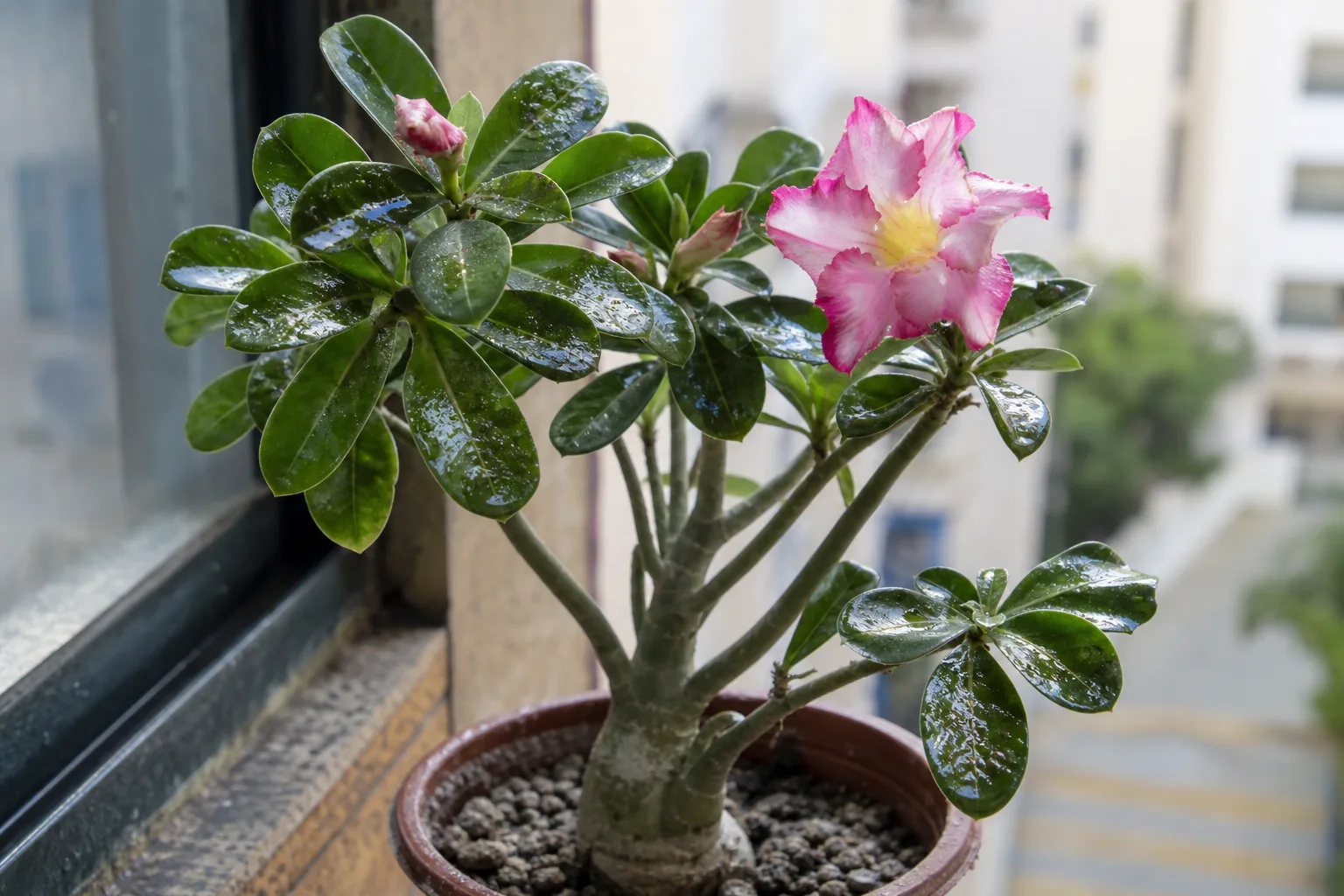
Sticky Leaves on Adenium: Causes, Checks & Fixes
This guide covers sticky leaves on Adenium. See also the general Sticky Leaves guide, watering, and light pages for this plant.
Sticky Leaves on Adenium: Causes, Checks & Fixes
Quick answer
Sticky leaves on Adenium obesum (Adenium overview) almost always mean honeydew-a clear, sugary waste left by sap-sucking insects feeding on your plant. Aphids, mealybugs, and scale are the usual culprits on desert rose; whiteflies can appear on outdoor patio plants but are less common indoors.
First step: press the caudex gently, then isolate the plant and inspect new shoots, flower buds, and leaf undersides for insects. Wipe sticky residue with a damp cloth.
| What you feel | What it usually means | Read next |
|---|---|---|
| Firm caudex + tacky new growth | Honeydew from sap-sucking pests | Stay on this page; use pest triage below |
| Soft caudex + wet mix + yellowing | Root rot from overwatering on Adenium | Root rot guide-not a humidity fix |
| Briefly wet leaves after morning dew or watering | Environmental moisture | Re-check at midday; honeydew stays sticky |
Honeydew is not a disease and not a sign that Adenium needs more moisture. Treat the insect, and the stickiness stops. For baseline culture that keeps pests from gaining ground, see the Adenium overview, light guide, and watering guide.
What sticky leaves look like on Adenium
On Desert Rose, stickiness shows up in predictable places because pests target tender, sugar-rich tissue.
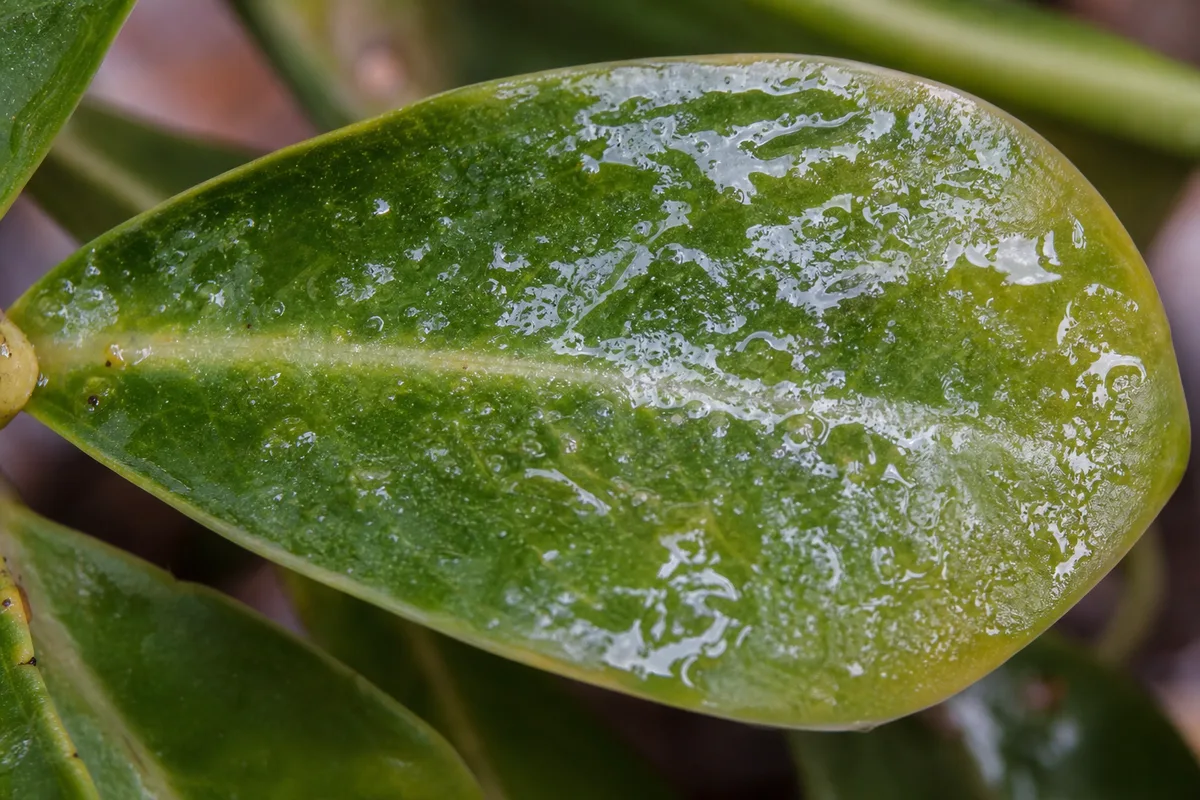
Sticky Leaves symptoms on Adenium - compare with healthy tissue on the same plant.
Typical patterns:
- Glossy, tacky leaf surfaces - upper or lower blades feel sticky when you touch them, even when the soil is dry and the caudex is firm
- Stickiness concentrated on new growth - stem tips, unfolding leaves, and flower buds are coated first; older lower leaves may stay clean
- Cottony white clumps in leaf axils or caudex folds - mealybugs hiding where stems meet the swollen base
- Small green, black, or yellow soft insects clustered on buds and tender shoots - aphids
- Hard brown or tan bumps on stems and leaf veins - armored scale that does not wipe off
- Black sooty film on top of the stickiness - sooty mold growing on honeydew, not a separate leaf infection
- Ant trails along stems or across the pot rim - ants harvest honeydew and often point you to the infestation above them; see ants on Adenium when trails are the first clue
During cool winter dormancy, Adenium may drop most leaves while the caudex stays firm. Sticky residue on remaining foliage-or on bare caudex skin when leaves are gone-during warm active growth is the pattern that needs action. Mealybugs in particular persist in caudex crevices through dormancy, so a leafless desert rose with ants on the pot rim or fresh tacky spots on exposed bark still deserves a crevice inspection, not a watering increase.
Compare stickiness with caudex firmness. A firm base with tacky new growth confirms a pest problem, not root rot. A soft caudex with yellowing leaves points to wet soil-even if leaves also feel damp on the surface.
Why Adenium gets sticky leaves
Adenium did not evolve to drip sap from healthy leaves. Stickiness is insect waste, not plant sap bleeding on its own.
Sap-sucking pests (the real cause)
Aphids, mealybugs, and scale pierce leaves and stems to drink phloem sap. They excrete excess sugar as honeydew, which coats nearby foliage. On desert rose, pests often gather on new growth and flower buds where sap flow is highest-exactly where you want blooms. That is why a sticky bud cluster on an otherwise dry, firm plant is almost never a watering mistake.
NC State Extension lists aphids, scales, and mealybugs among common insect problems on Adenium obesum. UF/IFAS notes mealybugs on indoor specimens and aphids or mites outdoors. On desert rose, that usually means white wax in caudex folds indoors, or green aphid clusters on patio shoots in summer-not a humidity deficit.
Sooty mold follows honeydew
Several fungi grow on honeydew deposits, creating a black, soot-like coating on leaves and stems. Sooty mold does not infect plant tissue directly, but heavy growth can block light and stress leaves. It clears once honeydew production stops-no fungicide is required for the mold alone while pests keep feeding.
Whiteflies (less common but possible)
On outdoor desert roses in warm climates, tiny white flying insects may leave honeydew on leaf undersides when disturbed. UC IPM notes whiteflies as sap feeders that require thorough underside coverage with soap or oil and repeat applications. If you see insects flutter off when you brush a leaf, treat as whitefly pressure in addition to the aphid/mealybug/scale triage below-not as a separate mystery symptom.
Why pests show up on Desert Rose now
Most sticky-leaf cases trace to recent introduction, not spontaneous infestation. Common entry routes for desert rose collectors:
- Nursery imports or bonsai-show purchases that skipped quarantine
- Summer patio season when outdoor aphids colonize tender shoots, then hitchhike indoors
- Crowded greenhouse benches where mealybugs spread between caudex plants sharing drip trays
Indoor Adenium in weak light with crowded pots and stagnant air is more vulnerable than a plant in full sun on a dry patio. Overwatering does not cause stickiness directly, but constantly damp soil and wet foliage can slow recovery while pests keep feeding.
Adenium’s milky latex sap is toxic and irritating-wear gloves when wiping leaves or pruning infested shoots. If a pet chews treated foliage or sap, contact ASPCA Animal Poison Control (888-426-4435) or your veterinarian promptly.
What usually is not the cause
- Low humidity - Adenium tolerates dry household air; stickiness is not fixed by misting
- Overwatering alone - wet rot causes soft caudex and yellow leaves, not sweet tacky residue
- Natural dew or rain - outdoor moisture dries by midday; honeydew stays sticky
- Fresh pruning sap - milky latex beads at cut stems but does not coat whole leaves in a sweet film
How to confirm the cause
Work through this order before spraying anything:
- Caudex firmness - Press the swollen base. Firm tissue with tacky new growth supports a pest diagnosis. Soft base with wet mix means address rot separately-even if leaves also look shiny from honeydew.
- Touch test - Rub a leaf between fingers. Honeydew feels tacky and slightly glossy. Rain or irrigation water feels wet but not glue-like once the surface dries.
- New growth inspection - Check buds, stem tips, and leaf undersides in bright light or with a hand lens. Pests stay near where they feed, close to the stickiest leaves.
- Caudex and axil check - Mealybugs often lodge in folds where branches meet the swollen base. Scale may look like part of the bark until you scrape gently.
- Ant trails - Follow ants on stems or pots upward to the insect colony they are protecting.
- Sooty mold presence - Black powdery coating on sticky areas confirms honeydew has been present long enough for fungal growth.
If you find insects or ants with tacky residue, you have confirmation. If leaves are clean of pests and only briefly wet after watering, look elsewhere.
Pest triage: which guide to read next
| What you see on Adenium | Likely pest | Dedicated guide |
|---|---|---|
| Soft green/black clusters on buds and shoot tips | Aphids | Aphids on Adenium |
| White cottony wax in caudex folds and axils | Mealybugs | Mealybugs on Adenium |
| Hard tan/brown bumps on stems; does not wipe off | Scale | Scale insects on Adenium |
| Ants on pot rim, sticky caudex, insects hard to find | Ants farming pests | Ants on Adenium |
| Tiny white insects fly off when leaf is brushed | Whiteflies | This page + repeat soap/oil on undersides |
This sticky-leaves page is the symptom triage hub. Once you name the pest, the dedicated guide carries species-specific treatment depth so you are not guessing from generic houseplant advice.
First fix for Adenium
Isolate the plant, inspect new growth and leaf undersides for insects, and wipe sticky residue with a damp cloth.
Move the pot away from other plants so aphids and mealybugs do not spread. Wearing gloves, wipe honeydew from leaves and stems with a soft cloth dipped in plain water. Rinse leaf undersides and buds under a gentle stream of lukewarm water to dislodge soft-bodied aphids-outdoors or in a sink.
Morning rinse timing for full-sun plants
Outdoor desert roses in direct afternoon sun need a timing adjustment: rinse in early morning or early evening so foliage dries before peak heat. UC IPM advises applying soaps or oils when temperatures are under 90°F and when plants are not drought-stressed-wet leaves baking in harsh sun can scorch glossy Adenium blades. Move the pot to shade for the rinse, let leaves dry fully, then return it to its sunny spot.
Do not apply insecticidal soap, neem, or horticultural oil until you see live pests after rinsing. Do not repot, prune heavily, or fertilize the same day. One correction first, then watch for 5–7 days.
Step-by-step recovery
After the initial wipe and rinse:
- Identify the pest using the triage table above-aphids, mealybugs, scale, or whiteflies each need slightly different follow-up.
- Physical removal - Dab mealybugs and scale with a cotton swab dipped in 70% isopropyl alcohol. Pick off visible aphids after rinsing.
- Targeted spray if insects remain - UC IPM recommends insecticidal soap or horticultural oil labeled for your plant and pest, with complete coverage of leaf undersides, buds, and stem crevices. Apply in early morning or evening; avoid spraying when temperatures exceed 90°F or the plant is water-stressed.
- Repeat on schedule - Clemson Extension advises reapplying insecticidal soap every four to seven days until pests clear. Most Adenium infestations need two to three weekly cycles before new growth stays clean.
- Manage ants if present - Disrupt ant trails with water; controlling ants lets natural predators help once pests are reduced. See the ants guide if trails persist.
- Clean sooty mold - Wipe black residue with soapy water on a cloth. Mold fades naturally once honeydew stops.
- Hold fertilizer until new leaves emerge healthy and firm for two weeks.
If the caudex softens during treatment, pause pest sprays and assess for wet-soil rot separately.
Recovery timeline
After first wipe and rinse, you should see less fresh stickiness within 2–3 days if most insects were removed.
Weekly pest treatments typically need two to three cycles before new shoots stay clean and honeydew production stops.
Sooty mold may take several weeks to weather off old leaves even after pests are gone. Judge success by clean new growth, not by old coated foliage turning green again.
Signs you are on track: no new tacky deposits, ants disappear, new leaves open glossy without black film, and the caudex stays firm.
Lookalike symptoms
| What you see | Often confused with | How to tell apart |
|---|---|---|
| Tacky glossy leaves | Dew or splash from watering | Dew dries by midday; honeydew stays sticky and often has insects or ants nearby |
| Black coating on leaves | Fungal leaf spot (anthracnose) | Leaf spot is lesions in the leaf; sooty mold wipes off as black film on top of honeydew |
| Sticky buds | Normal sap at prune cuts | Pruning sap is milky latex at a fresh cut, not widespread sweet film on multiple leaves |
| Ants on pot | Harmless visitors | Ants farming honeydew trail upward to aphids or mealybugs on stems |
| Yellowing with stickiness | Overwatering | Overwatering: wet soil, soft caudex, often no insects. Pests: firm caudex, insects visible on new growth |
Always pair sticky leaves with a pest search on new growth-that is where Adenium infestations start.
What not to do
Do not mist or shower the plant hoping to “wash away” stickiness without finding insects-rewetting foliage in stagnant air can invite fungal issues on desert rose. Do not apply fungicide for sooty mold alone while pests keep producing honeydew. Do not increase watering because leaves look dull-wet soil will not fix pest damage and risks caudex rot. Do not move the plant repeatedly between sun and shade while treating; stable bright light helps recovery. Do not skip gloves when handling sticky stems-the sap is toxic to pets and can irritate skin.
Avoid stacking Adenium repotting guide, hard pruning, and pesticide on the same day.
How to prevent sticky leaves next time
- Quarantine new desert rose plants for two weeks before placing them beside your collection-especially nursery imports and show purchases
- Inspect weekly during warm active growth-buds and new tips first
- Grow in full direct sun with gritty fast-draining mix and dry-down watering per the watering guide
- Space pots so air moves between plants; avoid enclosed humid corners for Adenium
- Rinse or wipe early when you spot a few aphids before honeydew spreads
- Keep foliage dry between waterings; bottom-water or pour at the soil line only
During dormancy, many pests slow when leaves drop and watering is minimal-but mealybugs can overwinter in caudex crevices. A quick axil check in spring catches problems before bloom season.
When to worry
Treat as urgent if:
- Stickiness spreads to multiple stems within a week during active growth
- Heavy ant activity covers the caudex while you cannot find the source
- Leaves yellow and drop rapidly on a firm caudex with heavy pest numbers
- Sooty mold coats most foliage and new tips cannot photosynthesize effectively
- A pet ingests sap or chewed leaves-contact ASPCA Poison Control or your vet
A few sticky leaves on one branch with visible aphids and a firm caudex is manageable with isolation and consistent weekly treatment-not a reason to repot or discard the plant on day one.
For chronic infestations that survive three weekly treatment cycles, contact your local cooperative extension office with photos before escalating to stronger pesticides.
When to use this page vs other Adenium guides
- Adenium watering guide - Use for routine moisture checks before assuming sticky leaves is the main issue.
- Adenium problems hub - Browse all 40 common issues on this species.