Scale Insects on Adenium: Causes, Checks & Fixes
Quick answer
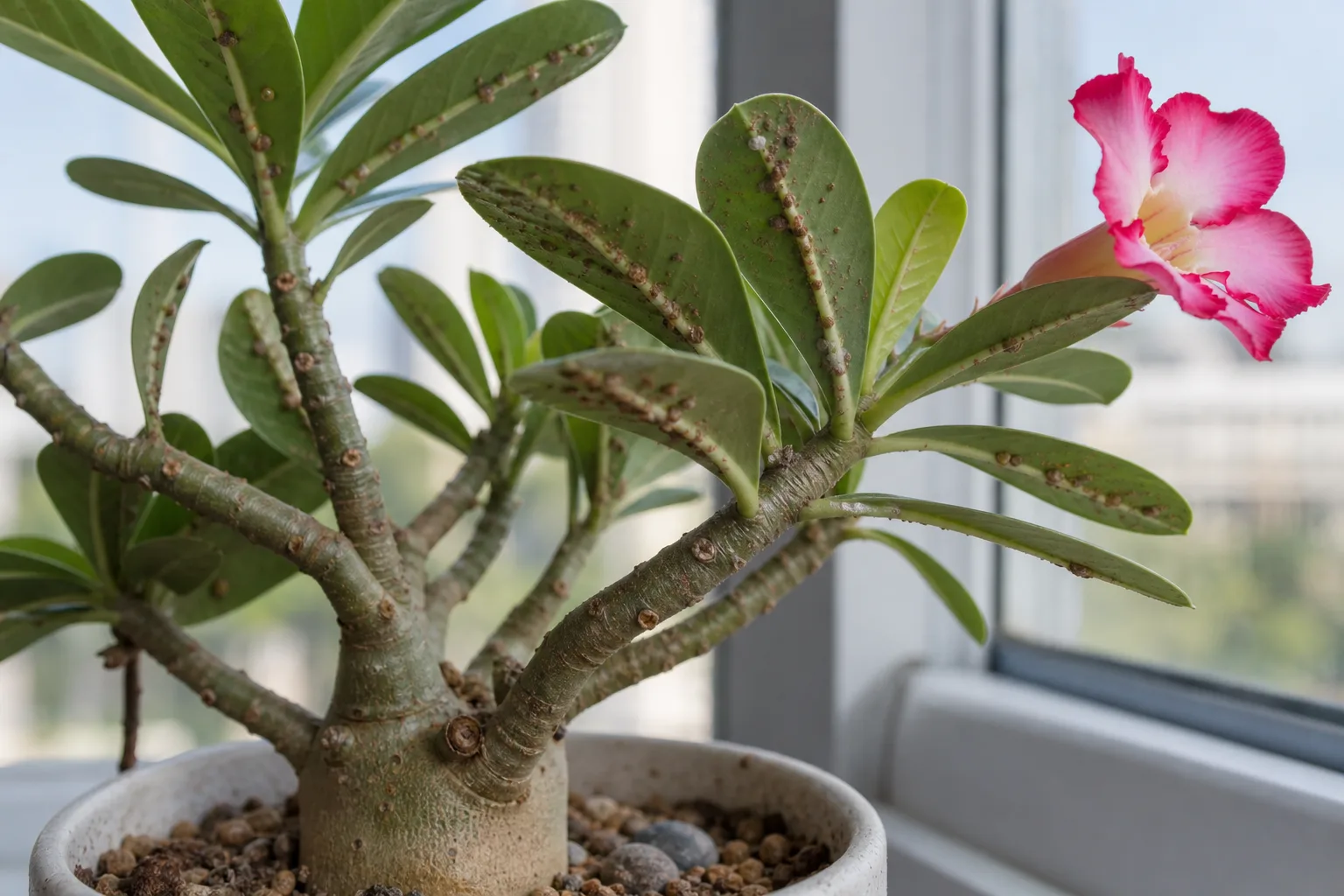
Immobile tan or brown bumps on Adenium woody stems and caudex ridges with a firm swollen base usually mean armored scale-not rot. Isolate the plant and scrape every visible bump with a toothpick or fingernail before any spray.
Scale Insects on Adenium: Causes, Checks & Fixes
This guide covers scale insects on Adenium. See also the general Scale Insects guide, watering, and light pages for this plant.
Scale Insects on Adenium: Causes, Checks & Fixes
Quick answer
You noticed immobile tan or brown bumps glued to bare desert rose stems while the swollen caudex still feels firm-that pattern usually means armored scale, not root rot from overwatering. Adenium obesum builds a woody framework with leaves clustered at the tips, leaving long stretches of bark-like stem where scale can feed undisturbed for months.
First step: isolate the plant and scrape off every scale you can see with a fingernail, toothpick, or soft brush-before reaching for any spray. A soft, darkening caudex on wet mix is a different emergency; press the base first so you treat the right problem.
Why desert rose gets scale on woody stems and caudex
Bare stems are long-term feeding sites. Desert rose develops thick woody branches and a swollen caudex with leaves only at the tips. Those exposed surfaces give armored scale stable attachment points where they lose mobility after the crawler stage and stay hidden. Mealybugs, scale, and aphids are potential insect pests on Adenium obesum.
Introduction beats watering as the trigger. Scale usually arrives on nursery stock, shared pruning tools, bonsai-show benches, or a stressed neighbor in a warm indoor room without natural predators. Overwatering does not cause scale, yet wet soil combined with sap loss weakens recovery-especially if yellow leaves lead you to add more moisture instead of removing pests.
Dormancy can mask the problem. During cool rest, Adenium drops leaves naturally. Scale damage can look similar, but dormancy follows seasonal rest with a firm caudex and no new bumps on bare branches-unlike leaf yellowing and leaf drop from chill stress alone. Scale persists through winter on the stems themselves, which is why a leafless caudex with scattered shells still needs treatment.
Graft unions trap colonies. Many collector plants are grafted; the swollen collar where scion meets rootstock creates a protected ridge. Scale on one side of the union can restart the infestation after you clean the other half.
Ants on the pot rim often signal honeydew from soft scale, mealybugs, or aphids-not a separate problem to treat first.
What scale looks like on Adenium - armored vs. soft
Armored scale is the pattern most often reported on desert rose: flat or dome-shaped tan, brown, or gray bumps along stems, caudex ridges, and leaf axils. The protective cover lifts separately from the insect body when you scrape it-unlike mealybugs, which look cottony and hide in crevices.
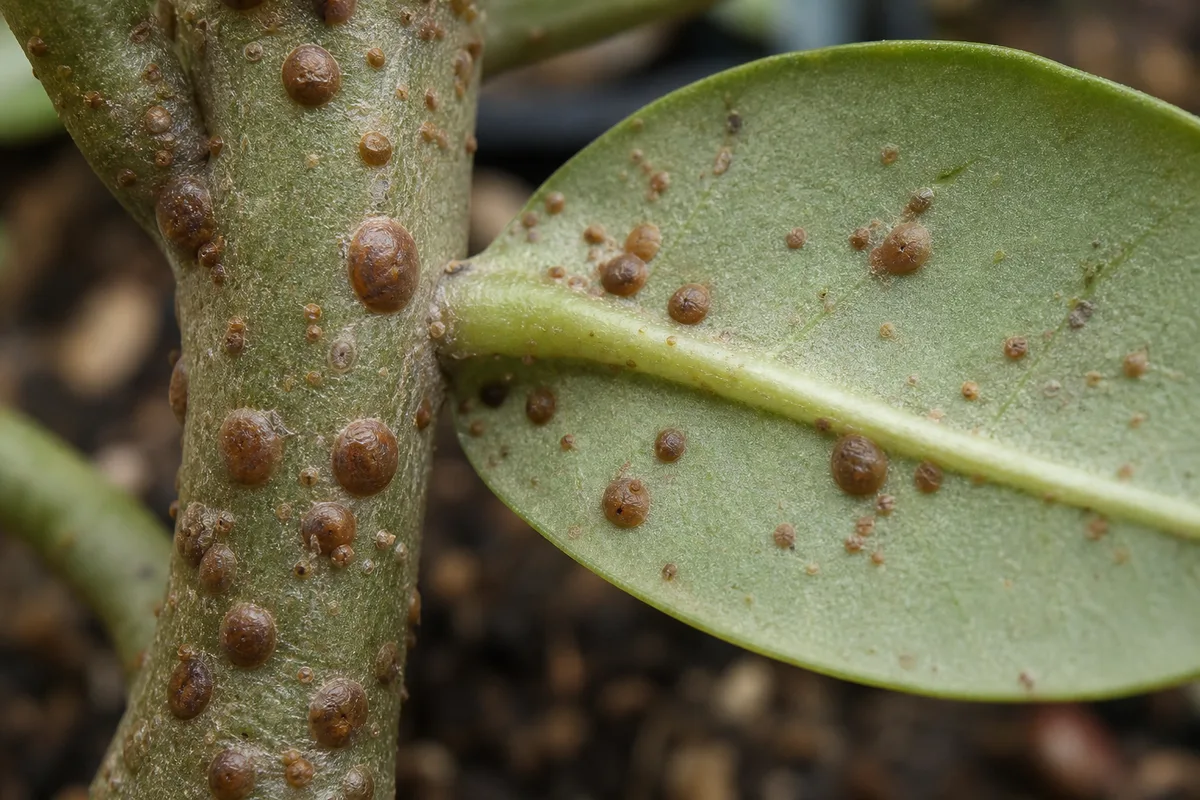
Scale Insects symptoms on Adenium - compare with healthy tissue on the same plant.
Soft scale is less common but possible. Those bumps smear when scraped and leave sticky honeydew on leaves or surfaces below, sometimes followed by black sooty mold. Armored scale typically does not produce honeydew because it feeds in plant cells beneath the bark surface.
Early damage shows as pale stippling or yellowing on individual leaves, slowed opening of new tips, and occasional premature leaf drop during active growth. Heavy infestations leave stems speckled with dozens of bumps and can weaken flowering. The caudex usually stays firm unless a separate rot issue is present.
Lookalikes to rule out
Mealybugs form white, cottony clusters in leaf axils and caudex folds-not hard, flat shells. Aphids are soft, mobile, and cluster on tender new growth and flower buds. Sun scorch browns leaf edges after a sudden move to harsh sun; it does not add bumps to stems. Normal dormancy drops leaves cleanly without scattered shells on branches.
Confirm scale vs. overwatering, mealybugs, aphids, sun scorch, and dormancy
Work through this inspection order before treating:
- Caudex press - Firm, plump tissue supports a pest diagnosis. Soft, darkening caudex with wet soil points to rot-stop and see the root rot guide instead.
- Stem scan - In bright light, run your finger along every branch, the caudex shoulder, graft unions, and rootstock below the collar. Scale feels like raised, immovable bumps; bark texture is smooth and continuous.
- Scrape test - Flick one bump with a fingernail. A separate shell that flakes off confirms armored scale. Smearing residue suggests soft scale.
- Leaf pattern - Yellowing with stem bumps and firm caudex fits scale. Widespread yellow leaves on wet soil without bumps fits overwatering or chill stress.
- Collection survey - Inspect plants that sat beside this Adenium. Scale crawlers are tiny and mobile for a short window; missed adults on a neighbor restart the cycle.
Symptom lookalike comparison
| What you see | Likely cause | Key check |
|---|---|---|
| Hard tan/brown bumps on woody stems | Armored scale | Shell lifts separately when scraped |
| White cottony wax in caudex folds | Mealybugs | Soft wax, not flat disks |
| Soft green insects on new tips | Aphids | Mobile; cluster on tender growth |
| Brown leaf edges, no stem bumps | Sun scorch | Follows sudden sun increase |
| Leaf drop, clean bare stems | Dormancy | Firm caudex; no new shells appearing |
| Yellow leaves, wet soil, no bumps | Overwatering | Soft caudex risk; no scrape test positive |
| Sticky leaves, smearing bumps | Soft scale | Honeydew present; sooty mold possible |
UF/IFAS notes that desert rose can have issues with scale and recommends catching them early before the plant declines-weekly stem checks during the growing season take less time than fighting a mature infestation.
Confirmed diagnosis - Immobile bumps that lift as separate shells plus firm caudex. Suspected - Yellow leaves without visible bumps may need a magnifying glass on graft unions and lowest leaf axils before treating.
First fix: isolate, scrape, and treat safely
Isolate the plant and physically remove every scale you can reach. Use a toothpick, soft toothbrush, or fingernail on stems and the caudex; dab stubborn shells with a cotton swab dipped in 70% isopropyl alcohol. Bag and discard scraped material. This single step immediately cuts the breeding population and tells you how heavy the infestation really is.
Wait 24 hours, then reassess. If bumps remain or you find crawlers-pinhead-sized moving specks-apply horticultural oil to stems and leaf undersides, following label rates for indoor use.
Horticultural oil timing for full-sun succulents
Oil suffocates scales that thorough coverage reaches. Clemson Extension recommends a 1 to 2% horticultural oil solution during the growing season (about 2½ to 5 tablespoons per gallon of water), coating stems and leaf undersides until runoff. Repeat every 10–14 days for at least three cycles, because eggs and protected stages hatch across weeks.
Treat in the evening out of direct sun. Adenium prefers full sun for growth, but oil on hot, sun-struck foliage can burn leaves. UF/IFAS notes that most oils should not be used when temperatures are very warm-follow label temperature limits, especially on outdoor patio specimens moved into afternoon heat.
Neem oil vs. horticultural oil on Adenium
Horticultural oil is the first spray choice for armored scale because it smothers crawlers and penetrates waxy covers with repeat coverage. Neem oil can suppress younger soft-bodied stages but is less reliable against mature armored shells already glued to woody stems. If you use neem, patch-test one leaf or a small caudex patch and apply in cool morning or evening hours-never on heat-stressed outdoor desert roses in midday sun.
What not to do the same day
Do not repot, prune heavily, or fertilize the same day you start treatment. One correction first; stack other changes only after new growth looks clean for two weeks. Do not rely on systemic imidacloprid as your only armored-scale strategy-it provides poor control of both soft and armored scales and can flare spider mites on Adenium.
Wear gloves when handling cut or scraped stems-the milky sap is toxic and can irritate skin.
Treating scale on a leafless dormant Adenium
When winter dormancy drops every leaf, armored scale remains on bare woody stems and caudex ridges-the infestation does not pause just because the plant looks dormant. This is often when collectors first notice bumps they missed under foliage.
Focus treatment on mechanical removal and stem-targeted oil, not whole-plant foliar sprays:
- Scrape every visible shell from branch forks, caudex shoulders, and graft unions in bright light.
- Apply horticultural oil to woody stems only, in early evening, so bark dries before cold nights.
- Repeat every 10–14 days through the dormant period until two inspections find no new bumps.
- Resume normal Adenium watering dry-down cycles-do not increase moisture because the plant is leafless.
When new leaves return in spring, inspect tips weekly; scale that survived dormancy often shows up first on the lowest new axils.
Step-by-step recovery
After the first scrape-and-oil cycle:
- Wipe honeydew from leaves with a damp cloth if soft scale was present.
- Move the plant to its brightest spot so new tips have energy to recover.
- Resume normal dry-down watering-let the gritty mix dry several centimeters down before soaking per the watering guide.
- Re-treat with oil on schedule until two consecutive inspections find no new bumps.
If ants trail to the plant, they are feeding on honeydew from soft scale or another sap feeder-control the scale, and ants usually leave.
Recovery timeline and bloom expectations
Light infestations often stop spreading within two to three weeks of consistent removal and oil. Moderate cases need four to six weeks across multiple hatch cycles. Old yellow leaves will not green up again; watch for firm new leaves at branch tips. Flower buds may abort during active infestation but can return the following warm season once stems stay clean.
If the caudex softens, stems blacken from the base, or soil stays sour-smelling despite pest clearance, shift focus to rot-scale treatment alone will not save the plant.
What not to do
Do not shower the whole plant in midday sun right after oil or alcohol treatment. Do not increase watering because leaves yellow-wet soil on a stressed caudex invites rot. Do not rely on a single spray; armored shells protect adults that one pass misses. Do not return the plant to your collection until two weeks pass with no new bumps.
How to prevent scale on Adenium
Quarantine every new desert rose for at least two weeks and inspect woody stems-including graft unions-before placing it near other plants. During active growth, include a monthly stem check in routine care: branch forks, caudex ridges, and the undersides of lowest leaves. Prune out only heavily encrusted twigs you can spare, and sterilize tools between plants because sap can carry pests and the toxic latex irritates skin.
When summering plants outdoors, a brief rinse before bringing them inside can dislodge crawlers-but outdoor time also exposes Adenium to oleander caterpillars and other pests, so inspect thoroughly either way. For baseline culture that keeps stems firm and growth vigorous, see the full Adenium care hub.
When to escalate - heavy infestation and pet safety
Escalate when bumps cover most stems, new tips stop opening, or ants farm the plant heavily-signs of serious sap loss. Separate the plant from your collection before crawlers spread. Soft caudex with sour soil is rot, not scale, and needs a different response.
For chronic infestations that survive three full scrape-and-oil cycles, a local extension office can confirm the scale species and discuss supplemental options such as dinotefuran soil drenches on large specimens-always follow label directions for ornamental succulents.
Pet ingestion: If a cat or dog chewed stems, leaves, or treated tissue, contact your veterinarian or ASPCA Poison Control at (888) 426-4435 immediately-Desert Rose contains cardiac glycosides that can cause vomiting, irregular heartbeat, and worse.
Before you water again
Stem bumps with a firm caudex mean scrape scale first-not another drink. Soft caudex on wet mix means rot protocol, not pest spray. That single check keeps most desert rose owners from making the problem worse while they treat the right cause.
When to use this page vs other Adenium guides
- Adenium watering guide - Use for routine moisture checks before assuming scale insects is the main issue.
- Adenium problems hub - Browse all 40 common issues on this species.
- Sticky Leaves on Adenium - Different entry point when symptoms overlap with scale insects.
- Ants on Plant on Adenium - Different entry point when symptoms overlap with scale insects.
- Yellow Leaves on Adenium - Different entry point when symptoms overlap with scale insects.