Leaf Drop on Adenium: Causes, Checks & Fixes
Quick answer
On Adenium, leaf drop is often normal winter dormancy if the caudex stays firm and soil is dry. First step: feel the caudex-if firm and cool season, cut back water; if soft or soil is wet, stop watering and inspect for rot.
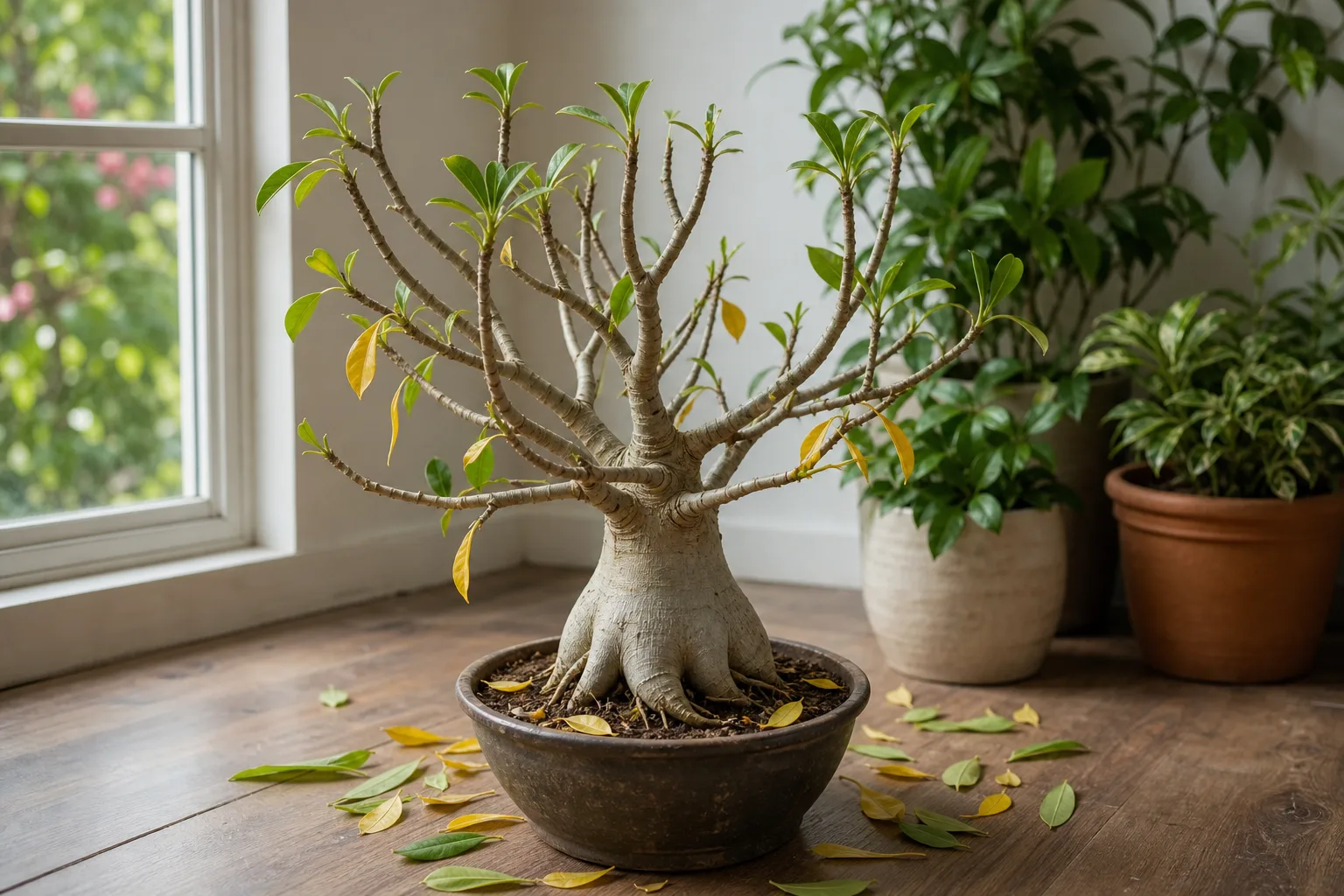
Leaf Drop on Adenium: Causes, Checks & Fixes
This guide covers leaf drop on Adenium. See also the general Leaf Drop guide, watering, and light pages for this plant.
Leaf Drop on Adenium: Causes, Checks & Fixes
Quick answer
When your desert rose starts shedding leaves, the caudex tells you whether to relax or act. Feel the swollen base first. If it is firm like a ripe apple and the season is cool, leaf drop is probably normal dormancy-cut back water and wait. If the caudex feels soft or the soil stays wet for days, you are likely dealing with overwatering on Adenium or early rot, and that needs a different response.
Adenium obesum is built for dry seasons. It stores water in its caudex and branches, then deliberately drops foliage when growth slows. That cycle catches new owners off guard because most houseplants keep their leaves year-round. On desert rose, a bare caudex through winter is often healthy-not a death sentence.
What leaf drop looks like on Adenium
Healthy leaf loss follows a recognizable pattern. Leaves yellow from the tips or edges first, then detach cleanly from the petiole. Drop usually starts on older, lower leaves and works upward. Within a few weeks the plant may shed most or all foliage while the caudex and bare branches stay firm and plump.
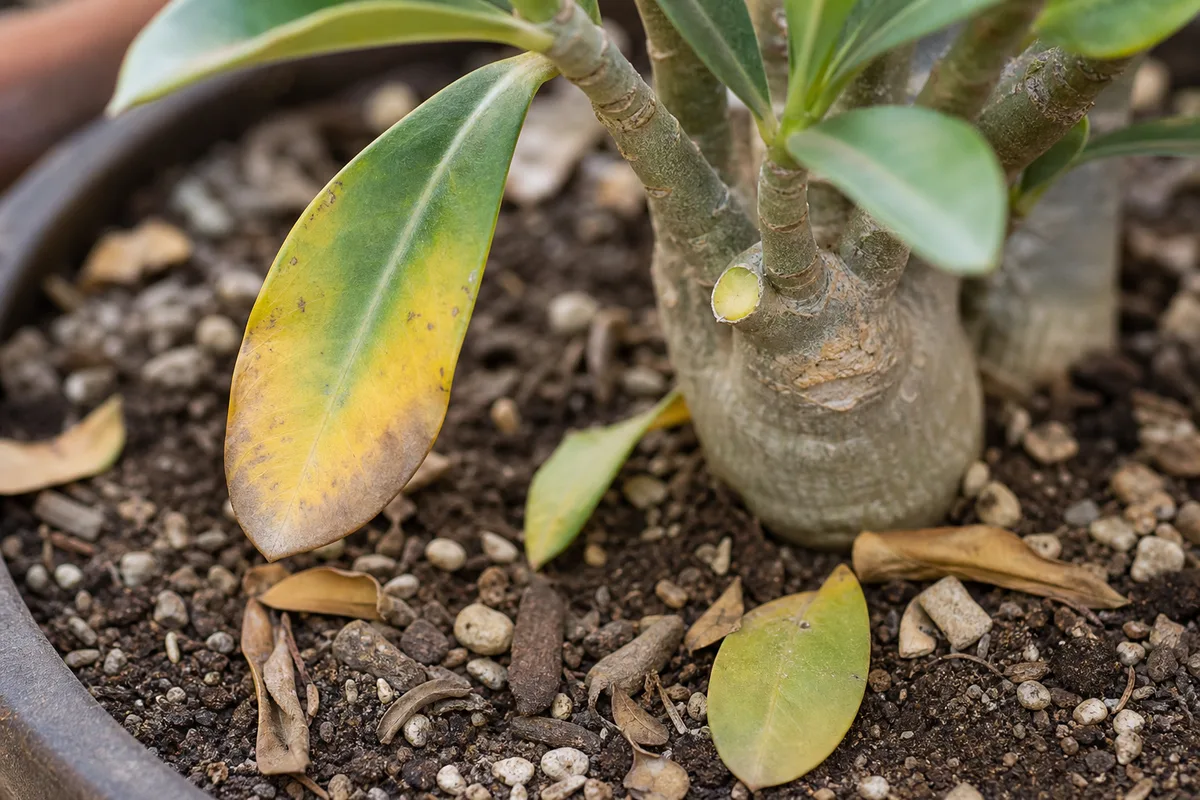
Yellowing tips on older lower leaves and clean petiole detachment on a firm desert rose caudex - gradual dormancy drop, not sudden green leaf loss from rot.
Problem leaf drop looks different. Leaves may fall green and suddenly during warm active growth. You might see blackened leaf bases, mushy stems, or a caudex that gives when pressed. Wet soil that never dries, fungus gnats at the surface, or a sour smell from the pot all point away from normal rest.
During dormancy, expect no new leaves and no flowers. The plant looks dormant-still alive, just paused. In summer, any steady leaf loss with wet soil or a soft base is a red flag, not a seasonal rhythm.
Why Adenium loses leaves
Normal winter dormancy
As temperatures fall below about 55°F (13°C) and daylight shortens, Adenium enters a rest period. Growth stops, flowers fade, and the plant sheds leaves to conserve stored water in the caudex. This can last three to four months indoors. It is part of the natural cycle, not a care failure.
Overwatering during rest or cool weather
The most dangerous cause of leaf drop is wet soil when the plant is not actively growing. Roots suffocate, rot spreads into the caudex, and leaves drop as the root system fails. Overwatering in dormancy is the leading way otherwise healthy desert roses die indoors.
Cold drafts and chill stress
Brief exposure to cold windows, AC vents, or outdoor nights below 50°F (10°C) can trigger yellowing and sudden leaf loss outside dormancy. Chill damage may also blacken stem tips. Adenium tolerates cool rest but not freezing and not repeated cold shocks during active growth.
Sudden environment changes
Moving a plant indoors for winter, Adenium repotting guide, or shifting it to a darker room can trigger defensive leaf drop even when the caudex is healthy. The plant is adjusting to new light and humidity. This usually stabilizes within two to four weeks if conditions stay consistent.
underwatering on Adenium in active growth
During hot summer months, extended drought can cause curling, browning, and leaf loss on an otherwise firm caudex. This is less common than overwatering but worth checking if the pot feels light and soil is bone dry through the root zone.
Pests and fungal leaf spot
Aphids, scale, and mealybugs weaken shoots and can accelerate drop. Anthracnose and other fungal leaf spots cause yellowing, spotting, then defoliation-especially when foliage stays wet and airflow is poor. These show visible signs on leaves and stems, not a clean bare caudex alone.
How to confirm the cause
Work through these checks in order before changing multiple variables at once.
- Caudex firmness - Press the swollen base gently with your thumb. Firm and solid suggests dormancy or minor stress. Soft, spongy, or collapsing tissue suggests rot.
- Season and temperature - Note whether nights are cool, days are short, and the plant was recently brought inside. Cool season plus firm caudex strongly favors dormancy.
- Soil moisture at depth - Stick a finger or dry skewer 5–7 cm into the mix. Dormant plants should read completely dry. Persistently damp soil during leaf loss is a rot warning.
- Recent changes - Repotting, relocation, or a Adenium watering guide shift in the last two weeks explains acclimation drop.
- Leaf and stem inspection - Look for spots, webbing, sticky residue, caterpillar damage, or black mushy stems. Clean yellowing without spots on a firm plant in winter points to rest.
Dormancy vs rot at a glance
| Signal | Likely dormancy | Likely rot or overwatering |
|---|---|---|
| Caudex feel | Firm, slightly less turgid | Soft, spongy, or collapsing |
| Soil | Dry throughout | Wet or never dries |
| Season | Cool months, short days | Any season, especially winter |
| Stem condition | Bare but hard, no blackening | Black or mushy tissue |
| Leaf pattern | Gradual yellow, then drop | Rapid drop, may include green leaves |
The first fix to try
Feel the caudex, then match watering to what you find.
If the caudex is firm and the season is cool, stop treating leaf loss like an emergency. Withhold water except a light drink every three to four weeks if the caudex starts to shrivel noticeably. Keep the plant in a bright cool spot above 50°F (10°C) and away from frost. Do not fertilize. Do not repot. Let it rest.
If the caudex is soft or the soil is wet, stop watering immediately. Do not add more water hoping leaves will return. Move the plant to Adenium light guide and warmth if possible, tip the pot to drain any standing water, and plan to inspect roots within a day or two if the base does not firm up.
Make this one correction first. Stacking repotting, pruning, fertilizer, and pesticides on the same day adds stress and makes it harder to read whether your fix worked.
Step-by-step recovery
For normal dormancy
Reduce watering to occasional light moisture or none at all until spring warmth returns. Remove fallen leaves from the pot surface to discourage fungus gnats. When new leaf buds appear and temperatures stay above 65°F (18°C), resume deep watering only after the mix dries through, then feed lightly.
For overwatering or early rot
Stop all irrigation. Unpot if the caudex stays soft after several dry days. Trim away black mushy root and caudex tissue with a sterile blade until you reach firm white or tan flesh. Let cut surfaces air-dry two to three days, then repot into fresh gritty succulent mix in a pot with drainage holes. Wait a week before the first cautious watering.
For cold or draft stress
Move the plant away from windows, doors, and HVAC vents to a stable spot above 55°F (13°C). Hold water until the caudex is firm. Prune only fully mushy tissue later-never into healthy hard wood during recovery.
For acclimation drop after a move
Keep light bright, temperature steady, and watering minimal until drop slows. Avoid moving the pot again for at least three weeks. New growth at stem tips confirms the plant has settled.
For pest or disease-related drop
Isolate the plant. Remove heavily spotted leaves. Treat confirmed pests on stems and leaf axils. Improve airflow and keep foliage dry. Address the pest or fungus directly rather than increasing water or feed.
Lookalike symptoms
Yellow leaves without full drop often overlap-many Adenium problems start with yellowing before leaves detach. If leaves stay attached but turn yellow during warm weather with wet soil, suspect overwatering before dormancy.
Wilting with firm caudex suggests underwatering in summer, not rot. A light pot and dry soil confirm drought stress.
Bud drop without leaf loss is a separate issue tied to light swings or pest pressure on flowers, not the same as canopy defoliation.
Mistakes to avoid
Do not increase watering because the plant looks bare. A leafless dormant Adenium needs less water, not more.
Do not fertilize during dormancy or while diagnosing rot. Salts stress roots that are already compromised.
Do not repot on day one unless the mix is waterlogged or roots are visibly rotting. Unnecessary repotting triggers more leaf loss.
Do not panic-prune healthy hard branches. Bare wood on a firm caudex in winter is normal.
Do not place a recovering plant in a dark corner. Even dormant desert rose needs bright sunlight-cool and bright, not warm and dim.
Recovery timeline
For normal dormancy, leaf drop may continue two to four weeks after you bring the plant inside, then stop completely. New leaves typically appear within two to four weeks after spring warmth and resumed watering. Full canopy rebuild can take one to two growing seasons on large specimens.
For overwatering caught early, the caudex should stop softening within five to seven days of dry rest. Root-trim recovery takes several weeks before new tip growth confirms success.
For acclimation drop, expect slowing leaf loss within one to two weeks and new buds within three to four weeks if placement stays stable.
When to worry
Escalate quickly if the caudex softens and spreads upward, stems turn black, or the soil smells sour. Leaf drop during peak summer growth with constantly wet soil is rot until proven otherwise.
You can wait if the caudex stays firm, soil is dry, and drop aligns with cooler weather. Cosmetic bare branches through winter do not require aggressive intervention.
How to prevent leaf drop next time
Match watering to the season-generous soak-and-dry in hot active growth, minimal moisture in cool rest. Use gritty fast-draining mix and pots with drainage holes. Give full direct sun during the growing season. Acclimate gradually when moving between indoors and outdoors. Bring plants inside before nights drop below 50°F (10°C), and place them in bright cool rooms rather than dark warm ones. Check the caudex weekly; firm tissue through winter means your desert rose is resting correctly, not failing.
When to use this page vs other Adenium guides
- Adenium watering guide - Use for routine moisture checks before assuming leaf drop is the main issue.
- Adenium problems hub - Browse all 40 common issues on this species.
- Yellow Leaves on Adenium - Different entry point when symptoms overlap with leaf drop.
- Drooping Leaves on Adenium - Different entry point when symptoms overlap with leaf drop.
- Root Rot on Adenium - Different entry point when symptoms overlap with leaf drop.