No Flowers on Adenium: Causes, Checks & Fixes
Quick answer
On Adenium, no flowers during cool winter rest is normal. In warm active growth, the usual blockers are weak direct sun, wet soil, or heavy nitrogen feed. First step: move the plant to a spot with at least six hours of direct sun and let the mix dry fully between waterings.
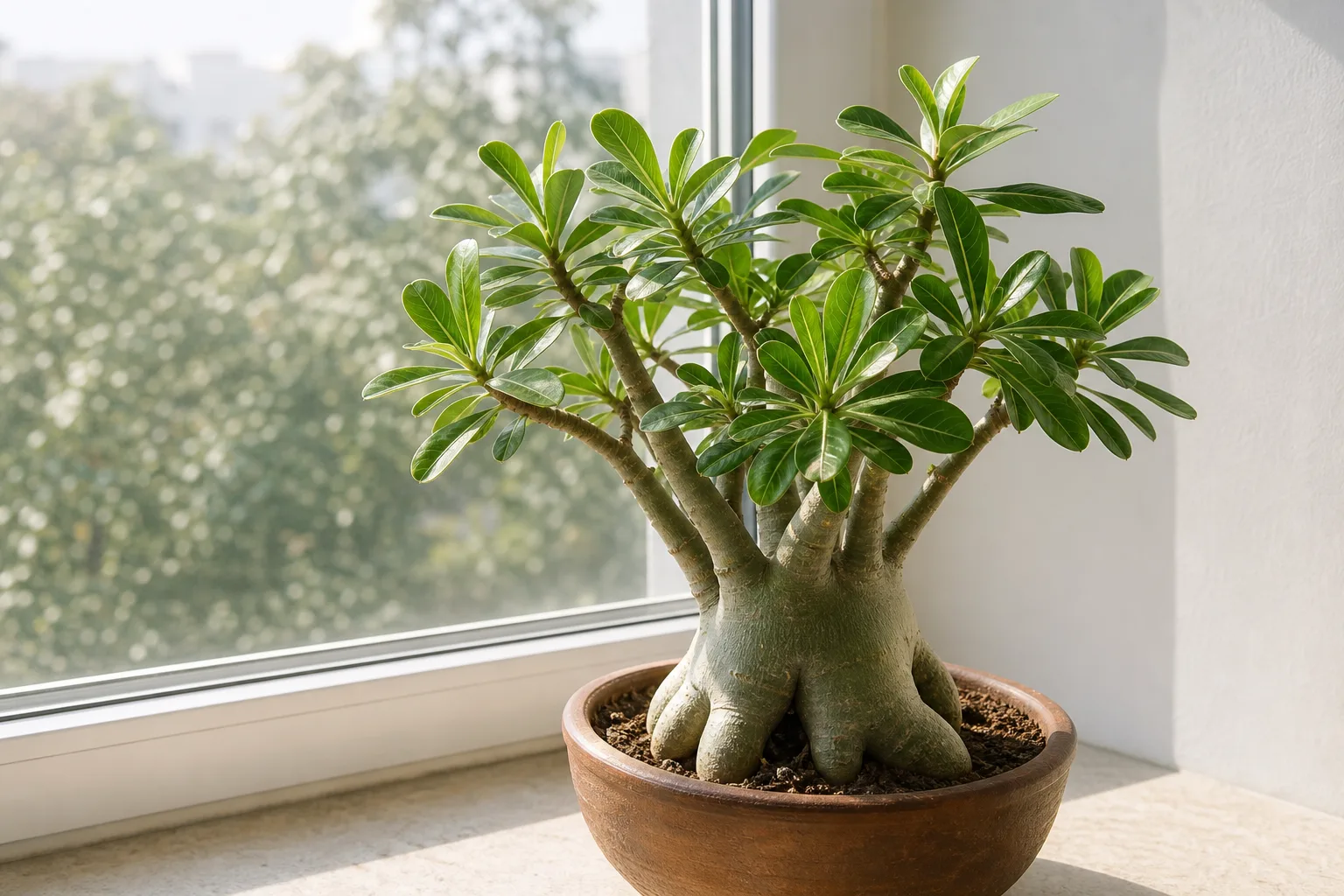
No Flowers on Adenium: Causes, Checks & Fixes
This guide covers no flowers on Adenium. See also the general No Flowers guide, watering, and light pages for this plant.
No Flowers on Adenium: Causes, Checks & Fixes
Quick answer
July on a bright windowsill: your Adenium overview has glossy leaves and a firm caudex, but stem tips stay smooth with no bud bumps for the third summer in a row. That pattern-healthy foliage, zero flowers in warm weather-almost always means insufficient direct sun, not a missing nutrient or mystery disease. During cool winter rest, no flowers and leaf drop are part of the natural cycle; that is not failure.
First fix: move the plant to the sunniest spot you can give it-at least six hours of direct sun on the leaves during the warm season-and water only after the mix is dry several centimeters down. Do not stack Adenium repotting guide, pruning, and extra fertilizer on the same week.
For light placement detail, see the Adenium light guide. If stems are stretching and pale, also read not enough light and leggy growth.
By sai-ananth · Reviewed by LeafyPixels Review Board · Last expert review: June 2026
What no flowers looks like on Adenium
On a flowering-age Desert Rose, you should see rounded bud bumps at branch tips in late spring and summer. When flowering fails, the pattern usually falls into one of these buckets:
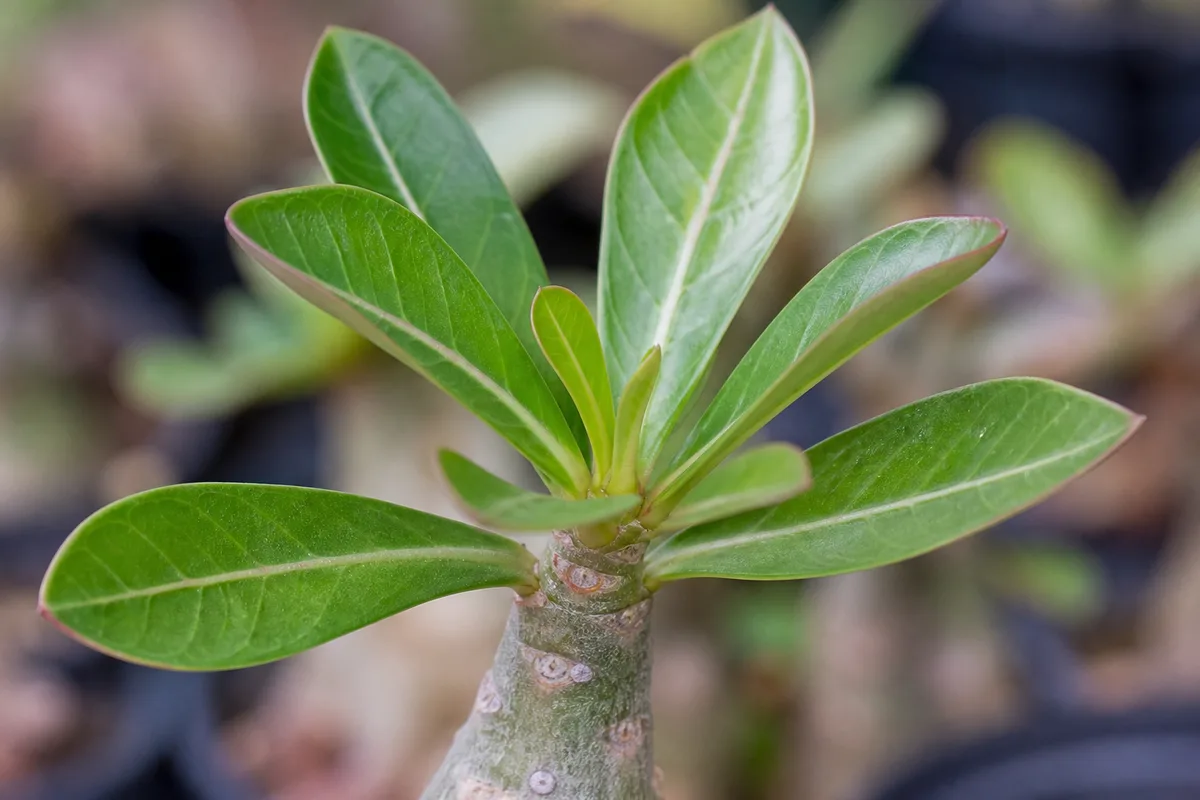
No Flowers symptoms on Adenium - compare with healthy tissue on the same plant.
- Healthy leaves, zero buds - stems look fine, caudex is firm, but tips stay bare through warm months.
- Leggy growth, no buds - internodes stretch, leaves are pale or small, and the plant leans toward the brightest window.
- Buds never appear after winter - leaves return in spring but tips stay smooth with no swelling for weeks.
- Only occasional weak blooms - one or two small flowers, then nothing for the rest of the season.
Compare this with normal winter silence: when temperatures drop and you withhold water, Adenium sheds leaves and flowers entirely for several months. That rest is required-forcing water or feed during dormancy often delays the next bloom cycle rather than speeding it up.
If buds form then fall off before opening, that is a different problem-see bud drop on Adenium.
Why Adenium stops flowering
Desert rose is a sun-loving caudex plant from arid regions. It stores water in its swollen base and pushes flowers only when light, warmth, and dry-down watering align.
Insufficient direct sun
UF/IFAS states plainly that Adenium will not flower under low light. Bright ambient room light is not enough. The plant needs six or more hours of direct sun on the foliage during active growth to maintain summer flowering. Indoors, that usually means a south or west window with the pot tight to the glass, or outdoor placement after gradual acclimation.
Cool season or incomplete dormancy break
Adenium flowers in heat. Its preferred active range is roughly 75°F to 95°F (24°C to 35°C). During a cool rest, all leaves and flowers drop-that is expected. If you keep the plant cold, dim, and wet through winter, it may never fully shift back into bloom mode in spring.
Overwatering and heavy soil
Adenium roots need sharp drainage and dry intervals. Missouri Botanical Garden recommends allowing soils to dry between waterings in gritty, well-drained mix. Constant moisture-especially in cool weather-keeps the plant in survival mode. Energy goes to damaged roots, not flower buds. See overwatering if the caudex softens on wet soil.
Too much nitrogen fertilizer
Regular high-nitrogen feed produces lush leaves and weak or absent flowering on many sun-loving plants. On Adenium, heavy feeding during weak light or dormancy also risks salt burn. Bloom problems from nutrition usually show up alongside dark green, soft new growth and no bud swelling at tips.
Plant age and recent stress
Seedlings and small grafted plants may need two or three warm seasons before their first serious flush. Recent repotting, a move to a new room, or pest damage on young shoots can pause bud formation for several weeks even when light is otherwise adequate.
How to confirm the cause
Work through these checks in order before changing more than one variable:
- Season and temperature - Is it cool dormant season with leaf drop? If yes, stop expecting flowers until warmth returns. If it is warm and leafy but budless, continue.
- Direct sun hours - Count hours of sun actually hitting leaves, not general room brightness. Stretching, leaning, and pale foliage confirm low light.
- Caudex and soil - Feel the base: firm is good; soft or squishy suggests rot stress that blocks flowering. Stick a finger 5–7 cm into the mix-water only when dry throughout.
- Age and history - Is the plant young, or was it repotted or moved in the last month? Recent disturbance explains a bloom skip.
- Pest scan on tips - Check new growth and any tiny bud bumps for aphids, mealybugs, or thrips scarring.
If light is clearly below six direct hours and everything else looks stable, treat insufficient sun as the primary diagnosis until proven otherwise.
The first fix to try
Move Adenium to a location with at least six hours of direct sun during warm active growth.
Place the pot where sun hits the leaves, not just the wall behind the pot. Outdoors, acclimate over one to two weeks to avoid sun scorch on leaves grown in shade. Indoors, use the brightest south or west window.
When a window is not enough
If you cannot hit six direct hours on leaves, supplement with a full-spectrum grow light positioned 30–45 cm (12–18 inches) above the canopy for 12–14 hours daily during active growth. The Adenium light guide covers placement and acclimation. Grow lights are a bridge, not a substitute for outdoor summer sun when you can provide it.
After the move, change nothing else for seven to ten days except watering when the mix is dry. Firm caudex tissue and tighter new leaves mean the plant is responding. Bud bumps at tips may take several weeks-that delay is normal after a light correction.
Step-by-step recovery
Once sun is addressed, add these steps in order if buds still do not form through mid-season:
Fix the watering rhythm
During active growth, water deeply, then let the mix dry between waterings. Empty saucers. In cool months, reduce frequency sharply or withhold water during full dormancy.
Resume bloom-supporting feed only in warm active growth
After new leaves are opening and the caudex is firm, apply a diluted balanced or phosphorus-forward liquid fertilizer at half label strength every three to four weeks through the warm season. UF/IFAS suggests low-dose weekly feed during summer growth outdoors; indoors, half-strength monthly is usually enough. Never feed a dry, dormant, or recently repotted plant.
Rule out pests on growing tips
If you see sticky residue, deformed new leaves, or silvery bud scars, treat sap-sucking pests before expecting blooms.
Repot only if drainage is failing
Repot in spring if the mix stays wet for days or smells sour-use gritty succulent mix with perlite or pumice. Do not repot purely to “encourage flowering”; root disturbance often skips a bloom cycle.
Recovery timeline
| Stage | What to expect |
|---|---|
| 1–2 weeks after light fix | New leaves may look tighter and darker; stem stretching slows. |
| 3–6 weeks | Bud bumps may appear at branch tips in warm weather. |
| Full warm season | Mature plants in good light often produce multiple flushes. |
| After repot or major move | Bloom pause of four to eight weeks is common. |
| Young seedlings | First serious flowering may take two or more warm seasons. |
Judge progress by new tip growth and bud swelling, not by old bare stems. Previous seasons without flowers do not permanently damage the plant if the caudex stays firm.
Lookalike symptoms
No flowers vs. bud drop - If buds form then fall off, see bud drop for water swings, heat spikes, or pests at bud stage.
No flowers vs. not enough light - These overlap. Leggy pale growth confirms light as the driver.
No flowers vs. normal dormancy - Winter silence with leaf drop is healthy rest, not a care failure.
No flowers vs. root rot on Adenium - A soft caudex, blackening base, and yellow wilting leaves are urgent rot signs, not a simple bloom issue.
Mistakes to avoid
- Watering on a calendar instead of when the mix is dry-keeps roots dull and delays buds.
- Feeding heavily to “force” blooms-especially high-nitrogen products in low light.
- Keeping Adenium in a dim “display” spot because the caudex looks sculptural there.
- Repotting during warm season hoping for more flowers-often skips the current flush.
- Ignoring winter rest-warm, wet, lit winter care produces weak growth without reliable flowering.
How to prevent it next time
Match the care rhythm Adenium evolved for: full sun outdoors or very strong direct light, gritty fast-draining mix, soak-and-dry watering, and a genuine cool rest with sharply reduced water. Feed lightly only in warm months. Track sun hours seasonally-a spot that worked in June may fall below six direct hours by autumn as the sun angle drops. See the Adenium overview for the full seasonal rhythm.
When to worry
No flowers alone is rarely an emergency. Treat it as urgent if the caudex softens, stems blacken at the base, or leaves yellow and wilt while soil stays wet-those point to rot, not a bloom tweak.
Otherwise, a firm caudex, healthy new leaves, and a corrected sunny spot are enough reason to stay patient through one warm season.
Dormancy vs active growth - quick reminder
Expect no flowers during cool rest with leaf drop-that is biology, not a fixable failure. Resume bloom expectations only when warmth returns, you resume soak-and-dry watering, and direct sun hours climb back above six on the foliage.
When to use this page vs other Adenium guides
- Adenium watering guide - Use for routine moisture checks before assuming no flowers is the main issue.
- Adenium problems hub - Browse all 40 common issues on this species.