Leggy Growth on Adenium (Desert Rose): Causes, Checks &
Quick answer
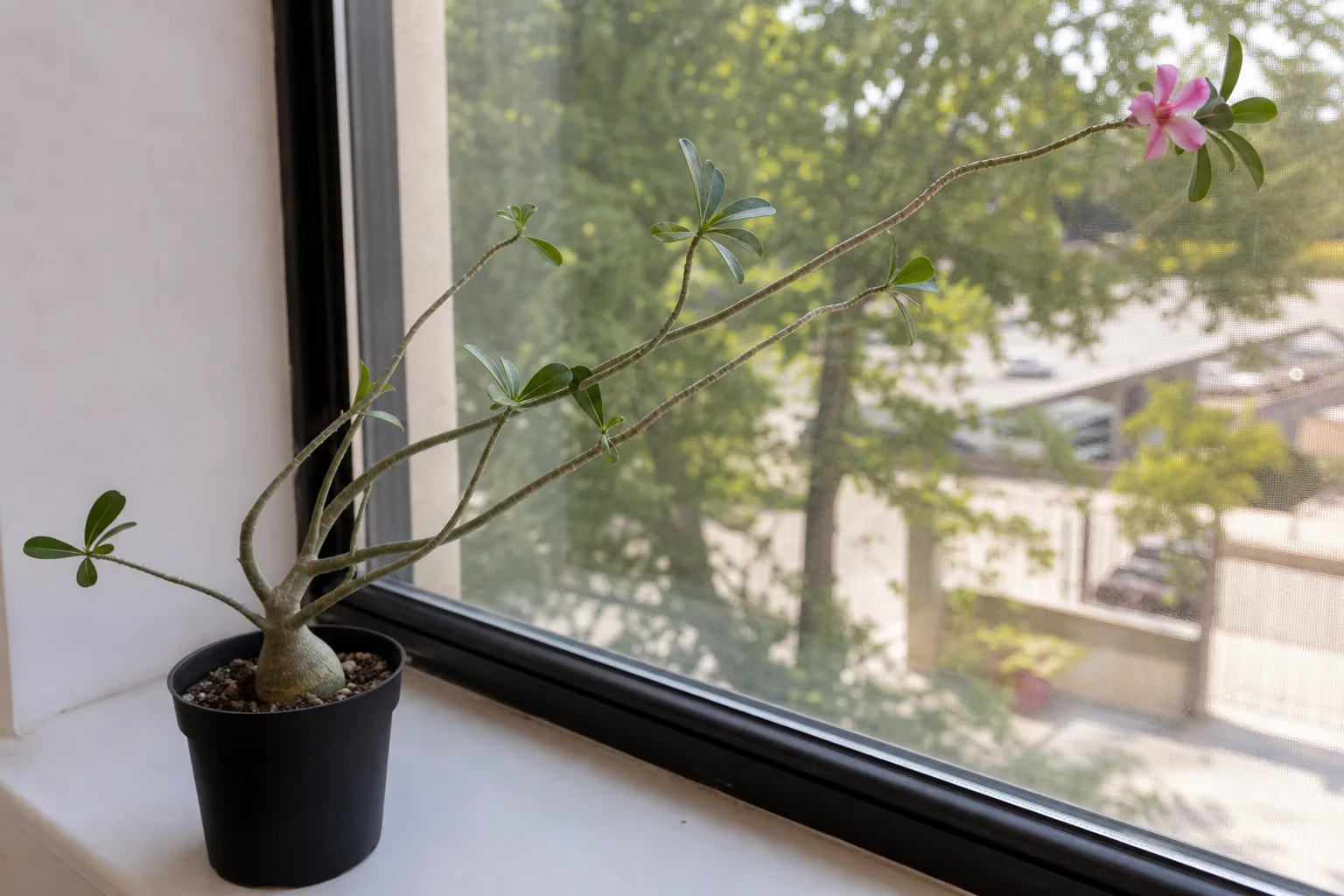
Leggy Adenium shows long bare internodes and wand-like shoots leaning toward glass-not just pale leaves. First step: move the pot to the sunniest spot you have (six or more hours of direct sun during warm growth), acclimate gradually, then hard-prune stretched stems in early spring once new compact growth proves the light fix worked.
Leggy Growth on Adenium: Causes, Checks & Fixes
This guide covers leggy growth on Adenium. See also the general Leggy Growth guide, watering, and light pages for this plant.
Leggy Growth on Adenium: Causes, Checks & Fixes
Quick answer
Leggy growth on Adenium (Desert Rose) is structural etiolation-long bare internodes, thin wand-like shoots, and a hard lean toward the brightest window. It is not the same as a compact bonsai-style specimen that simply carries fewer leaves by design; true legginess means weak reaching growth with poor flower production, not an intentional lifted caudex silhouette.
The root cause is almost always insufficient direct sun. UF/IFAS notes Adenium will not flower under low light and needs six hours or more of bright light daily to maintain summer blooms and compact branches.
First step: move the pot to the sunniest location you can offer-a south or west window with direct sun on the leaves, a full-sun patio after gradual acclimation, or a full-spectrum grow light above the canopy. Do not prune, repot, and relocate on the same day.
Use this page when stems already show long empty middle sections and floppy reach toward glass-you need stretch-specific pruning and recovery detail. Use the not enough light guide instead when pale leaves, missing flowers, or placement questions come first and stems are not dramatically wand-like yet. Window math and fixture specs live on the Adenium light guide.
Leggy growth vs. not enough light on Adenium
Both problems share insufficient light as the root cause, but these URLs serve different search moments:
| Your situation | Start here |
|---|---|
| Long bare internodes; thin floppy shoots leaning hard toward glass; empty middle sections on branches | This page - stretch-specific pruning and recovery |
| Pale leaves, no flowers, slow caudex; placement may be too dim but stems are not dramatically wand-like yet | Not enough light guide |
| Buds form then abort despite firm caudex and strong sun | No flowers guide |
| Foot-candle bands, window direction, acclimation schedule | Light guide |
| Hard prune timing after light improves | Pruning guide |
| Wet soil in shade with yellowing and soft base | Root rot guide |
Fixing stretch always requires brighter placement-the difference is when you hard-prune and how you judge whether old bare wood can be cut back safely.
What leggy growth looks like on Adenium
On desert rose, legginess shows up as long, pencil-thin stems with noticeably wide gaps between leaf clusters. Leaves at the tips may look smaller and paler than older foliage lower on the branch. The whole plant often leans hard toward one window or light source, and the lower half of each stem may be bare.
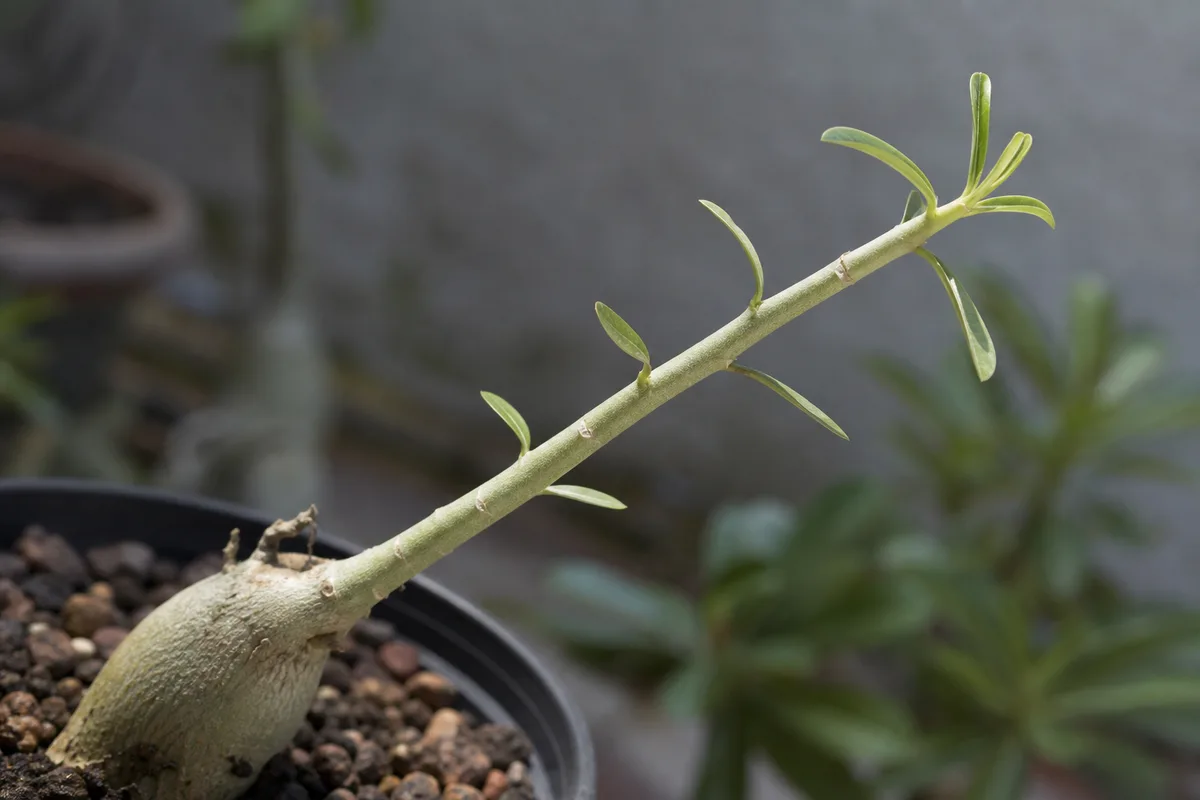
Leggy Growth symptoms on Adenium - compare with healthy tissue on the same plant.
During warm active growth, a healthy Adenium should produce dark green and glossy leaves and trumpet-shaped flowers along branch tips. A leggy plant instead looks sparse-a few leaves at the end of a wand-like shoot with an empty middle section. The caudex usually stays firm if rot is not involved, which helps separate this from overwatering in a dim corner.
Some lifted or bonsai-style specimens naturally carry fewer leaves than bush-form plants. Judge by stem weakness, absent flowers, and reaching lean-not leaf count alone. A thick caudex with short sturdy internodes on the sun-facing side is training aesthetics; floppy bare wands with no buds are etiolation.
Recovery snapshot: indoor winter stretch to spring patio
A common pattern: an Adenium that bloomed on a summer patio spends October through February on a bright living-room shelf. By March the caudex is still firm, but newest internodes measure roughly 4–5 cm apart (older sun-grown pairs were under 2 cm), leaves open pale, and shoots lean 30° toward the south window. After a 10-day acclimation-morning sun on the patio, then full exposure-the third new leaf pair opens darker green with internodes under 2 cm again. A hard prune in early April above active nodes produces side branches within three to four weeks in warm sun; bud initials often follow by early summer. Old stretched sections from the dim winter never shorten-only new growth proves the fix worked.
Why Adenium gets leggy growth
Desert rose evolved for open scrub with intense daily sun across sub-Saharan Africa and the Arabian Peninsula. When light falls short, stems elongate toward the brightest source instead of building compact wood.
Insufficient direct sun indoors
The plants must be stationed in high light, six hours or more per day, to maintain flowering during summer. A room that looks bright to you may deliver only indirect light on the leaves. Adenium kept on a shelf away from glass, or in a north-facing room, will etiolate within one or two growing seasons.
Seasonal light drop and winter culture
Shorter winter days and a lower sun angle reduce intensity even at the same window. Plants brought indoors for cold protection often land in the brightest available spot that still provides far less direct sun than outdoor summer culture. Missouri Botanical Garden notes winter leaf loss and dormancy on a firm caudex-seasonal rest is normal, but stretch that worsens during warm months is not.
One-sided exposure and crowding
The side facing the window may stay slightly fuller while the shaded side goes bare. Rotate the pot weekly before permanent lean sets in.
Nitrogen push in weak light
Overfeeding with nitrogen in dim conditions can push soft, elongated shoots that still lack the density of a sun-grown plant. Do not fertilize a still-stretching plant until light improves and new leaves look normal.
Light-watering interaction
Low light slows evaporation from the pot. Dim corners often stay wet longer than sunny ones-and wet soil plus shade is how a firm caudex turns soft. Pair any light fix with a dry-down check from the watering guide before you add fertilizer or repot.
How to confirm the cause
Work through these checks before pruning or repotting:
- Direct sun hours - during warm months, count how many hours direct sun actually hits the leaves. Fewer than six hours of direct light during active growth strongly points to light as the cause, matching UF/IFAS flowering requirements.
- Stem direction - light-starved Adenium leans toward the brightest source. Stems that stand upright but are long and bare may need pruning after light is fixed, not just relocation.
- Caudex feel - a firm caudex with dry soil supports a light diagnosis. A soft or squishy base suggests rot; do not prune heavily until that is ruled out-see root rot on Adenium.
- Season - leaf drop on a firm caudex in cool weather may be dormancy, not etiolation. Judge legginess during warm months when the plant should be actively growing.
- Flower history - if the plant has not bloomed in a year despite regular watering, low light is the leading suspect when the caudex stays firm in dry soil.
Confirmed leggy growth from light shows pale, stretched new leaves on a firm caudex. Confirmed rot or water stress shows wilting, yellowing, or soft tissue at the base-different fixes apply.
The first fix to try
Move the plant to the sunniest spot you can provide.
That means direct sun on the leaves for most of the day-a south-facing window with no sheer curtain, an unobstructed patio after frost risk passes, or a full-spectrum grow light positioned 15–30 cm above the canopy for 12–14 hours daily indoors. To maintain profuse flowering, desert rose needs six hours or more of bright light each day.
If the plant has been in deep shade, increase exposure gradually over 7–14 days to avoid sun scorch on leaves adapted to dim conditions. University of Arizona Cooperative Extension emphasizes gradual adjustment when moving succulents to stronger light. Rotate the pot a quarter turn every few days so all sides receive similar light.
Do not prune, repot, and relocate on the same day. Fix light first, then watch for two to three weeks. Once new growth looks tighter and greener, schedule stem cuts for early spring when the plant resumes active growth above about 55°F.
Step-by-step recovery
After light is corrected, follow this sequence:
- Confirm the caudex is firm and soil dries between waterings per the watering guide.
- Wait until early spring when temperatures stay warm and new leaves appear.
- Cut leggy stems back to just above a leaf cluster or node-avoid bare wood far below active foliage when possible. Full cut placement and bonsai vs bush-form goals live on the pruning guide.
- Remove dead or yellow leaves at the base.
- Resume normal soak-and-dry watering as new shoots emerge.
- Apply a low-dose liquid fertilizer only after fresh compact growth is visible.
Expect side branches from cut nodes within two to four weeks in warm, sunny conditions. Flowers typically return once light and pruning have restored a compact framework-often the same season if corrected before midsummer.
Grow-light backup when windows fall short
When no window delivers six hours of useful direct light-common in north rooms and short winter days-supplemental lighting keeps structure from collapsing until spring sun returns:
- Fixture: Full-spectrum horticultural LED (roughly 5,000–6,500 K), not warm household bulbs alone. Maryland Extension notes that inadequate light causes leggy stretch.
- Photoperiod: 12–14 hours daily on a timer during active growth; do not exceed 16 total hours of combined natural and artificial light.
- Distance: 15–30 cm (6–12 inches) above the highest leaves-close enough for intensity, far enough to avoid heat burn.
- Intensity check: PPFD measures usable light at the leaf surface; if new growth still stretches with 14 hours of lamp time, raise intensity (closer fixture or stronger panel), not just duration. Detailed fixture notes live on the Adenium light guide.
Recovery timeline
| Milestone | What to expect |
|---|---|
| 1–2 weeks | Lean may slow; newest leaf pairs should open closer together and slightly darker. |
| 3–4 weeks | Active branches thicken at the tips in strong sun. |
| After spring prune | Side shoots often emerge within two to four weeks in warm conditions. |
| One season | Flower count improves if light, watering, and warmth align. Old stretched sections remain long unless pruned. |
Elongated internodes on existing stems do not shrink back. Only new growth will look compact. If nothing sprouts after a month in strong sun with a firm caudex, inspect roots for hidden rot before cutting again.
Lookalike symptoms
Leggy growth is easy to confuse with these patterns:
- Winter dormancy - leaf drop on a firm caudex with reduced watering is seasonal rest, not etiolation. Wait until spring growth resumes before judging structure.
- Not enough light (early stage) - pale leaves and missing flowers before dramatic wand-like stretch; see the not enough light guide for placement diagnosis first.
- Underwatering - a slightly wrinkled but firm caudex with curled leaves signals drought, not stretch. Stems do not typically reach toward windows.
- Root rot - soft caudex, blackening stem base, and wilting with wet soil point to overwatering. Fix drainage and rot before pruning for shape.
- Natural sparse bonsai habit - some lifted specimens carry fewer leaves by design. Judge by stem weakness and absent flowers, not leaf count alone.
What not to do
Do not leave a leggy desert rose in the same low-light spot and expect fertilizer to fix the structure-Adenium needs bright sunlight for maximum flowering, and feed cannot replace light. Do not prune heavily without improving light first, or new shoots will stretch again. Avoid moving directly from a dim room to harsh unfiltered outdoor midday sun without acclimation.
Wear gloves when cutting stems-the milky plant sap is poisonous and Adenium is toxic to cats and dogs if ingested. If a pet chews any part of the plant, contact your veterinarian or the ASPCA Animal Poison Control Center promptly-do not wait for symptoms. Keep sap away from eyes and mucous membranes.
How to prevent leggy growth next time
Place Adenium where full sun and a loose, sandy or gravelly, well-drained mix are both realistic from the start. Outdoors in summer, give an open sunny location; before frost, move to the brightest indoor spot or add supplemental lighting rather than a back room.
Plan a light spring prune each year to remove last season’s stretched tips before the main growth flush-see the pruning guide. Rotate containers weekly. Match watering to active growth-allow soils to dry between waterings-so weak light is not compounded by soggy roots.
When to worry
Leggy growth alone is a care correction, not a crisis. Escalate if stems collapse at the base, the caudex softens, or blackening spreads up the trunk-those signs indicate root rot or cold damage rather than simple etiolation. A severely top-heavy plant with weak stems may need staking temporarily after pruning until new growth stiffens.
Related Adenium guides
- Adenium overview - hub page for caudex care, dormancy, and species basics
- Adenium light - window scorecard, acclimation schedule, grow-light specs
- Not enough light on Adenium - pale leaves and placement before severe stretch
- No flowers on Adenium - bud abort when light is already strong
- Adenium watering - dry-down rhythm tied to placement brightness
- Adenium pruning - hard cutback after light improves
- Root rot on Adenium - soft caudex with wet soil in shade
FAQs
Why does my desert rose have long thin stems with no flowers?
Long bare gaps between leaf clusters and thin shoots reaching toward the brightest window are etiolation-structural stretch from insufficient direct sun, not a watering schedule problem alone. Adenium needs six or more hours of direct light on the foliage during warm active growth to stay compact and bloom. Confirm sun hours on the leaves, not room brightness, before you prune or feed.
Should I prune all leggy desert rose branches at once?
Fix light first and wait one to two weeks until new tip growth looks tighter and greener. Then prune in early spring when temperatures stay above about 55°F and active leaves appear. You can hard-cut several wand-like shoots above leaf clusters in one session if the caudex is firm and soil dries normally-but do not stack a heavy prune, repot, and relocation on the same day.
Will old stretched internodes on Adenium shrink back?
No. Elongated gaps on existing stems are permanent structural change. Only new growth after stronger light will open with shorter internodes and darker leaves. Judge recovery by fresh shoots at branch tips and returning flower buds, not by whether old bare middle sections fill in on their own.
Can a regular desk lamp stop leggy growth on Adenium?
Warm household bulbs alone rarely deliver enough intensity for a full-sun succulent. Use a full-spectrum horticultural LED 15–30 cm above the canopy for 12–14 hours daily during active growth. If stems still stretch with long lamp hours, raise intensity-closer fixture or stronger panel-not just duration. Full fixture notes live on the Adenium light guide.
When is leggy growth urgent on desert rose?
Stretch alone is a care correction, not an emergency. Act before weak stems flop under a heavy caudex or snap at the base. Treat as urgent if the caudex softens, stems blacken from the soil line up, or leaves yellow while mix stays damp in shade-that pattern points to rot combined with weak light, not etiolation alone. See the root rot guide before heavy pruning.
Conclusion
Leggy Adenium is telling you it needs more direct sun. Confirm sun hours on the actual leaves, move to the brightest feasible location, acclimate if needed, then prune stretched stems in early spring above active nodes. Judge success by shorter internodes on new growth and returning flowers-not by whether old stretched sections fill in on their own. For placement and window math before stretch becomes severe, start with the not enough light guide; for cut height and bush-form recovery, follow the pruning guide.