Leaf Spot Disease on Adenium (Desert Rose): Causes, Checks
Quick answer
Leaf spot on Adenium shows yellowing leaves with brown or black circular spots from fungal infection, often anthracnose. First step: Remove spotted leaves and stop wetting foliage-water at the base only.
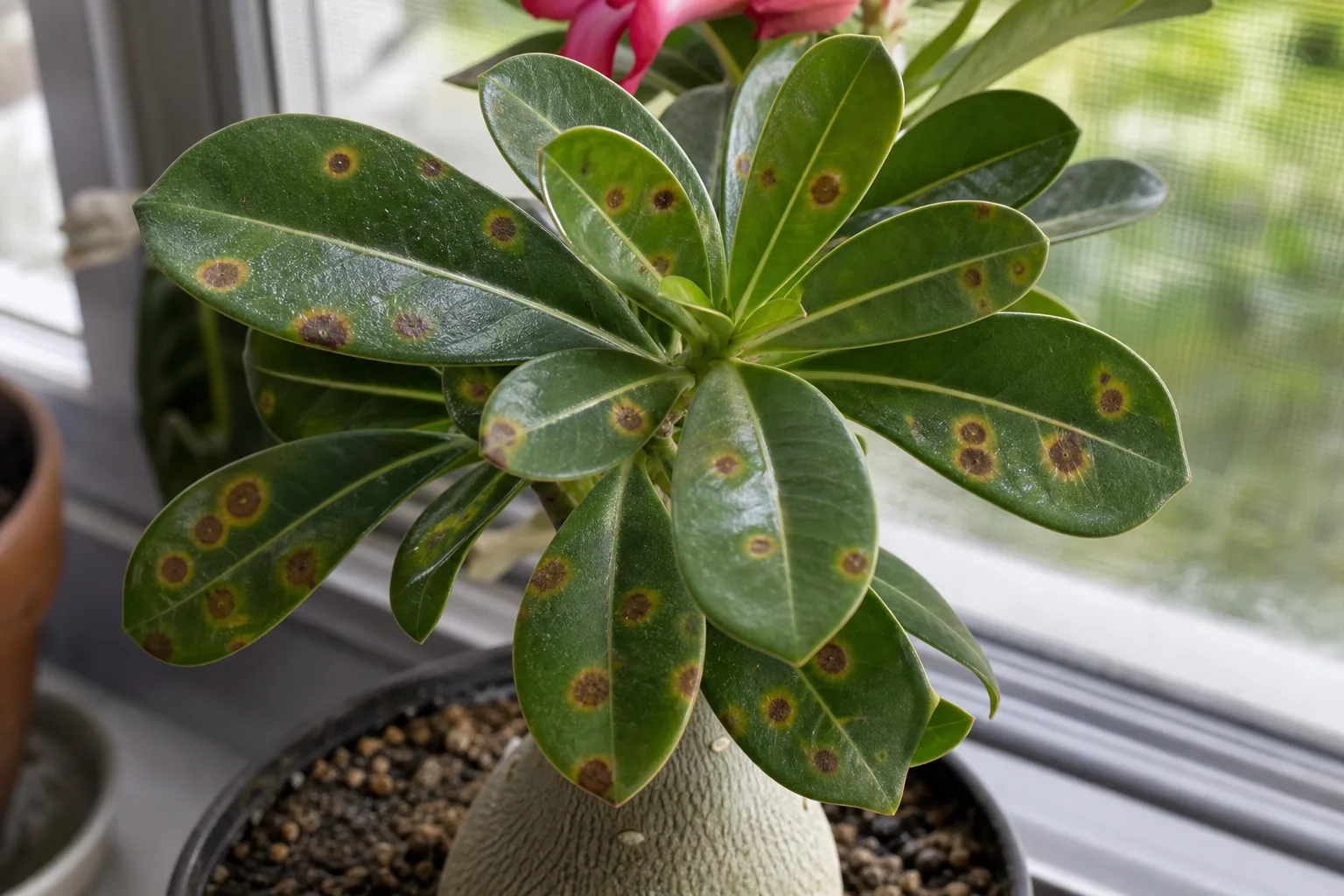
Leaf Spot Disease on Adenium (Desert Rose): Causes, Checks & Fixes
This guide covers leaf spot disease on Adenium. See also the general Leaf Spot Disease guide, watering, and light pages for this plant.
Leaf Spot Disease on Adenium (Desert Rose): Causes, Checks & Fixes
Quick answer
Yellow circles turning brown on your Adenium overview leaves usually mean fungal leaf spot-most often anthracnose from Colletotrichum species-not rot. Before anything else, press the caudex. Firm swollen base tissue with spotted leaves points to a foliar fungus you can correct by drying the canopy. A soft, mushy caudex means root or crown rot instead-different emergency.
First step: remove every spotted leaf with clean scissors, bag the debris, and switch to base watering so no water touches foliage.
Which page to read: this guide covers the fungal leaf-spot umbrella (anthracnose, Cercospora, and similar fungi). If your main symptom is black blotches with yellow halos, the black spots on Adenium guide is the deeper Colletotrichum resource-treatment is the same: dry leaves first.
By sai-ananth · Reviewed by LeafyPixels Review Board · Last expert review: June 2026
Why desert rose gets fungal leaf spots
Adenium obesum stores water in its caudex and thick stems. It needs full sun and well-drained soil and tolerates drought far better than moisture sitting on its leaves. When foliage stays wet for several hours after overhead watering, misting, rain exposure, or humid stagnant air, fungal spores germinate on the leaf surface.
Colletotrichum causes the most common leaf spot pattern on desert rose. UF/IFAS documents Adenium obesum among landscape plants affected by anthracnose, with yellowing foliage and necrotic lesions. Cercospora and similar leaf-spot fungi follow the same trigger: a film of moisture plus poor airflow.
On desert rose specifically, leaf spot appears when care mimics a tropical foliage plant instead of an arid succulent. Indoor growers often see outbreaks after moving plants to a humid sunroom, clustering pots on a drip tray, or watering from above in the evening. Gulf Coast and monsoon-season outdoor growers get flare-ups when pots sit in open rain without shelter. Overwatering the soil does not directly cause foliar spots, but soggy mix slows drying and keeps humidity high around the canopy-see overwatering on Adenium if the caudex is softening.
What leaf spots look like on Adenium
Early infection often starts as general yellowing on one or two leaves. Small circular brown or black spots then appear, sometimes surrounded by yellow halos. Spots may merge into larger blotches before the leaf drops. Lower leaves near the soil splash zone are frequently hit first.
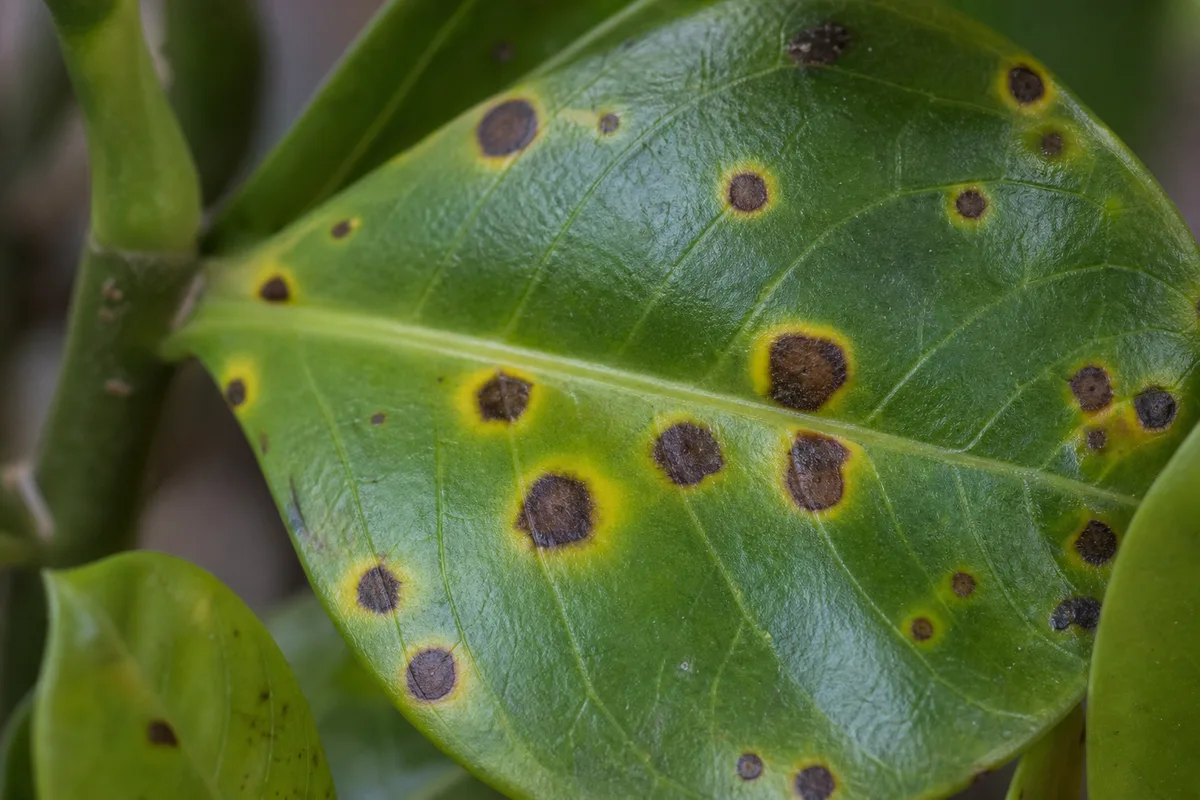
Leaf Spot Disease symptoms on Adenium - compare with healthy tissue on the same plant.
Unlike powdery mildew, there is no white talcum-like coating. Unlike sun scorch, damage is spotty with halos rather than uniform crispy margins on sun-exposed edges. Unlike oleander caterpillar damage, you will not find ragged holes or visible larvae. Unlike normal winter dormancy, yellowing is patchy with lesions during warm active growth, not a clean seasonal shed with a firm caudex and dry soil.
In advanced cases, defoliation can be heavy. The swollen caudex should remain firm throughout-soft, mushy base tissue points to rot, not leaf spot alone.
How to confirm fungus vs. rot, sunburn, and dormancy
Work through these checks before reaching for fungicide:
- Recent moisture on leaves - Did you overhead-water, mist, or leave the plant in rain within the past few days? Spots that appeared or spread after wetting strongly suggest fungus.
- Spot pattern - Round brown or black lesions with yellow halos that enlarge over time fit anthracnose and related leaf spots.
- Caudex firmness - Press the base. Firm tissue with spotted leaves supports a foliar fungal diagnosis. Soft caudex with yellow leaves means inspect roots for rot before treating leaves.
- Airflow and humidity - Crowded shelves, closed terrariums, and saucers holding standing water keep leaves damp longer. UF/IFAS notes that leaf surfaces wet for four or more hours after irrigation or rain favor anthracnose development.
- Stem inspection - Leaf spot alone rarely softens stems. Blackened, sunken stem lesions suggest anthracnose or rot spreading beyond foliage-escalate care immediately.
Symptom lookalike comparison
| What you see | Likely cause | Key differentiator on Adenium |
|---|---|---|
| Yellow halos around brown/black circles spreading after rain | Fungal leaf spot / anthracnose | Firm caudex; spots follow wet foliage |
| Black blotches with yellow halos (same fungus) | Colletotrichum anthracnose | See black spots guide |
| Crispy brown edges on sun-facing side only | Sun scorch | No circular halos; followed sudden light increase |
| Yellow leaves + soft caudex + sour soil | Root or crown rot | Base tissue fails before leaf pattern matters |
| Uniform yellow-then-drop, cool weather, dry soil | Winter dormancy | No expanding brown lesions; below 55°F trigger |
| White powder on leaf surfaces | Powdery mildew | Powder, not necrotic circles |
| Ragged holes, frass, caterpillars visible | Oleander caterpillar | Insect damage, not fungus |
First fix: remove spotted leaves and dry the canopy
Remove every leaf showing active spots using clean, sharp scissors. Bag infected leaves and discard them-do not compost indoors. This single step cuts the spore load and is the safest first action before any spray or soil change.
After removal, shift to base watering so no water touches foliage. Move the pot to a brighter, airier position with direct sun if possible-Adenium needs six or more hours of bright light during active growth. Space it away from neighboring plants and run a small fan on low indoors if humidity is high.
Wait five to seven days and watch new growth. Do not repot, fertilize, or heavily prune stems the same day you remove spotted leaves. Stack one correction at a time so you can read the plant’s response.
When to escalate to copper fungicide
If spots appear on fresh leaves despite dry foliage for a full week, a protective copper spray may help. UF/IFAS recommends copper sprays containing copper diammonia diacetate or copper octanoate for managing Colletotrichum on ornamentals. Fungicides protect healthy tissue only-they do not cure existing lesions.
During wet, humid weather that favors spore spread, apply at the shorter interval on the product label-typically seven to ten days. Spray in morning so leaves dry before hot afternoon sun-copper and oil sprays can phytotoxic succulent leaves under intense heat.
Do not reach for fungicide before correcting wet foliage. Cultural drying solves most desert rose leaf spot without chemicals.
Recovery timeline
| Phase | What to expect |
|---|---|
| Days 1–7 | Spot spread should halt once leaves stay dry; remove any new spotted leaves promptly |
| Weeks 1–2 | Existing lesions stop expanding; defoliation slows |
| Weeks 2–3 | New leaves emerging should be clean if conditions hold |
| Long term | Old spotted foliage will not green up-bare branches fill as fresh growth returns |
Defoliation during active summer growth looks alarming but is usually reversible when the caudex stays firm. Plants forced through winter dormancy may drop leaves anyway; wait until spring warmth returns before judging recovery.
What not to do
Do not mist desert rose to “help humidity” when spots are present-moisture feeds the fungus. Do not overhead-water from a shower or hose. Do not leave fallen spotted leaves on the soil surface where splash reinfects new growth. Do not apply nitrogen fertilizer to a defoliating plant; stressed Adenium does not need feeding until new growth is stable.
Wear gloves when cutting stems and leaves. Desert rose sap is toxic to cats and dogs and can irritate skin. Sterilize scissors with rubbing alcohol between cuts and between plants. If a pet chewed Adenium tissue or sap, contact ASPCA Animal Poison Control or your veterinarian.
How to prevent leaf spot on Adenium
Match care to the plant’s arid origins. Grow in loose, sandy or gravelly, well-drained mix with drainage holes. Water deeply at the soil line only when the mix is dry several centimeters down; empty saucers promptly. Shelter outdoor pots from rain during humid seasons. Give full direct sun-the same light that supports flowering also dries leaves quickly.
Reduce watering sharply during cool winter rest when leaves drop naturally. Wet soil and wet leaves together during dormancy invite both foliar fungus and caudex rot. For full species context, see the Adenium overview.
When to worry
Treat as urgent if the caudex softens, stem tissue blackens and sinks near lesions, or defoliation accelerates weekly during warm growth. Those signs suggest rot or advanced anthracnose moving into stems-not a cosmetic leaf issue. Open root rot or crown rot workflows if the base fails.
Slow, stable spotting on a few lower leaves with a firm base is lower urgency. Correct watering technique first and reassess before chemical treatment. If spots persist after two weeks of dry culture and copper spray on label intervals, contact your local cooperative extension office for lab confirmation.
FAQ: Is this the same as black spots?
Often yes for treatment. Anthracnose (Colletotrichum) drives most yellow-halo black spots on desert rose. This page is the umbrella entry; the black spots guide goes deeper on Colletotrichum identification and copper escalation when cultural drying is not enough.
FAQ: Neem vs copper?
Cultural drying first, then copper if needed. UF/IFAS recommends copper formulations for Colletotrichum when spots keep appearing on new leaves after a week of dry foliage. Neem is not a substitute for that escalation path on Adenium.
When to use this page vs other Adenium guides
- Adenium watering guide - Use for routine moisture checks before assuming leaf spot disease is the main issue.
- Adenium problems hub - Browse all 40 common issues on this species.