Curling Leaves on Adenium: Causes, Checks & Fixes
Quick answer
Curling leaves on Adenium usually mean water stress, sap-sucking pests, or heat after a sudden move-not low humidity. First step: feel the caudex and check soil moisture 5–7 cm deep before watering, spraying, or repotting.
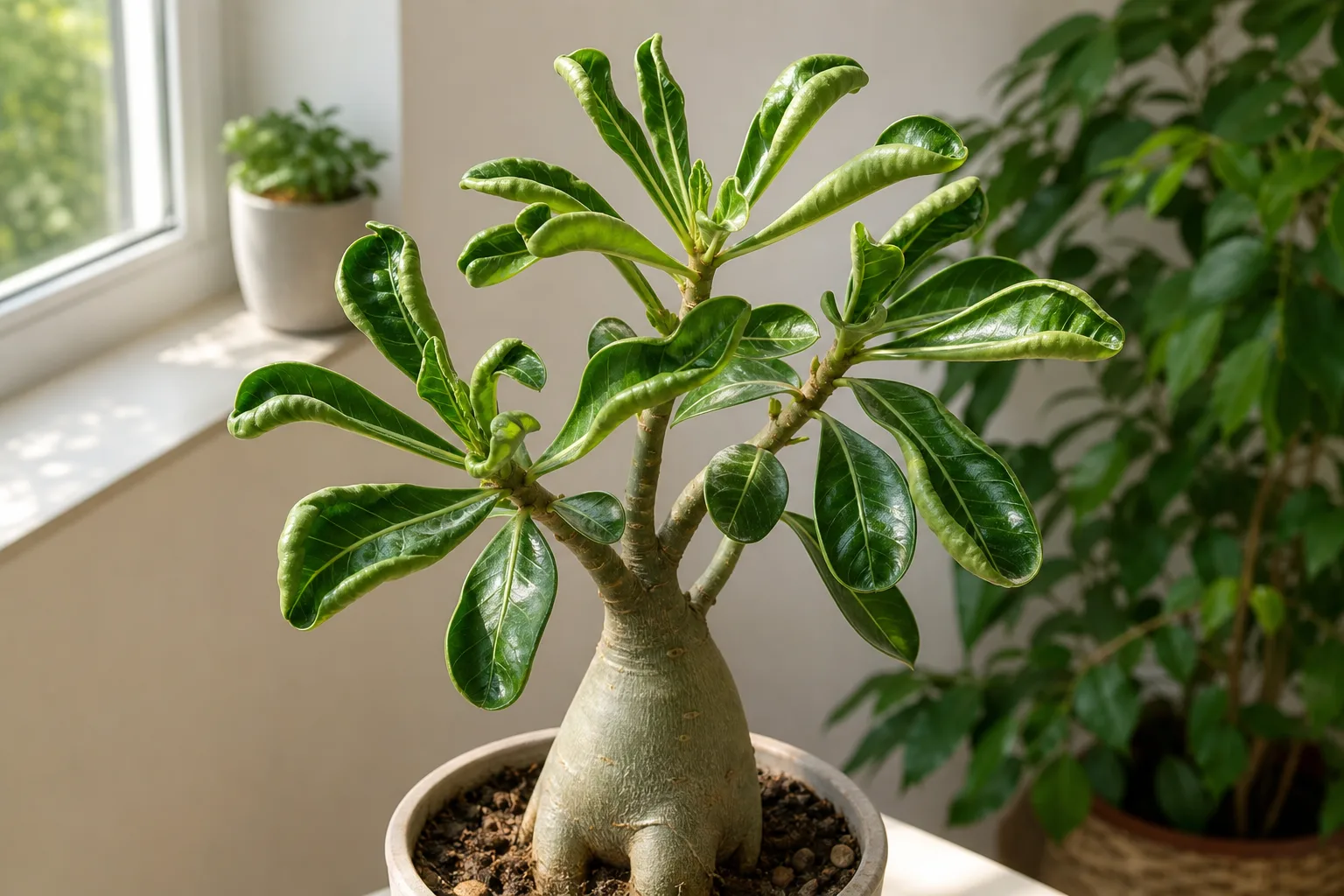
Curling Leaves on Adenium: Causes, Checks & Fixes
This guide covers curling leaves on Adenium. See also the general Curling Leaves guide, watering, and light pages for this plant.
Curling Leaves on Adenium: Causes, Checks & Fixes
Quick answer
Curling leaves on Adenium (Adenium obesum), also called Adenium overview, usually signal water stress, sap-sucking pests, or heat shock after a sudden environment change-not the low-humidity problems that curl tropical foliage plants.
First step: feel the caudex (swollen base), check soil moisture 5–7 cm deep, and scan new shoots for aphids before you water heavily, repot, or spray anything.
Adenium stores water in its caudex and thick stems. A firm caudex with dry mix means drought stress is likely; a soft caudex with wet mix means stop watering and inspect roots. Pests on buds and tender leaves cause curl without changing how the caudex feels.
What curling leaves looks like on Adenium
On Desert Rose, curl shows up differently than on humidity-sensitive houseplants like calatheas.
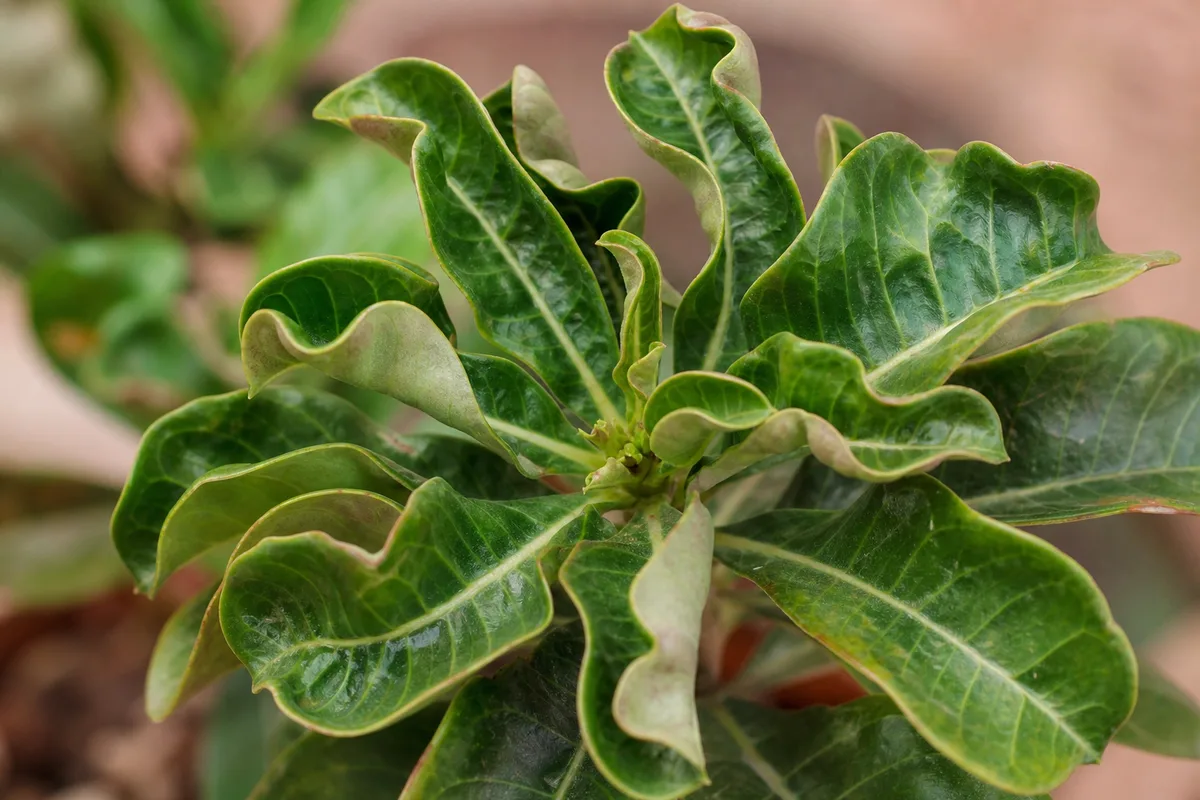
Inward cupping along thickened leaf margins on Desert Rose - compare with flat glossy green leaves on healthy growth nearby.
Typical patterns:
- Inward roll or cupping along the leaf margin, often on several leaves at once after a hot spell or missed watering
- Puckered, uneven blades where one side of the glossy leaf grows slower than the other-common with drought stress on thick leaves
- Twisted or stunted new leaves at stem tips when aphids, spider mites, or thrips feed on expanding tissue
- Yellowing lower leaves that curl before dropping-can follow overwatering on Adenium, chill, or seasonal rest
During cool winter dormancy, Adenium may shed leaves naturally while the caudex stays firm. Curl during warm active growth with wet soil or weak light is the pattern that needs intervention.
Compare the caudex at the same time you read the leaves. A firm, plump base with curled foliage usually means underwatering on Adenium or heat-not rot. A soft, yielding caudex with curl and yellowing means wet roots, even if the leaves look dry on the surface.
Why Adenium gets curling leaves
Adenium evolved as a drought-adapted succulent tree. Leaves curl to reduce exposed surface area when the plant cannot pull enough water through its roots-or when pests drain sap from new growth.
Water stress (most common)
Both extremes curl leaves, but the caudex tells them apart.
Underwatering in active growth dehydrates the caudex slightly, wilts leaves, and triggers inward curl so the plant loses less moisture. Hot windows and outdoor heat waves accelerate this-weekly watering that worked in spring may be too sparse once temperatures climb.
Overwatering suffocates roots in dense or constantly wet mix. The plant cannot take up water properly, so leaves curl and yellow while the caudex goes soft. This is easy to misread as thirst; adding water makes rot worse.
Sap-sucking pests
Aphids cluster on new Adenium growth and flower buds, weakening shoots and distorting leaves. Mealybugs hide in leaf axils and caudex crevices; spider mites leave stippling and fine webbing in hot, dry indoor air. All three can curl leaves without changing soil moisture.
Heat and sudden moves
Moving a Desert Rose from dim indoors to harsh afternoon sun-or from shade to full patio sun without acclimation-stresses leaves into curl within days. Drafts and chill below about 55°F can also yellow and drop foliage, which sometimes precedes curl on remaining leaves.
What usually is not the cause
Adenium tolerates low household humidity and does not need misting. Standard “raise humidity to 55%” advice from generic curling-leaf guides does not fit this plant. Nutrient deficiency can stunt growth, but curl with a firm caudex and stable watering is rarely solved by fertilizer alone.
How to confirm the cause
Work through this order before treating:
- Caudex firmness - Press the swollen base gently. Firm and slightly wrinkled suggests drought. Soft, squishy, or darkening suggests rot from wet soil.
- Soil moisture at depth - Dry 5–7 cm down with a firm caudex supports underwatering. Wet, heavy mix with a soft caudex supports overwatering.
- Pot weight - A light pot plus curl and wrinkled caudex confirms dry conditions. A heavy pot that never dries points to drainage or watering frequency problems.
- Light and recent moves - Did the plant move outdoors, change windows, or sit through a heat wave in the last week?
- Pest inspection - Check leaf undersides, stem tips, and buds with good light or magnification. Look for green/black aphid clusters, cottony mealybug patches, stippling, sticky honeydew, or webbing.
- Season - Firm caudex, leaf drop, and minimal water needs in cool months may be normal dormancy-not a crisis.
If wet soil and a soft caudex appear together, treat as root stress before assuming pests or drought.
First fix for Adenium
Feel the caudex and check soil moisture 5–7 cm deep-then make one correction based on what you find.
- Dry mix, firm wrinkled caudex: water deeply until excess drains, then let the mix dry through before the next drink. Do not mist.
- Wet mix or soft caudex: stop watering, move to Adenium light guide and airflow, and inspect roots only if the base stays soft after 5–7 dry days.
- Pests on new growth: isolate the plant, rinse leaf undersides and buds with plain water, then treat with insecticidal soap if insects remain-confirm active pests before spraying.
- Recent harsh sun move: shift to bright indirect light for one week, then re-acclimate to direct sun gradually.
Do not stack Adenium repotting guide, pruning, fertilizer, and pesticide on the same day. Adenium responds best to one change, then a 5–7 day watch on caudex firmness and new tip growth.
Step-by-step recovery
Once the first fix matches the confirmed cause:
- Stabilize placement - Full direct sun during warm active growth; protect from cold drafts and AC vents.
- Adjust watering only after caudex check - Soak-and-dry in summer; much less in cool rest. Empty saucers after every watering.
- Pest follow-through - Repeat insecticidal soap or neem at label intervals until new growth stays clean for two weeks.
- Trim only dead tissue - Remove fully brown, mushy leaves; leave slightly curled green leaves until replacements appear.
- Repot only if needed - Heavy peat mix, no drainage holes, or black mushy roots require gritty succulent mix and trimmed rot-not repotting on day one for mild curl alone.
- Hold fertilizer until new leaves unfurl healthy and the caudex stays firm for two weeks.
Recovery timeline
Mild drought curl on a firm caudex often improves within 3–7 days after one deep watering, with new leaves opening flatter within two to four weeks.
Pest-related curl needs two to three weekly treatments before new growth looks normal; old distorted leaves may never flatten.
Overwatering with early soft caudex can take several weeks of dry-down and possible root surgery; advanced rot may not fully recover.
Heat-shock curl eases within one to two weeks after acclimation to stable light and corrected watering.
Signs you are on track: caudex firmness returns, curl stops spreading to new leaves, and stem tips push healthy glossy foliage.
Lookalike symptoms
Curl on Adenium overlaps with other problems:
- Wilting/drooping - Limp hang with wet soil and soft caudex is rot; limp leaves with dry soil and firm caudex is drought. Both can include some curl.
- Yellow leaves - Cool dormancy or chill yellows before drop; overwatering yellows with soft tissue. Curl may appear on either.
- Sunburn - Crispy tan edges after sudden intense sun, not uniform inward cupping from drought.
- Leggy growth - Long thin stems from low light rarely curl leaves first; stretch and pale foliage come earlier.
Always pair leaf symptoms with caudex feel and soil moisture-Adenium diagnoses fail when you read leaves alone.
What not to do
Do not increase watering automatically when leaves curl-wet rot kills more Desert Rose plants than brief dryness. Do not use standard peat-heavy potting mix without grit or drainage holes. Do not mist for humidity; it does not fix Adenium curl and can encourage fungal issues on wet foliage. Do not fertilize stressed plants hoping leaves will uncurl. Do not move repeatedly between sun and shade in the same week.
Wear gloves when cutting stems-the milky sap is irritating and the plant is toxic to pets if ingested.
How to prevent curling leaves next time
Match care to Adenium’s growth rhythm: full sun, gritty fast-draining mix, and dry-down watering during active growth, with sharply reduced water in cool dormancy. Acclimate outdoor moves over one to two weeks. Quarantine new plants and inspect buds weekly during warm months. Keep pots off cold windowsills in winter and away from heating vents that dry soil unevenly.
When in doubt, let the caudex and deep soil moisture guide the next drink-not the calendar alone.
When to use this page vs other Adenium guides
- Adenium watering guide - Use for routine moisture checks before assuming curling leaves is the main issue.
- Adenium problems hub - Browse all 40 common issues on this species.
- Spider Mites on Adenium - Different entry point when symptoms overlap with curling leaves.
- Thrips on Adenium - Different entry point when symptoms overlap with curling leaves.
- Underwatering on Adenium - Different entry point when symptoms overlap with curling leaves.