Thrips on Adenium (Desert Rose): Causes, Checks & Fixes
Quick answer
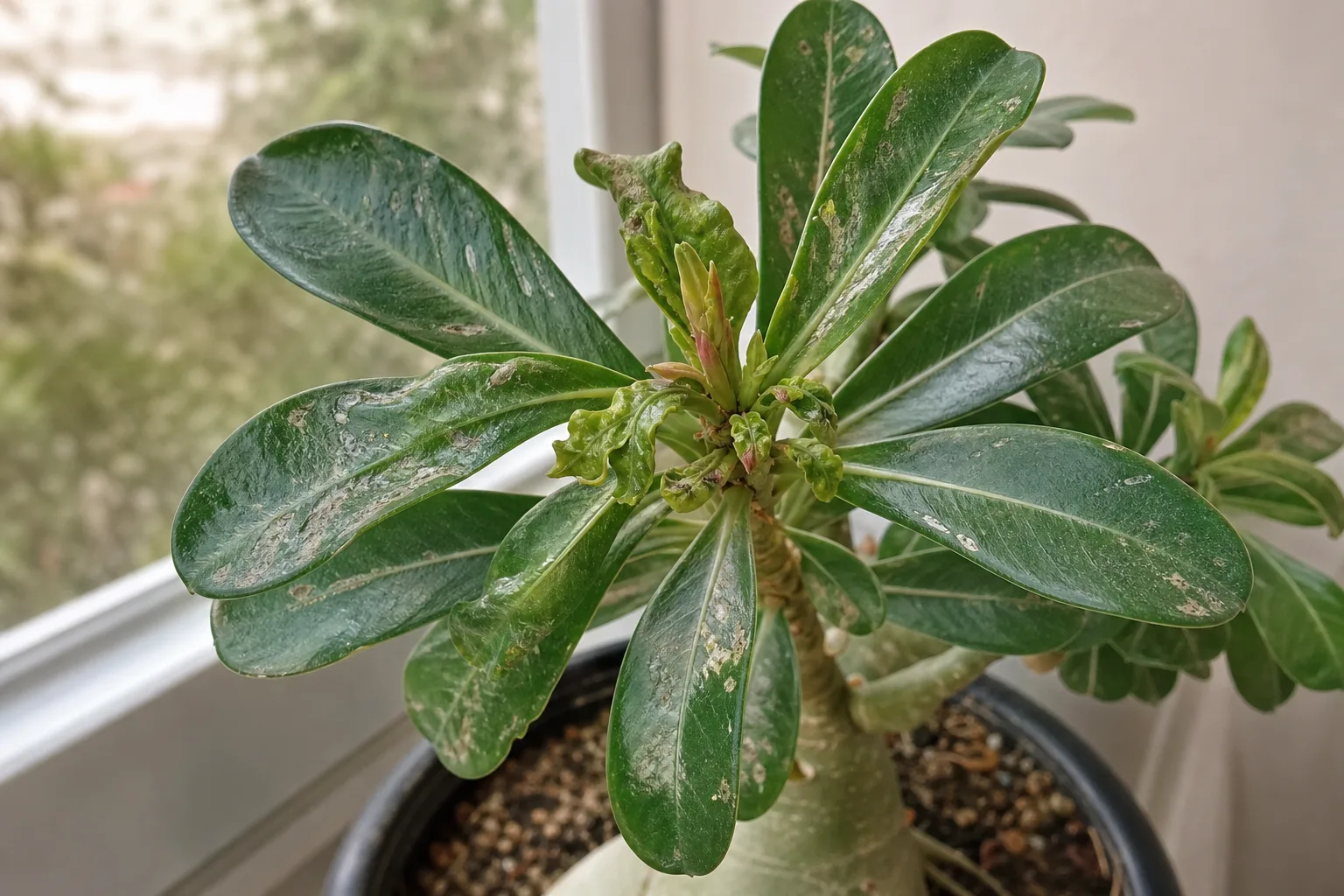
Thrips on desert rose rasp tender shoot tips and flower buds, leaving silvery streaks and twisted new leaves. First step: isolate the plant and shake stems over white paper to confirm tiny moving insects before spraying anything.
Thrips on Adenium (Desert Rose): Causes, Checks & Fixes
This guide covers thrips on Adenium. See also the general Thrips guide, watering, and light pages for this plant.
Thrips on Adenium (Desert Rose): Causes, Checks & Fixes
Quick answer
Silvery streaks on your desert rose buds usually mean thrips-not rot. Adenium obesum pushes its softest tissue at shoot tips and swelling flower buds during warm active growth, and thrips rasp those cells to feed, leaving silvery stippling and twisted new leaves while the caudex stays firm.
First step: isolate the plant and shake the newest stems over a sheet of white paper. Slender, fast-moving specks that fall onto the paper confirm thrips. Do not spray insecticide, repot, or prune heavily until you have that confirmation-stacking stress on a caudex plant that hates wet soil and root disturbance makes recovery harder.
A soft, mushy caudex on wet mix is a different emergency. See the Adenium root rot guide before you treat pests.
Visual cues: silvery thrips scarring vs. other damage
Thrips damage on desert rose has a recognizable look even without a microscope:
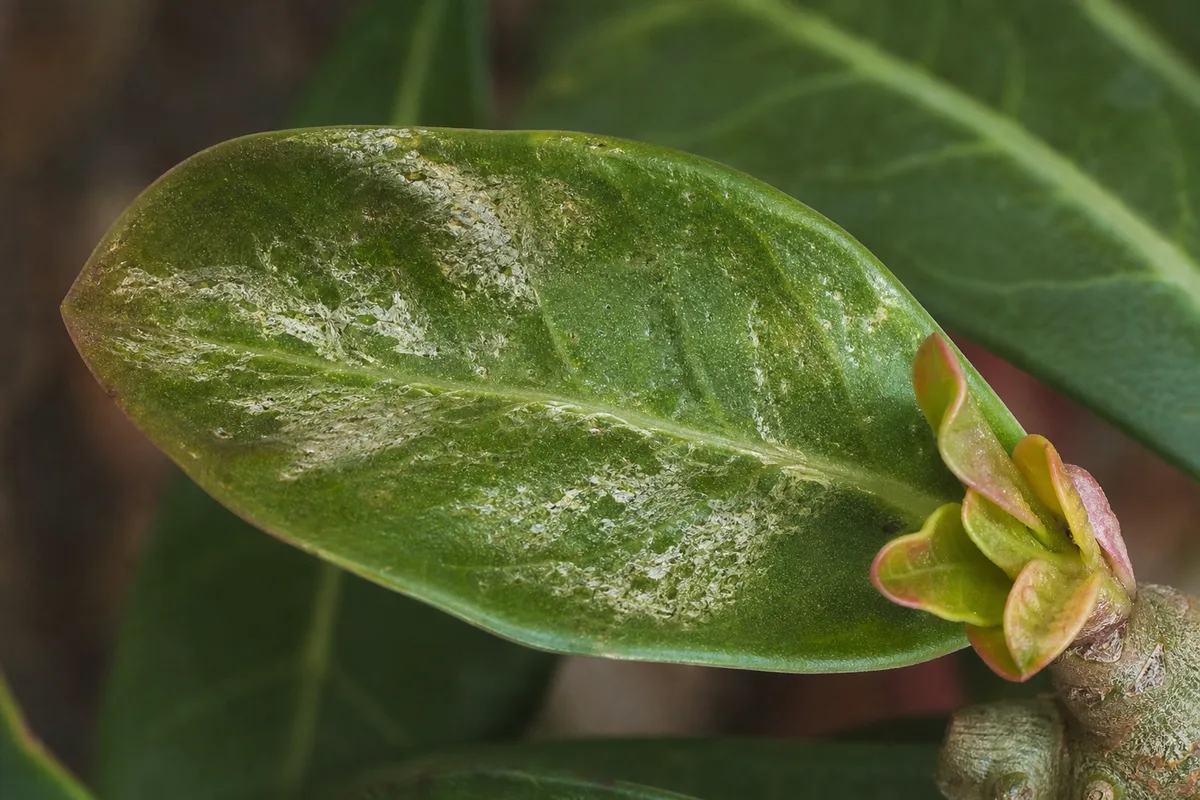
Silvery scrape marks and slight distortion on a young Adenium leaf tip - thrips feeding on the softest new growth.
- Silvery or bronze pencil-streaks on young leaves and unopened bud scales-the tissue looks scraped, not waterlogged.
- Black fecal specks scattered on scarred tips (not fuzzy mold spores).
- Twisted or crinkled leaf tips that should be flat and glossy on healthy Adenium.
- Buds that stall or abort while older leaves below look normal.
Compare before you spray:
| Visual cue | Thrips | Sun scorch | Rot |
|---|---|---|---|
| Surface texture | Silvery stippling with black specks | Tan, dry crispy margins | Mushy stems; no insect specks |
| Location | Newest shoots and buds only | Sun-facing leaf edges after a light move | Base and lower stems |
| Caudex feel | Firm | Firm | Soft or spongy on wet mix |
| White-paper shake | Moving elongated specks | Negative | Negative |
If you photograph damage for your records, shoot one close-up of a scarred bud, one of the white-paper shake result, and one sticky-trap catch-that trio documents the pest better than a single leaf shot.
Why desert rose gets thrips on spring buds and new shoots
Desert rose is not especially prone to thrips because of weak culture the way overwatered ferns are-but its growth rhythm creates a predictable target. When warm weather returns and Adenium breaks dormancy, it pushes a burst of tender leaves and flower buds. That flush coincides with when thrips populations rise on nearby ornamentals, open windows, and newly purchased plants.
New plants without quarantine. Thrips hitchhike on nursery stock, especially in buds and folded new leaves. Skipping a two-week isolation period is the fastest way to infect an entire collection.
Warm active growth windows. Spring and early summer are peak desert rose growth-and peak thrips feeding on soft tissue. Damage that appears “overnight” on new tips often reflects days of hidden feeding inside buds.
Indoor collections and greenhouses. Enclosed spaces lack predatory insects that keep thrips in check outdoors. One infested Adenium on a sunny windowsill can spread adults to neighbors within days.
Bloom-boosting fertilizer during flush. Soft, nitrogen-rich shoots attract sap feeders. Match feeding to the Adenium fertilizer guide instead of pushing tender tips while thrips are already present.
Shared tools and handling. Thrips do not travel on sap the way aphids clone on stems, but brushing infested buds and then touching clean plants can move adults. Adenium’s toxic milky sap means you already wear gloves for pruning-extend that habit when handling suspect tips.
Adenium’s preferred dry air and full sun do not prevent thrips; they simply mean the pest is not a humidity fungus. This is an insect problem on growing points, not a signal to mist or water more.
Confirm thrips vs. rot, mites, aphids, sun scorch, and mosaic virus
Work through these checks before treating. The goal is to confirm thrips-not spider mites, aphids, sun scorch, or mosaic virus.
- White-paper shake test. Hold a white sheet under the newest leaves and unopened buds. Tap or gently shake the stem. Thrips dislodged as tiny, elongated, moving specks confirm the pest. Static black dots that do not move are fecal spots, not insects-keep shaking fresh tissue.
- Inspect buds and shoot tips with a hand lens. Adults are less than 1 mm long and slender. Larvae are pale and wingless. Focus on the softest tissue; thrips hide in folded leaves and closed buds.
- Pattern on the plant. Scarring only on new growth with older leaves untouched strongly favors thrips. Uniform yellowing from the base up suggests watering or rot.
- Caudex and soil. Press the base. Firm caudex with dry-to-normal soil fits insect damage on tips. Soft base with sour wet mix means stop and assess rot before any spray.
- Sticky residue check. Aphids and mealybugs leave honeydew that makes leaves glossy and sticky. Thrips typically do not-if leaves are sticky, look for co-conspirators.
- Blue or yellow sticky traps. Hang a trap just above the plant for a few days. Thrips adults caught on the card support the diagnosis and help you monitor whether numbers fall after treatment.
If the paper shake is negative but silvery scarring is fresh, repeat the test on three separate mornings. Cool thrips move slowly; warm afternoon checks catch more activity.
Symptom lookalike comparison
| What you see | Likely cause | Key check |
|---|---|---|
| Silvery streaks on new buds and tips | Thrips | White-paper shake shows moving specks |
| Fine webbing and yellow stippling on older leaves | Spider mites | Mites on undersides; dry indoor air |
| Soft green or black bumps with sticky honeydew | Aphids | Visible colonies without magnification |
| White cottony wax in caudex crevices | Mealybugs | Stationary clusters; alcohol turns them orange-gray |
| Tan crispy margins after sudden sun move | Sun scorch | No insects; follows exposure change |
| Patchy yellow-green mottling across leaves | Mosaic virus | Tool sterilization; thrips can vector viruses on other ornamentals |
| Limp stems, soft caudex, wet mix | Overwatering / rot | No insect clusters; see root rot guide |
Confirmed diagnosis - Moving specks on white paper plus silvery scarring on new tips with a firm caudex. Suspected - Fresh scars without a positive shake may need repeat tests on three mornings before spraying.
First fix: isolate and confirm with the white-paper shake test
Isolate the plant and confirm thrips with the white-paper shake test.
Move the Adenium away from other plants-another room or a closed porch if temperatures allow-before you treat. Desert rose tolerates brief isolation in bright light; the priority is stopping adult thrips from spreading while you verify the pest.
Once you see moving specks on white paper (or catch adults on a sticky trap near the tips), you have confirmation. Only then move to treatment. If the shake is negative twice on scarred tissue, reconsider lookalikes before spraying.
Do not repot, fertilize, or heavily prune on the same day as your first pesticide application. Adenium roots resent disturbance, and stacking interventions makes it hard to know what helped.
Step-by-step recovery
Bud-heavy desert rose callout: Thrips hide inside unopened buds and folded new leaves-not on the tough old foliage you see first. Surface-spraying only the tops of mature leaves leaves the actual feeding sites untouched. Treat every closed bud, folded leaf, and soft shoot tip; skip the caudex and dry lower stems.
After isolation and confirmation, proceed in order:
Trim only heavily scarred bud clusters if they are clearly dead. Snip twisted tips that will never open, bag the debris, and sterilize scissors between cuts. Wear gloves-Adenium sap is toxic and irritating. Leave mildly scarred tissue until you see whether new growth comes in clean.
Add a blue sticky trap just above the canopy to catch flying adults and monitor population direction. Replace the trap weekly and note whether counts fall.
Apply spinosad or insecticidal soap to growing tips and buds, covering the tissue thrips actually feed on-not the caudex or dry old leaves. Spinosad is effective against thrips on ornamentals when applied to foliage and flowers; repeat every five to seven days for two to three cycles to catch newly hatched larvae. Insecticidal soap works on contact for soft-bodied stages but requires thorough coverage of folded leaves and bud scales.
Spinosad and insecticidal soap on buds and folded leaves
Follow label directions for ornamental use. UC IPM notes that contact sprays must thoroughly cover buds and shoot tips where thrips feed in protected sites-on desert rose, that means misting into closed bud clusters and the crease of each folded new leaf without drenching the caudex or wetting the soil surface.
- Spinosad (e.g., Monterey Garden Insect Spray, Captain Jack’s Deadbug Brew): generally more effective than soap alone; has short translaminar movement into sprayed tissue. Repeat at five- to seven-day intervals for two to three cycles.
- Insecticidal soap: kills on contact only; coat tops and undersides of young leaves and bud scales until runoff. Repeat on the same interval while active thrips and susceptible new growth are both present.
- Spray timing: early morning or evening when temperatures are moderate. Avoid treating open desert rose flowers if bees are active nearby; spinosad can harm pollinators for about one day after application.
- Outdoor summer caution: do not apply soap or oil above 90°F or in peak midday sun on heat-stressed plants-wet foliage baking in direct afternoon light can scorch desert rose leaves.
Inspect neighboring Adenium and other houseplants weekly. Thrips often appear on one plant first; catching secondary infestations early prevents another full cycle.
Do not increase watering because tips look damaged. Thrips are not a drought signal. Stick to dry-down watering when the mix is dry 5–7 cm down during active growth per the Adenium watering guide, and withhold feed until new growth looks normal.
Recovery timeline
| Phase | What to expect |
|---|---|
| Days 1–3 | Isolation and first treatment. Existing silver scars remain; no instant visual improvement. |
| Week 1–2 | Sticky trap counts should drop if coverage reached buds and folded leaves. No new scarring on the very newest emerging leaf is the first win. |
| Week 2–4 | Clean tips and opening buds without streaks confirm control. Old scarred leaves stay blemished until you prune them off. |
| Next bloom cycle | Normal flower count if buds formed after treatment started clean. Heavily damaged buds from before treatment may not reopen. |
Thrips rarely kill a mature desert rose with a sound caudex. Failure looks like fresh silvery scarring on every new leaf after three weekly treatments, or spreading infestation to the whole collection-escalate with a different labeled product or consult extension resources.
Mistakes to avoid
- Spraying before confirming thrips-systemic stress on Adenium without a clear target wastes time and can harm beneficial insects outdoors.
- Treating once and stopping-thrips eggs hatch in cycles; one application rarely clears a population on bud-heavy desert rose.
- Missing buds and folded leaves-surface-spraying only the tops of old leaves leaves the actual feeding sites untouched.
- Returning the plant to the collection too soon-wait until sticky traps and new growth stay clean for at least two weeks.
- Overwatering or repotting while fighting pests-wet soil plus root disturbance invites caudex rot on a plant already under stress.
- Misting to “help” scarred leaves-desert rose wants dry foliage; extra moisture does not heal rasp damage and slows soil dry-down.
- Composting trimmed buds-dispose of infested tissue in sealed bags.
How to prevent thrips on Adenium
Prevention blends quarantine, monitoring, and strong growing conditions aligned with the full Adenium care hub:
- Quarantine every new desert rose for two weeks minimum. Inspect shoot tips and buds with a lens before placing it beside established plants.
- Hang blue sticky traps near Adenium during spring growth to catch adults before scarring spreads.
- Grow in full sun with gritty, fast-draining mix so the plant pushes vigorous, inspectable new growth on a predictable schedule.
- Inspect tips weekly during warm months-early silver streaks are easier to treat than a bud set ruined mid-bloom.
- Isolate at first suspicion; thrips outrun casual monitoring in mixed indoor collections.
- Sterilize pruning tools between plants when trimming buds or tips, especially if sap is visible.
Adenium’s winter dormancy is not a thrips-free guarantee. Indoor plants kept warm year-round can host low populations that explode when spring buds appear-continue trap checks as new growth starts.
Outdoor collections and beneficial insects
For patio or greenhouse desert roses, predatory mites such as Neoseiulus cucumeris can supplement monitoring on outdoor ornamentals when temperatures stay below about 75°F. In warmer summer conditions, Amblyseius swirskii tolerates higher heat and may be a better fit for southern patio collections. Biocontrol works best as prevention alongside sticky traps-not as a rescue after heavy scarring is already widespread. Avoid applying spinosad while predatory mites are active; it can harm natural enemies for about a day after spray.
When to escalate - chronic infestations and pet safety
Treat thrips as urgent if:
- Every new leaf and bud scars within days during active growth, threatening the entire bloom cycle.
- Multiple Adenium or other ornamentals in the same space show fresh tip damage simultaneously.
- Buds collapse en masse before opening during peak flowering season.
- Silvery scarring persists on all new growth after three properly timed treatments at labeled intervals-reidentify the pest or escalate control.
For chronic infestations that survive repeated spinosad cycles, contact your local cooperative extension office or a certified IPM professional. They can confirm thrips species and discuss rotation products safe for your setup.
Thrips alone on a firm caudex is manageable cosmetic and reproductive damage, not a death sentence. Worry more when pest stress overlaps with wet soil or soft caudex tissue-that combination means you may be fighting insects while rot develops unnoticed at the base. Check caudex firmness at every inspection.
Pet ingestion: If a cat or dog chewed stems, leaves, or spinosad-treated foliage, contact your veterinarian or ASPCA Poison Control at (888) 426-4435 immediately-Desert Rose contains cardiac glycosides that can cause vomiting, irregular heartbeat, and worse.
Related Adenium guides
- Adenium overview - caudex care, dormancy, and species basics
- Adenium watering - dry-down rhythm that protects the caudex during pest stress
- Aphids on Adenium - sticky honeydew and branch-tip clusters
- Mealybugs on Adenium - white wax in caudex crevices
- Mosaic virus on Adenium - mottling that can follow thrips on other crops
Before you spray again
Silvery tips on a firm caudex mean confirm thrips with the white-paper shake first-not another drink. Soft caudex on wet mix means rot protocol, not pest spray. That single check keeps most desert rose owners from stacking the wrong fixes while thrips keep scarring the buds they wanted to bloom.