Cold Damage on Adenium: Causes, Checks & Fixes
Quick answer
Cold damage on Adenium usually follows exposure below about 50–55°F (10–13°C)-often after a plant is left outdoors too late or sits against a cold window. First step: move it to a stable spot above 55°F with bright light, then stop watering until the caudex feels firm again.
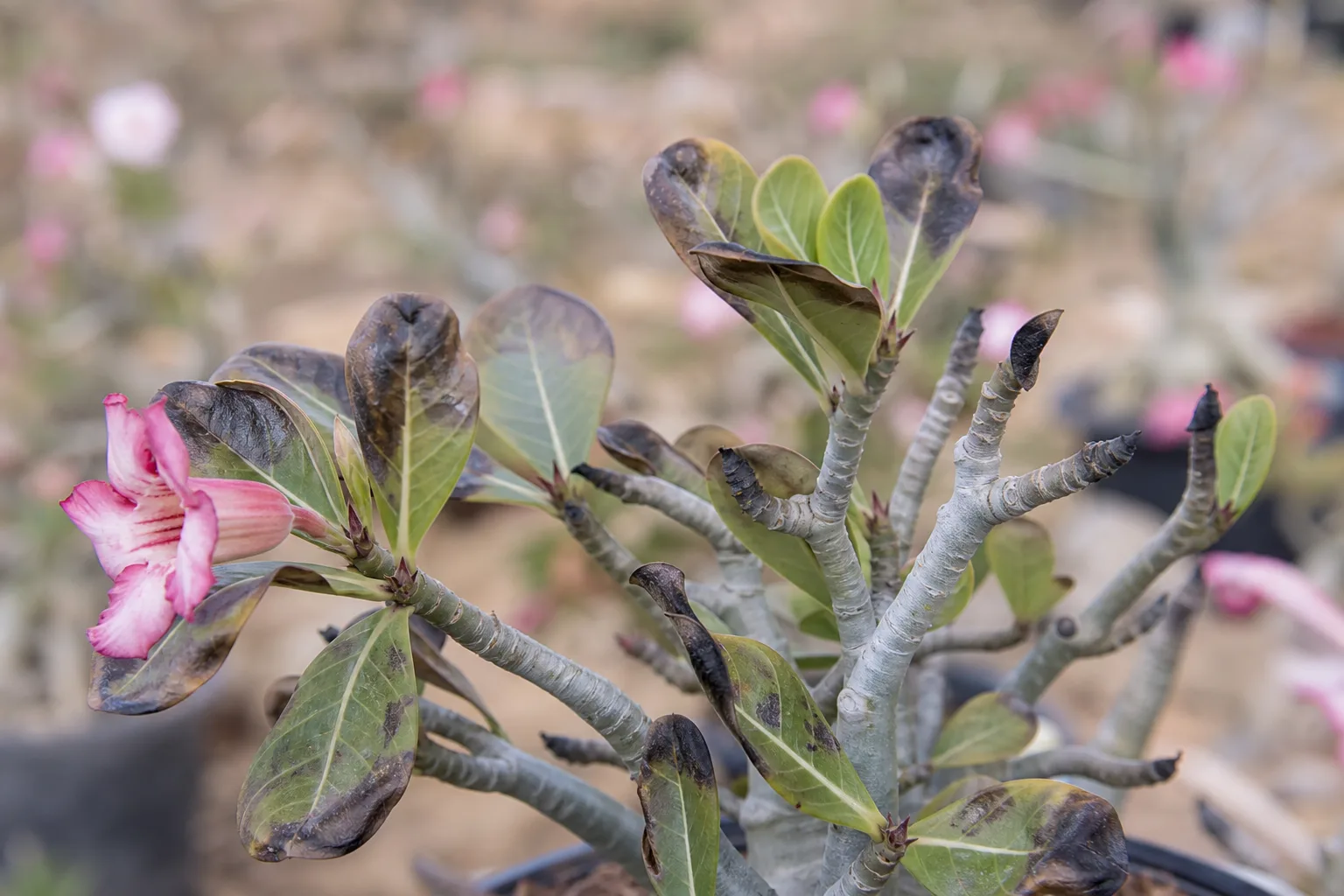
Cold Damage on Adenium: Causes, Checks & Fixes
This guide covers cold damage on Adenium. See also the general Cold Damage guide, watering, and light pages for this plant.
Cold Damage on Adenium: Causes, Checks & Fixes
Quick answer
Picture this: your Adenium overview sat on a south-facing patio through an Indian summer week. The forecast said 52°F overnight, so you left it out. By morning every leaf was yellow, branch tips had turned black, and the newest growth looked cooked-not crisp like sunburn, but soft and dark.
That pattern is classic cold damage on Adenium obesum (Desert Rose). The swollen caudex stores water in stems and branches, so when cell fluid chills or freezes, tissue dies fast-and the visual language often mimics rot.
First step: move the pot to a stable location above 55°F (13°C) with as much bright light as you can give it indoors. Do not water yet. Press the caudex gently: firm tissue means you are likely dealing with chill stress or normal dormancy; soft or squishy tissue means rot may have started on top of cold injury-switch to the Adenium root rot guide before anything else.
By sai-ananth · Reviewed by LeafyPixels Review Board · Last expert review: June 2026
What cold damage looks like on Adenium
Cold injury on Desert Rose rarely looks subtle once you know the pattern. Symptoms usually appear within a day or two of a chill event-not randomly mid-summer.
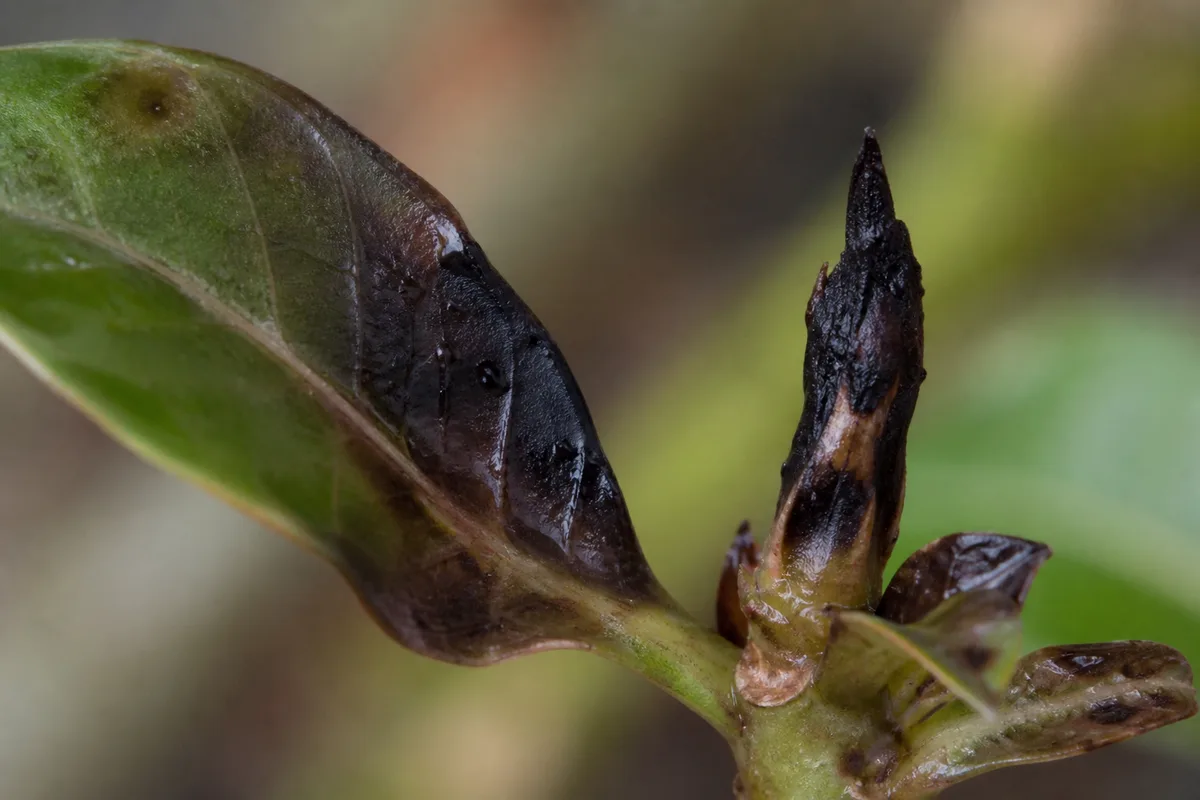
Cold Damage symptoms on Adenium - compare with healthy tissue on the same plant.
Early chill stress (roughly 50–55°F / 10–13°C)
- Leaves turn uniformly yellow, then drop
- Newest growth may look limp or paused
- Flower buds abort if the plant was blooming
Harder cold or brief frost exposure
- Stem and branch tips turn black or dark brown
- Tissue feels soft, waterlogged, or “cooked” rather than crisp
- Outer caudex skin may darken; advanced cases smell sour if rot follows
What still looks normal (dormancy cues)
- A firm caudex with dry soil and gradual leaf loss in late autumn often reflects normal winter dormancy-not frost injury
- Slightly wrinkled but firm caudex tissue points more toward drought than cold
The location story matters. Plants on an unheated porch, in an open garage, or pressed against single-pane glass show this pattern far more often than plants in a stable warm room.
Documented recovery example: A container Desert Rose left on a covered porch at 45°F (7°C) with damp soil showed uniform yellowing within 48 hours and black tips on the upper branches by day four. After moving indoors to 65°F (18°C) beside a south window, withholding water, and waiting two weeks, the caudex stayed firm. New leaf pairs appeared at branch tips in week three-cosmetic black scars remained on older wood, but no rot spread.
Why Adenium is vulnerable to cold (and wet cold)
Desert Rose is not a hardy outdoor shrub in most of the U.S. Missouri Botanical Garden lists it for USDA zones 11–12 and recommends container culture with overwintering indoors north of those zones. UF/IFAS describes its temperature preference as hot and tropical-about 75–95°F during active growth.
When temperatures fall into the chill band of 55–35°F, the plant may survive but responds with yellowing and defoliation because its metabolism cannot keep pace. That is different from the intentional dry rest many growers give Adenium in winter, where a firm caudex and dry soil are expected.
Below freezing, water inside cells can form ice crystals that rupture tissue. Because Adenium holds so much water in its trunk and branches, damaged areas often turn mushy and dark-the same visual language as rot, which is why cold and overwatering on Adenium are easy to confuse.
Wet cold kills faster than dry cold. Roots in wet soil chill faster than roots in dry mix. A plant that was fine at 60°F in fast-draining grit can fail quickly at 45°F in soggy peat because cold plus moisture invites fungal decay at the caudex. That compound failure is the main reason chill events escalate into root rot rescue.
Species and hybrid cold sensitivity
A. obesum-the most common Desert Rose in trade-is especially sensitive to cold and may show damage below 50°F, according to University of Arizona Cooperative Extension. A. arabicum and some hybrids bred from other Adenium species can tolerate chill slightly better, but no adenium should be treated as winter-hardy in continental climates. If you grow a named hybrid, still use the 50–55°F move-indoors rule; do not assume “tougher genetics” means patio culture through frost.
Climate context for outdoor growers
In USDA zones 9–10, some growers keep Desert Rose on patios through warm months and pull pots under eaves or indoors when nights approach 50°F. In zone 11 pockets, brief dips may not frost-kill tissue, but A. obesum still needs protection below about 50°F. Apartment growers face a different risk: air currents around windows and doors can produce cold drafts that chill pots pressed against glass-even when the thermostat reads comfortable. Greenhouse growers can hold stable warmth; if you lack one, treat a bright indoor room above 55°F as mandatory overwinter storage.
Confirm cold damage: step-by-step checks
Work through these checks in order before pruning, Adenium repotting guide, or feeding.
1. Timeline and placement
Did temperatures drop below 55°F within the last 48–72 hours? Was the pot outside, near an open door, on a glass windowsill, or in an unheated room? A clear cold event strongly supports cold damage. Repeated leaf drop without a freeze event points more toward draft stress.
2. Caudex firmness
Press the swollen base gently with your thumb.
- Firm and solid: chill stress or dormancy is likely; rot is less probable
- Soft, yielding, or hollow-feeling: inspect roots-rot may have started, especially if soil has been wet. Follow the root rot workflow if the base keeps softening.
3. Soil moisture
Stick a finger 5–7 cm into the mix. Cold damage alone does not require wet soil, but wet cold soil is the fastest route to a fatal caudex. If the pot is heavy and damp in cool weather, treat root health as part of the problem.
4. Stem and tip condition
Black, mushy tips that appeared after cold point to tissue death from chill. Dry, crispy brown edges on otherwise firm stems suggest sun scorch or salt burn instead. Uniform yellowing with firm wood and a recent cool week may be normal leaf drop approaching dormancy.
5. New growth test after warming
After several days in stable warmth, watch the branch tips. Cold-damaged plants often hold dormant buds that resume once nights stay above 55°F. If tips stay black and soft while the base firms up, the dead segment may need removal later-not on day one.
Caudex decision flow
| Step | Finding | Likely cause | Next action |
|---|---|---|---|
| 1 | Recent night below 50–55°F | Cold damage | Move warm + bright; hold water |
| 2 | Caudex firm, soil dry, gradual drop | Dormancy | Reduce water; wait for spring |
| 3 | Caudex firm, one-sided yellowing, no frost | Draft stress | Relocate away from vents/glass |
| 4 | Caudex soft, wet soil, sour smell | Root rot | Dry out, unpot, trim mush |
| 5 | Black tips after frost, firm base | Cold tissue death | Wait 1–2 weeks; prune mush only |
Cold damage vs. dormancy vs. draft stress vs. root rot
| Clue | Cold damage | Normal dormancy | Draft stress | Root rot |
|---|---|---|---|---|
| Trigger | Outdoor night, frost, cold window | Cool season + dry rest | AC vent, heater blast, leaky glass | Overwatering, especially in cool weather |
| Caudex | Firm early; may soften if wet + cold | Firm and plump | Firm | Soft, dark, may smell |
| Soil | Dry or wet depending on event | Dry | Often normal; danger when wet + chilled | Wet, heavy, slow to dry |
| Leaf pattern | Uniform yellow; black tips after hard chill | Even drop from bottom up | One-sided near air source | Yellow limp leaves throughout |
| Stem tips | Black/mushy after frost | Bare wood; no blackening | Woody; no black tips | May blacken as rot advances |
| Read next | This page | Leaf drop | Draft stress | Root rot |
The first fix to try
Move the plant to the warmest bright location you can maintain above 55°F, away from drafty doors and AC vents-but not directly above a hot radiator or heat register. Sudden jump from a 45°F porch to blasting dry heat can shock tissue that is already injured.
South- or west-facing indoor glass is fine as long as the pot sits a few inches back from freezing window panes at night.
That single move stops ongoing injury. Hold off on watering, fertilizer, and repotting until you have read the caudex for a week in stable conditions.
Step-by-step recovery
Once the plant is warm and bright, proceed in this order:
-
Keep it dry. UF/IFAS recommends withholding water during cold winter rest; the same dry discipline helps cold-injured plants. Resume watering only when the mix is fully dry and the caudex is firm-and daytime temps stay warm.
-
Give strong light. Adenium will not rebound in a dark corner. A sunny window or supplemental grow light supports the next flush of leaves.
-
Wait before pruning. Blackened tips can look alarming, but the full extent of dieback is not always visible for one to two weeks after warming. Premature cuts into live tissue waste stored energy.
-
Prune only mushy tissue-later. When new growth begins or when black areas stay soft after stable warm conditions, trim back to firm, light-colored flesh using sterile tools. Wear gloves; Adenium sap is irritating and the plant is toxic if ingested by pets or children. Keep cuttings and pruned debris away from curious pets.
-
Escalate if the caudex softens. If the base turns mushy despite dry soil and warmth, unpot, cut away all soft rot, air-dry two to three days, and repot into gritty mix. That crosses into rot rescue, not simple cold recovery.
Recovery timeline: what improvement looks like
Mild chill with a firm caudex: leaf drop may continue for one to two weeks, then stop. New leaf pairs often appear within two to four weeks once spring-like warmth returns-earlier if the event happened in late spring, slower if it hit in early winter when the plant was already heading toward dormancy.
Week 1 checkpoint: caudex should feel as firm as or firmer than day one; black tips should not spread downward. If softness appears, switch to rot protocol.
Week 2 checkpoint: dormant buds at branch tips may swell or show tiny green. Persistent black mush with no firm wood below means prepare for selective pruning-not panic repotting.
Cosmetic scars remain. Yellow or blackened leaves do not revert to green; wait for replacement foliage.
Signs you are winning:
- Caudex stays firm or re-firms after drying
- Branch tips green up or produce small new leaves
- No spreading black line moving down the stem
Signs the situation is worsening:
- Softening caudex despite dry soil
- Sour smell from the pot
- Black tissue advancing downward after a week of warmth
Severe frost that turns most of the above-ground stem mushy may be fatal. A caudex that stays firm can sprout again even when all leaves are lost.
Mistakes to avoid after a chill event
- Watering “to help” a wilted plant - the most common post-cold error; it pushes rot when roots are already impaired
- Repotting or feeding immediately - adds stress while the plant is barely metabolizing
- Pruning everything black on day one - you may remove tissue that would have recovered
- Moving chilled plant onto a hot radiator - thermal shock on top of cold injury
- Leaving the pot outdoors “one more night” - UF/IFAS is explicit that Adenium must not freeze; repeated chill causes cumulative damage
- Assuming the plant is dead because leaves dropped - bare branches with a firm caudex often leaf out again in spring
Prevent cold damage next winter
Use the 55°F rule: when autumn nights approach 55°F, bring containers indoors to a sunny cool room with reduced watering. Missouri Botanical Garden advises moving plants inside once temperatures begin dipping below 55°F in fall.
Outdoors in summer, track weather forecasts. Potted Desert Rose on decks must come in before the first cold snap-not after leaves already blacken.
For winter storage:
- Keep pots above 55°F and below normal room heat if you want dormancy
- Reduce water sharply; let leaves fall naturally
- Avoid placing pots directly on cold window glass-use a shelf or pull them back at night
- Maintain airflow, but not cold drafts from frequently opened doors
In spring, wait until nights stay consistently above 50–55°F before moving back outside, and acclimate to full sun over one to two weeks. Baseline year-round care lives on the Adenium overview.
Pet and child safety: Desert Rose sap can irritate skin and the plant is toxic if chewed. Store winter pots where dogs, cats, and toddlers cannot reach pruned debris or broken stems.
When to worry - and when to escalate to rot rescue
Treat the situation as urgent if:
- The caudex softens or smells off after you have stopped watering
- Black tissue spreads down stems during warm recovery weeks
- The plant sat below freezing (32°F / 0°C)-inspect the caudex daily for two full weeks even if it looks fine at first
Cosmetic tip dieback on a firm plant can wait for a calm correction. Structural base rot cannot-open the root rot guide the moment the caudex yields under gentle pressure.
Related problems: Draft stress · Leaf drop · Root rot · Adenium overview
This page targets home growers diagnosing cold injury on Desert Rose-the caudex-first branch before rot rescue or dormancy patience. Recommendations were checked against UF/IFAS, Missouri Botanical Garden, University of Arizona Cooperative Extension, Wisconsin Horticulture Extension, and ASPCA references cited inline, cross-checked against sibling Adenium problem pages, then validated with a claims audit before publication.
Author: sai-ananth · Reviewer: LeafyPixels Review Board · Reviewed: 2026-06-17 · Methodology: Plant problem guidance is reviewed against botanical references, extension resources, and LeafyPixels plant-care data before publication.
When to use this page vs other Adenium guides
- Adenium watering guide - Use for routine moisture checks before assuming cold damage is the main issue.
- Adenium problems hub - Browse all 40 common issues on this species.
- Leaf Drop on Adenium - Different entry point when symptoms overlap with cold damage.
- Drooping Leaves on Adenium - Different entry point when symptoms overlap with cold damage.