Draft Stress on Adenium: Causes, Checks & Fixes
Quick answer
Draft stress on Adenium usually shows up as sudden leaf yellowing or drop after exposure to moving cold or hot air, while the caudex stays firm. First move: get the plant out of the air stream, then check soil moisture before you water again.
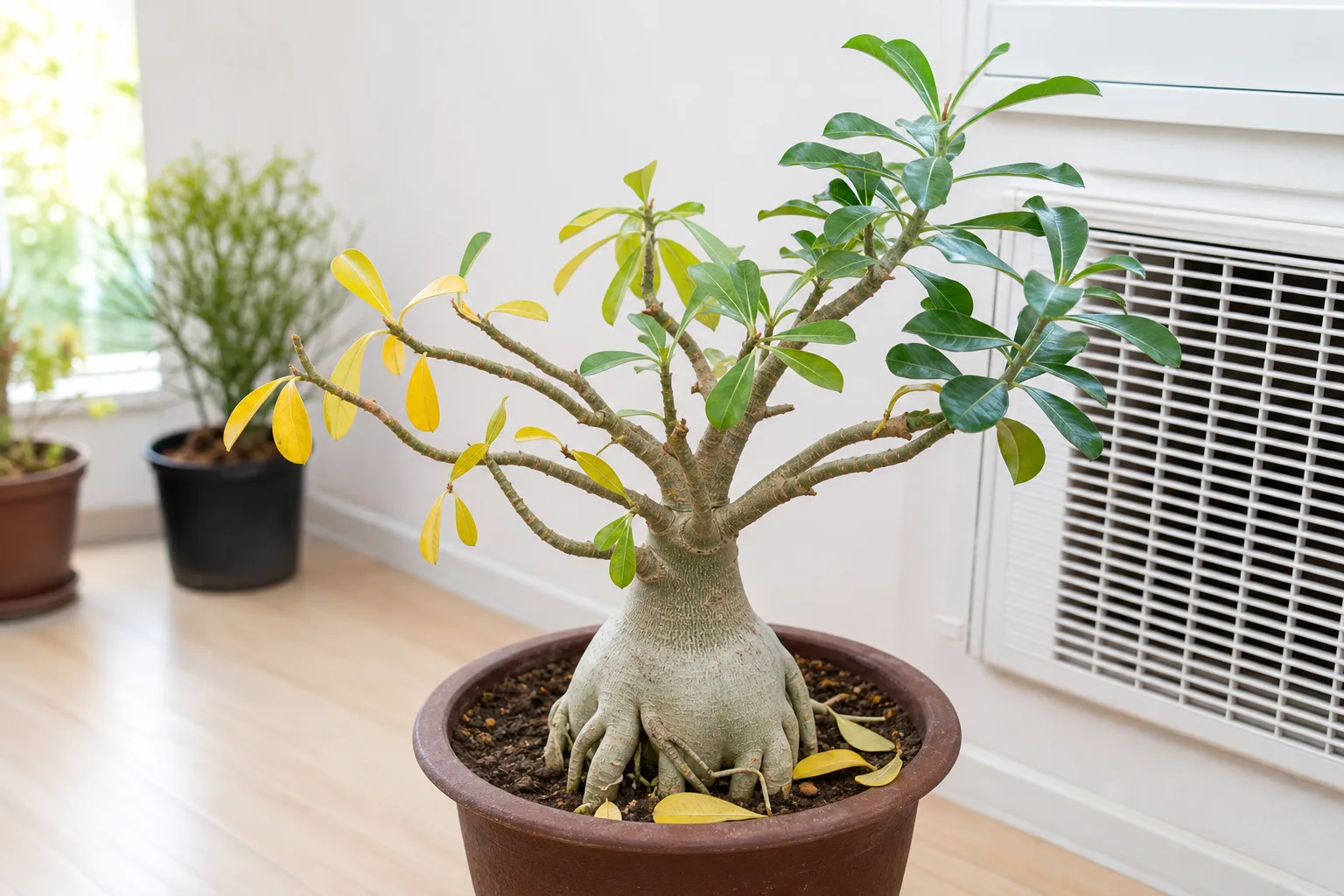
Draft Stress on Adenium: Causes, Checks & Fixes
This guide covers draft stress on Adenium. See also the general Draft Stress guide, watering, and light pages for this plant.
Draft Stress on Adenium: Causes, Checks & Fixes
Quick answer
On Adenium obesum, draft stress is usually a placement problem first, not a fertilizer or pruning problem. Desert rose wants bright light, warmth, and a root zone that dries decisively between waterings. When a pot sits in the path of cold air from an AC vent, a frequently opened exterior door, or cold window glass, leaves can yellow and drop even while the caudex stays firm. That differs from root rot on Adenium, where the base softens and the pot often stays wet.
First fix: move the plant out of direct airflow into the brightest stable spot you have, then check the pot before you water again. University of Arizona Cooperative Extension and UF/IFAS both treat desert rose as a warm-climate plant that suffers when temperatures drop too low for active growth. If the mix is still cool and damp, wait. If the mix is dry and the caudex is firm, return to the usual Adenium watering guide instead of overcorrecting.
What Draft Stress Looks Like on Adenium
Draft stress on desert rose usually shows up through timing and pattern, not through one unique lesion.
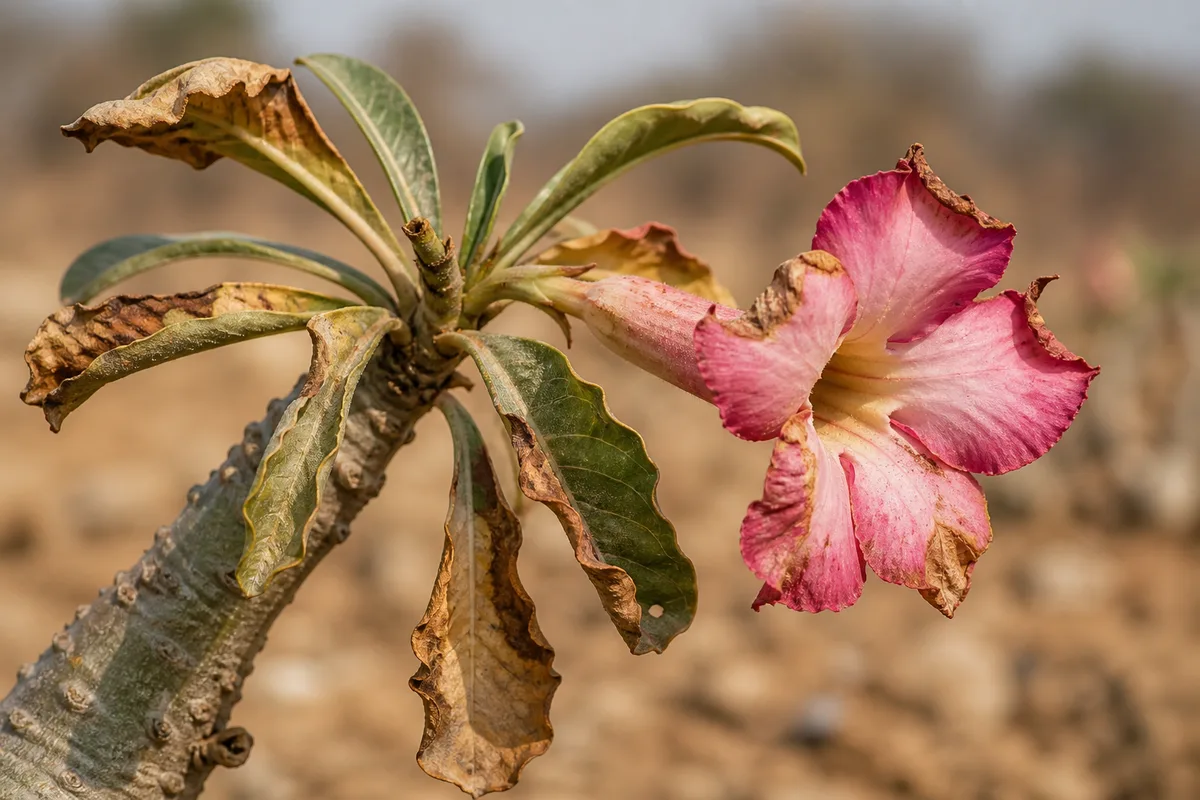
Draft stress symptoms on Adenium often overlap with dormancy and cold stress, so use the pattern together with caudex firmness and soil moisture.
Typical signs include:
- leaf yellowing or drop that starts soon after a placement change, AC use, heater use, or exposure to cold glass
- damage that is heavier on the vent-facing or window-facing side
- a plant that still has a firm caudex even though leaves are failing
- bud drop or stalled tip growth during otherwise warm, bright weather
What you usually do not see from simple draft stress is a black, mushy stem tip or a soft collapsing base. Those point more strongly to cold damage on Adenium or rot.
Why Desert Rose Reacts So Fast to Drafts
Desert rose is not adapted to the evenly moist, cool-root routine that many indoor foliage plants tolerate. NC State and the RHS both describe Adenium obesum as a sun-loving succulent shrub with strong light and warmth needs. UF/IFAS notes that flowering and active growth depend on high light and warm conditions.
Moving air matters because it changes leaf temperature and root behavior faster than the thermostat number suggests:
- Cold drafts slow water use and can trigger yellowing or leaf drop.
- Hot dry drafts can desiccate leaves faster than the roots can respond.
- Draft + wet soil is the risky combination, because chilled roots in damp mix are far more prone to failure than dry roots in the same room.
That is why a desert rose near an AC vent can behave badly even when the room seems warm enough overall.
Draft Stress vs Dormancy vs Cold Damage
These problems overlap, so treat draft stress as a working diagnosis, not a guess based on one yellow leaf.
| Clue | Draft stress | Normal dormancy | Cold damage |
|---|---|---|---|
| Timing | Begins after airflow change or placement change | Builds as days shorten and temperatures cool | Follows harder chilling or prolonged cold |
| Caudex | Usually firm | Firm | May start firm, then soften if tissue fails |
| Soil | May be dry or damp | Usually kept drier by design | Often dangerous when damp and cold |
| Leaf pattern | Often one-sided or abrupt | More even seasonal leaf loss | Yellowing may progress to blackened or mushy tissue |
| First response | Move plant, then reassess moisture | Reduce water and monitor | Warm plant, inspect damage, avoid wet cold soil |
If your plant is leafless in cool weather but the caudex is still firm, read leaf drop on Adenium before assuming something is wrong. If tips blackened after a genuine chill event, go straight to the cold damage guide.
How to Confirm Draft Stress Before You Change Anything Else
Work through these checks in order:
- Press the caudex. Firm tissue supports an environmental diagnosis. Soft tissue shifts the priority toward overwatering on Adenium or rot.
- Check the potting mix. If the root zone is still wet several days after watering, do not add more water just because leaves dropped.
- Map the airflow. Stand where the plant sits when the AC, heater, or fan is running. If you can feel moving air at leaf height, the plant can too.
- Compare timing. Sudden decline after a move, HVAC change, or cold window placement fits draft stress better than pests or nutrient issues.
- Rule out lookalikes. Webbing, stippling, sticky residue, or obvious pests send you toward the relevant Adenium problems hub instead.
The point is to identify whether airflow is the main trigger before you stack new fixes that the plant does not need.
First Fix: Move the Plant, Then Pause
Move the plant once to a steadier location: bright, warm, and outside the direct air stream. UF/IFAS Gardening Solutions recommends strong light for desert rose, and University of Arizona Cooperative Extension notes that cold stress increases as temperatures fall toward 50 F. A bright south- or west-facing window set back from cold glass is usually safer than a vent-facing ledge.
After the move:
- do not add extra water automatically
- do not fertilize until you see stable new growth
- do not move the plant again the next day unless the first spot was still drafty
If the soil is wet, let it dry further. If the soil is dry and the caudex is still firm, water normally and let the plant settle.
Recovery Timeline
Old damaged leaves will not turn green again. Judge recovery by what happens next, not by trying to save existing yellow leaves.
In a straightforward draft-stress case:
- leaf drop should slow once the air stream is removed
- the caudex should remain firm
- new growth should resume only when warmth, light, and watering are back in balance
That can happen quickly during active summer growth and much more slowly if the plant was already slowing for the season. A desert rose that is heading into rest may not replace leaves immediately even after you correct the draft.
What Not to Do
Do not treat leaf drop near a draft as proof of thirst. Wetting an already cool root ball is how a placement problem becomes a root rot on Adenium problem.
Do not repot immediately unless the mix is failing or roots are clearly compromised. Draft stress alone is usually fixed by changing placement, not by disturbing the roots.
Do not prune hard while the plant is actively shedding leaves from stress. Save structural pruning for stable warm growth. If you need that guidance later, use the Adenium pruning guide.
Prevention
The safest prevention plan is simple:
- keep desert rose away from direct AC discharge, heater blasts, and frequently opened cold doors
- avoid pushing the pot right against cold glass in winter
- keep the mix sharply draining so a temporary chill does not become prolonged wet-root stress
- adjust watering as growth slows instead of keeping a summer schedule year-round
Those same habits also lower risk for poor drainage on Adenium and repotting stress on Adenium.
When to Use This Page vs Other Adenium Guides
- Adenium watering guide: start there if you are not sure whether the pot is actually too wet or too dry.
- Leaf drop on Adenium: use when the plant is resting seasonally and you need dormancy context.
- Cold damage on Adenium: use when chilling caused blackened or collapsing tissue.
- Root rot on Adenium: use when the caudex softens or the soil smells sour.
- Adenium problems hub: use when draft stress no longer fits the pattern.