High Humidity on Adenium: Causes, Checks & Fixes
Quick answer
High humidity hurts Adenium when leaves stay wet and soil dries slowly-often after rain, misting, or grouping with tropical plants. First step: move the plant to full sun where foliage dries quickly and stop overhead watering.
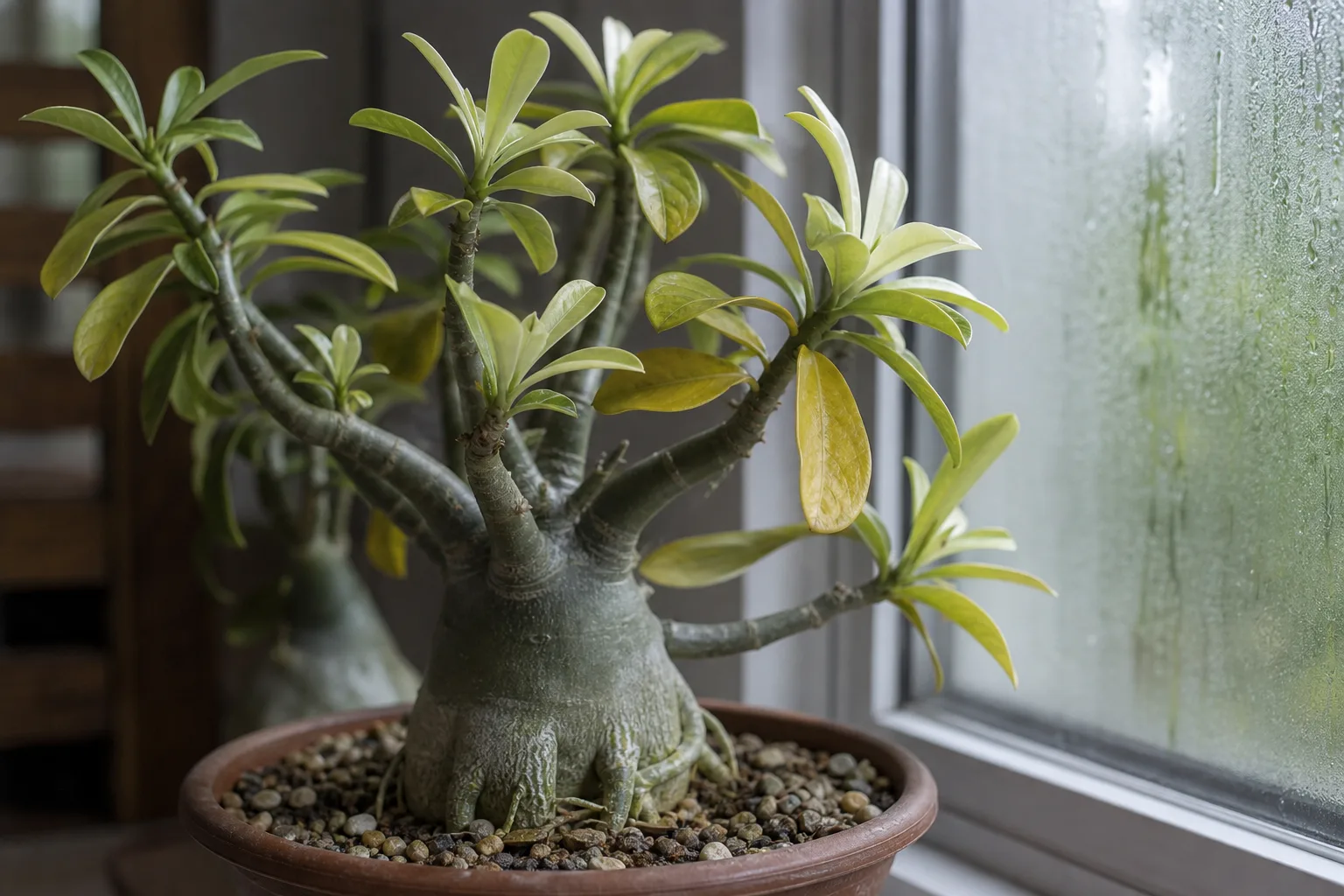
High Humidity on Adenium: Causes, Checks & Fixes
This guide covers high humidity on Adenium. See also the general High Humidity guide, watering, and light pages for this plant.
High Humidity on Adenium: Causes, Checks & Fixes
Quick answer
After a Gulf Coast afternoon storm, your porch Adenium still has raindrops on thick leaves at 9 a.m., the pot has not dried in four days, and yellow halos are spreading on lower foliage. That is humidity damage in action-not a mystery disease. Adenium obesum stores water in its caudex and evolved for dry heat in arid Africa and the Arabian Peninsula, not steamy greenhouse air.
First move: relocate the pot to the brightest, airiest spot you have-outdoor Adenium light guide or a south-facing window-and keep water off the foliage. Do not mist, shower, or overhead-water until leaves stay dry between drinks.
For species baseline care, see the Adenium overview. Humid stress often overlaps with overwatering when slow-drying soil keeps roots damp.
By sai-ananth · Reviewed by LeafyPixels Review Board · Last expert review: June 2026
What high humidity looks like on Adenium
Humidity damage rarely announces itself as a humidity reading. You see secondary effects:
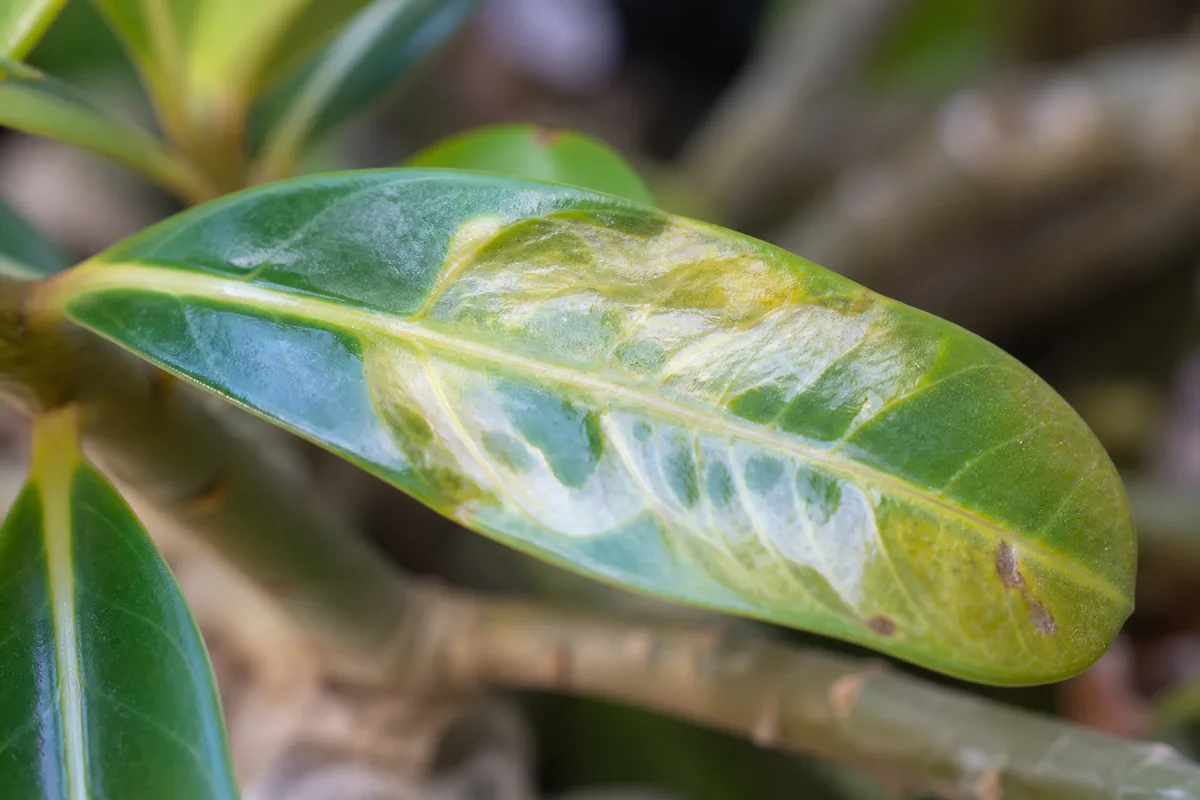
High Humidity symptoms on Adenium - compare with healthy tissue on the same plant.
- Leaf spots with yellow halos - small brown or black blotches that spread and drop leaves; classic anthracnose on desert rose in wet seasons.
- Persistent leaf wetness - dew, rain, or mist sits on thick succulent leaves for hours instead of drying by midday.
- Slow-drying soil - the pot feels damp 4–5 days after watering even though you are not watering heavily.
- White or gray mold on the soil surface, especially when pots are crowded on a humid patio or enclosed porch.
- Powdery white patches on stems or leaf undersides in stagnant, humid corners with weak airflow.
- Softening caudex - if wet soil lingers too long, the swollen base goes from firm to spongy; that is rot, not cosmetic spot.
During cool winter dormancy, Adenium may drop leaves with a firm caudex-that is seasonal rest, not humidity disease. Worry when spots and wet foliage appear during warm active growth. See leaf drop for the dormancy workflow.
Why Adenium struggles in humid air
Humidity becomes a problem in three linked ways:
- Wet leaves - Colletotrichum and other fungi need moisture on leaf surfaces to infect. Splash from rain or overhead watering spreads spores; high humidity keeps those surfaces wet long enough for lesions to form.
- Slow evaporation from the pot - In muggy air, gritty mix still dries, but much more slowly. Roots sit in damp soil longer, which Adenium tolerates poorly compared with brief drought.
- Stagnant air - Grouped pots, enclosed sunrooms without fans, and sheltered alcoves trap humid air. Even moderate humidity becomes damaging when nothing moves.
Treating Adenium like a tropical foliage plant-misting, pebble trays, dense peat mix-is a common setup for leaf spot and rot. Desert rose needs bright, warm, dry conditions and struggles when leaves stay wet in humid air.
Regional humid-climate notes
Gulf Coast and Southeast - Summer rain plus 80%+ humidity keeps outdoor pots wet for days. Move pots under eaves during storm weeks, tilt saucers, and space containers so air moves between them. Anthracnose flare-ups after open rain are common; shelter beats spraying first.
Monsoon and tropical outdoor benches - Brief heavy rain is less dangerous when full sun returns within hours. Chronic overcast weeks with wet leaves are the high-risk window-prioritize canopy drying over extra watering.
Indoor humid rooms - Bathrooms, kitchens, and plant shelves grouped with ferns keep Adenium leaves damp overnight. A small fan on low often matters more than a hygrometer reading.
How to confirm humidity is the cause
Work through these checks before reaching for fungicide:
- Morning leaf touch - After a normal night, are leaves still visibly wet or tacky? That confirms the environment, not just your watering, is holding moisture on foliage.
- Soil probe - Push your finger 5–7 cm into the mix. If it is cool and damp while the caudex is still firm, humidity is slowing dry-down; adjust placement before watering again.
- Caudex feel - Firm and smooth means you caught it early. Soft, discolored, or smelly tissue means rot-humidity may have been one trigger, but you are now in a root-rescue situation.
- Recent events - Rainy week outdoors, moved beside a humidifier, new grouping with ferns, or switching to overhead watering? Timing that matches spotting strongly points to humidity stress.
- Light level - Less than six hours of direct sun plus humidity is a high-risk combo. Weak light slows drying and weakens leaves.
If the caudex is firm, soil is drying on schedule, and leaves are dry by mid-morning, yellow leaves alone may be dormancy or a watering issue-not humidity.
The first fix to try
Move the plant out of rain, mist, and stagnant humid air into full sun where foliage dries within a few hours.
That single placement change does more for Adenium than spraying first. Full sun speeds leaf drying, pulls moisture from the pot, and matches how this plant grows in habitat. Bring outdoor pots under an eave only if rain is the problem-not into a dim, enclosed room.
Wait 24–48 hours and check: leaves should feel dry, and the pot should start drying faster. If spots are limited and the caudex is firm, you can hold off on fungicide. For deeper anthracnose symptom photos and copper detail, see black spots on Adenium.
Step-by-step recovery
After the move, add these steps in order-one at a time, not all on the same day:
- Stop wetting leaves - Switch to base watering or pour at the soil line only. Never mist desert rose to “help” humidity stress.
- Remove heavily spotted leaves - Snip leaves with more than half their area affected; bag and discard them. Sterilize pruners between cuts if rot is suspected.
- Improve airflow - Space pots apart, run a fan on low in enclosed rooms, or open vents so air moves past foliage.
- Let soil dry fully - Skip the next scheduled drink until the mix is dry throughout. A firm caudex can handle a short dry spell better than another wet cycle.
- Fungicide only if spots keep spreading - After foliage stays dry for a week, a copper-based or chlorothalonil product labeled for ornamentals can protect new tissue. Fungicides do not cure existing lesions.
If the caudex softens at any point, stop the sequence above and treat as root rot: unpot, trim mushy tissue, dry the plant for two to three days, then repot into fresh gritty mix.
Recovery timeline and what to expect
Spotted leaves will not revert to green. Judge success by:
| Phase | What to look for |
|---|---|
| Days 3–7 | No new spots on upper leaves; existing lesions stop expanding; pot weight drops as mix dries |
| Weeks 2–4 | New tip growth emerges clean and firm; caudex stays hard; defoliation slows |
| Success metric | Firm caudex + clean apical growth - not greening of old spotted leaves |
If stems blacken from the base upward or the caudex softens despite dry care, the plant may not recover fully-salvage firm upper stem as a cutting only if tissue is still healthy above the rot line.
Lookalike symptoms
| What you see | Often confused with | How to tell apart |
|---|---|---|
| Yellow halos + black spots | Overwatering alone | Overwatering can occur in dry air; humidity adds wet leaves overnight and mold on soil surface. |
| Leaf drop | Winter dormancy | Dormancy: firm caudex, cool season, no new spots. Humidity: spots or mold present during warm growth. |
| Limp leaves | underwatering on Adenium | Underwatering: light pot, dry mix, slightly wrinkled but firm caudex. Humidity rot: wet mix, soft base. |
| White on leaves | Mealybugs | Mealybugs: cottony clumps in axils; wipe shows insects. Powdery mildew: fine even coating in humid shade. |
Mistakes to avoid
- Misting or showering the plant to “clean” spots-rewets foliage and spreads spores.
- Grouping with high-humidity tropicals in a closed room without airflow.
- Using standard peat-heavy potting mix that stays wet longer in humid weather.
- Running a humidifier nearby-Adenium prefers dry air; excess moisture around the caudex is dangerous.
- Stacking fixes - Adenium repotting guide, pruning hard, fertilizing, and spraying fungicide the same day adds stress when the plant needs dry stability.
- Overhead watering because the soil “felt dry on top” while humidity kept the core damp.
How to prevent humidity problems
Match care to a desert succulent, not a rainforest floor:
- Grow in full direct sun for at least six hours during active growth.
- Use gritty, fast-draining mix with perlite, pumice, or coarse sand.
- Shelter outdoor pots from summer rain or move them under cover when storms arrive.
- Space containers so air circulates between plants.
- Bottom-water or soil-line water only; empty saucers after each drink.
- Reduce water in cool humid spells and through winter dormancy-roots need dry rest.
When to worry
Treat as urgent if:
- The caudex feels soft, sunken, or smells sour.
- Stems blacken at the soil line and the band moves upward.
- More than half the foliage drops in a week during warm weather.
- Spots spread to new leaves after a full week of dry foliage and corrected placement.
Cosmetic spotting on a few lower leaves with a firm caudex and clean new tips is manageable-stay consistent with dry foliage and dry-down watering rather than panicking.
Success in humid zones
Southeast and monsoon growers can keep Desert Rose healthy by treating leaf dryness and caudex firmness as the scoreboard-not relative humidity alone. After rain, if leaves are dry by midday and the caudex stays hard, you are winning. If the pot stays heavy and halos spread, shelter and airflow beat another fungicide round.
When to use this page vs other Adenium guides
- Adenium watering guide - Use for routine moisture checks before assuming high humidity is the main issue.
- Adenium problems hub - Browse all 40 common issues on this species.