Holes in Leaves on Maidenhair Fern: Causes, Checks & Fixes
Quick answer
Holes in Maidenhair Fern leaflets are chew damage from fern caterpillars, slugs, or thrips - not fungal disease. Inspect the crown at dusk for larvae or frass pellets, hand-pick caterpillars, and isolate before treating with Bt or insecticidal soap.
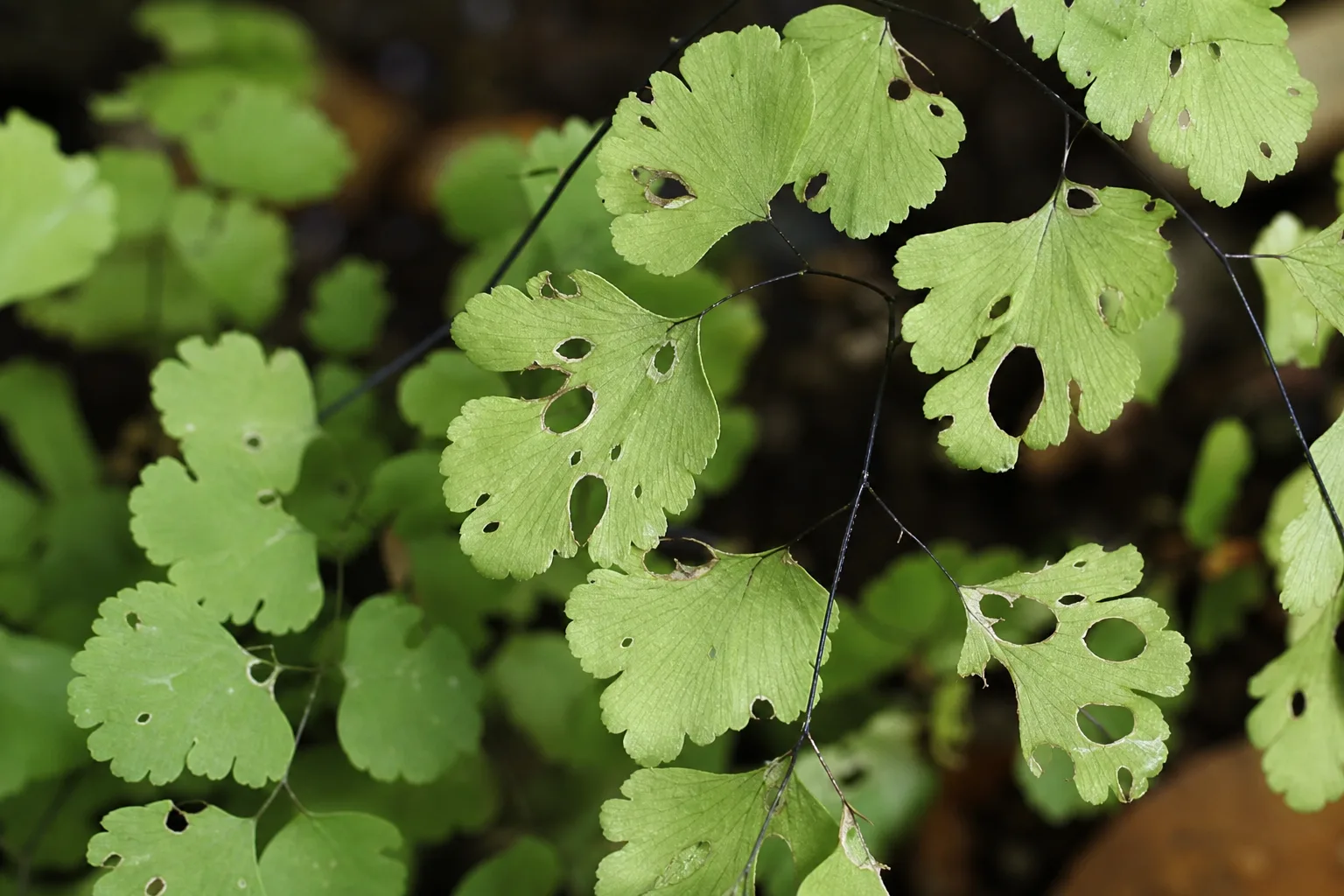
Holes in Leaves on Maidenhair Fern: Causes, Checks & Fixes
This guide covers holes in leaves on Maidenhair Fern. See also the general Holes in Leaves guide, watering, and light pages for this plant.
Holes in Leaves on Maidenhair Fern: Causes, Checks & Fixes
Quick answer
Holes in Maidenhair Fern leaflets are chew damage, not rot or a leaf-spot disease. On this delicate fern, the most common indoor chewers are fern caterpillars (especially Florida fern caterpillar on nursery stock), with slugs and thrips as secondary causes. Mechanical tears from handling can mimic holes but lack frass, slime trails, or a repeating feeding pattern.
First step: inspect the crown and undersides at dusk with a flashlight. Fern caterpillars feed at night and hide in the crown or soil surface by day - daytime checks often miss them. Hand-pick any larvae you find and isolate the plant from others before spraying.
What holes in leaves look like on Maidenhair Fern
Maidenhair Fern (Adiantum raddianum) carries thin, fan-shaped leaflets on wiry black stems. True chew damage differs from the crisp brown tips caused by dry air or missed watering.
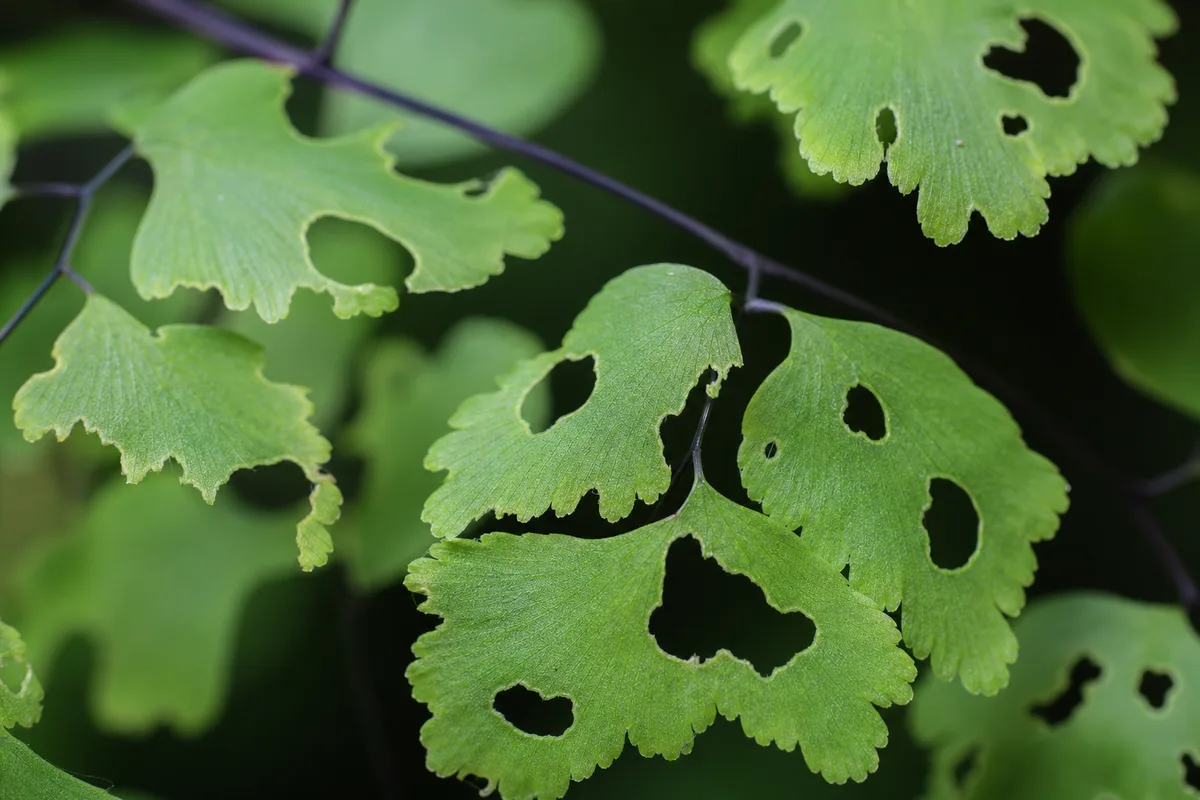
Holes in Leaves symptoms on Maidenhair Fern - compare with healthy tissue on the same plant.
Typical patterns include:
- Irregular holes punched through individual leaflets, sometimes leaving a lacy skeleton of veins
- Ragged leaflet edges where caterpillars or slugs rasp tissue overnight
- Clusters of damage on one frond or side of the plant rather than random single breaks
- Black frass pellets (caterpillar droppings) on leaves, stems, or the pot rim below damaged fronds
- Silvery slime trails on leaflets or the outside of the container when slugs are involved
- Silvery streaks or speckling with tiny black excrement flecks when thrips are rasping tissue
- Damage on newest unfurling croziers - caterpillars prefer tender expanding leaflets
Holes from handling, pet brushing, or dry leaflet snap usually affect isolated leaflets without frass, slime, or spread to neighboring fronds overnight. If damage appears on multiple fronds after one calm night indoors, suspect a live chewer.
Why Maidenhair Fern gets holes in leaves
Maidenhair Fern is not a tough-leaved foliage plant. Its soft leaflets are easy for night feeders to bite through - and the constantly moist crown this fern needs can also harbor pests that hide at the soil line.
Fern caterpillars
The Florida fern caterpillar (Callopistria floridensis) is a leading cause of tattered fern foliage in greenhouses and homes. It feeds on many commercial fern species, including northern maidenhair. Eggs are laid singly on undersides of fronds or emerging croziers; larvae feed mostly at night and hide in the crown or on the soil surface during the day, which makes them easy to overlook until holes multiply.
Infestations often start when ferns arrive pre-infested from growers - home infestations are most often due to plants being infested when purchased; eggs hatch indoors weeks after purchase. Warm indoor conditions speed development. Several caterpillars can severely damage a small Maidenhair Fern because each leaflet is thin and offers little resistance.
Slugs and snails
Slugs rasp irregular holes and leave silvery mucus trails. They are less common on elevated indoor shelves but appear in humid bathrooms, on floor-level pots, and on ferns summered outdoors then brought inside. Maidenhair Fern’s moist soil surface and organic mulch in the mix can attract slugs if debris collects around the pot.
Thrips
Thrips scrape leaflet surfaces with rasping mouthparts, causing silvery streaks, speckling, and distorted young leaflets. Heavy feeding can produce small torn areas that look like pinholes. Thrips run quickly when disturbed and may be caught on yellow sticky cards near the fern.
What usually does not cause holes
Fungal leaf spots on Maidenhair Fern show as brown patches with halos - not clean through-holes. Spider mites cause stippling and webbing, not ragged chew margins. overwatering on Maidenhair Fern yellows and collapses fronds without punched-out leaflet tissue.
How to confirm the cause
Work through these checks in order:
- Time the inspection. Go out at dusk or after lights dim when fern caterpillars feed. Slugs also move at night.
- Search the crown. Part fronds gently and look at the base of black stems and the soil surface for curled green, brown, or black larvae.
- Look for frass. Black pellet droppings below holed fronds confirm caterpillar feeding even if the larva is hidden.
- Check for slime. Silvery winding trails on pots or leaflets point to slugs - not caterpillars.
- Tap-test for thrips. Shake a damaged frond over white paper; tiny elongated insects that run quickly suggest thrips. Confirm silvery scarring without frass pellets.
- Review plant history. New nursery fern, recent outdoor patio stay, or neighboring infested plants increase caterpillar and thrips odds.
- Exclude mechanical damage. If holes appeared immediately after moving or Maidenhair Fern repotting guide and no pests are found over three nightly checks, suspect physical breakage.
First fix for Maidenhair Fern
Inspect at night and hand-pick caterpillars before spraying anything.
Move Maidenhair Fern away from other ferns and delicate plants. At dusk, examine the crown, soil surface, and undersides of holed fronds. Handpick caterpillars and slugs and drop found larvae into soapy water. Wipe frass from stems and the pot rim so you can tell whether new damage appears tomorrow.
If you find slugs instead, pick them off and check under the pot and saucer. For thrips only (no caterpillars), rinse fronds gently in a sink - support each leaflet to avoid snapping stems.
Do not reach for systemic pesticides or heavy oils on day one. Maidenhair Fern leaflets burn easily; confirm the pest first, then choose the gentlest labeled treatment.
Step-by-step recovery
- Isolate the fern from other houseplants.
- Hand-pick caterpillars or slugs nightly for three to five evenings - populations drop fast when caught early.
- Rinse fronds with lukewarm gentle spray to dislodge small larvae and thrips. Pat excess water off; do not leave the crown soggy overnight.
- Apply Bacillus thuringiensis (Bt) labeled for caterpillars if hand-picking cannot keep up - choose a Bt labeled for caterpillar control, spray all frond surfaces, especially undersides and the crown interior. Caterpillars must ingest treated tissue; expect some new holes until larvae die.
- Use insecticidal soap for thrips if Bt is not appropriate - insecticidal soap is effective against thrips; test one frond first and wait 48 hours before full application.
- Set yellow sticky cards near the pot to monitor flying adult moths or thrips - detection only, not sole treatment.
- Remove badly skeletonized fronds at the base once new clean growth appears.
- Hold fertilizer until feeding stops and new croziers unfurl without damage.
Recovery timeline
Minor caterpillar damage on a healthy Maidenhair Fern often stabilizes within one to two weeks of nightly hand-picking. Bt-treated infestations may need two to three weekly applications before new fronds emerge clean.
Holed leaflets never refill - judge success by undamaged new croziers and no fresh frass. Thrips control with washing and soap typically shows cleaner new leaflets within two to three weeks.
If new holes keep appearing after three weeks of consistent treatment, re-inspect for hidden pupae in soil surface debris or a second pest species.
Lookalike symptoms
- Dry air browning - Tips and margins crisp uniformly without through-holes or frass.
- Spider mites - Stippling and webbing, not ragged chew edges.
- Aphids on Maidenhair Fern - Curl and sticky honeydew on new growth; rarely punch clean holes.
- Mechanical tears - Single snapped leaflets after handling; no overnight spread.
- Fungal spots - Brown lesions with yellow halos; tissue collapses rather than being eaten out.
Mistakes to avoid
Do not spray homemade dish soap on Maidenhair Fern - leaflet burn is common on delicate ferns. Avoid heavy horticultural oil without a label clearance for ferns and a spot test. Do not assume holes mean overwatering and cut back water - dehydration makes recovery slower while pests keep feeding. Do not discard the plant after one holed frond if you find and remove a single caterpillar. Do not place treated ferns in direct sun while foliage is wet from rinsing or sprays.
Maidenhair Fern care cross-check
Pest recovery still needs this fern’s baseline conditions: steady moisture, 60–80% humidity, and medium indirect light. Roots must never be allowed to dry out on delta maidenhair fern. Letting the root ball dry out while fighting caterpillars adds wilt stress on top of lost leaf area. Maidenhair Fern is non-toxic to cats and dogs, but keep soapy rinse water and pesticide sprays away from pets during treatment.
How to prevent holes next time
Quarantine new ferns for two weeks and inspect crowns at purchase before placing near established Maidenhair Fern. After summer outdoors, rinse fronds and check the soil surface before bringing pots indoors. Clear dead fronds and debris from the pot rim where slugs and moth pupae hide. During warm months, a quick weekly dusk check of the crown catches caterpillars before they strip multiple fronds.
When to worry
Escalate when new croziers fail to open cleanly, frass accumulates daily despite picking, or damage spreads to multiple plants. A single hole on one older frond with one larva removed is manageable. Consider discarding severely stripped plants that no longer have enough foliage to photosynthesize if infestation persists after repeated Bt cycles - protecting the rest of your collection may be the practical choice.
Conclusion
Holes in Maidenhair Fern leaflets mean something is chewing - usually fern caterpillars introduced on nursery stock, sometimes slugs or thrips. Confirm with a dusk inspection for larvae, frass, or slime trails; hand-pick first; then use labeled Bt or insecticidal soap if needed. New clean fronds, not repaired old leaflets, tell you recovery is working.
When to use this page vs other Maidenhair Fern guides
- Maidenhair Fern watering guide - Use for routine moisture checks before assuming holes in leaves is the main issue.
- Maidenhair Fern problems hub - Browse all 55 common issues on this species.