Holes in Leaves on Philodendron Gloriosum: Causes, Checks &
Quick answer
Holes in Philodendron Gloriosum leaves are not normal fenestration. First step: inspect every leaf surface with magnification to decide whether damage is chewed (pests), silvery-streaked (thrips), or torn (handling or unfurling stress).
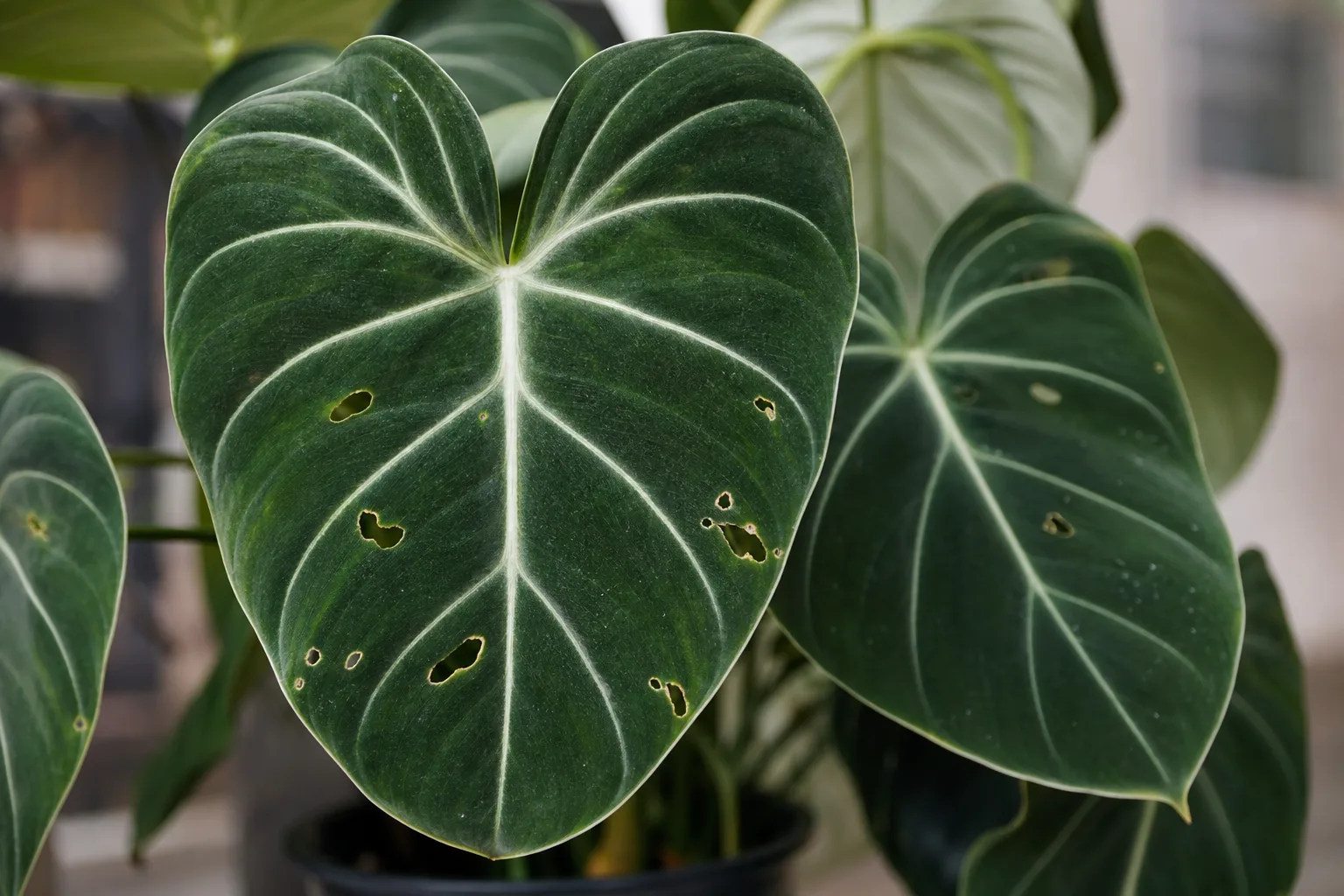
Holes in Leaves on Philodendron Gloriosum: Causes, Checks & Fixes
This guide covers holes in leaves on Philodendron Gloriosum. See also the general Holes in Leaves guide, watering, and light pages for this plant.
Holes in Leaves on Philodendron Gloriosum: Causes, Checks & Fixes
Quick answer
Holes in Philodendron Gloriosum leaves are not normal fenestration. First step: inspect every leaf surface with magnification to decide whether damage is chewed (pests), silvery-streaked (thrips), or torn (handling or unfurling stress).
Philodendron Gloriosum is a terrestrial crawler with large velvet heart-shaped leaves-not a split-leaf or Swiss cheese type. True philodendrons have deeply cut leaves with no holes; fenestration belongs to Monstera and similar plants grown in bright light. Random holes, notches, or tears on Gloriosum always warrant a cause check before you prune or spray.
What holes in leaves look like on Philodendron Gloriosum
On Philodendron Gloriosum overview, hole patterns fall into three buckets:
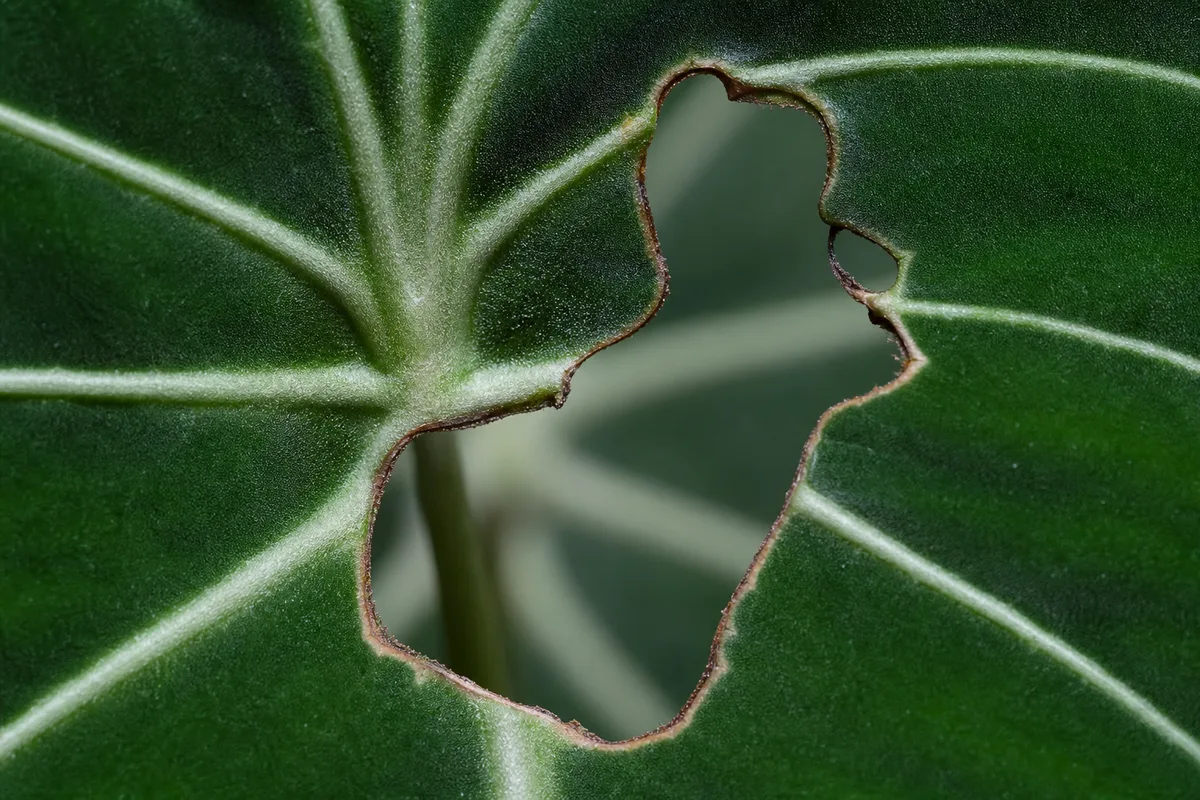
Holes in Leaves symptoms on Philodendron Gloriosum - compare with healthy tissue on the same plant.
Chewed holes (pests). Irregular, ragged openings-often starting at leaf margins-with small black droppings (frass) on the leaf below. Lower leaves resting near the pot rim are common targets because Gloriosum crawls horizontally and older foliage drapes downward.
Thrips and piercing damage. Silvery or bronze streaks, tiny pinpricks, and shiny black excrement specks on velvet. Damage may look dusty from above while the underside shows scraped tissue. Thrips hide in cataphyll folds at the rhizome tip.
Mechanical tears. Clean-edged rips or elongated splits on young leaves still unfurling, or on mature velvet tissue snagged during Philodendron Gloriosum repotting guide, shipping, or brushing against furniture. No frass, no stickiness, no moving insects.
A single old hole on one lower leaf with stable new growth is often a past event. Fresh holes on multiple leaves, especially the newest one, need action.
Why Philodendron Gloriosum gets holes in leaves
Chewing insects after outdoor time. Caterpillars and beetles have chewing mouthparts and can strip foliage quickly once eggs hatch on leaves that spent summer outside. Clemson HGIC notes caterpillars leave frass on leaves and under the plant-a reliable clue indoors.
Thrips on tender velvet. Thrips scrape surface cells and suck sap, causing silvery streaks and distorted growth. New growth at the rhizome tip is high-value tissue; thrips there can deform the next leaf before it fully expands.
Slugs and snails on soil-level leaves. Less common indoors, but root balls brought inside after summer may harbor slugs in exterior cavities of the potting mix. They feed at night on leaves touching moist mix or saucers.
Handling and unfurling stress. Velvet Gloriosum leaves mark and tear easily. Forcing a stuck cataphyll, moving a wide shallow pot through a doorway, or letting a heavy new leaf drag on a shelf can rip tissue that never closes.
Lookalike: fenestration confusion. Collectors sometimes expect holes as the plant matures. Gloriosum does not develop symmetrical windowed splits. If holes look intentional and symmetrical on a different plant labeled “split-leaf,” you may be looking at Monstera-not a Gloriosum problem.
How to confirm the cause
Work through this order:
- Pattern scan - Note ragged chew vs silvery scrape vs smooth tear. Photograph the newest damaged leaf.
- Underside inspection - Use phone magnification on velvet undersides, petiole axils, and rhizome cataphyll.
- Frass and residue - Look for black pellets (caterpillars), sticky honeydew (aphids, scale), or fine webbing (mites-usually stippling more than holes).
- Night check - If chew marks spread without visible daytime pests, inspect after dark with a flashlight; some beetles and slugs feed nocturnally.
- History - Did the plant return from outdoors, get repotted, or unfurl a leaf against a hard surface this week?
- Collection scan - Check neighboring aroids; shared pests explain simultaneous new holes.
First fix for Philodendron Gloriosum
Identify the damage type before treating. If you see live insects, frass, silvery thrips streaks, or fresh chew marks spreading, isolate the plant immediately. Then rinse all leaf surfaces-including undersides-with lukewarm water, supporting each velvet leaf from underneath to avoid tearing.
Do not reach for fertilizer, repotting, or broad pesticides on day one. Wrong treatment stresses a slow crawler and damages velvet texture. Mechanical tears need support and patience, not insecticide.
Step-by-step recovery
If chewing pests are confirmed
- Isolate Gloriosum away from other aroids.
- Hand-pick visible caterpillars or beetles; crush or dispose outdoors.
- Rinse foliage top and bottom every three to five days to knock off eggs and small larvae.
- If damage continues after two rinse cycles, apply insecticidal soap or horticultural oil labeled for the pest-test a small leaf area first because velvet can react to soaps.
- For outdoor-returned plants, inspect the root ball perimeter for slugs and scrape them away before returning to the collection.
- Remove one fully destroyed lower leaf only if several healthy leaves remain for photosynthesis.
If thrips are confirmed
- Isolate and rinse as above, directing water into cataphyll folds.
- Increase humidity to the 60–70% range Gloriosum prefers-helps plant health while you monitor.
- Apply insecticidal soap or horticultural oil to undersides on a repeat schedule; thrips hide in crevices and often need multiple treatments.
- Sticky blue traps near the pot catch flying adults but do not replace leaf treatment.
If damage is mechanical
- Leave stable tears alone; do not cut a mostly green velvet leaf for cosmetics.
- Support the next unfurling leaf with a soft stake or by clearing space so it does not snag.
- Move the wide shallow pot where leaves will not brush walls or shelf edges.
- Wait for the rhizome tip to produce a clean new leaf before judging success.
Wear gloves when handling damaged leaves; philodendrons contain irritating calcium oxalate crystals.
Recovery timeline and what improvement looks like
Holey velvet tissue does not regenerate. On Gloriosum, expect four to eight weeks-or longer in low light-before a new leaf emerges from the rhizome tip. Improvement means no new holes, no fresh frass, and an intact unfurling leaf. Old damaged leaves can stay if they still photosynthesize.
Worsening signs: daily new chew marks, deformed stuck cataphyll, thrips streaks spreading to the growth tip, or multiple collection plants affected.
Lookalike symptoms to rule out
| Pattern | Likely cause | Key difference on Gloriosum |
|---|---|---|
| Silvery stippling, fine webbing | Spider mites | Rarely large holes; dull bronze patches on undersides in dry air |
| Round brown spots with yellow halos | Fungal leaf spot | Spots, not chew holes; diseases are rarely a home problem on philodendrons |
| Symmetrical windows on mature leaves | Monstera fenestration | Wrong plant or mixed collection-not Gloriosum biology |
| Single split on one old leaf, stable tip | Past mechanical tear | No new damage, clean newest leaf |
Mistakes to avoid
- Pruning all holey leaves before fixing pests-removes photosynthetic surface on a slow grower.
- Spraying neem or soap repeatedly without confirming pests-velvet leaves can look worse from product residue.
- Burying the rhizome deeper to “stabilize” the plant-invites rot at the growth front while leaves keep declining.
- Assuming fenestration will appear with maturity-Gloriosum leaves stay solid heart shapes.
- Returning an outdoor plant to the collection without quarantine or root-ball slug check.
How to prevent holes next time
Quarantine plants two to three weeks after outdoor summer stays or new purchases, as extension guides recommend for houseplants. Give unfurling leaves clearance in the wide pot. Keep the rhizome tip above moist stagnant mix. Run monthly underside checks on Gloriosum and nearby aroids. Position the crawler where velvet foliage will not drag across rough surfaces.
When to worry
Escalate if the only active growth tip is chewed, thrips-streaked, or stuck closed; if frass reappears within days of rinsing; or if lower leaves are skeletonized faster than new growth can replace them. Severe velvet loss on this slow species sets recovery back months-early isolation and correct identification matter more than aggressive pruning.
Conclusion
Holes in Philodendron Gloriosum leaves signal pests, mechanical damage, or confusion with fenestrating plants-not normal maturity. Inspect velvet undersides and the rhizome tip first, isolate and rinse when pests are confirmed, and support unfurling leaves when tears are mechanical. Judge success by clean new growth from the crawler’s front, not by old holey foliage.
When to use this page vs other Philodendron Gloriosum guides
- Philodendron Gloriosum watering guide - Use for routine moisture checks before assuming holes in leaves is the main issue.
- Philodendron Gloriosum problems hub - Browse all 22 common issues on this species.